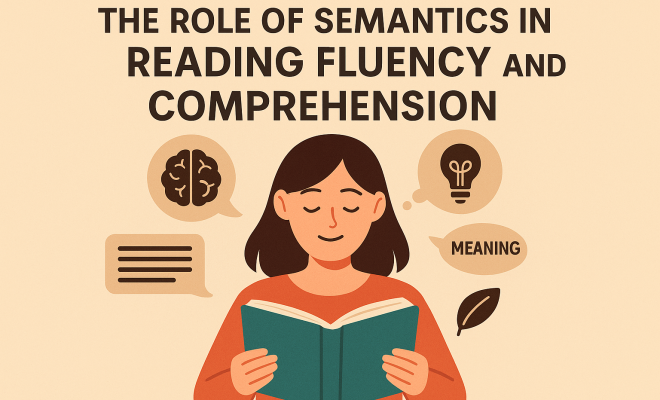
The Role of Semantics in Reading Fluency and Comprehension
“`html
Understanding Semantics in Reading Comprehension
Reading comprehension is not just about recognizing words on a page; it’s about understanding the meaning behind those words. One of the critical components that influences how effectively we comprehend text is semantics in reading comprehension. This concept encompasses the meanings of words, sentences, and phrases as they relate to each other within a given context. In this article, we’ll explore the role of semantics, how it affects reading fluency, and offer practical insights into improving comprehension skills.
The Foundations of Semantics
Semantics is the study of meaning in language. It plays a vital role in reading comprehension because it connects what readers see on the page to what they understand. For instance, when a reader encounters the word “dog,” their understanding is shaped by their prior experiences with dogs, cultural associations, and even the context in which the word appears. Understanding semantics involves recognizing not just the dictionary definition of words but also connotations, nuances, and contextual meanings.
Effective reading comprehension relies on readers’ abilities to decode text while simultaneously making sense of it. This dual process is where semantics shines. A reader who grasps the meaning of a word in context can infer deeper meanings from the text, thus improving overall comprehension.
How Semantics Influences Reading Fluency
Reading fluency involves the ability to read smoothly and effortlessly, with appropriate speed and expression. A key factor contributing to fluency is the reader’s semantic knowledge. When readers understand the meaning of the words they are reading, they can focus less on decoding and more on understanding the text as a whole.
Consider a child reading a passage filled with unfamiliar words. If they struggle to decode these words, their fluency suffers. However, if the text is rich in familiar terminology and meaningful context, the child can read more fluently and will likely grasp the overall meaning much more efficiently. Studies show that readers who possess strong semantic knowledge can read with greater fluency because they can anticipate meanings and make connections while reading.
Semantic Knowledge and Comprehension Skills
Research has indicated that there is a direct correlation between a reader’s semantic knowledge and their comprehension skills. When readers have a robust vocabulary and an understanding of how words interact with one another, they can construct mental models that make the text meaningful.
For example, a study conducted by the National Reading Panel found that vocabulary instruction significantly impacts reading comprehension. Readers who engage in activities that enhance their semantic knowledge—such as learning synonyms, antonyms, and contextual usage of words—demonstrate improved comprehension.
The Role of Context in Semantics
Context is crucial in the realm of semantics, as it helps to clarify meanings. The same word can have different meanings depending on its usage in a sentence. For instance, the word “bark” can refer to the sound a dog makes or the outer covering of a tree. A reader’s ability to discern the correct meaning relies heavily on their contextual knowledge.
Effective readers use contextual clues to infer meanings when they encounter unfamiliar words. This skill is especially important in academic settings, where texts often contain specialized vocabulary. Encouraging students to use context clues can significantly enhance their understanding and retention of information.
Strategies to Enhance Semantic Understanding
Improving semantic knowledge doesn’t have to be a daunting task. Here are some practical strategies that can help enhance your or your students’ understanding of semantics in reading comprehension: (See: Reading development and comprehension.)
- Encourage Active Reading: Teach students to annotate texts, make notes in the margins, or highlight key phrases. This engages them with the material and prompts them to think critically about word meanings.
- Use Visual Aids: Maps, charts, and images can help illustrate meanings. For example, graphic organizers can visually connect words to their meanings and related concepts.
- Incorporate Word Games: Activities like crossword puzzles, word searches, and vocabulary games can make learning new words enjoyable and interactive.
- Teach Morphology: Understanding the roots, prefixes, and suffixes of words can aid students in deciphering unfamiliar vocabulary. For instance, knowing that “bio-” means life can help students understand words like “biology” or “biography.”
Semantic Mapping: A Powerful Tool for Comprehension
Semantic mapping is an effective strategy for developing deeper understanding. This visual representation of a word’s meaning and its relationships to other words or concepts can significantly enhance comprehension. In this method, students create diagrams that connect a central word to related terms, synonyms, antonyms, and examples.
For example, if a student creates a semantic map for the word “emotion,” they might connect it to related words like “happiness,” “anger,” and “sadness.” They might also include examples or personal experiences related to those emotions. This technique not only reinforces vocabulary but also helps students see the intricate web of meanings that words can have.
The Impact of Technology on Semantic Learning
In our digital age, technology has transformed the way we approach reading and comprehension. Numerous apps and online platforms focus on vocabulary development and semantics. These tools often use gamified elements to make learning engaging.
For instance, platforms like Quizlet allow users to create flashcards that can enhance vocabulary retention. Interactive reading apps often highlight words and provide contextual definitions instantly, allowing readers to understand meanings without disrupting their flow. Furthermore, audiobooks can expose listeners to varied vocabularies in context, promoting semantic understanding through auditory learning.
Current Trends in Semantic Instruction
As educators continue to explore effective reading strategies, several trends have emerged in the teaching of semantics. One notable trend is the integration of semantics into comprehensive literacy programs. Instead of treating vocabulary and semantics as isolated subjects, educators are incorporating them into broader reading curricula.
Another trend is the focus on culturally relevant teaching. This approach recognizes that students come from diverse backgrounds that influence their understanding of language. By incorporating texts that reflect students’ cultural experiences, educators can enhance engagement and promote semantic understanding.
Challenges in Teaching Semantics
While semantics is crucial for reading comprehension, there are challenges in implementing effective instructional strategies. One significant barrier is the reliance on standardized testing, which often emphasizes rote memorization over deep semantic understanding. This can lead to a narrow focus on vocabulary lists rather than meaningful engagement with language.
Additionally, educators may struggle to find resources that effectively bridge the gap between vocabulary instruction and reading comprehension. There’s a need for comprehensive tools that integrate semantic instruction within literacy frameworks. Addressing these challenges requires ongoing professional development for teachers and innovative approaches to curriculum design.
The Future of Semantics in Reading Comprehension
Looking ahead, the role of semantics in reading comprehension will likely continue to evolve. As research in cognitive science expands our understanding of how people learn and process language, instructional practices will adapt accordingly. A greater emphasis on teaching the interconnectivity of words and meanings will likely shape future literacy curricula.
Moreover, as technology continues to play a significant role in education, the possibilities for enhancing semantic understanding through interactive and personalized learning experiences are promising. By embracing these advancements, educators can equip students with the skills they need to be proficient readers who can navigate complex texts with confidence.
Final Thoughts
In summary, the role of semantics in reading comprehension is profound. It influences reading fluency, comprehension skills, and the overall ability to engage with texts meaningfully. By emphasizing the importance of semantic knowledge and providing effective strategies for instruction, educators can support students in developing the critical skills needed for academic success and lifelong learning. As we continue to explore the intricacies of language and meaning, the connection between semantics and comprehension will remain a fundamental aspect of literacy education.
Understanding the Differences: Semantics vs. Syntax
When discussing semantics, it’s essential to distinguish it from syntax, another crucial component of language. While semantics deals with meaning, syntax focuses on the structure of sentences. Syntax governs how words are arranged to create coherent and grammatically correct sentences, which is vital for effective communication.
For example, consider the sentences “The cat chased the mouse” and “The mouse chased the cat.” Both sentences contain the same words, but their meanings differ based on word order. A reader’s semantic understanding allows them to derive meaning from these structures, linking semantics and syntax closely in the reading process. Understanding how these components work together can significantly enhance a reader’s comprehension skills. (See: Semantics in reading fluency.)
The Role of Semantic Memory in Comprehension
Semantic memory refers to a type of long-term memory that stores facts, concepts, and knowledge about the world. This type of memory plays a crucial role in reading comprehension, as it allows readers to draw upon their existing knowledge when encountering new information. The richer a reader’s semantic memory, the more connections they can make, leading to deeper understanding and retention of material.
For instance, someone with a well-developed semantic memory related to history will better understand a historical text than someone without that background knowledge. This is why prior knowledge is often referenced in discussions about comprehension—readers can better grasp new concepts if they relate them to what they already know.
Statistics on Semantics and Reading Comprehension
Data from various studies underscore the importance of semantics in reading comprehension. According to the National Assessment of Educational Progress (NAEP), students with higher vocabulary scores tend to perform better in reading comprehension assessments. In a 2019 report, students in the highest percentile of vocabulary had an average reading comprehension score that was 30 points higher than those in the lowest percentile.
Furthermore, research published in the Journal of Educational Psychology found that explicit instruction in vocabulary led to a 25% improvement in reading comprehension scores among elementary school students. These statistics demonstrate a clear link between strong semantic knowledge and improved comprehension abilities.
Expert Perspectives on Semantics
Educators and linguists alike emphasize the significance of semantics in reading comprehension. Dr. Patricia Kuhl, an expert in language acquisition, asserts that “the understanding of meaning is at the heart of reading.” She argues that without a solid grasp of semantics, readers cannot fully engage with or understand the text. Her research suggests that developing semantic knowledge should be a priority in literacy education.
Similarly, Dr. Isabel Beck, co-author of the influential book “Bringing Words to Life,” advocates for robust vocabulary instruction. She argues that teaching words in context, rather than in isolation, promotes better comprehension. Her perspective aligns with the idea that semantics is not just an academic concept but a practical tool for enhancing reading skills.
FAQs About Semantics in Reading Comprehension
What is semantics in reading comprehension?
Semantics in reading comprehension refers to the understanding of meanings that words, phrases, and sentences convey in a text. It involves recognizing how context influences interpretation and how different words relate to one another.
How can I improve my semantic knowledge?
You can improve your semantic knowledge by engaging in various activities such as reading widely, participating in discussions, learning root words, and using vocabulary-building apps. Practicing semantic mapping and using context clues while reading can also enhance your understanding.
Why is semantic understanding important for students?
Semantic understanding is crucial for students because it facilitates better reading comprehension. When students grasp the meaning of words in context, they can connect ideas, retain information, and engage with texts more actively, leading to improved academic performance.
Can technology aid in developing semantic skills?
Yes, technology can be a powerful tool for developing semantic skills. Various apps and online resources offer interactive vocabulary exercises, context-based learning, and instant access to definitions, making it easier for learners to enhance their understanding of semantics.
What challenges do students face in understanding semantics?
Students may face challenges such as a limited vocabulary, lack of background knowledge, and difficulty recognizing context clues. These obstacles can hinder their ability to derive meaning from texts, making effective instruction in semantics essential for overcoming these hurdles.
How does semantics influence academic writing?
Semantics significantly influences academic writing, as clear and precise language is vital for conveying ideas effectively. Strong semantic knowledge allows writers to choose the right words, construct logical arguments, and make their writing accessible and engaging to readers.
Real-World Applications of Semantic Knowledge
Understanding semantics isn’t just beneficial for academic tasks; it has real-world applications as well. In professional environments, strong semantic skills can enhance communication, collaboration, and critical thinking. For example, in fields like law, healthcare, and education, clarity of language and precision in meaning are paramount. Misunderstandings can lead to significant consequences, making semantic awareness crucial for effective interactions.
Moreover, individuals striving for personal development can benefit from improved semantic understanding. Whether reading literature, engaging with complex materials, or even participating in conversations, having a robust semantic framework allows for deeper engagement and critical thinking.
Teaching Semantics Across Grades
When it comes to teaching semantics, the approach can vary significantly across different educational stages. In early childhood education, introducing basic vocabulary through playful methods like songs, rhymes, and storytelling can lay the foundation for semantic understanding. Engaging children with picture books that have rich illustrations can help them grasp meanings through visual context.
As students progress into middle school and high school, the focus can shift towards more complex vocabulary and critical analysis of texts. Teachers can encourage students to explore the connotations of words, participate in discussions, and analyze how word choice impacts tone and meaning. Activities such as debates or persuasive writing can further enhance their understanding of semantics in different contexts.
Common Misconceptions About Semantics
Despite its importance, there are several misconceptions about semantics in reading comprehension. One common belief is that learning vocabulary means memorizing definitions. While knowing a word’s definition is helpful, it’s equally essential to understand how that word functions in various contexts. Another misconception is that semantics is only relevant for advanced readers. In reality, semantic awareness is crucial for all levels of reading and is a skill that can be developed over time.
Conclusion: The Indispensable Role of Semantics
Through this exploration of semantics in reading comprehension, it’s clear that semantic knowledge is foundational to effective communication and understanding. As we advance in educational practices and technologies, nurturing semantic skills will remain a priority for fostering proficient readers and thoughtful communicators. Investing in semantic instruction is an investment in students’ futures, equipping them with the tools necessary for success in an increasingly complex world.
“`
Trending Now
Frequently Asked Questions
What is the role of semantics in reading comprehension?
Semantics plays a crucial role in reading comprehension by helping readers understand the meanings of words, sentences, and phrases within context. It connects what is seen on the page to the reader's prior knowledge and experiences, facilitating deeper understanding and improved comprehension.
How does semantics affect reading fluency?
Semantics influences reading fluency by allowing readers to focus on understanding the text rather than just decoding unfamiliar words. When readers have a strong semantic knowledge, they can read more smoothly and effortlessly, enhancing their overall fluency.
Why is understanding context important in reading?
Understanding context is vital in reading because it shapes the meanings of words and phrases. Readers who grasp the contextual nuances can infer deeper meanings, which significantly enhances their comprehension and engagement with the text.
What are the components of semantics in reading?
The components of semantics in reading include the meanings of words, their connotations, and how they relate to one another within a sentence or larger context. This understanding helps readers make connections and interpret texts more effectively.
How can I improve my reading comprehension skills?
Improving reading comprehension skills can be achieved by enhancing semantic knowledge. This includes expanding vocabulary, practicing contextual understanding, and engaging with diverse texts to recognize various meanings and nuances in language.
What’s your take on this? Share your thoughts in the comments below — we read every one.