Dyspraxia and Proprioception: Understanding the Sensory Connection
“`html
Understanding the intricate relationship between dyspraxia and proprioception is crucial for parents, educators, and healthcare professionals involved with individuals who experience these conditions. Dyspraxia, a developmental coordination disorder, affects the ability to plan and carry out physical movements. Proprioception, on the other hand, is the body’s sense of its position in space, which plays a significant role in movement and coordination. This article explores the sensory connection between dyspraxia and proprioception, providing insights into their implications, challenges, and strategies for support.
The Basics of Dyspraxia
Dyspraxia, also known as Developmental Coordination Disorder (DCD), is a condition often diagnosed in childhood, characterized by difficulties in motor skills. Children with dyspraxia may struggle with tasks that require coordination, such as writing, using scissors, or riding a bike. Although the exact cause of dyspraxia is not well understood, it is believed to stem from a combination of genetic, neurological, and environmental factors.
Research indicates that around 5–6% of children have dyspraxia, which can persist into adulthood. Individuals with dyspraxia may also experience challenges in areas like social interaction and academic performance. Due to the wide range of symptoms, dyspraxia is often identified alongside other disorders such as ADHD or autism spectrum disorder, complicating diagnosis and management.
What is Proprioception?
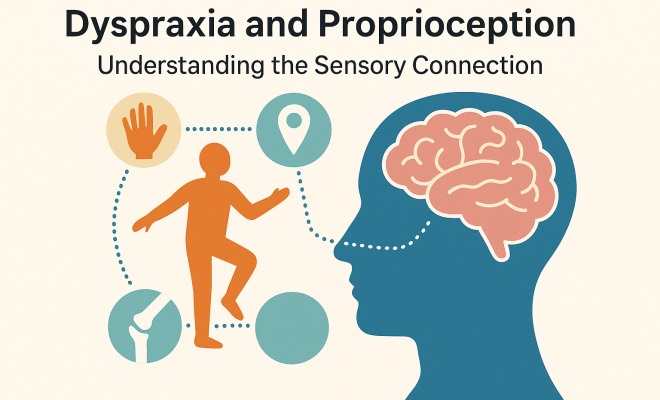
Proprioception is a key sensory system that allows individuals to perceive the position and movement of their body parts. It involves receptors in the muscles, joints, and skin, which send information to the brain about body position and movement. This sensory feedback is essential for tasks that require coordination, balance, and agility.
For instance, when you close your eyes and touch your nose, proprioception helps you know where your arm is, enabling you to perform the task accurately despite visual input being absent. This sense is crucial for everyday activities and plays a significant role in physical development, sports performance, and overall motor skills.
The Link Between Dyspraxia and Proprioception
The connection between dyspraxia and proprioception is well-documented, with research showing that individuals with dyspraxia often have impaired proprioceptive processing. This impairment can lead to difficulties in understanding body position and movement, exacerbating the challenges faced in motor coordination.
Studies indicate that children with dyspraxia may have a heightened or reduced sensitivity to proprioceptive input. For example, some may seek out excessive physical stimulation, engaging in activities that require intense movement, while others may avoid certain physical tasks due to discomfort or confusion about their body’s position.
Understanding this sensory connection is vital for developing effective intervention strategies. By addressing proprioceptive issues, caregivers and educators can create targeted activities that improve both motor skills and sensory processing.
Common Challenges Faced by Individuals with Dyspraxia
Dyspraxia can manifest in various ways, leading to a range of challenges that impact daily life. Here are some common difficulties faced by individuals: (See: National Institute of Child Health and Human Development.)
- Motor Skills: Difficulty in executing planned movements, which can affect writing, sports, and everyday tasks.
- Balance and Coordination: Struggles with balance can make simple activities like walking or climbing stairs seem daunting.
- Speech and Language: Some individuals with dyspraxia may also have speech difficulties, impacting their ability to communicate effectively.
- Social Interactions: The challenges in physical coordination can lead to social anxieties and difficulties in peer relationships.
- Self-regulation: Problems with proprioception may affect emotional regulation and the ability to gauge body movements in social contexts.
Identifying Dyspraxia and Proprioceptive Issues
Recognizing dyspraxia and associated proprioceptive problems is a critical step toward effective interventions. Early identification often involves a multi-disciplinary approach, including pediatricians, occupational therapists, and educational psychologists. Here are some common signs to look for:
- Delayed milestones in reaching physical development goals.
- Frequent trips or falls, indicating poor balance.
- Difficulty with fine motor tasks like buttoning shirts or tying shoelaces.
- Struggles with gross motor skills such as running, jumping, or throwing.
- Issues with spatial awareness, such as bumping into objects or other people.
If you suspect that someone you know may have dyspraxia and related proprioceptive difficulties, it’s essential to seek professional help. Early intervention can lead to improved outcomes and better strategies for managing daily challenges.
Practical Strategies for Supporting Individuals with Dyspraxia
Effective support for individuals with dyspraxia involves tailored strategies that address both motor skills and proprioceptive processing. Here are several practical tips for parents, educators, and therapists:
- Structured Activities: Engage children in structured play that includes motor skill development activities, such as obstacle courses or ball games.
- Proprioceptive Input: Activities that involve jumping, pushing, or pulling can provide essential proprioceptive feedback. Consider incorporating trampoline time, climbing, or even heavy lifting.
- Fine Motor Skills Practice: Activities like bead threading, clay modeling, or using tweezers can enhance hand-eye coordination and fine motor skills.
- Routine Establishment: Create consistent routines to help children feel more secure and capable in their movements.
- Encouragement and Positive Reinforcement: Celebrate small achievements to build confidence and motivation.
Therapeutic Approaches for Dyspraxia
Various therapeutic approaches can effectively address dyspraxia and its sensory components. Occupational therapy (OT) is a common intervention that focuses on improving motor skills through engaging activities. An occupational therapist can evaluate the individual’s needs and create a personalized therapy plan that may include:
- Motor Skill Development: Targeted exercises designed to enhance coordination and stability.
- Adaptive Strategies: Techniques that help individuals navigate daily activities more effectively.
- Sensory Integration Therapy: Activities designed to help the individual process sensory information more efficiently.
In addition to OT, other therapeutic approaches, such as physical therapy and speech therapy, may also be beneficial, depending on the individual’s specific challenges. Collaboration among professionals is often key to successful intervention.
Educational Strategies for Success
Education is critical for children with dyspraxia, and schools can play a pivotal role in supporting their needs. Here are some educational strategies that can enhance learning outcomes:
- Individualized Education Plans (IEPs): Collaborating with educators to create tailored IEPs that address specific motor and sensory goals.
- Classroom Accommodations: Providing tools like slant boards for writing, fidget toys, or modified assignments can help students succeed.
- Peer Support Programs: Creating an inclusive classroom environment encourages social interactions and fosters understanding among peers.
- Regular Feedback: Offering constructive feedback helps students track their progress and stay motivated.
Current Research and Future Directions
Research on dyspraxia and proprioception is ongoing, with studies aiming to better understand the underlying mechanisms and improve intervention strategies. Recent findings suggest that neuroplasticity—the brain’s ability to reorganize itself—may play a role in treatment. By repeatedly engaging in targeted motor activities, individuals may develop new neural pathways that enhance their coordination and proprioceptive awareness.
Moreover, growing attention is being given to the role of technology in supporting individuals with dyspraxia. Virtual reality, for instance, is being explored as a tool for enhancing proprioceptive feedback in a controlled environment, allowing individuals to practice motor skills safely.
As our understanding of dyspraxia and proprioception evolves, ongoing collaboration among researchers, clinicians, and educators will be essential in developing innovative strategies that promote better outcomes for individuals affected by these challenges.
Understanding Proprioception and Its Role in Everyday Life
Proprioception isn’t just about movement; it’s vital for a variety of daily tasks. From walking to typing, our ability to sense where our body is in space helps us function effectively. For individuals with dyspraxia, proprioception can be a double-edged sword. Some may have a diminished sense, causing them to misjudge their movements, while others may have an exaggerated sense, leading to overcompensation and awkward movements. Recognizing the nuances of proprioception can help us tailor interventions specifically to the individual’s needs. (See: Centers for Disease Control and Prevention on child development.)
Empirical Evidence: Statistics and Studies
Recent studies have highlighted the prevalence of proprioceptive impairments among those with dyspraxia. A study published in the Journal of Pediatric Rehabilitation Medicine revealed that approximately 70% of children with dyspraxia also experience proprioceptive difficulties. These findings underscore the importance of addressing proprioception in therapeutic and educational settings. Furthermore, the study noted that children receiving proprioceptive input through tailored exercises showed significant improvement in motor skills over a six-month period.
Expert Perspectives on Dyspraxia and Proprioception
Experts in child development emphasize the importance of early intervention. Dr. Lisa Miller, a pediatric occupational therapist, states, “Understanding proprioception is crucial. Children with dyspraxia often struggle in silence, and when we address their sensory needs, we’re not just helping them with movement—we’re also enhancing their confidence and social interactions.” This perspective highlights the holistic approach needed when working with dyspraxia, going beyond mere movement to encompass emotional and social development as well.
Comparison with Other Sensory Disorders
Dyspraxia shares some overlap with other sensory processing disorders, but it’s essential to differentiate among them. Unlike autism spectrum disorders, where sensory sensitivities may be more pronounced, children with dyspraxia often exhibit specific difficulties with movement and coordination. Furthermore, individuals with sensory processing disorder (SPD) may have a broader range of sensory challenges that affect their everyday functioning. Understanding these differences is crucial for effective intervention.
Building Confidence Through Activities
Engaging children with dyspraxia in activities that promote proprioceptive input can significantly boost their confidence. Activities that challenge their balance and coordination can be both fun and beneficial. For instance, participating in team sports or dance can provide structured environments where children can practice their skills in a supportive setting. Additionally, encouraging participation in activities like martial arts or gymnastics can enhance their body awareness and coordination while fostering social connections.
FAQ Section
What are the main symptoms of dyspraxia?
Common symptoms include difficulty with fine and gross motor skills, problems with balance and coordination, challenges in speech and language, and issues with planning and organizing tasks.
How can I help my child with dyspraxia at home?
Incorporate playful activities that promote motor skills, such as playing with building blocks, engaging in arts and crafts, or participating in games that require movement. Structured routines and positive reinforcement can also help.
Is dyspraxia a lifelong condition?
While many individuals can manage their symptoms with appropriate strategies and interventions, dyspraxia can persist into adulthood. However, with support, individuals can lead fulfilling lives and develop coping mechanisms for their challenges.
How does proprioception affect learning and development?
Proprioception plays a crucial role in learning by enabling children to engage in activities that require coordination and spatial awareness. This is essential for physical education, arts, and other activities where movement is involved. (See: World Health Organization on developmental coordination disorder.)
Can adults have dyspraxia?
Yes, while dyspraxia is often diagnosed in childhood, it can continue into adulthood. Many adults may not have been diagnosed earlier, but they may still experience challenges related to motor skills and proprioceptive awareness.
How does proprioception relate to sports performance?
Proprioception significantly impacts sports performance as it helps athletes gauge their body’s position and movement during activities. Enhanced proprioceptive skills can improve an athlete’s balance, coordination, and reaction time, leading to better overall performance.
Are there specific activities that improve proprioception?
Yes, activities like yoga, martial arts, dance, and certain team sports can help improve proprioception. These activities encourage body awareness and coordination, promoting better motor skills and overall physical fitness.
What role do sensory integration activities play in supporting individuals with dyspraxia?
Sensory integration activities help individuals with dyspraxia process sensory information more effectively. Engaging in these activities, which can include swinging, jumping, or using balance boards, allows individuals to strengthen their proprioceptive abilities and enhance overall coordination.
Can dietary factors influence dyspraxia symptoms?
While there is no definitive evidence linking diet to dyspraxia, some parents report that certain dietary changes, such as reducing sugar intake or avoiding food additives, help improve focus and behavior. However, more research is needed to draw conclusive links between diet and dyspraxia symptoms.
Conclusion: Embracing the Journey
The relationship between dyspraxia and proprioception underscores the complexity of human development and the challenges that some individuals face in their daily lives. By fostering awareness, understanding, and support, we can help those with dyspraxia navigate their unique journeys. Through targeted strategies, therapeutic interventions, and educational support, we can empower individuals to overcome challenges and reach their full potential. The journey may be fraught with obstacles, but with the right resources, encouragement, and understanding, every small victory becomes a significant step forward.
“`
Trending Now
Frequently Asked Questions
What is the connection between dyspraxia and proprioception?
Dyspraxia and proprioception are interconnected as dyspraxia affects motor coordination, which relies heavily on proprioceptive feedback. Individuals with dyspraxia may struggle with understanding their body’s position in space, leading to challenges in movement and coordination.
What are the symptoms of dyspraxia?
Symptoms of dyspraxia include difficulties with motor skills such as writing, using scissors, and riding a bike. Individuals may also face challenges in social interactions and academic performance, and symptoms can vary widely among those affected.
How is proprioception assessed?
Proprioception can be assessed through various tests that evaluate an individual's ability to perceive body position and movement. These may include balance tests, joint position sense tests, and coordination activities that gauge how well a person can perform tasks without visual input.
Can dyspraxia be treated or managed?
While there is no cure for dyspraxia, it can be managed through various strategies such as occupational therapy, physical therapy, and tailored educational support. These interventions aim to improve motor skills, enhance coordination, and provide coping strategies.
What role does proprioception play in movement?
Proprioception plays a crucial role in movement by providing the brain with information about body position and movement. This sensory feedback is vital for performing coordinated tasks, maintaining balance, and executing precise movements effectively.
Agree or disagree? Drop a comment and tell us what you think.