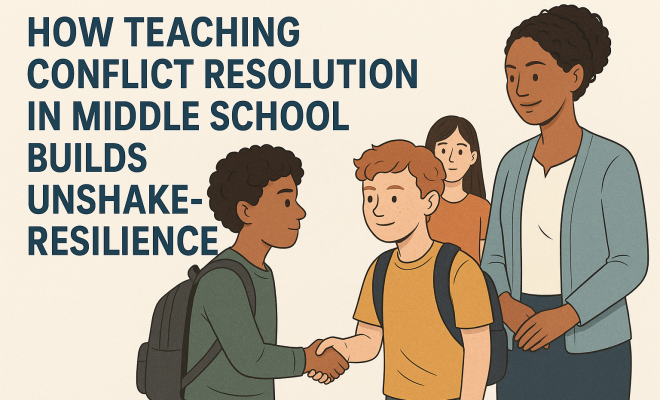
How Teaching Conflict Resolution in Middle School Builds Unshakeable Resilience
“`html
Middle school can be a tumultuous time for young adolescents as they navigate the complexities of social dynamics, personal identity, and academic pressures. One critical skill that can significantly influence their experience during this stage is the ability to resolve conflicts effectively. Teaching conflict resolution in middle school not only helps students manage disputes but also fosters resilience, equipping them with the tools they need to face challenges both now and in the future. In this article, we’ll explore the significance of conflict resolution, strategies for teaching it, and how it ultimately leads to greater emotional strength and adaptability.
Understanding Conflict Resolution
Conflict resolution refers to the methods and processes involved in facilitating the peaceful ending of conflict and retribution. In a middle school setting, conflicts can arise from disagreements over friendships, academic competition, or even misunderstandings in communication. Recognizing the importance of conflict resolution in middle school is vital for several reasons:
- Social Development: During these formative years, students are developing their social skills and learning how to interact with peers. Conflict resolution teaches them how to communicate effectively and empathize with others.
- Emotional Intelligence: Managing conflicts requires a degree of emotional intelligence, which encompasses self-awareness, self-regulation, social awareness, and relationship management. Building these skills can help students respond to challenging situations constructively.
- Academic Success: Disputes can distract students from their studies. By resolving conflicts amicably, students can focus on their academic performance and overall growth.
The Link Between Resilience and Conflict Resolution
Resilience is the ability to bounce back from challenges, adapt to adversity, and maintain a positive outlook despite difficulties. When middle schoolers learn conflict resolution, they develop resilience in several key ways:
- Problem-Solving Skills: Conflict resolution strategies encourage students to analyze problems critically and develop solutions, fostering a mindset that views challenges as opportunities for growth.
- Empathy Development: Understanding different perspectives during conflicts enhances empathy, a core component of resilience that enables students to support others while managing their own emotional responses.
- Stress Management: Learning how to navigate conflicts can reduce anxiety and stress, creating a more supportive environment for students to thrive.
These connections between conflict resolution and resilience highlight the importance of integrating conflict resolution training into middle school curricula.
Current Relevance of Conflict Resolution Skills
In today’s society, where social media amplifies disagreements and misunderstandings, the ability to resolve conflicts is more critical than ever. Middle school is a time when students are increasingly exposed to social media and digital communication. The anonymity and distance of online interactions can lead to misunderstandings and conflicts that may escalate more quickly than face-to-face encounters. Thus, equipping students with conflict resolution skills will not only serve them in school but also in their future interactions beyond the classroom. Here’s why these skills are crucial:
- Bullying Prevention: Conflict resolution programs can help students address bullying more effectively, leading to a more positive school environment.
- Peer Relationships: Understanding how to resolve conflicts can lead to healthier friendships and collaborations among peers.
- Preparation for the Future: As students grow, they will encounter conflicts in their workplaces and personal lives. Early training in conflict resolution sets the foundation for lifelong skills.
Effective Strategies for Teaching Conflict Resolution
Implementing conflict resolution training in middle schools requires structured strategies. Educators can adopt various methods to teach these essential skills, ensuring that students are equipped to face conflicts head-on:
1. Role-Playing Activities
Role-playing is an interactive method that allows students to practice conflict resolution in a safe environment. By simulating real-life scenarios, students can explore different perspectives and develop empathy. Teachers can facilitate role-playing sessions by providing scenarios that are age-appropriate and relevant to the students’ experiences. After the role-play, discussions can help students reflect on their feelings during the exercise and what they learned about resolving conflicts.
2. Conflict Resolution Workshops
Workshops are another effective way to teach conflict resolution skills. Various organizations offer workshops aimed at middle school students, focusing on communication, negotiation, and mediation skills. These workshops often involve interactive activities, group discussions, and exercises that promote understanding and cooperation. Engaging a professional facilitator can add depth to these sessions, providing expert insights and techniques.
3. Incorporating Literature and Media
Using literature and media as teaching tools can also facilitate discussions around conflict resolution. Books, films, and even current events can serve as springboards for discussions about conflicts and their resolutions. Teachers can pose questions to stimulate thought, such as, “What could the characters have done differently?” or “How did the resolution affect the outcome?” This method allows students to analyze conflicts from different angles and understand the consequences of various resolution strategies. (See: CDC on mental health in youth.)
4. Peer Mediation Programs
Peer mediation programs empower students to take an active role in resolving conflicts among their peers. In these programs, selected students are trained as mediators and learn how to facilitate conversations between conflicting parties. By utilizing their peers as mediators, students may feel more comfortable discussing their issues and working toward resolution. Implementing a peer mediation program can foster a sense of community and responsibility among students.
Creating a Supportive Environment
For conflict resolution training to be effective, the school environment must be supportive and encouraging. Here are several ways educators and school administrators can foster such an environment:
- Establish Clear Expectations: Setting clear behavior expectations helps students understand the consequences of their actions and fosters a culture of respect.
- Promote Open Communication: Encourage students to express their feelings and thoughts openly. An open-door policy can help students feel safe discussing conflicts with teachers and counselors.
- Model Conflict Resolution: Educators should model conflict resolution strategies themselves. By demonstrating how to handle disagreements constructively, teachers can provide real-life examples for students.
Integrating Conflict Resolution into the Curriculum
To ensure that conflict resolution becomes an integral part of students’ education, it’s important to integrate these lessons into the curriculum. Here are some approaches teachers can take:
- Social Studies and History: Use historical events that involve conflict and resolution to illustrate the importance of negotiation and understanding diverse perspectives.
- Language Arts: Analyze characters in literature who face conflicts, discussing their choices and the outcomes of their resolutions.
- Health Education: Discuss the impact of unresolved conflicts on mental health and well-being, emphasizing the importance of resolution strategies.
By embedding conflict resolution concepts across various subjects, educators can reinforce the skills students are learning in different contexts.
Measuring the Impact of Conflict Resolution Programs
To evaluate the effectiveness of conflict resolution training, schools should establish metrics for measuring outcomes. Surveys and assessments can help gauge changes in student behavior, attitudes, and the overall school climate. Here are some potential evaluation methods:
- Pre- and Post- Surveys: Conduct surveys before and after conflict resolution training to assess changes in students’ understanding and application of conflict resolution strategies.
- Behavioral Observations: Monitor changes in student behavior and interaction post-training. Teachers can note instances of conflict resolution in action and the overall atmosphere in the classroom.
- Academic Performance: Analyze whether there are improvements in academic performance correlating with the implementation of conflict resolution programs.
By systematically measuring the impact, schools can refine their programs and demonstrate their value to stakeholders.
Challenges in Implementing Conflict Resolution Programs
While the benefits of teaching conflict resolution in middle school are clear, several challenges can arise during implementation:
- Resistance from Students: Some students may resist engaging in conflict resolution training due to misconceptions or a belief that they can handle conflicts on their own.
- Staff Training: Teachers and school staff need appropriate training to effectively deliver conflict resolution programs. Without proper training, the quality of instruction can suffer.
- Resource Allocation: Schools may face budget constraints that limit their ability to implement comprehensive conflict resolution programs. Seeking community partnerships and grants can help alleviate these financial barriers.
Addressing these challenges proactively can lead to successful conflict resolution programs that empower students.
Real-Life Examples of Successful Conflict Resolution Programs
Several schools and districts across the country have successfully implemented conflict resolution programs that showcase the effectiveness of these initiatives. For instance, the Peaceful Playground Program has been adopted by numerous schools nationwide, providing structured strategies for resolving playground disputes. This program teaches students to create agreements among themselves about rules and consequences, fostering a culture of respect and cooperation.
In addition, the Restorative Practices framework has gained traction in many schools. This approach focuses on repairing harm and restoring relationships rather than merely punishing students. Schools utilizing this framework report significant reductions in disciplinary incidents and improvements in school climate, illustrating how conflict resolution can transform student interactions.
Expert Perspectives on Conflict Resolution in Education
Educational experts emphasize the importance of teaching conflict resolution. Dr. John Dewey, a renowned educational philosopher, argued that education should not only focus on academic knowledge but also on preparing students for real-life interactions. According to Dr. Dewey, “Education is not preparation for life; education is life itself.” This perspective underlines the need for incorporating skills such as conflict resolution into school curricula.
Additionally, professionals like Dr. Linda Lantieri, co-founder of the Collaborative for Academic, Social, and Emotional Learning (CASEL), advocate for social-emotional learning (SEL) programs that include conflict resolution skills. She asserts, “Students need to learn not only to resolve conflicts but also to navigate their own emotions and understand the emotions of others.” This holistic approach ensures students are prepared to face various challenges throughout their lives.
The Role of Parents in Conflict Resolution Education
Parents play a crucial role in reinforcing conflict resolution skills outside of school. By modeling effective communication and problem-solving at home, parents can help their children develop these abilities. Here are a few strategies parents can use:
- Encourage Open Dialogue: Create an environment where children feel comfortable expressing their feelings and disagreements. Open communication can help children articulate their needs and resolve conflicts constructively.
- Teach by Example: Demonstrate conflict resolution in action during family discussions. When disagreements arise, show how to approach conflicts calmly and collaboratively.
- Practice Role-Playing: Engage in role-playing scenarios at home to help children practice conflict resolution strategies in a safe space.
By actively participating in their child’s conflict resolution education, parents can reinforce the importance of these skills in daily life.
Frequently Asked Questions about Conflict Resolution in Middle School
1. Why is conflict resolution important in middle school?
Conflict resolution is important in middle school because it equips students with essential skills to navigate social dynamics, manage disagreements, and build healthier relationships. As they encounter various conflicts, these skills help them develop resilience and emotional intelligence.
2. How can I help my child learn conflict resolution skills?
You can help your child learn conflict resolution skills by modeling effective communication at home, encouraging them to express their feelings, and practicing role-playing scenarios together. Engaging in discussions about conflicts they encounter can also help them reflect on their experiences.
3. What are some common sources of conflict in middle school?
Common sources of conflict in middle school include misunderstandings among friends, competition for academic recognition, differing opinions in group projects, and issues related to social media interactions.
4. How can schools measure the success of conflict resolution programs?
Schools can measure the success of conflict resolution programs through pre- and post-surveys, behavioral observations, and tracking academic performance. Evaluating student interactions and overall school climate can also provide insights into the program’s effectiveness.
5. What should educators do if a conflict escalates?
If a conflict escalates, educators should intervene calmly and ensure the safety of all students involved. It’s essential to listen to each party’s perspective, mediate the discussion, and guide students toward a constructive resolution. If necessary, involve parents or counselors for additional support.
Long-term Benefits of Conflict Resolution Education
Teaching conflict resolution in middle school prepares students not just for today, but for the challenges of adulthood. These skills translate into better workplace interactions and personal relationships. Research has shown that individuals who possess strong conflict resolution skills are better equipped to handle stress and approach problems logically. According to the American Psychological Association, effective conflict resolution can reduce long-term stress levels and promote positive mental health outcomes.
Addressing Cultural Sensitivity in Conflict Resolution
As middle schools become increasingly diverse, it’s essential to address cultural differences in conflict resolution. Conflicts can arise not only from personal disagreements but also from cultural misunderstandings. Educators can enhance their programs by incorporating cultural sensitivity training, ensuring that students learn to respect and understand varying perspectives. For instance, discussing how different cultures approach conflict can help students appreciate diversity and find common ground.
Encouraging Student Leadership in Conflict Resolution
Empowering students to take initiative in conflict resolution can also enhance their leadership skills. By creating student-led committees or clubs focused on conflict resolution, schools can encourage students to take ownership of their learning and the school environment. These groups can organize events, workshops, or peer mediation sessions, providing students with practical experiences that reinforce their conflict resolution skills.
Conclusion: The Long-term Benefits of Conflict Resolution in Middle School
The importance of teaching conflict resolution in middle school cannot be overstated. As students learn to navigate conflicts effectively, they also cultivate resilience that will serve them throughout their lives. The skills they develop not only prepare them for academic success but also enhance their interpersonal relationships and emotional well-being. By creating supportive environments, integrating conflict resolution into curricula, and engaging students through various teaching methods, educators can play a pivotal role in shaping a generation of resilient, empathetic individuals. In a world where challenges are inevitable, equipping young people with conflict resolution skills is perhaps one of the most valuable investments in their future.
“`
Trending Now
Frequently Asked Questions
How does conflict resolution help students in middle school?
Conflict resolution equips middle school students with essential social skills, enabling them to communicate effectively and empathize with peers. This skill set not only aids in managing disputes but also fosters emotional intelligence, which is crucial for navigating academic and social challenges.
What are the benefits of teaching conflict resolution in schools?
Teaching conflict resolution in schools enhances students' social development, emotional intelligence, and academic focus. By learning to resolve conflicts peacefully, students can build resilience, improve their relationships, and maintain concentration on their studies, leading to overall personal growth.
Why is resilience important for middle school students?
Resilience is vital for middle school students as it helps them bounce back from challenges and adapt to adversity. Developing resilience allows them to maintain a positive outlook and effectively handle the pressures of adolescence, including academic and social conflicts.
What strategies can teachers use to teach conflict resolution?
Teachers can implement various strategies to teach conflict resolution, such as role-playing scenarios, guided discussions, and collaborative problem-solving activities. These methods encourage students to practice communication, empathy, and negotiation skills in a safe environment.
How can conflict resolution impact academic success?
Effective conflict resolution can significantly impact academic success by minimizing distractions caused by disputes. When students learn to resolve conflicts amicably, they can focus better on their studies, leading to improved academic performance and a more positive school experience.
Agree or disagree? Drop a comment and tell us what you think.