NASA Tracks 3 Large Asteroids Approaching Earth in March 2026
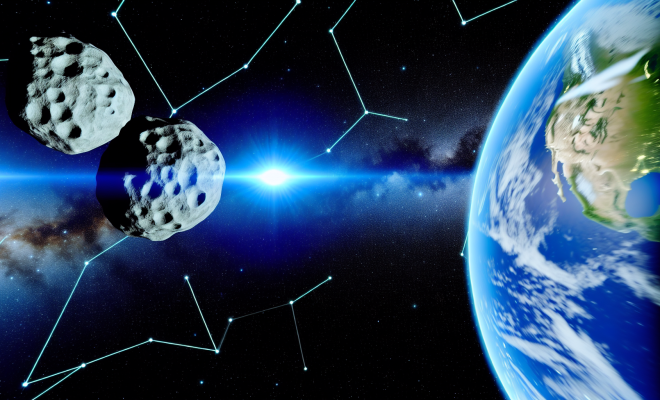
As part of its ongoing planetary defense efforts, NASA’s Jet Propulsion Laboratory (JPL) is currently tracking three large asteroids that are scheduled to make close approaches to Earth on March 16, 2026. While these celestial bodies may capture the imagination, they pose no threat to our planet, as their trajectories will safely bypass Earth.
Understanding the Asteroids
The three asteroids being monitored vary significantly in size and distance from Earth, showcasing the diversity of near-Earth objects (NEOs) that scientists continually observe. Here’s a closer look at each of these asteroids:
- Asteroid 2026 ET2: Measuring approximately 25 feet wide, this bus-sized asteroid will approach Earth at a distance of about 495,000 miles. Despite its relatively close proximity, there is no risk of collision.
- Asteroid 2026 CR3: This larger asteroid spans roughly 230 feet in width, comparable to the size of a commercial airplane. It is projected to pass at a distance of around 4,640,000 miles from Earth.
- Asteroid 2026 CAA: Another significant NEO, it has not been detailed in size but is also part of the upcoming close approaches. Specific data regarding its distance and size is still being analyzed by scientists.
The Importance of Monitoring NEOs
The tracking of these asteroids is crucial for several reasons:
- Planetary Defense: By continuously monitoring the orbits and characteristics of NEOs, scientists can better understand potential threats from space and develop strategies for planetary defense.
- Scientific Research: Studying these objects allows researchers to gain valuable insights into the composition and behavior of asteroids, which can inform both planetary science and the history of our solar system.
- Public Awareness: Keeping the public informed about close approaches helps demystify the concept of asteroids and promotes a better understanding of space science.
How NASA Tracks Asteroids
The JPL employs a variety of sophisticated tools and techniques to track asteroids and other celestial bodies. Key technologies and methods include:
- Telescopes: Ground-based and space-based telescopes are used to observe NEOs, capturing data on their positions and movements.
- Radar Observations: By bouncing radar signals off asteroids, scientists can gather precise information about their size, shape, and trajectory.
- Computer Modeling: Advanced computational models help predict the future paths of asteroids based on their current trajectories.
Why Should We Care?
While the chances of a catastrophic asteroid impact are low, the implications of such an event can be dire. Understanding the paths of asteroids is essential not only for prevention but also for preparedness. In fact, NASA and other space agencies around the world have been increasing their efforts in planetary defense initiatives.
For instance, the recent success of missions like NASA’s Double Asteroid Redirection Test (DART) demonstrates the feasibility of altering the course of an asteroid if a threat were ever identified. This technology could one day provide humanity with the means to prevent a potential disaster.
Conclusion
While the three asteroids monitored by NASA on March 16, 2026, will pass safely at a distance that poses no threat to Earth, their close approaches serve as a reminder of the dynamic environment of our solar system. The work being done by NASA and its partners to track and study these near-Earth objects is critical not only for safeguarding our planet but also for advancing our understanding of the universe.
Looking Ahead
As we continue to explore the cosmos, the importance of monitoring NEOs will only grow. With advancements in technology and increased collaboration among international space agencies, there is hope that we can further enhance our planetary defense capabilities. The future of asteroid tracking holds promise for both scientific discovery and the protection of our planet.