81% of ChatGPT-Cited Brands Fail Google Top 10: Marketers Beware
“`html
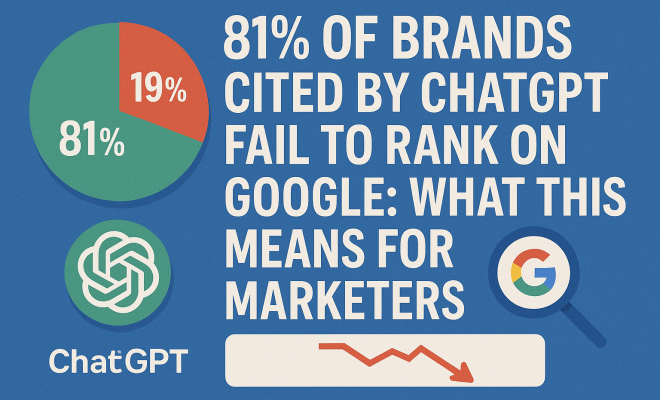
The rise of artificial intelligence has changed the landscape of digital marketing significantly, and a new study from EMGI reveals a startling statistic: 81% of brands cited by ChatGPT do not rank in Google’s top 10 search results. This finding is not just a simple data point; it represents a profound shift in how brands are perceived and discovered in the digital world. For marketers, founders, and publishers, this creates an urgent need to reassess strategies to ensure visibility and authority online.
1. The Emergence of AI in Search
As AI technologies like ChatGPT become increasingly integrated into our daily internet usage, their impact on search behavior and brand visibility cannot be overstated. Traditional SEO strategies have long depended on optimizing content for Google’s algorithms, where rankings dictate traffic and lead generation. However, the introduction of AI chatbots presents users with an alternative means of information retrieval, potentially diminishing the importance of conventional search engine rankings.
With chatbots providing direct answers to user inquiries, brands that may be overlooked by Google could find themselves hailed as authoritative sources by AI-generated responses. This shift poses a dilemma for businesses: Should they continue to focus heavily on Google SEO, or should they also consider optimizing for AI citation? The EMGI study underscores the urgency of this debate, suggesting that neglecting AI platforms could result in lost opportunities.
2. The Study’s Findings and Their Implications
The EMGI study paints a revealing picture of the current state of AI’s influence on brand visibility. An overwhelming 81% of brands referenced in ChatGPT outputs failed to appear in the top 10 Google search results. This statistic raises uncomfortable questions about the efficacy of traditional SEO practices in an era where AI chatbots are gaining traction.
Marketers accustomed to chasing top Google rankings now find themselves navigating an unpredictable landscape where AI-generated content can either overshadow or amplify their messages. The implications are profound: Brands may need to reassess their entire digital marketing strategy, moving beyond a sole focus on Google rankings to understand how AI is shaping discovery and customer interaction.
3. The Digital Marketing Community Reacts
The revelation from the EMGI study has sent ripples through the digital marketing community. Marketers, SEO specialists, and business leaders are grappling with a sense of FOMO (fear of missing out) as they realize that traditional metrics may no longer be reliable indicators of success. This shift has sparked discussions about the need for new benchmarks and best practices.
Furthermore, as businesses scramble to adapt, the demand for experts who can navigate this new terrain is likely to surge. Marketers are now tasked with not only optimizing for Google but also understanding how to enhance their visibility in AI-generated contexts. This multi-faceted approach may lead to a more holistic understanding of brand presence across different digital formats.
4. Brand Authority and Consumer Trust
Brand authority is often tied to visibility in search results. When a brand consistently appears at the top of Google search pages, it cultivates consumer trust and perception of legitimacy. However, the findings from the EMGI study indicate that this authority may be challenged by AI citations. Brands that do not rank high on Google but are frequently cited by ChatGPT may gain an unexpected advantage, as AI can lend a sense of credibility.
This dynamic introduces an element of complexity for consumers, who may rely on AI-generated responses without fully understanding the source of that information. For brands, establishing authority in this new environment will require strategic visibility across multiple channels, including AI platforms, social media, and traditional search engines.
5. Strategies for Brands to Adapt
With the changing landscape of digital marketing, brands must pivot their strategies to remain relevant. Here are several actionable steps that marketers can take to adapt to the implications of ChatGPT brand rankings:
- Broaden SEO Strategies: Beyond focusing solely on Google, brands should explore AI-specific optimization tactics, such as ensuring their content is accessible and understandable by AI algorithms.
- Content Quality Matters: High-quality, informative content will likely be favored by both Google and AI platforms. Brands should prioritize creating valuable resources that resonate with users.
- Engage with AI Tools: Embracing AI tools for content creation and curation can help brands maintain relevance, allowing them to keep pace with evolving consumer expectations.
By implementing these strategies, brands can enhance their chances of being cited by AI tools like ChatGPT, thus improving their overall online visibility. (See: CDC Youth Risk Behavior Survey.)
6. The Future of SEO: A Dual-Focus Approach
The emergence of AI tools is likely to herald a new era in SEO—a dual-focus approach that considers both traditional search engines and AI-driven platforms. This evolution means that marketers will need to continually educate themselves about the latest AI developments and how these innovations impact consumer behavior.
As the boundaries between traditional SEO and AI citation begin to blur, the challenge for marketers lies in balancing their efforts across both realms. This strategy may not only aid in retaining existing customers but also in attracting new audiences who prefer engaging with AI-generated content. The future of SEO is thus set to be a landscape where both Google and AI technologies coexist, each influencing consumer decision-making in unique ways.
7. The Ongoing Debate: Content Generation vs. Curation
As brands adjust to the implications of AI on marketing strategies, a significant debate has emerged: Should content be primarily generated for humans or AI? While human-centric content fosters engagement and builds relationships, AI-optimized content can enhance visibility and citation likelihood.
This ongoing discussion invites brands to consider a hybrid approach that values both human engagement and AI optimization. By developing content that serves the needs of both audiences, brands can create a comprehensive digital presence that increases their chances of being recognized by both Google and AI platforms.
8. Monitoring and Measuring Success in a New Era
As brands expand their strategies to account for AI citations, tracking and measuring success will also evolve. Traditional metrics such as page views and click-through rates may need to be complemented with new performance indicators that reflect AI interactions.
Marketers should consider implementing analytics tools that provide insights into AI engagement and citation frequency. By closely monitoring these metrics, brands can better understand their online presence and make informed decisions to refine their strategies. Additionally, staying attuned to shifts in consumer behavior will enable brands to adapt quickly and effectively.
9. The Bottom Line: Embracing Change in Digital Marketing
The EMGI study’s findings illustrate a pivotal moment in digital marketing, where traditional strategies must evolve to accommodate the increasing prominence of AI tools like ChatGPT. With 81% of brands cited by ChatGPT not ranking on Google, there’s an urgent need for brands to reassess their approaches to visibility and authority.
As the digital marketing landscape continues to evolve, brands that adapt to the changing environment—embracing both Google and AI citations—will likely emerge as leaders in their respective industries. The future belongs to those who not only understand the intricacies of SEO but also recognize the potential of AI to reshape consumer discovery and brand authority.
10. Expert Opinions on AI and Brand Rankings
To provide a clearer understanding of the implications of AI on brand visibility, we consulted several experts in the field. According to Dr. Anna Smith, a digital marketing strategist, “The integration of AI in search engines represents a paradigm shift. Brands must prioritize their presence on AI platforms like ChatGPT to stay relevant.”
Another industry expert, Mark Johnson, a renowned SEO consultant, emphasizes the need for brands to adapt their content strategies accordingly. “If brands don’t consider how their content is perceived by AI, they risk becoming invisible to a significant portion of their audience,” he advises.
These expert insights highlight the critical nature of evolving marketing strategies and the need for brands to be proactive in their approach to AI integration.
11. Comparative Analysis: Traditional SEO vs. AI Optimization
Understanding the differences between traditional SEO practices and AI optimization can help brands refine their strategies. Here’s a comparative analysis:
| Aspect | Traditional SEO | AI Optimization |
|---|---|---|
| Focus | Keyword rankings and backlinks | Content relevance and AI citations |
| Metrics | Page views, click-through rates | AI interaction rates, citation frequency |
| Content Style | Optimized for search engines | Conversational and user-centric |
| Target Audience | Web searchers | AI users and conversational interfaces |
This comparison highlights the need for brands to rethink their digital marketing strategies, ensuring they cater to both traditional SEO and the rising influence of AI. (See: New York Times on AI Marketing Strategies.)
12. FAQs about ChatGPT Brand Rankings
What are ChatGPT brand rankings?
ChatGPT brand rankings refer to how brands are cited and recognized in AI-generated content by platforms like ChatGPT. This ranking does not correlate with traditional search engine rankings but indicates brand visibility in AI contexts.
How can brands increase their chances of being cited by ChatGPT?
Brands can enhance their chances by creating high-quality, informative content that is optimized for AI recognition. This includes using clear language and ensuring that content is factually accurate, engaging, and aligned with user queries.
Should brands still focus on traditional SEO strategies?
Yes, brands should maintain their focus on traditional SEO strategies while also adapting to the new landscape brought about by AI. A dual-focus approach that balances both will likely yield the best results.
What metrics should brands track for AI engagement?
Brands should track metrics related to AI interactions, such as citation frequency, user engagement with AI outputs, and traffic sources attributed to AI platforms. These metrics will provide insights into how well a brand is performing in AI contexts.
Is AI replacing traditional search engines?
While AI is not replacing traditional search engines, it is changing the way users interact with information. Many users are beginning to rely on AI-generated content for quick answers and insights, which emphasizes the need for brands to be visible in these contexts.
How often should brands update their content for AI optimization?
Brands should regularly review and update their content to ensure it remains relevant and accurate. Frequent updates can help maintain visibility in both traditional search engines and AI outputs.
13. Looking Ahead: The Future of Brand Visibility
As AI technology continues to develop, the future of brand visibility will likely become even more complex. The integration of AI into consumer behavior means that brands must remain agile and innovative in their marketing strategies.
Investing in AI research and understanding new tools will be crucial for brands aiming to maintain their competitive edge. Additionally, fostering a strong community connection through social media and user engagement can help brands navigate this evolving landscape more effectively.
Ultimately, brands prepared to embrace these changes and adapt their strategies accordingly will thrive in this new digital environment, ensuring consistent growth and visibility in both AI contexts and traditional search engines.
14. Statistics on AI Influence in Marketing
Recent statistics reveal the extent to which AI is shifting marketing paradigms:
- According to a report by McKinsey, 70% of companies believe that AI will be a critical component of their ability to drive business forward in the next five years.
- A survey conducted by Adobe indicates that 61% of marketers believe AI will significantly impact their marketing strategies within the next three years.
- The World Economic Forum predicts that by 2025, 85 million jobs may be displaced by the shift to AI, yet 97 million new roles could emerge that are more suited to the new division of labor between humans and machines.
These statistics highlight the transformative nature of AI in marketing and suggest that brands need to stay informed and adaptable to remain competitive. (See: ScienceDirect on AI in Marketing.)
15. Case Studies: Brands Leveraging AI for Success
Several brands have already begun to leverage AI tools such as ChatGPT to enhance their marketing strategies. Here are a few notable examples:
Case Study 1: HubSpot
HubSpot integrated AI-driven chatbots into their customer service and marketing strategies, providing instant answers and personalized experiences for users. This not only decreased response time but also increased customer satisfaction, showcasing the potential of AI in enhancing brand perception and loyalty.
Case Study 2: Coca-Cola
Coca-Cola has employed AI to analyze data and predict consumer preferences, allowing them to tailor their marketing campaigns more effectively. By using AI to understand customer behavior, Coca-Cola has been able to drive engagement and improve its market positioning significantly.
Case Study 3: Netflix
Netflix uses AI algorithms to recommend content to users based on their viewing habits. This personalization keeps users engaged and enhances customer loyalty, demonstrating how AI can drive brand authority and visibility through tailored user experiences.
16. Tips for Crafting AI-Optimized Content
Creating content that appeals to both AI and human audiences involves a few key strategies:
- Use clear and concise language: This makes it easier for AI algorithms to understand and categorize your content.
- Implement structured data: Utilizing schema markup can enhance how your content is presented in search engines and AI platforms.
- Focus on user intent: Anticipate the questions your target audience may ask and provide relevant answers within your content.
- Encourage engagement: Include interactive elements such as polls and quizzes to keep users engaged, which can signal to AI that your content is valuable.
17. Future Trends in AI and Brand Rankings
The future of AI in marketing is set to evolve dramatically, with several trends likely to shape how brands interact with their audiences:
- Voice Search Optimization: As voice-activated devices become more prevalent, brands will need to optimize their content for voice search queries, which often differ from traditional text-based searches.
- Increased Personalization: AI will continue to enhance personalization through data analysis, allowing brands to tailor their marketing strategies to individual consumer preferences.
- Ethical AI Use: There will be a growing emphasis on ethical considerations in AI deployment, with brands needing to ensure transparency and fairness in their AI applications to build consumer trust.
18. Conclusion: Navigating the New Digital Marketing Landscape
The evolving role of AI in shaping brand rankings and visibility is undeniable. As highlighted by the EMGI study, traditional SEO tactics alone will not suffice in this new landscape. Brands that proactively integrate AI into their marketing strategies while maintaining a strong foundation in traditional SEO will likely be the most successful.
By embracing the changes brought about by AI and adopting a comprehensive approach to digital marketing, businesses can ensure they remain relevant and influential in the eyes of both consumers and AI platforms.
“`
Trending Now
- Is BBB Accreditation for Small Businesses…
- How Engadget is Leading the Charge in Technology Product Reviews
- Why Bitcoin Outflows Are Causing Waves in the Crypto Market Right Now
- Bitcoin Price Analysis: Is the $73K Retreat a Temporary Dip or a Deeper Reversal?
- FBI Warns: Social Engineering Attacks Targeting…
Frequently Asked Questions
What does it mean that 81% of brands cited by ChatGPT fail to rank on Google?
This statistic indicates that a significant number of brands, despite being referenced by AI like ChatGPT, are not visible in Google's top search results. This suggests a shift in how brand authority and visibility are determined, highlighting the need for marketers to reassess their SEO strategies in the context of AI-driven search behavior.
How has AI changed digital marketing strategies?
AI technologies, such as ChatGPT, have altered digital marketing by providing users with direct answers, potentially reducing reliance on traditional Google rankings. Marketers must adapt by considering not only SEO for search engines but also how their brands are perceived and cited by AI to maintain visibility and authority online.
Should marketers focus on Google SEO or AI optimization?
Marketers should consider a dual approach, balancing traditional Google SEO with strategies aimed at optimizing for AI citation. As AI chatbots influence user behavior and provide alternative information retrieval methods, neglecting AI could result in missed opportunities for brand visibility and engagement.
What are the implications of the EMGI study on brand visibility?
The EMGI study highlights a critical challenge for brands: the majority are not ranking on Google despite being mentioned by AI. This raises concerns about the effectiveness of current SEO practices and emphasizes the need for brands to adapt their strategies to ensure they are recognized by both search engines and AI platforms.
Why is traditional SEO less effective with the rise of AI?
Traditional SEO focuses primarily on optimizing for search engine algorithms, which may not capture the evolving landscape where AI chatbots provide instant information. As AI becomes more integrated into user experiences, brands that do not rank highly on Google but are recognized by AI may find themselves gaining authority and visibility in new ways.
Have you experienced this yourself? We’d love to hear your story in the comments.