The Edvocate

Top Menu

Main Menu

  • Start Here
    • Our Brands
    • Governance
      • Lynch Education Consulting, LLC.
      • Dr. Lynch’s Personal Website
      • Careers
    • Write For Us
    • Books
    • The Tech Edvocate Product Guide
    • Contact Us
    • The Edvocate Podcast
    • Edupedia
    • Pedagogue
    • Terms and Conditions
    • Privacy Policy
  • PreK-12
    • Assessment
    • Assistive Technology
    • Best PreK-12 Schools in America
    • Child Development
    • Classroom Management
    • Early Childhood
    • EdTech & Innovation
    • Education Leadership
    • Equity
    • First Year Teachers
    • Gifted and Talented Education
    • Special Education
    • Parental Involvement
    • Policy & Reform
    • Teachers
  • Higher Ed
    • Best Colleges and Universities
    • Best College and University Programs
    • HBCU’s
    • Diversity
    • Higher Education EdTech
    • Higher Education
    • International Education
  • Advertise
  • The Tech Edvocate Awards
    • The Awards Process
    • Finalists and Winners of The 2026 Tech Edvocate Awards
    • Finalists and Winners of The 2025 Tech Edvocate Awards
    • Finalists and Winners of The 2024 Tech Edvocate Awards
    • Finalists and Winners of The 2023 Tech Edvocate Awards
    • Finalists and Winners of The 2021 Tech Edvocate Awards
    • Finalists and Winners of The 2022 Tech Edvocate Awards
    • Finalists and Winners of The 2020 Tech Edvocate Awards
    • Finalists and Winners of The 2019 Tech Edvocate Awards
    • Finalists and Winners of The 2018 Tech Edvocate Awards
    • Finalists and Winners of The 2017 Tech Edvocate Awards
    • Award Seals
  • Apps
    • GPA Calculator for College
    • GPA Calculator for High School
    • Cumulative GPA Calculator
    • Grade Calculator
    • Weighted Grade Calculator
    • Final Grade Calculator
  • The Tech Edvocate
  • Post a Job
  • AI Powered Personal Tutor

logo

The Edvocate

  • Start Here
    • Our Brands
    • Governance
      • Lynch Education Consulting, LLC.
      • Dr. Lynch’s Personal Website
        • My Speaking Page
      • Careers
    • Write For Us
    • Books
    • The Tech Edvocate Product Guide
    • Contact Us
    • The Edvocate Podcast
    • Edupedia
    • Pedagogue
    • Terms and Conditions
    • Privacy Policy
  • PreK-12
    • Assessment
    • Assistive Technology
    • Best PreK-12 Schools in America
    • Child Development
    • Classroom Management
    • Early Childhood
    • EdTech & Innovation
    • Education Leadership
    • Equity
    • First Year Teachers
    • Gifted and Talented Education
    • Special Education
    • Parental Involvement
    • Policy & Reform
    • Teachers
  • Higher Ed
    • Best Colleges and Universities
    • Best College and University Programs
    • HBCU’s
    • Diversity
    • Higher Education EdTech
    • Higher Education
    • International Education
  • Advertise
  • The Tech Edvocate Awards
    • The Awards Process
    • Finalists and Winners of The 2026 Tech Edvocate Awards
    • Finalists and Winners of The 2025 Tech Edvocate Awards
    • Finalists and Winners of The 2024 Tech Edvocate Awards
    • Finalists and Winners of The 2023 Tech Edvocate Awards
    • Finalists and Winners of The 2021 Tech Edvocate Awards
    • Finalists and Winners of The 2022 Tech Edvocate Awards
    • Finalists and Winners of The 2020 Tech Edvocate Awards
    • Finalists and Winners of The 2019 Tech Edvocate Awards
    • Finalists and Winners of The 2018 Tech Edvocate Awards
    • Finalists and Winners of The 2017 Tech Edvocate Awards
    • Award Seals
  • Apps
    • GPA Calculator for College
    • GPA Calculator for High School
    • Cumulative GPA Calculator
    • Grade Calculator
    • Weighted Grade Calculator
    • Final Grade Calculator
  • The Tech Edvocate
  • Post a Job
  • AI Powered Personal Tutor
  • Baffling: 72% of Gen Z Still Financially Dependent on Parents — Here’s Why It’s a Crisis

  • The Staggering $172 Billion Crisis: Why Your Child Care Costs Are Exploding

  • This Unbelievable AI Minor Program Is Quietly Reshaping Every Student’s Future

  • Millions Face Repayment Chaos: Your Student Loan Plan Is Disappearing — Here’s What You MUST Do Now

  • Why I Believe Special Ed Teachers Have Superpowers

  • The Brutal Truth: Why Your Kids’ Screen Time Limits Just Got Blown Apart

  • Florida’s Bold AI Move: The Controversial Rules That Could Reshape Education

  • Baffling New Studies Reveal the TRUTH About Screen Time Effects on Children

  • The Astonishing Reason CXOs Are Rushing to Master AI Now

  • This Game-Changing AI Nanny Software Will Transform Parenting — But At What Cost?

Uncategorized
Home›Uncategorized›NASA Tracks 3 Large Asteroids Approaching Earth in March 2026

NASA Tracks 3 Large Asteroids Approaching Earth in March 2026
By Matthew Lynch
March 16, 2026
0
Spread the love

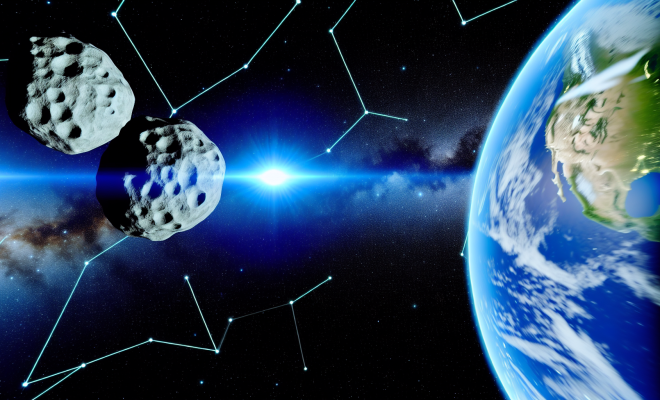
As part of its ongoing planetary defense efforts, NASA’s Jet Propulsion Laboratory (JPL) is currently tracking three large asteroids that are scheduled to make close approaches to Earth on March 16, 2026. While these celestial bodies may capture the imagination, they pose no threat to our planet, as their trajectories will safely bypass Earth.

Understanding the Asteroids

The three asteroids being monitored vary significantly in size and distance from Earth, showcasing the diversity of near-Earth objects (NEOs) that scientists continually observe. Here’s a closer look at each of these asteroids:

  • Asteroid 2026 ET2: Measuring approximately 25 feet wide, this bus-sized asteroid will approach Earth at a distance of about 495,000 miles. Despite its relatively close proximity, there is no risk of collision.
  • Asteroid 2026 CR3: This larger asteroid spans roughly 230 feet in width, comparable to the size of a commercial airplane. It is projected to pass at a distance of around 4,640,000 miles from Earth.
  • Asteroid 2026 CAA: Another significant NEO, it has not been detailed in size but is also part of the upcoming close approaches. Specific data regarding its distance and size is still being analyzed by scientists.

The Importance of Monitoring NEOs

The tracking of these asteroids is crucial for several reasons:

  • Planetary Defense: By continuously monitoring the orbits and characteristics of NEOs, scientists can better understand potential threats from space and develop strategies for planetary defense.
  • Scientific Research: Studying these objects allows researchers to gain valuable insights into the composition and behavior of asteroids, which can inform both planetary science and the history of our solar system.
  • Public Awareness: Keeping the public informed about close approaches helps demystify the concept of asteroids and promotes a better understanding of space science.

How NASA Tracks Asteroids

The JPL employs a variety of sophisticated tools and techniques to track asteroids and other celestial bodies. Key technologies and methods include:

  • Telescopes: Ground-based and space-based telescopes are used to observe NEOs, capturing data on their positions and movements.
  • Radar Observations: By bouncing radar signals off asteroids, scientists can gather precise information about their size, shape, and trajectory.
  • Computer Modeling: Advanced computational models help predict the future paths of asteroids based on their current trajectories.

Why Should We Care?

While the chances of a catastrophic asteroid impact are low, the implications of such an event can be dire. Understanding the paths of asteroids is essential not only for prevention but also for preparedness. In fact, NASA and other space agencies around the world have been increasing their efforts in planetary defense initiatives.

For instance, the recent success of missions like NASA’s Double Asteroid Redirection Test (DART) demonstrates the feasibility of altering the course of an asteroid if a threat were ever identified. This technology could one day provide humanity with the means to prevent a potential disaster.

Conclusion

While the three asteroids monitored by NASA on March 16, 2026, will pass safely at a distance that poses no threat to Earth, their close approaches serve as a reminder of the dynamic environment of our solar system. The work being done by NASA and its partners to track and study these near-Earth objects is critical not only for safeguarding our planet but also for advancing our understanding of the universe.

Looking Ahead

As we continue to explore the cosmos, the importance of monitoring NEOs will only grow. With advancements in technology and increased collaboration among international space agencies, there is hope that we can further enhance our planetary defense capabilities. The future of asteroid tracking holds promise for both scientific discovery and the protection of our planet.


Previous Article

Trump Urges Coalition to Secure Strait of ...

Next Article

Cells Sense Environment 10x Farther: New Cancer ...

Matthew Lynch

Related articles More from author

  • Uncategorized

    Best Live TV Streaming Services for Cord-Cutting in 2023

    January 2, 2025
    By Matthew Lynch
  • Uncategorized

    Google AI Travel Search: Revolutionizing Trip Planning

    June 2, 2026
    By Matthew Lynch
  • Uncategorized

    AI in Cybersecurity: 7 Shocking Changes for 2026

    May 2, 2026
    By Matthew Lynch
  • Uncategorized

    The Best Summer Reading Books For Teachers

    June 28, 2026
    By Matthew Lynch
  • Uncategorized

    Top 9 Personalized Learning Apps for Students & Educators

    July 1, 2026
    By Matthew Lynch
  • Uncategorized

    Ferrofluid Dynamics: Self-Oscillating Patterns in Laser Light

    May 30, 2026
    By Matthew Lynch

Search

Registration and Login

  • Log in
  • Entries feed
  • Comments feed
  • WordPress.org

Newsletter

Signup for The Edvocate Newsletter and have the latest in P-20 education news and opinion delivered to your email address!

RSS feed: Matthew on Education Week Matthew on Education Week

  • Au Revoir from Education Futures November 20, 2018 Matthew Lynch
  • 6 Steps to Data-Driven Literacy Instruction October 17, 2018 Matthew Lynch
  • Four Keys to a Modern IT Approach in K-12 Schools October 2, 2018 Matthew Lynch
  • What's the Difference Between Burnout and Demoralization, and What Can Teachers Do About It? September 27, 2018 Matthew Lynch
  • Revisiting Using Edtech for Bullying and Suicide Prevention September 10, 2018 Matthew Lynch

About Us

The Edvocate was created in 2014 to argue for shifts in education policy and organization in order to enhance the quality of education and the opportunities for learning afforded to P-20 students in America. What we envisage may not be the most straightforward or the most conventional ideas. We call for a relatively radical and certainly quite comprehensive reorganization of America’s P-20 system.

That reorganization, though, and the underlying effort, will have much to do with reviving the American education system, and reviving a national love of learning.  The Edvocate plans to be one of key architects of this revival, as it continues to advocate for education reform, equity, and innovation.

Newsletter

Signup for The Edvocate Newsletter and have the latest in P-20 education news and opinion delivered to your email address!

Contact

The Edvocate
910 Goddin Street
Richmond, VA 23230
(601) 630-5238
[email protected]
  • situs togel online
  • dentoto
  • situs toto 4d
  • situs toto slot
  • toto slot 4d
Copyright (c) 2026 Matthew Lynch. All rights reserved.