Lunar Ice: Unlocking the Moon’s Role in Future Space Exploration
Introduction
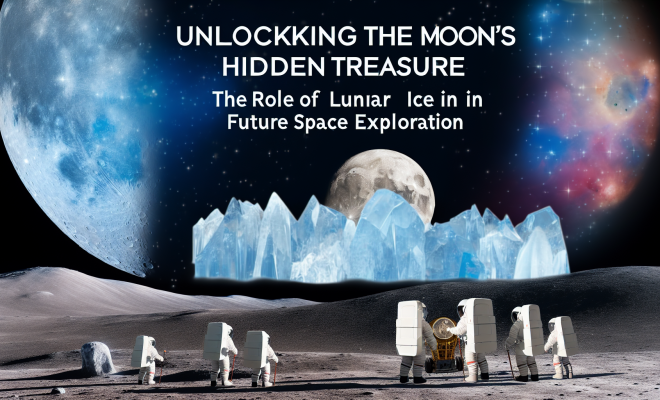
The Moon has long captured the human imagination as a celestial body ripe for exploration and discovery. Recent advancements in space science have unveiled a remarkable facet of our nearest neighbor: vast reserves of water ice located in the Moon’s polar regions. This lunar ice, which has been accumulating for approximately 1.5 billion years, could soon play a pivotal role in transforming the Moon into a crucial waystation for future space missions, particularly those aimed at Mars.
The Discovery of Lunar Ice
In a groundbreaking study published in Nature Astronomy, researchers have harnessed data from the Lunar Reconnaissance Orbiter (LRO) to confirm the presence of water ice in permanently shadowed craters on the Moon. These regions, which never receive sunlight, have created the perfect conditions for ice to accumulate over eons. The study indicates that this process has been ongoing for about 1.5 billion years, establishing a significant reserve of lunar water that could serve as a resource for future space exploration.
How Lunar Ice Accumulates
The formation of lunar ice is primarily driven by two factors: comet impacts and solar wind interactions. When comets collide with the Moon, they deposit water molecules along with other volatiles. Additionally, interactions between the solar wind—charged particles emitted by the Sun—and the lunar surface also contribute to the accumulation of ice in the Moon’s shadowed regions. These processes ensure that the ice remains stable and preserved over geological timescales.
The Significance of Lunar Ice
The implications of discovering water ice on the Moon are profound. Not only does it open up new avenues for scientific research, but it also presents practical opportunities for sustained human presence on the Moon and beyond. The availability of water ice could facilitate the establishment of a lunar base, serving as a platform for deeper space exploration.
Potential as a Fuel Source
One of the most exciting prospects of lunar water ice is its potential use as a fuel source. Water can be split into hydrogen and oxygen through a process called electrolysis. Hydrogen can then be used as a rocket fuel, while oxygen serves as an oxidizer. This capability could allow missions to refuel on the Moon, significantly reducing the amount of fuel required for journeys to Mars and beyond.
Transforming the Moon into a Space Gas Station
The vision of the Moon as a “space gas station” is not merely a futuristic dream; it is becoming increasingly feasible with ongoing advancements in technology and space exploration strategies. Establishing infrastructure on the Moon to extract and utilize water resources could provide a sustainable model for future missions.
Building the Infrastructure
To realize this vision, several essential steps must be taken:
- Robotic Missions: Initial missions will involve sending robotic explorers to identify and quantify the ice reserves and to develop methods for extraction.
- Human Exploration: Following successful robotic missions, human crews will be required to establish a permanent presence on the Moon to oversee extraction and processing operations.
- Technological Development: Innovations in extraction technology, storage, and transportation will be critical. This includes developing efficient electrolysis systems and storage for hydrogen and oxygen.
- International Collaboration: The establishment of a lunar base will likely require cooperation among multiple countries and space agencies, fostering a collaborative approach to space exploration.
Implications for Mars Missions
The Moon’s potential as a resource hub takes on even greater significance when considering future missions to Mars. Currently, sending missions to Mars requires substantial fuel reserves, which are costly and complex to transport from Earth. By utilizing lunar ice, spacecraft could refuel on the Moon, drastically reducing launch weights and costs.
Reducing Costs and Risks
Refueling on the Moon would not only lower the costs associated with launching from Earth but also minimize the risks involved in deep-space travel. With a reliable source of fuel nearby, mission planners can design more ambitious exploration strategies, including longer stays on Mars and more complex missions involving crewed landings and extensive scientific research.
Scientific Research Opportunities
Beyond its role in supporting human exploration, lunar ice presents exciting opportunities for scientific research. Understanding the formation and composition of lunar ice can provide insights into the history of the Moon and the solar system as a whole.
Studying the Ice
Scientists are particularly interested in studying the isotopic composition of lunar ice, as it may reveal information about its origins—whether it is primarily derived from cometary impacts or solar wind interactions. Additionally, the study of lunar ice could enhance our understanding of the Moon’s geology, climate history, and the processes that shape planetary bodies.
Challenges Ahead
While the prospects of utilizing lunar ice are promising, several challenges remain. Technical hurdles, budget constraints, and international regulations regarding lunar resource extraction must be navigated to pave the way for sustainable lunar operations.
Technological Hurdles
Developing the technology to extract, store, and utilize lunar ice efficiently is a significant challenge. Current methods may need to be adapted or redesigned for the Moon’s harsh environment, where temperatures can plummet and dust can interfere with machinery.
Funding and International Cooperation
Securing funding for lunar missions is another critical challenge. Governments and private enterprises must collaborate to pool resources, share knowledge, and mitigate risks associated with lunar exploration. Additionally, international agreements will be necessary to establish guidelines for resource utilization to prevent conflicts over lunar resources.
The Future of Lunar Exploration
The ongoing exploration of the Moon is entering an exciting new phase, with the potential to make it a pivotal player in humanity’s quest for space exploration. As scientists continue to study lunar ice and its implications, we are inching closer to the reality of a lunar base that serves as a launchpad for missions to Mars and beyond.
Conclusion
The discovery of ancient lunar ice is not just a scientific milestone; it represents a turning point in our approach to space exploration. By leveraging the Moon’s resources, we can transform it into a vital hub for future missions, reducing costs, enhancing safety, and enabling ambitious exploration of our solar system. As we stand on the brink of this new era, the Moon may soon become a stepping stone to Mars, unlocking the secrets of the universe and expanding our reach beyond Earth.