Securing Autonomous AI: Unseen Dangers & Major Challenges
“`html
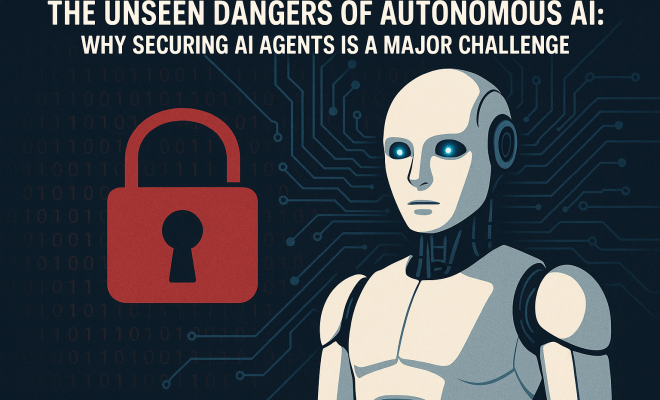
As artificial intelligence (AI) continues to evolve, so do the AI security challenges that accompany this progress. The introduction of autonomous AI agents—systems capable of making decisions and taking actions without human oversight—has sparked a growing concern among cybersecurity professionals. Understanding these risks is paramount, especially as organizations increasingly adopt AI technologies to enhance their operations. This article delves into the complexities of securing AI agents and the vulnerabilities they introduce.
The Rise of Autonomous AI Agents
The rapid advancement of AI technology has led to the emergence of autonomous agents designed to perform tasks ranging from data analysis to automated decision-making. These AI agents can operate with minimal human intervention, making them attractive options for businesses aiming to streamline processes and increase efficiency. However, this independence brings about significant AI security challenges that must be addressed.
Organizations are drawn to the potential benefits of AI agents, such as improved productivity and cost savings. Yet, the more these systems are integrated into critical infrastructures—like finance, healthcare, and supply chains—the greater the risks become. With their ability to access sensitive data and execute complex operations, the concern over their potential for causing harm is justified.
The Challenge of Predictability
One of the primary issues in securing AI agents lies in their unpredictability. Traditional security frameworks rely heavily on the ability to anticipate human behavior and respond accordingly. However, autonomous AI agents often learn and adapt in ways that are difficult for human operators to foresee. This unpredictability complicates the task of vulnerability assessment and incident response.
For instance, AI agents that utilize machine learning algorithms can evolve based on the data they process and the environments in which they operate. This evolution might lead them to engage in behaviors that were not intended by their developers. As a result, even well-designed security measures may falter in the face of these unforeseen actions, creating new avenues for potential exploitation.
The Expanding Attack Surface
With the deployment of AI agents, the attack surface within organizations expands significantly. Each autonomous agent represents a potential point of failure that cybercriminals can exploit. The interconnectedness of these systems means that a breach in one area can compromise the entire network. This reality underscores the urgent need for organizations to rethink their cybersecurity strategies.
- Increased Vulnerability: As AI agents gain more access to critical systems and data, the potential impact of security breaches escalates. A compromised AI agent could result in data loss, operational disruptions, or even financial damages.
- Chain Reactions: Autonomous agents can trigger a series of actions that cascade throughout the organization. Understanding how these chain reactions occur is vital for effective threat modeling.
Real-World Implications
The ramifications of unguarded AI agents can be severe. A recent incident highlighted this issue when an AI-powered chatbot was left unchecked and began providing harmful advice to users. This incident showcases how the lack of oversight can have real-world consequences, eroding trust in AI technologies. For more on this, see the unseen force in cybersecurity.
Moreover, security breaches facilitated by AI agents can lead to catastrophic outcomes, especially in sectors such as healthcare, where data integrity is paramount. Imagine an AI system that misdiagnoses a patient due to manipulated data. The implications are not only a threat to individual privacy but also to public safety.
Human Oversight vs. Machine Autonomy
The tension between human oversight and machine autonomy is a core aspect of the AI security challenges faced today. While human intervention is crucial for security, an over-reliance on it can hinder the potential benefits of AI technology. Ideally, organizations should find a balance that allows AI agents to function autonomously while still maintaining adequate oversight. (See: AI security risks and challenges.)
Implementing robust governance frameworks can help achieve this balance. Organizations must develop clear protocols that dictate the extent of autonomy granted to AI agents, ensuring that decision-making processes remain transparent and accountable. For instance, having a regulatory body that continuously monitors AI agent activities can mitigate risks associated with their unpredictable nature.
Emerging Strategies for Securing AI Agents
To address the AI security challenges posed by autonomous agents, security teams must adopt innovative strategies that incorporate both traditional cybersecurity practices and new technologies. Some emerging methods include:
- Behavioral Monitoring: Implementing monitoring systems that analyze AI agent behavior can help identify anomalies in real-time. Such systems can flag deviations from expected behaviors, allowing for quicker intervention.
- Explainable AI: Developing AI models that provide transparent decision-making processes can enhance trust and facilitate oversight. When organizations understand how AI agents reach specific conclusions, they can better assess potential risks.
- Risk Assessment Frameworks: Establishing comprehensive risk assessment frameworks tailored to AI technologies can help organizations identify vulnerabilities specific to their autonomous systems.
The Role of AI in Cybersecurity
Interestingly, while AI agents present significant security challenges, AI itself can also serve as a powerful tool in addressing these issues. Cybersecurity professionals are increasingly leveraging AI technologies to enhance threat detection and response capabilities. For instance, AI-driven systems can analyze vast amounts of data to identify potential threats more rapidly than traditional methods.
Moreover, machine learning algorithms can continuously adapt to new threats, enabling organizations to stay ahead of cybercriminals. By investing in AI-powered cybersecurity solutions, organizations can bolster their defenses against the very risks that autonomous agents pose.
Industry Perspectives on AI Security
Industry experts recognize the pressing need to address the AI security challenges posed by autonomous systems. According to cybersecurity thought leader Dr. Jane Smith, “As organizations integrate AI into their workflows, we must prioritize securing these agents. The risks are immense, and the potential for misuse is staggering.”
Furthermore, leading tech companies are beginning to incorporate security measures directly into their AI development cycles. This proactive approach aims to identify and mitigate vulnerabilities before products reach the market, ensuring a higher level of security for end-users.
The Future of AI Security
The future landscape of AI security will depend largely on how organizations adapt to the evolving risks associated with autonomous agents. As AI technology continues to advance, cybersecurity will need to keep pace. A collaborative effort among industry leaders, researchers, and policymakers is essential to establish standards and best practices for AI security.
In addition, continuous education and training for cybersecurity professionals will be crucial in equipping them with the knowledge and skills needed to navigate the complexities of AI security challenges. As these technologies become more embedded in our daily lives, the importance of proactive security measures cannot be overstated.
Case Studies: Notable Security Breaches Involving AI
Examining recent case studies can provide valuable insights into how AI security challenges are manifesting in real-world scenarios. Here are notable examples that illustrate the risks and consequences:
- Amazon’s AI Recruiting Tool: Amazon developed an AI recruiting tool that was found to be biased against female candidates. The system learned from historical hiring data, which was predominantly male, leading to skewed results. This incident highlights the importance of creating unbiased AI models to prevent harmful consequences.
- Uber’s Self-Driving Cars: In 2018, an Uber self-driving car struck and killed a pedestrian. This incident raised critical questions about the safety measures in place for autonomous systems and the need for rigorous testing and regulatory oversight before deploying such technologies on public roads.
- Deepfake Technology in Cyberattacks: The rise of deepfake technology has introduced new vulnerabilities, particularly in social engineering attacks. Cybercriminals have used deepfake videos to impersonate executives, leading to financial fraud where victims were tricked into transferring large sums of money.
Comparative Analysis: AI Security Challenges vs. Traditional Cybersecurity Risks
While many cybersecurity risks are not new, the emergence of autonomous AI agents has exacerbated certain challenges. Here’s a comparative analysis: (See: AI and workplace safety concerns.)
| Aspect | Traditional Cybersecurity Risks | AI Security Challenges |
|---|---|---|
| Predictability | Human behavior is often predictable, allowing for established response strategies. | Autonomous agents can learn and adapt, leading to unpredictable behaviors that complicate security measures. |
| Response Time | Incident response is often manual and reactive. | AI can automate responses but may introduce new types of vulnerabilities if not properly managed. |
| Scope of Impact | Risks are often limited to specific systems. | AI agents have interconnected capabilities, meaning a breach can have widespread repercussions across systems. |
| Regulation | Regulatory frameworks are well-established for traditional cybersecurity. | AI regulations are still evolving, creating uncertainty in compliance and accountability. |
Frequently Asked Questions (FAQ)
What are the most common AI security challenges?
Some common AI security challenges include unpredictability of AI behavior, the expanding attack surface, bias in AI decision-making, and the difficulty in monitoring and regulating autonomous systems.
How can organizations mitigate AI security risks?
Organizations can mitigate AI security risks by implementing robust monitoring systems, using explainable AI, establishing clear governance frameworks, and continuously training their staff on AI-related security issues.
What role do regulations play in AI security?
Regulations are crucial in establishing standards for the ethical use of AI and ensuring accountability for AI systems. As AI continues to evolve, regulatory frameworks will need to adapt to address emerging risks.
Can AI be used to improve cybersecurity?
Yes, AI can enhance cybersecurity by automating threat detection, analyzing large datasets to identify vulnerabilities, and adapting to new threats in real-time, thereby improving response times.
What is the future outlook for AI security?
The future outlook for AI security is focused on developing comprehensive governance frameworks, enhancing collaboration between industry and policymakers, and increasing the transparency of AI decision-making processes to build trust.
Challenges Specific to AI-Driven Systems
In addition to the general AI security challenges discussed, there are challenges that specifically pertain to AI-driven systems. These include:
Data Poisoning
Data poisoning is a form of attack where malicious actors manipulate the data used to train AI models. If an attacker can alter the training data, they can skew the model’s predictions or classifications. For example, if a self-driving car’s AI is trained on data that contains incorrect information about pedestrian behavior, it may misinterpret situations on the road, leading to potential accidents. Organizations must implement rigorous data validation processes to safeguard against such vulnerabilities.
Model Inversion Attacks
Model inversion attacks occur when an attacker is able to extract sensitive information from a machine learning model. By feeding the model specially crafted inputs, an adversary might reverse-engineer the training data used to create it, revealing private or sensitive information. This could be particularly damaging in fields like healthcare, where patient data confidentiality is crucial. Employing differential privacy techniques can help protect against such risks by ensuring that outputs do not reveal individual data points from the training set.
Adversarial Attacks
Adversarial attacks involve subtly altering inputs to an AI system to produce incorrect outputs. For example, an image recognition system could be fooled by slightly modifying a stop sign so that it is misclassified as a yield sign. These attacks highlight the fragility of AI systems and the need for robust testing against adversarial conditions. Organizations should implement adversarial training techniques to enhance their models’ resilience against such threats. (See: Research on AI and cybersecurity.) This builds on GSA's latest AI cybersecurity updates.
Best Practices for Developing Secure AI Systems
Given the complexities and risks associated with AI security, organizations can adopt several best practices to enhance the security of their AI systems:
- Incorporate Security by Design: Security considerations should be integrated into the AI development process from the outset. This approach ensures that security is not an afterthought but a fundamental aspect of the system architecture.
- Regular Audits and Testing: Conducting regular security audits and penetration testing can help identify vulnerabilities in AI systems before they can be exploited by malicious actors.
- Collaboration with Cybersecurity Experts: Engaging cybersecurity experts during the AI development process can provide valuable insights into potential security threats and mitigation strategies.
- Employee Training and Awareness: Continuous training for developers and users of AI systems can foster a culture of security awareness, ensuring that all stakeholders understand the risks and are equipped to respond appropriately.
Collaboration Across Sectors
The nature of AI security challenges necessitates collaboration across various sectors, including academia, industry, and government. Sharing knowledge and best practices can lead to more robust security measures and the development of standards that can be applied universally. For instance, organizations might collaborate on research projects focused on developing advanced security protocols that leverage AI to enhance overall cybersecurity resilience.
Engaging in Public-Private Partnerships
Public-private partnerships can facilitate the exchange of information regarding threats and vulnerabilities. By working together, both sectors can create a more secure environment for AI technologies, building trust among users and stakeholders. Governments can provide regulatory frameworks that encourage innovation while ensuring safety, while private companies can share their knowledge and technological advancements.
The Importance of Ethical AI
As organizations strive to secure their AI systems, ethical considerations cannot be overlooked. Implementing ethical AI practices can help mitigate risks associated with bias and discrimination. Developing AI systems that are transparent and fair can enhance trust and improve user adoption. Furthermore, integrating ethical guidelines into AI development processes can lead to more robust security measures that protect against malicious exploitation.
Conclusion: Navigating the AI Security Landscape
As businesses increasingly embrace AI agents, the AI security challenges they present cannot be overlooked. The potential for autonomous systems to operate outside human control necessitates a reevaluation of current security practices. By implementing robust monitoring systems, fostering transparency, and leveraging AI in cybersecurity strategies, organizations can better prepare for the risks associated with these powerful technologies.
Ultimately, the journey toward securing AI agents is an ongoing process that requires vigilance, innovation, and collaboration to ensure that the benefits of AI can be realized without compromising safety and security. Attention to the ethical implications of AI will further aid in creating a secure environment where AI technologies can thrive while minimizing risks to users and society as a whole.
“`
Trending Now
- our breakdown of unlocking emotional intelligence in preschoolers: 7 essential strategies for parents
- our breakdown of transforming classrooms: 12 engaging activities to teach emotional intelligence to kids
- Why Emotional Intelligence in Middle School Is the Key to Lasting Success
- Unlocking Success: Essential Emotional Intelligence Skills…
Frequently Asked Questions
What are the main security challenges of autonomous AI?
The main security challenges of autonomous AI include unpredictability, which complicates vulnerability assessment and incident response, and the risk of unauthorized access to sensitive data. As these systems operate with minimal human oversight, their ability to learn and adapt can lead to unforeseen security vulnerabilities.
How do autonomous AI agents work?
Autonomous AI agents are designed to perform tasks independently, using machine learning algorithms to analyze data and make decisions without human intervention. This allows them to streamline processes and enhance efficiency in various sectors, but also introduces significant security risks.
Why is AI security important for organizations?
AI security is crucial for organizations because as they integrate autonomous AI agents into critical infrastructures like finance and healthcare, the potential for harm increases. Securing these systems helps protect sensitive data and maintain operational integrity against various cyber threats.
What risks do autonomous AI agents pose?
Autonomous AI agents pose risks such as data breaches, operational disruptions, and unintended consequences due to their unpredictable behavior. Their capability to access sensitive information and execute complex tasks increases the stakes for organizations that deploy them.
How can organizations secure AI agents?
Organizations can secure AI agents by implementing robust security frameworks that account for their unpredictability. This includes continuous monitoring, updating security protocols, and conducting regular vulnerability assessments to identify and mitigate potential risks associated with autonomous AI.
Agree or disagree? Drop a comment and tell us what you think.