Unsettling: Mortgage Rates August 2026 See a Sudden Spike — What Happens Next?
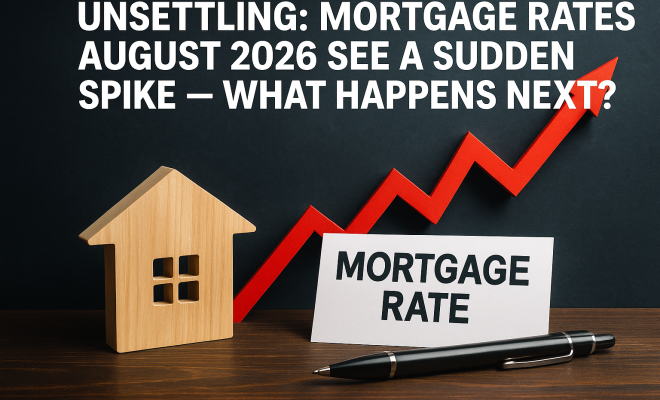
It feels like just yesterday we were talking about the possibility of mortgage rates finally cooling off, offering a glimmer of hope to frustrated homebuyers and homeowners eyeing a refinance. But as of August 7, 2026, those hopes have taken a pretty significant hit. We’re seeing mortgage rates, particularly for refinances, on a noticeable upward trajectory. The average 30-year fixed refinance rate, for instance, jumped a notable 16 basis points in a single day, landing at 7.12%. This isn’t just a minor fluctuation; it’s a move that pushes rates dangerously close to one-year highs, creating a palpable sense of anxiety across the housing market. If you’ve been tracking mortgage rates in August 2026, you’re likely feeling the squeeze.
This isn’t just about refinancing, either. Freddie Mac reported the broader 30-year fixed mortgage rate at 6.69% just a day prior, on August 6. When you combine these figures, it paints a picture of a market that’s once again challenging affordability. What’s driving this unexpected surge, and what does it mean for anyone looking to buy, sell, or refinance a home in the coming months? Let’s dig into the ten critical factors at play and what you should be considering right now.
1. The Sudden Surge in Refinance Rates: A 16-Basis-Point Jolt
Let’s start with the most immediate and impactful news: the 16-basis-point increase in the average 30-year fixed refinance rate on August 7, 2026. This isn’t just a statistic; it’s a direct hit to the pockets of homeowners who’ve been patiently waiting for an opportunity to lower their monthly payments or tap into their home equity. A jump like this in a single day is a strong indicator of underlying market volatility and a tightening credit environment.
For context, a 16-basis-point rise on a $400,000 mortgage can translate to a noticeable increase in monthly payments, making the prospect of refinancing less attractive, if not entirely out of reach for some. This rapid escalation suggests that lenders are becoming more cautious, pricing in higher risks, and responding to broader economic signals that point towards sustained inflation or increased borrowing costs for themselves. It’s a stark reminder that the window for favorable refinance terms can close quickly.
To put this into perspective, consider a homeowner with a $350,000 mortgage balance. If their current rate was, say, 6.50%, a jump to 7.12% means their potential savings from refinancing have evaporated, or even turned into a higher monthly payment. For a conventional 30-year fixed loan, this difference could be an extra $100-$150 per month, which isn’t insignificant when household budgets are already stretched. This sudden shift can halt refinance applications in their tracks, as the financial incentive diminishes rapidly. Lenders, in turn, adjust their pricing models almost instantly, factoring in the increased cost of borrowing on the secondary market. This isn’t just about the Fed; it’s also about bond market dynamics and lender risk assessment reacting in real time to perceived economic headwinds. what this means for you offers useful background here.
2. Approaching One-Year Highs: A Troubling Benchmark
The fact that current mortgage rates are nearing one-year highs is, frankly, alarming. This isn’t uncharted territory for recent memory, but it certainly isn’t where anyone wanted the market to be in August 2026. After a period of relative stability, albeit at elevated levels, seeing rates creep back up towards peaks from the past year signals a potential return to even more challenging conditions.
Think about what this means for market sentiment. When rates were at these levels previously, we saw a significant slowdown in sales and a noticeable cooling of buyer enthusiasm. Returning to that benchmark suggests that the affordability crisis isn’t just lingering; it might be intensifying. It puts immense pressure on both first-time buyers struggling to qualify and existing homeowners who might have delayed a move, hoping for better borrowing conditions.
Historically, when mortgage rates hit these kinds of benchmarks, we see a noticeable drop in mortgage application volumes, both for purchases and refinances. Potential buyers often put their plans on hold, adopting a wait-and-see approach, which can lead to a build-up of inventory and potentially, though not immediately, a softening of home prices. For homeowners, the ‘golden handcuffs’ effect becomes more pronounced: if you bought when rates were 3% or 4%, moving to a new home at 7% means a substantial increase in your monthly housing cost, even if the new home’s price is similar. This creates a bottleneck in the market, reducing turnover and making it harder for people to relocate for jobs or family needs. It’s a key reason why tracking mortgage rates in August 2026 is so critical for anyone involved in real estate.
3. Zillow Economists’ Declaration: The 2026 Housing Market Has Peaked
Perhaps one of the most sobering pronouncements comes from Zillow economists, who have officially declared that the 2026 housing market has peaked. This isn’t a speculative guess; it’s an expert assessment based on real-time data and predictive models. A market peak means that the rapid appreciation and robust sales activity we’ve seen in recent times are likely behind us, at least for now. It signals a shift from a seller’s market to something more balanced, or even leaning towards buyers, though not necessarily in a way that makes homes more affordable.
This declaration has significant psychological weight. It tells potential sellers that waiting for even higher prices might be a losing game. For buyers, while it might suggest less competition, the persistent high rates negate much of that advantage. This official ‘peak’ call reshapes expectations and strategies for everyone involved in real estate, forcing a reevaluation of market timing and investment decisions as we move through August 2026 and beyond.
The implications of a market peak declaration are far-reaching. For real estate agents, it means a shift in sales strategies, focusing more on value propositions and less on bidding wars. For builders, it might necessitate slowing down new construction starts or offering incentives to move existing inventory. And for investors, it signals a period where capital appreciation might be harder to come by, shifting focus towards rental yields or distressed properties. Zillow’s data-driven approach, which includes tracking listing views, price reductions, and time on market, provides a comprehensive view. Their models consider factors like demographic shifts, employment rates, and, crucially, interest rate trends. When they make such a definitive call, it’s usually because multiple indicators are aligning to suggest a turning point, marking a potentially significant pivot point for mortgage rates in August 2026 and beyond.
4. July’s Temporary Sales Jump: A False Dawn?
Remember that brief moment of optimism in July? There was a noticeable, albeit temporary, jump in sales activity, which many hoped signaled a turning point for the housing market. Unfortunately, Zillow economists suggest this was likely a false dawn, a temporary blip rather than a sustained recovery. The key factors that are expected to stifle any further momentum are precisely what we’re discussing: persistent high rates and stubborn inflation. (See: CDC on Urban Health and Housing.)
This scenario is classic ‘head fake’ territory. Buyers who rushed in during July might now be looking at rising rates and wondering if they made the right move. For those who waited, the current spike in mortgage rates in August 2026 validates their caution but also presents a new set of challenges. It underscores the unpredictable nature of this market and why making decisions based on short-term trends can be risky.
This ‘false dawn’ phenomenon is something experienced market watchers recognize. Often, a small dip in rates or a seasonal surge in activity can create a temporary illusion of recovery. However, without fundamental shifts in the underlying economic drivers – like a significant drop in inflation or a clear signal from the Federal Reserve that rate cuts are imminent – these brief upticks rarely translate into sustained market improvements. It serves as a cautionary tale: don’t chase the market based on a single month’s data. Instead, look for consistent trends over several quarters. This July blip likely attracted a subset of buyers who were on the fence, perhaps those with expiring leases or a strong need to move, who decided to act on what seemed like a momentary opportunity. Now, with mortgage rates in August 2026 heading north again, those buyers might be feeling the pinch, and others will be even more hesitant.
5. The Persistent Grip of Inflation: More Than Just Housing
Inflation isn’t just a buzzword; it’s a relentless force eroding purchasing power and influencing central bank policy. The fact that inflation remains persistent is a major driver behind the elevated mortgage rates. When inflation is high, the Federal Reserve is compelled to maintain a hawkish stance, which typically involves keeping benchmark interest rates higher to cool down the economy. These higher federal funds rates inevitably trickle down to consumer lending, including mortgages.
For the average consumer, this means everything costs more – from groceries to gas – and now, the cost of borrowing money for a home. This dual pressure of rising living costs and higher mortgage payments creates a truly challenging environment, making it harder for households to save for down payments and manage their overall budgets. Until inflation shows a clear and sustained retreat, don’t expect a dramatic drop in mortgage rates.
Consider the core inflation rate, which strips out volatile food and energy prices. Even if headline inflation occasionally dips due to these fluctuating components, if core inflation remains sticky, the Fed won’t feel comfortable easing its stance. Services inflation, in particular, has proven resilient, driven by strong wage growth in some sectors and robust consumer demand. This sticky core inflation sends a strong signal to the bond market, where mortgage rates are primarily determined. Bond investors demand a higher yield to compensate for the erosion of their returns by inflation, directly pushing up the cost of borrowing for mortgages. This dynamic means that even if the Fed pauses rate hikes, if inflation doesn’t genuinely cool off, mortgage rates can remain elevated, impacting mortgage rates in August 2026 and beyond.
6. Global Geopolitical Tensions: The Unseen Hand on Oil Prices
It’s easy to think of mortgage rates as purely domestic, but in our interconnected world, global events play a massive role. Currently, geopolitical tensions are a significant factor, particularly their impact on oil prices. When there’s instability in key oil-producing regions or disruptions to global supply chains, crude oil prices tend to spike. What does this have to do with your mortgage?
Higher oil prices feed directly into inflation. Transportation costs go up, manufacturing costs rise, and pretty soon, the price of nearly everything increases. This inflationary pressure then reinforces the Federal Reserve’s need to keep interest rates higher, directly affecting mortgage rates. It’s a complex web, but understanding this connection helps explain why your mortgage rates in August 2026 are influenced by events far beyond your local housing market.
Take, for instance, ongoing conflicts in Eastern Europe or heightened tensions in the Middle East. These situations create uncertainty in global energy markets. Even the threat of supply disruptions can cause oil futures to climb, leading to higher prices at the pump for consumers and increased operational costs for businesses worldwide. This ripple effect permeates the entire economy. Businesses pass on higher energy costs to consumers, contributing to the very inflation the Federal Reserve is fighting. The Fed, seeing this, has less room to maneuver and is more likely to maintain higher interest rates to combat inflationary pressures. This global-to-local impact highlights why news headlines from halfway across the world can directly influence something as personal as your mortgage rate in August 2026.
7. The Federal Reserve’s Policy Dilemma: Balancing Act Under Pressure
The Federal Reserve finds itself in a precarious position. On one hand, they need to tame inflation, which suggests keeping interest rates elevated. On the other, they want to avoid tipping the economy into a deep recession. The persistent inflation, exacerbated by global factors like oil prices, puts immense pressure on the Fed to maintain its restrictive monetary policy. Related reading: a hidden factor impacting rates.
Their policy decisions directly impact the cost of borrowing for banks, which then passes those costs onto consumers in the form of higher mortgage rates. Any signals from the Fed about future rate hikes or a prolonged period of high rates can immediately send mortgage rates climbing. As we look at mortgage rates in August 2026, the Fed’s next moves, or even their rhetoric, will be crucial in determining where rates head next. Don’t underestimate their influence.
This balancing act is often referred to as navigating a ‘soft landing.’ The Fed aims to cool the economy enough to bring inflation down to its 2% target without triggering widespread job losses or a severe economic contraction. It’s a notoriously difficult task. Their primary tool is the federal funds rate, which influences everything from credit card interest to auto loans and, indirectly, mortgage rates. When the Fed signals a ‘higher for longer’ approach, it sends a message to the bond market that short-term rates will stay elevated, which pulls up longer-term rates like those for 30-year mortgages. The market is highly sensitive to Fed commentary, so even subtle shifts in language from FOMC members can cause immediate rate fluctuations, making their upcoming announcements pivotal for mortgage rates in August 2026.
8. The Emotional Toll and Market Engagement: Widespread Concern
Beyond the numbers, there’s a significant emotional component to this news. The unexpected rise in rates and the declaration of a market peak are emotionally charged developments. Homeownership is a fundamental aspiration for many, and when the path to achieving it becomes steeper, it creates widespread anxiety and frustration. This isn’t just about financial calculations; it’s about shattered dreams and postponed plans.
This emotional intensity is driving massive search and social media engagement around affordability and future housing prospects. People are desperate for answers, for predictions, and for strategies to navigate this challenging environment. This widespread concern underscores the profound impact mortgage rates have on individual lives and the broader economy. It’s not just a niche topic for finance professionals; it’s a mainstream discussion point.
Think about the discussions happening at dinner tables, in online forums, and among friend groups. Homebuyers who’ve been saving diligently for years suddenly see their purchasing power erode with each rate hike. Homeowners who wanted to move for a bigger family or a new job are stuck, feeling trapped by their low existing rate. This emotional weight creates a sense of paralysis for many, leading to fewer transactions and a less dynamic housing market. The frustration is palpable, and it manifests in increased online searches for “mortgage rates August 2026,” “when will mortgage rates drop,” and “housing market forecast,” reflecting a collective anxiety about one of life’s biggest financial decisions. (See: New York Times on Mortgage Rates.) There’s a fuller look at key strategies to consider.
9. Affordability at a Breaking Point: A Crisis Deepens
Let’s be blunt: affordability is at a breaking point for a significant portion of the population. When home prices have soared over the past few years, and now mortgage rates are pushing towards 7% and beyond, the math simply doesn’t work for many households. The combination of high prices, high rates, and persistent inflation means that a ‘starter home’ is increasingly out of reach, even for those with decent incomes.
This isn’t just about buyers, either. Existing homeowners who bought with much lower rates might feel ‘locked in,’ unable to move without taking on a significantly higher mortgage payment. This creates a stagnant market where fewer people are willing or able to transact, further impacting inventory and overall market health. The question of affordability isn’t going away; it’s intensifying, and for mortgage rates in August 2026, it’s the elephant in the room.
According to recent reports, the typical American household now needs to spend a larger percentage of their income on housing than at almost any point in the last several decades. For many first-time buyers, the dream of homeownership is becoming a distant fantasy. The median income required to afford a median-priced home with a 20% down payment at current rates is often significantly higher than the actual median household income in many metro areas. This disparity creates a widening gap between those who can afford to buy and those who are priced out, contributing to wealth inequality. It also impacts rental markets, as more people are forced to rent for longer, driving up rental costs and creating a vicious cycle where saving for a down payment becomes even harder. This deepens the crisis, making mortgage rates in August 2026 not just a financial indicator, but a societal challenge.
10. Strategies for Navigating the Current Market: What You Can Do
So, given this challenging landscape, what can you actually do? It’s easy to feel helpless when faced with such significant economic headwinds, but there are still strategies to consider, whether you’re a prospective buyer, seller, or someone looking to refinance.
For buyers, patience might be your best friend. While rates are high, a peaking market could eventually lead to some price corrections, though don’t expect a crash. Focus on strengthening your financial position: boost your credit score, save a larger down payment, and explore all available loan programs, including FHA or VA loans if you qualify, which can sometimes offer slightly better terms. Consider adjustable-rate mortgages (ARMs) if you’re confident you’ll move or refinance within the initial fixed-rate period, but understand the risks. For those looking to refinance, if your current rate is significantly higher than the 7.12% we’re seeing, it still might make sense, but you’ll need to run the numbers carefully. Don’t forget to shop around aggressively; even a few basis points can make a difference over the life of a loan.
For sellers, the Zillow pronouncement means you might need to adjust your expectations. Pricing competitively from the outset is more crucial than ever. Be prepared for longer listing times and potentially fewer offers than what was common a year or two ago. High rates mean fewer qualified buyers, so presenting a well-maintained, move-in-ready home can give you an edge. And for everyone, staying informed about economic data, especially inflation reports and Federal Reserve announcements, is paramount. The housing market is rarely static, and understanding the forces at play is your best defense against surprises like the one we’ve seen with mortgage rates in August 2026.
11. The Role of Mortgage-Backed Securities (MBS): Behind the Scenes
While we often focus on the Federal Reserve and inflation, a significant, often unseen force influencing mortgage rates is the market for Mortgage-Backed Securities (MBS). When you take out a mortgage, your loan isn’t typically held by the bank forever. It’s often bundled with thousands of other mortgages and sold to investors as an MBS. These securities are essentially bonds, and like any bond, their value and yield are subject to market forces.
When investors perceive higher risk or demand higher returns (perhaps due to inflation or a less stable economic outlook), they’ll require a higher yield on these MBS. To offer that higher yield, mortgage lenders have to increase the interest rates they charge borrowers. The Fed’s quantitative easing programs, where they bought MBS, helped keep rates low for years. Now that they’ve largely stopped those purchases and are even allowing their balance sheet to shrink (quantitative tightening), there’s less demand for MBS from a major buyer, which naturally pushes yields, and therefore mortgage rates, higher. This ongoing dynamic in the MBS market is a crucial, often overlooked, driver of mortgage rates in August 2026.
12. Regional Market Divergence: Not All Areas Are Equal
It’s important to remember that while national averages for mortgage rates and housing market trends provide a broad overview, real estate is inherently local. What’s happening with mortgage rates in August 2026 nationally might manifest differently in various regional markets across the country.
For example, high-growth tech hubs that saw massive price appreciation during the pandemic might experience a more significant slowdown or even price corrections as affordability reaches extreme levels. Conversely, more stable, less speculative markets with diverse economies and lower price points might weather the storm better, experiencing slower appreciation rather than outright declines. Factors like local job growth, population migration, housing supply, and even state-specific tax policies can heavily influence how national trends translate to your backyard. Always look beyond the national headlines and consult with local real estate professionals who understand the nuances of your specific market. Their insights can be invaluable in determining if a particular area is truly peaking or just experiencing a temporary adjustment, which then informs your strategy regarding local home prices versus national mortgage rate trends.
13. The Impact on Long-Term Wealth Building: A Deeper Look
High mortgage rates and a peaking market don’t just affect short-term buying and selling decisions; they have profound implications for long-term wealth building, especially for younger generations. Homeownership has historically been a primary vehicle for accumulating wealth for middle-class families. When access to homeownership is severely restricted by affordability challenges, it can exacerbate wealth inequality over decades.
For those who manage to buy, high rates mean a larger portion of their monthly payment goes to interest, building equity slower in the initial years. For those priced out, they miss out on potential appreciation and the tax advantages of homeownership. This creates a widening gap between homeowners and renters, making it harder for the latter to catch up financially. Policymakers often grapple with this challenge, trying to balance economic stability with equitable access to housing. The current environment for mortgage rates in August 2026 is a stark reminder of these long-term societal impacts.
FAQ: Navigating Mortgage Rates in August 2026
Q1: What is the current average 30-year fixed mortgage rate as of August 2026?
As of August 7, 2026, the average 30-year fixed refinance rate jumped to 7.12%. For new purchases, the broader 30-year fixed mortgage rate was reported at 6.69% on August 6, indicating an overall upward trend and challenging affordability.
Q2: Why are mortgage rates rising so quickly in August 2026?
Several factors are driving the surge. Key among them are persistent inflation, which compels the Federal Reserve to maintain higher interest rates. Global geopolitical tensions are also pushing up oil prices, further fueling inflation. Additionally, the market for Mortgage-Backed Securities (MBS) is reacting to less demand from the Fed’s quantitative tightening, pushing yields higher. Lenders are also pricing in higher risks, leading to rapid rate adjustments. This builds on an unseen issue affecting housing.
Q3: What does it mean that Zillow economists declared the 2026 housing market has peaked?
This declaration suggests that the period of rapid home price appreciation and robust sales activity is likely over for now. It signals a shift from a strong seller’s market to a more balanced market, or one that might favor buyers, though high mortgage rates still make homes expensive. For sellers, it means adjusting price expectations, and for buyers, it might mean less competition but still high borrowing costs.
Q4: Should I wait for mortgage rates to drop before buying a home?
This is a tough question, and it depends on your personal financial situation and goals. While waiting could lead to lower rates, there’s no guarantee when or if a significant drop will occur, especially with persistent inflation and Fed policy. Waiting could also mean missing out on a home you love or facing continued home price appreciation in some areas. Some buyers choose to buy now and plan to refinance if rates drop significantly in the future. It’s crucial to assess your affordability at current rates and consult with a financial advisor.
Q5: Is refinancing still a good idea with rates over 7%?
It depends on your current mortgage rate. If your existing rate is significantly higher than the current average (e.g., 8% or more), refinancing to 7.12% could still save you money monthly. However, if your current rate is only slightly higher, or even lower, refinancing might not make financial sense due to closing costs. You need to carefully calculate the break-even point and compare the total cost of the new loan with your potential savings. Always shop around with multiple lenders for the best terms.
Q6: How does inflation directly affect mortgage rates?
When inflation is high, the purchasing power of money erodes. Investors who buy bonds (including Mortgage-Backed Securities that determine mortgage rates) demand higher interest rates to compensate for this erosion. The Federal Reserve also raises its benchmark interest rates to combat inflation, which increases the cost of borrowing for banks, and these higher costs are then passed on to consumers in the form of higher mortgage rates.
Q7: What can I do to improve my chances of getting a better mortgage rate?
Focus on strengthening your financial profile. This includes improving your credit score (aim for 740+ for the best rates), saving for a larger down payment (reducing your loan-to-value ratio), and reducing your debt-to-income ratio. Also, shop around aggressively with multiple lenders. Even a small difference in basis points can save you thousands over the life of the loan. Consider different loan types like FHA or VA if you qualify, as they sometimes offer more favorable terms.
Q8: What’s the outlook for mortgage rates for the rest of 2026 and into 2027?
Predicting future mortgage rates is challenging, but the current consensus points to continued volatility and potentially elevated rates as long as inflation remains persistent and the Federal Reserve maintains its hawkish stance. While some economists anticipate rates might stabilize or even slightly decline if inflation shows clear signs of sustained retreat, a dramatic drop back to historically low levels isn’t widely expected in the near future. Keep a close eye on inflation reports, employment data, and Federal Reserve announcements.
Trending Now
Frequently Asked Questions
What caused the spike in mortgage rates in August 2026?
The spike in mortgage rates in August 2026 was driven by a combination of market volatility and a tightening credit environment, which led to a significant 16-basis-point increase in the average 30-year fixed refinance rate. This sudden change has created concerns about affordability for potential homebuyers and those looking to refinance.
How does a 16-basis-point increase affect mortgage payments?
A 16-basis-point increase on a $400,000 mortgage can lead to a noticeable rise in monthly payments. This jump may make refinancing less attractive or even unaffordable for some homeowners, emphasizing the impact of sudden rate increases on financial planning.
What are the current mortgage rates as of August 2026?
As of August 7, 2026, the average 30-year fixed refinance rate is 7.12%, while the broader 30-year fixed mortgage rate is reported at 6.69%. These rates indicate a trend towards higher borrowing costs, affecting the housing market significantly.
Should I refinance my mortgage now or wait?
Given the recent spike in mortgage rates, homeowners considering refinancing may want to evaluate their financial situation closely. The increased rates could lead to higher monthly payments, so it may be wise to consult with a financial advisor to determine the best course of action.
What should homebuyers expect in the current market?
Homebuyers in August 2026 should brace for increased borrowing costs due to rising mortgage rates, which can challenge affordability. It's crucial to stay informed about market trends and consider how these rates impact purchasing power and overall homebuying strategies.
What did we miss? Let us know in the comments and join the conversation.