JWST Discovery: Massive Early Galaxy Challenges Cosmic History
“`html
The cosmos is full of mysteries, but a recent finding from the James Webb Space Telescope (JWST) has stunned astronomers and stargazers alike. Discovered during its mission to explore the universe’s infancy, this remarkable galaxy appears to have formed just 300 million years after the Big Bang. As if this weren’t astonishing enough, it boasts an estimated 100 billion stars, far exceeding what models predicted for galaxies in such an early epoch. This James Webb Space Telescope galaxy discovery is shaking the foundations of our understanding of cosmic history, sparking intense debate about how galaxies form in the early universe.
What Makes This Galaxy ‘Impossible’?
The term ‘impossible’ might sound dramatic, but it aptly captures the essence of this discovery. The galaxy in question—the one identified by the JWST—seems to be highly evolved and substantially massive for its age. Current cosmological models suggest that galaxies like this should not have existed so soon after the Big Bang, which occurred about 13.8 billion years ago. Generally, it was believed that it would take longer for such massive structures to form due to the limitations of matter density and the rates of star formation in the early universe.
This galaxy’s composition has forced scientists to re-evaluate their theories regarding galaxy formation. If it indeed formed within 300 million years post-Big Bang, it raises questions about the speed of star and galaxy formation during that time. Could our understanding of cosmic evolution be incomplete? This discovery presents a challenge to the established timeline of the universe and suggests that the mechanisms of galaxy formation may be faster and more complex than current models allow.
The Role of the James Webb Space Telescope
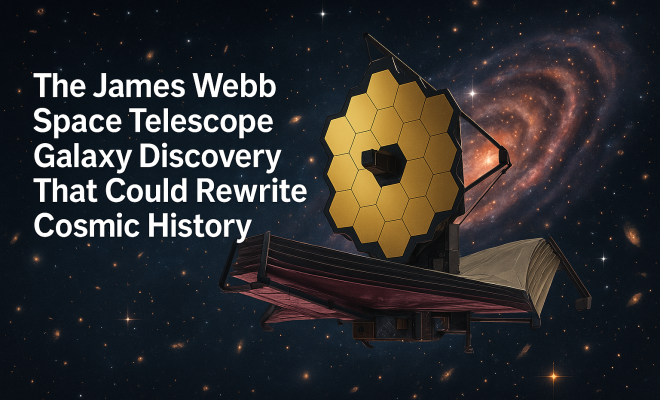
Launched in December 2021, the JWST was designed to succeed the Hubble Space Telescope, pushing the boundaries of our astronomical knowledge. Equipped with advanced technology, such as a 6.5-meter primary mirror and a suite of sophisticated instruments, Webb is capable of observing objects that are billions of light-years away, offering insights into the conditions of the universe’s formative years.
Through its infrared capabilities, the JWST can penetrate cosmic dust and gas, allowing it to detect light from the first stars and galaxies. This makes the telescope particularly suited for identifying celestial bodies that existed in the universe’s youth. The discovery of this ‘impossible’ galaxy is one of many observations that the JWST has made, but it stands out due to its implications for our understanding of cosmic history.
A Glimpse into Cosmic Evolution
The implications of this discovery extend beyond simply rewriting timelines. They challenge our fundamental understanding of how galaxies evolve. Traditionally, the process of galaxy formation was thought to take place over billions of years, shaped by the interactions of dark matter and gas. This new finding suggests that the early universe was more dynamic and conducive to the rapid formation of massive galaxies.
For instance, the existence of a galaxy containing around 100 billion stars just a few hundred million years after the Big Bang implies that the conditions in the early universe may have been different from what we previously thought. This may lead scientists to explore new models of galaxy formation that take into account factors like dark matter’s role and the influence of primordial gas clouds.
Scientific Debate and Community Response
The discovery has ignited a wave of excitement and debate among cosmologists. Many scientists are re-evaluating their theories about the timeline of the universe and the formation of galaxies. Some propose that if this galaxy can exist, then perhaps there are many more hidden in the depths of space, waiting to be discovered, each with its own story of formation.
Social media platforms have become a hotbed for discussions surrounding the JWST’s findings. Posts discussing the implications of this galaxy have gone viral, captivating both the scientific community and the general public. This surge in interest highlights the growing fascination with astronomy and the science of the cosmos.
What This Means for Future Research
The implications of the James Webb Space Telescope galaxy discovery extend well beyond its immediate findings. They encourage a re-examination of not only galaxy formation theories but also the very nature of cosmic evolution. As more data from the JWST continues to emerge, researchers will have the opportunity to refine their models and perhaps unearth additional early galaxies.
Future research could focus on identifying other galaxies from the same era, using the JWST’s capabilities to explore not just the existence of such galaxies, but their structure, composition, and the processes that led to their formation. Understanding these factors might lead to significant shifts in the prevailing models of cosmology. (See: James Webb Space Telescope mission details.)
The Urgency of Cosmic Understanding
As we learn more about the universe, each discovery carries with it a sense of urgency to understand our place within it. The ability to rewrite what we thought we knew about the cosmos provokes a fundamental reflection on the nature of scientific inquiry. Knowledge is inherently fluid, and as new evidence arises, so too must our understanding evolve.
This galaxy discovery reminds us that the universe holds secrets yet to be uncovered. Each finding provides a puzzle piece, leading us closer to a comprehensive picture of cosmic history. The excitement surrounding this discovery is not just confined to those in the scientific community; it resonates with anyone who finds wonder in the night sky.
Public Engagement and the Future of Astronomy
The viral nature of this discovery illustrates how science and social media intersect in today’s digital age. The ability to share spectacular findings in real-time has transformed how we engage with scientific advancements. The JWST’s revelations serve not only to inform but also to inspire a new generation of astronomers, scientists, and curious minds.
As more discoveries emerge, it’s crucial for public understanding of astronomy to keep pace with these advancements. Outreach programs and educational initiatives will play a vital role in fostering interest in space science, ensuring that the next generation of scientists is equipped to tackle the challenges and mysteries that lie ahead.
Lessons from the Cosmos
The discovery of an ‘impossible’ galaxy serves as a humbling reminder of the vastness of the universe and our current understanding’s limitations. Each breakthrough in space exploration invites us to question, to learn, and to grow in our knowledge. As much as we attempt to map the cosmos, it often surprises us with findings that defy expectations.
This is the beauty of science—it is always evolving, always questioning, and perpetually curious. The JWST’s findings encourage us to embrace uncertainty and engage with the unknown. So, as we ponder the implications of this galaxy discovery, let’s remember that the journey of understanding the cosmos is just as valuable as the knowledge itself.
New Insights on Galaxy Formation
One of the most exciting aspects of the JWST’s findings is that they compel researchers to think critically about the processes that lead to galaxy formation. Historically, the prevailing theories have revolved around the idea that gravity pulls matter together slowly over time, creating stars and galaxies. However, the discovery of this early galaxy suggests that there could be additional processes at play.
For example, it’s possible that interactions with dark matter could catalyze faster galaxy formation than previously believed. Dark matter, which is invisible and makes up a significant portion of the universe’s total mass, could influence the gravitational dynamics in such a way that allows for quicker accumulation of matter, leading to the rapid birth of galaxies.
Additionally, the possibility of ‘mini-halos’ of dark matter forming earlier than models predict could also contribute. These mini-halos may provide the necessary conditions for gas to cool and collapse into stars faster than previously theorized. This prompts further investigation into early cosmic structures and their interplay with dark matter.
Statistics and Observational Data
Observational data from the JWST is already making an impact on our understanding of the universe’s early epochs. For instance, the telescope has provided evidence that hundreds of galaxies existed during the first billion years after the Big Bang, a substantial increase from what was previously estimated. Studies indicate that these galaxies are not just small, but many have the potential to grow larger in the cosmic timeline.
Statistics from initial surveys show that the number of galaxies found in the first 500 million years could be ten times higher than expected. This suggests a more abundant and diverse early universe than previously thought, which invites researchers to reassess the conditions present during this time. The JWST’s capacity to collect data on galaxy masses, star formation rates, and chemical compositions is paving the way for new insights.
Expert Perspectives on the Discovery
Experts across the field of astronomy have weighed in on the implications of the JWST galaxy discovery. Dr. Emily Turner, an astrophysicist at the University of California, states, “This discovery forces us to reconsider the timeline of galaxy formation. It opens a door to the possibility that the universe was a much more chaotic place in its infancy, filled with rapid star formation and galaxy mergers.” (See: Nature article on early galaxy formation.)
Another perspective comes from Dr. Li Chen, a cosmologist at Harvard University, who emphasizes the role of simulations in understanding these findings. “The current models we rely on for simulating galaxy formation will need to be updated. We might be seeing the very first stages of galaxy evolution, where interactions could lead to faster growth.”
These expert opinions highlight the collaborative nature of scientific inquiry; as more researchers analyze the data, a holistic understanding of these phenomena begins to form. There’s a fuller look at Webb Telescope insights.
Comparison with Past Discoveries
The findings from the JWST stand in stark contrast to earlier discoveries. For years, astronomers relied on data from the Hubble Space Telescope, which provided valuable insights into the universe’s structure but faced limitations in observing earlier epochs due to its lower sensitivity and resolution. The Hubble primarily viewed the universe’s later stages, with most of its findings focusing on galaxies that formed billions of years after the Big Bang.
In contrast, the JWST’s ability to peer deeper into cosmic time expands our view of galaxy formation. Previous discoveries, like those from the Cosmic Assembly Near-Infrared Deep Extragalactic Legacy Survey (CANDELS), hinted at the existence of earlier galaxies, but none approached the scale or mass of the galaxy identified by the JWST. This comparison illustrates the revolutionary potential of the JWST in changing our fundamental understanding of cosmic history.
FAQ: Understanding the James Webb Space Telescope Galaxy Discovery
What is the James Webb Space Telescope?
The James Webb Space Telescope is an international collaboration between NASA, ESA (the European Space Agency), and the Canadian Space Agency. It is designed to observe the universe in infrared wavelengths, allowing it to see objects that are too faint or distant for other telescopes.
How does the JWST differ from the Hubble Space Telescope?
The JWST has a larger mirror (6.5 meters compared to Hubble’s 2.4 meters) and operates primarily in the infrared spectrum. This capability allows it to observe the early universe and gather data that were previously inaccessible with Hubble.
Why is the discovery of this galaxy significant?
This galaxy, believed to have formed only 300 million years after the Big Bang and containing around 100 billion stars, challenges existing models of galaxy formation and evolution. It suggests that galaxies can form much more rapidly than previously thought, prompting a re-evaluation of the early universe’s conditions.
What are the next steps following this discovery?
Following this discovery, astronomers will continue to use the JWST to search for more early galaxies and analyze their structures and compositions. This research will help refine our understanding of how galaxies evolve and the role of dark matter and gas in their formation.
How does this discovery affect our understanding of dark matter?
The findings may indicate that dark matter exists in ways we have yet to fully understand. If early galaxies can form rapidly due to interactions with dark matter, it could lead to new theories regarding the relationship between dark matter and galaxy evolution, prompting further research in this area.
What does this mean for our understanding of the universe?
This discovery emphasizes that our understanding of the universe is still very much in flux. It highlights the complexities of cosmic evolution and the need to continuously adapt our models based on new observations, which could lead to groundbreaking insights about our universe’s origin and development. (See: Research on cosmic history and galaxy evolution.)
The Journey Ahead: Impact on Future Astronomy
As we look to the future, the implications of the JWST’s discoveries are profound. The telescope is set to continue its mission over the next decade, and each observation will deepen our understanding of the cosmos. With its advanced technology, we might uncover not only new galaxies but potentially entire networks of cosmic structures that we have yet to imagine.
In addition to galaxy formation, researchers are also excited about the JWST’s potential to explore exoplanets. The telescope can analyze the atmospheres of distant worlds, searching for the building blocks of life. This multidimensional approach to astronomy, combining galaxy studies with exoplanet research, may yield breakthroughs in our understanding of the origins of life in the universe.
Understanding Cosmic Time: Redshift and Distance
A critical aspect of the JWST’s findings is the concept of redshift, which helps astronomers measure how far away an object is and how fast it is moving away from us. The higher the redshift, the further back in time we are observing. The ‘impossible’ galaxy discovered by the JWST is estimated to have a redshift of around 10, indicating we are seeing it as it existed a mere 300 million years after the Big Bang.
This ability to measure redshift is not just a technical achievement; it allows scientists to construct a timeline of cosmic history. By mapping galaxies’ redshifts, researchers can analyze how galaxies clustered and evolved over time. This process will be crucial in understanding the cosmic web structure and how matter became distributed throughout the universe.
The Broader Implications for Cosmology
The implications of this breakthrough extend beyond just understanding galaxy formation. They touch on fundamental questions about dark energy, the rate of cosmic expansion, and the future of the universe. Current theories about dark energy and the accelerating expansion of the universe may need to be revisited in light of these findings. The discovery of such massive early galaxies suggests that the processes governing the universe’s evolution are more intricate than previously acknowledged.
As we piece together the evidence gathered by the JWST, we may come to new insights about the fate of the universe, leading to captivating discussions on cosmic destiny and the very nature of existence. The JWST not only gives us a window into the past, but it also shapes our understanding of what is yet to come.
Conclusion: A New Era in Astronomy
The James Webb Space Telescope galaxy discovery is more than just a scientific finding; it’s a beacon of curiosity and a call to action for all of us to delve deeper into the mysteries of the universe. As we expand our understanding of how galaxies form and evolve, we also expand our capacity to wonder about our existence in the vastness of space.
This remarkable finding invites everyone to share in the excitement of discovery, to question long-held beliefs, and to contribute to the ever-growing narrative of cosmic exploration. With each new revelation from the James Webb Space Telescope, we stand on the brink of a new era in astronomy—one filled with potential, discovery, and, above all, awe.
“`
Trending Now
Frequently Asked Questions
What did the James Webb Space Telescope discover about galaxies?
The James Webb Space Telescope (JWST) discovered a remarkable galaxy formed just 300 million years after the Big Bang, containing an estimated 100 billion stars. This finding challenges existing models of galaxy formation, suggesting that massive galaxies could form much earlier than previously thought.
Why is the JWST discovery considered 'impossible'?
The discovery is termed 'impossible' because the identified galaxy appears highly evolved and massive for its age, contradicting current cosmological models. It suggests that galaxies like this should not have existed so soon after the Big Bang, raising questions about galaxy formation timelines.
How does the JWST challenge our understanding of cosmic history?
The JWST's findings challenge our understanding of cosmic history by suggesting that galaxies formed faster and more complex than current models suggest. This discovery forces scientists to re-evaluate the timeline and mechanisms of galaxy formation in the early universe.
What is the significance of the galaxy discovered by JWST?
The significance of the galaxy discovered by JWST lies in its unexpected mass and early formation, which shake the foundations of our understanding of cosmic evolution. It prompts scientists to reconsider how quickly galaxies can form after the Big Bang.
When was the James Webb Space Telescope launched?
The James Webb Space Telescope was launched in December 2021. It was designed to succeed the Hubble Space Telescope and enhance our understanding of the universe through advanced astronomical technology.
Have you experienced this yourself? We'd love to hear your story in the comments.