Google’s AI in Education: Are We Ready for Gemini’s Impact?
“`html
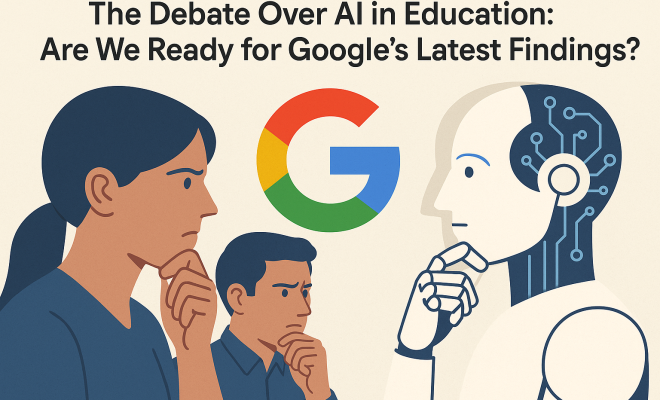
In the rapidly evolving landscape of education, technology has consistently played a transformative role. With the introduction of artificial intelligence (AI) in education, institutions have the opportunity to enhance learning experiences for students and streamline teaching processes for educators. Recently, Google released findings regarding its AI platform, Gemini, that have sparked a renewed debate on the efficacy and implications of incorporating AI in classrooms. The results indicate significant advancements in both student learning outcomes and teacher productivity, raising critical questions about the future of education and the role of AI within it.
Understanding Google’s Findings on AI in Education
Google’s recent evaluation of the Gemini platform reveals a dual role for AI in education: as a learning accelerator and a teacher productivity tool. According to the findings, a staggering 69% of students reached the recommended 12-hour usage threshold in what Google refers to as Guided Learning. Furthermore, across various schools, the average usage of Gemini reached approximately 15 hours, suggesting that the adoption of this AI technology is far from being a small-scale pilot program.
These statistics are not merely numbers; they represent a shift in how technology can be harnessed to facilitate learning. With AI becoming more integrated into the educational framework, the focus on meaningful application rather than superficial implementation becomes crucial. Students who engaged with the platform showed measurable improvements in core math concepts, which bodes well for educators seeking effective resources to enhance student comprehension and engagement.
The Positive Impacts of AI in Education
One of the most encouraging aspects of Google’s findings is the reported enhancement in student learning outcomes. The ability to grasp complex concepts in mathematics is a significant hurdle for many students. By integrating AI into the learning process, educators may find that students can access personalized learning experiences that cater to their individual needs.
Moreover, the efficiencies gained by teachers using AI can lead to more enriched educational environments. With AI handling administrative tasks and providing insights into student performance, teachers can redirect their focus toward personalized instruction and mentorship. This increased capacity for engagement could lead to a ripple effect in overall educational quality.
Concerns Surrounding AI in Education
Despite the promising findings, the introduction of AI in education is not without its controversies. The emotional charge surrounding this topic reflects broader societal concerns about technology’s place in our lives. Critics argue that reliance on AI tools may undermine the traditional pedagogical approaches that have been the backbone of education for decades. They caution that education should prioritize human interaction and critical thinking, rather than mere technological efficiency.
Furthermore, there are concerns about equity and access. If AI tools like Gemini become integral to educational systems, what happens to students and schools that cannot afford such technology? The digital divide could widen, leaving disadvantaged students even further behind. Thus, while AI presents opportunities, it also raises significant questions about fairness and inclusivity in education.
The Role of Policymakers in AI Integration
With these new findings, the role of policymakers becomes increasingly vital. Policymakers are tasked with creating frameworks that guide the integration of AI in education while ensuring equitable access for all students. This necessitates collaboration among educators, technologists, and community stakeholders to develop comprehensive strategies that prioritize educational outcomes.
Moreover, as AI becomes more prevalent, policymakers must consider regulatory measures to safeguard against potential misuse or over-reliance on technology in educational settings. Crafting policies that promote responsible use of AI and emphasize the importance of human educators in the learning process will be essential in navigating the challenges ahead.
Expert Perspectives on AI in Education
To gain a deeper understanding of the implications of AI in education, it’s important to consider expert opinions. Educators and technology experts alike have weighed in on both the potential benefits and pitfalls of integrating AI into classrooms.
Many educators express optimism about AI’s ability to support differentiated instruction, where learning is tailored to meet individual student needs. Dr. Emma Chen, an education technology researcher, states, “AI can help identify areas where students struggle and provide targeted resources to address those challenges. This individualized approach can greatly enhance student engagement and retention of knowledge.” However, she cautions against viewing AI as a replacement for teachers. “The human element in education is irreplaceable; AI should serve as a tool to empower teachers, not replace them.” (See: AI's impact on education.)
The Future of AI in Education
The future of AI in education is undoubtedly multifaceted. As schools continue to explore the potential of AI tools like Gemini, it is crucial to stay informed about emerging trends and developments. With the ongoing advancements in generative AI, we may see even more innovative applications in the classroom setting.
Moreover, as educational institutions adapt to these changes, professional development for educators will become essential. Ensuring that teachers are equipped with the skills and knowledge to effectively utilize AI technologies will be key to fostering successful integrations. Continuous training and support will enable educators to leverage AI in ways that truly benefit students.
Case Studies: Real-World Applications of AI in Education
To ground the discussion of AI in education in real-world applications, examining case studies can provide valuable insights. Various schools and districts around the world are experimenting with AI tools, yielding varying results in terms of student engagement, learning outcomes, and operational efficiency.
For instance, one school district in California implemented an AI-driven platform that personalized math instruction for each student. Teachers reported significant improvements in student performance, with test scores rising by an average of 20% within a single academic year. The district has since expanded its use of AI to other subjects, creating a model that highlights the potential for AI to enhance the educational landscape.
Conversely, some districts faced challenges when integrating AI tools due to a lack of infrastructure and training. In these cases, the anticipated benefits were not realized, underscoring the importance of careful planning and resource allocation in the implementation of AI technologies.
Addressing the Ethical Considerations of AI in Education
The integration of AI in education also raises ethical considerations that cannot be overlooked. Issues such as data privacy and algorithmic bias must be addressed to prevent negative consequences for students and educators. As AI systems rely on vast amounts of data, ensuring the secure handling of student information is paramount.
Moreover, the algorithms that power AI tools must be scrutinized for biases that could unfairly disadvantage certain student groups. Developing transparent systems that prioritize fairness and accountability will be critical in fostering trust among educators, students, and parents alike.
Comparative Analysis: AI vs. Traditional Teaching Methods
To understand the impact of AI in education, it’s essential to compare its effectiveness with traditional teaching methods. Traditional education often relies on a one-size-fits-all approach, where teachers present material to the entire class at once. This can lead to disparities in student understanding, as some may grasp concepts quickly while others struggle.
In contrast, AI offers personalized learning experiences tailored to individual students’ needs. For example, an AI-driven platform can analyze a student’s performance in real time, adjusting the difficulty of tasks based on their mastery of concepts. Studies have shown that such personalized approaches can lead to increased student motivation and improved outcomes. A report by the National Education Association found that classrooms utilizing AI saw a 15% increase in student performance metrics compared to traditional methods.
In another study conducted by the Stanford Graduate School of Education, students using AI-enhanced learning tools scored significantly higher on standardized tests than those in conventional classrooms. This demonstrates that AI not only supplements traditional teaching but can potentially outperform it in terms of student engagement and knowledge retention.
The Importance of Teacher Training in AI Integration
One significant factor that can determine the success of AI in education is the training provided to educators. Simply implementing AI technology without equipping teachers with the necessary skills can lead to underutilization or ineffective use of these tools. Continuous professional development is therefore crucial to ensuring that teachers feel confident and competent in using AI in their classrooms.
Training programs should focus on practical applications, providing teachers with hands-on experience in utilizing AI tools. For instance, workshops that simulate AI-driven lesson planning or data analysis can empower teachers to harness AI’s potential fully. Moreover, ongoing support systems, such as mentorship from tech-savvy colleagues or access to tech support, can further enhance teacher efficacy in integrating AI into their pedagogy. (See: Research on AI in education.)
Educators should also be encouraged to collaborate and share best practices regarding AI use. Platforms that foster teacher collaboration can help create a community of practice, where educators share insights, challenges, and successes in using AI tools, ultimately leading to more effective integration of technology in education.
Future Trends in AI and Education
As we look to the future, several trends are likely to shape the landscape of AI in education. One notable trend is the rise of adaptive learning technologies, which utilize AI to create customized learning paths for each student. These systems can analyze a student’s learning style, pace, and preferences to deliver personalized content that meets their unique needs.
Furthermore, the use of AI in assessment is expected to expand. Traditional assessments often measure rote memorization rather than critical thinking and problem-solving skills. AI can facilitate more dynamic assessment techniques, such as project-based assessments or simulations, providing a more comprehensive evaluation of student capabilities.
Another trend is the increasing importance of social-emotional learning (SEL) in education. AI tools that can assess students’ emotional states and provide feedback or resources to support their well-being are becoming more prevalent. This approach emphasizes the holistic development of students and acknowledges that emotional intelligence is as crucial as academic achievement.
Frequently Asked Questions (FAQ) about AI in Education
What is AI in education?
AI in education refers to the integration of artificial intelligence technologies in teaching and learning processes. This can include personalized learning experiences, automated grading systems, and data analytics to enhance student performance.
How does AI improve student learning outcomes?
AI improves student learning outcomes by providing personalized learning experiences, identifying areas where students struggle, and offering targeted resources and support. AI can adapt to individual learning styles, helping students grasp complex concepts more effectively.
What are the risks associated with AI in education?
The risks associated with AI in education include data privacy concerns, algorithmic bias, and the potential for exacerbating educational inequities. If not managed carefully, AI can lead to unfair disadvantages for certain student groups and may diminish the essential human element of teaching.
How can teachers effectively integrate AI into their classrooms?
Teachers can effectively integrate AI by participating in professional development programs that focus on practical applications of AI tools, collaborating with colleagues to share best practices, and continuously seeking support and training to enhance their skills in using AI technologies.
What role do policymakers play in the integration of AI in education?
Policymakers play a critical role in establishing frameworks and regulations that guide the responsible integration of AI in education. This includes ensuring equitable access to AI technologies, protecting student data, and promoting the ethical use of AI in educational contexts.
Challenges in Implementing AI in Education
While the potential benefits of AI in education are significant, there are numerous challenges that institutions face when implementing these technologies. One major challenge is the resistance to change from educators who may feel overwhelmed by the prospect of incorporating AI into their teaching methods. Many educators are accustomed to traditional teaching paradigms and may be hesitant to embrace new technologies. (See: Latest developments in AI technology.)
Additionally, the integration of AI requires a robust technological infrastructure, including reliable internet access and sufficient devices for students. Schools in underserved areas may struggle to meet these requirements, which could hinder their ability to leverage AI effectively.
Lastly, the rapid pace of AI development means that educators will need ongoing training and support to keep up with the latest tools and methodologies. This necessitates a commitment from both educational institutions and policymakers to prioritize continuous professional development.
Global Perspectives on AI in Education
AI in education is not merely a phenomenon limited to Western countries. Around the globe, various nations are exploring how AI can enhance their educational systems. For instance, in South Korea, the government has invested heavily in AI education, introducing coding and AI-related subjects into the national curriculum. This initiative aims to equip future generations with the skills necessary to thrive in a technology-driven world.
In contrast, countries like Finland are taking a more cautious approach. Finnish educators emphasize the importance of human interaction in the learning process, preferring to integrate AI tools in ways that support rather than replace traditional teaching methods. This highlights a global conversation about the balance between technological advancement and the preservation of core educational values.
Innovative AI Tools in Education
Several innovative AI tools are currently making waves in the educational sector. For example, platforms like DreamBox Learning, which provides adaptive math lessons, leverage AI to personalize learning experiences based on student performance. Similarly, tools like Knewton and Carnegie Learning offer AI-driven resources that adapt to each student’s learning pace and style, ensuring that no learner is left behind.
Furthermore, AI-powered chatbots, such as those developed by IBM Watson, are being utilized in academic settings to provide real-time assistance to students. These chatbots can answer questions regarding course materials, deadlines, and other academic inquiries, freeing up educators to focus on more complex student needs.
Conclusion: Navigating the Path Forward
As the debate over AI in education continues to unfold, stakeholders must navigate a complex landscape of benefits, challenges, and ethical considerations. Google’s findings on Gemini serve as a catalyst for discussions about the future of education and the potential role of AI in enhancing learning experiences.
Ultimately, the integration of AI in education should not come at the expense of human connection and critical thinking. Instead, it should serve as an opportunity to enrich and expand the educational experience while ensuring equity and inclusivity for all students. As we move forward, ongoing dialogue among educators, policymakers, and communities will be essential in shaping the future of AI in education.
“`
Trending Now
Frequently Asked Questions
What are Google's findings on AI in education?
Google's findings on AI in education highlight the effectiveness of its Gemini platform, showing that 69% of students reached a recommended 12-hour usage threshold. The data suggests that AI can significantly enhance student learning outcomes and teacher productivity, indicating a promising future for AI integration in classrooms.
How does AI improve student learning outcomes?
AI improves student learning outcomes by providing personalized learning experiences and facilitating the understanding of complex concepts. Google's findings indicate that students using the Gemini platform showed measurable improvements in core math skills, demonstrating the potential for AI to enhance comprehension and engagement.
What is Guided Learning in AI education?
Guided Learning refers to a structured approach where students utilize AI tools, like Google’s Gemini, to facilitate their learning process. According to Google's findings, this method has led to a significant percentage of students achieving the recommended usage hours, underscoring the effectiveness of AI in supporting educational goals.
Are schools adopting AI technology in classrooms?
Yes, schools are increasingly adopting AI technology in classrooms. Google’s evaluation of the Gemini platform shows that the average usage among various schools reached approximately 15 hours, indicating that the implementation of AI in education is expanding beyond initial pilot programs.
What role does AI play for teachers in education?
AI serves as a productivity tool for teachers, helping to streamline administrative tasks and enhance instructional methods. According to Google’s findings, the integration of AI can free up time for educators, allowing them to focus more on teaching and supporting student learning effectively.
What’s your take on this? Share your thoughts in the comments below — we read every one.