Why Equal Internet Access Education Alone Won’t Bridge Learning Gaps
“`html
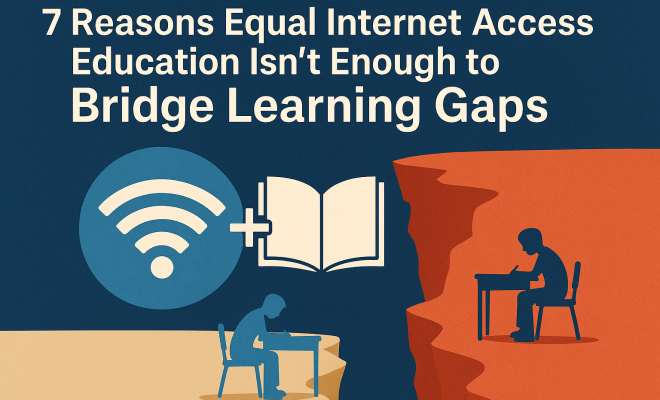
As the digital age continues to evolve, the importance of equal internet access education has been a hot topic among educators, parents, and policymakers. While many believe that providing all students with internet access will level the playing field, a closer examination reveals that equal access does not necessarily translate into equal learning outcomes. In fact, the disparity in baseline knowledge among students often determines how effectively they can utilize online resources. Here, we explore seven critical reasons why simply increasing internet access may not be enough to bridge the educational divide.
1. Understanding the Knowledge Gap
The concept of a knowledge gap refers to the differences in the baseline knowledge that students possess when they approach learning materials. Research has shown that students who enter educational settings with a stronger foundational understanding benefit more from online learning resources compared to their peers who start with less knowledge. This disparity suggests that equal internet access education alone cannot compensate for varying levels of pre-existing knowledge.
In a recent study, participants were encouraged to engage in online searches with financial incentives and verbal encouragement. Despite these efforts, the gap in retention and understanding remained evident, underscoring the significant role that prior knowledge plays in the learning process. As a result, students with a richer educational background are often in a better position to extract value from the same resources available to their less-informed counterparts.
2. The Role of Prior Knowledge
Prior knowledge serves as a vital scaffold for new information. Students with a strong foundation can integrate new concepts more effectively, making connections that enhance their understanding and retention. Conversely, students with minimal prior knowledge may struggle to grasp new material, leading to frustration and disengagement. This dynamic underscores why equal internet access education is a necessary but insufficient condition for improving educational outcomes.
Moreover, students with higher baseline knowledge are adept at searching for relevant information and discerning quality sources, while those lacking such skills may find themselves overwhelmed or misled by the vast amount of information available online. This discrepancy can lead to a widening of the achievement gap rather than its closure, as students with lower baseline knowledge may fall further behind.
3. Emotional and Social Factors
The emotional and social contexts in which students learn also play a significant role in educational success. Factors such as motivation, self-efficacy, and the encouragement received from peers and educators can impact how students utilize their internet access. A supportive environment can bolster a student’s confidence and willingness to engage with online learning tools, while a lack of encouragement can discourage even the most motivated students.
In the aforementioned study, participants were incentivized to search online, yet the emotional aspects of learning were not adequately addressed. As a result, even when students had equal internet access, their varying emotional responses influenced their learning outcomes. Thus, addressing the emotional and social dimensions of learning is essential to ensure that all students can leverage internet resources effectively.
4. Quality of Online Resources
Not all online resources are created equal. The availability of high-quality educational content is critical to enhancing learning experiences. Students with more advanced prior knowledge may be better equipped to navigate the vast ocean of online materials and discern credible sources from those that are misleading or irrelevant.
This becomes particularly problematic in an environment where students with lower baseline knowledge may not possess the skills needed to evaluate the credibility of information. Thus, offering equal internet access education is futile if students do not have access to quality educational resources tailored to their varying levels of understanding. Educational stakeholders must prioritize the curation of high-quality, accessible materials to ensure that all students can benefit from online learning. (See: disparities in online learning outcomes.)
5. The Need for Digital Literacy Skills
Digital literacy is a crucial skill that complements equal internet access education. Students must not only have the tools to access information but also the skills to use these tools effectively. In many cases, students with lower baseline knowledge also lack the necessary digital literacy skills to navigate online learning environments, further exacerbating the educational divide.
Educational systems must therefore focus on teaching digital literacy alongside providing internet access. By equipping all students with the skills to search for, evaluate, and utilize information effectively, educators can help to mitigate some of the disadvantages faced by those who start with less prior knowledge. This comprehensive approach could be key to closing the gap in educational outcomes.
6. Socioeconomic Factors
The socioeconomic status of students plays a significant role in their educational opportunities. Students from lower-income families may face additional barriers, such as limited access to technology at home or a lack of support from parents who may not have the time or resources to assist with their education. These barriers can hinder the effectiveness of equal internet access education.
Additionally, students from wealthier backgrounds often have access to enriching educational experiences, such as tutoring or extracurricular activities, that provide them with the skills and knowledge that enhance online learning. Therefore, addressing the socioeconomic factors that impact education is essential for truly leveling the playing field for all students.
7. The Importance of Comprehensive Educational Strategies
To address the complexities surrounding equal internet access education, schools and policymakers must adopt comprehensive strategies that consider the multifaceted nature of learning. This includes not only ensuring that all students have access to the internet and quality online resources but also focusing on enhancing prior knowledge, emotional support, digital literacy, and addressing socioeconomic barriers.
Moreover, educational interventions should be tailored to meet the diverse needs of students. This might involve differentiated instruction, targeted support for struggling learners, and the development of inclusive curricula that resonate with all students, regardless of their starting point. By adopting a holistic approach, education systems can move closer to achieving equitable learning outcomes for every student.
8. Impact of Remote Learning on Educational Equity
The COVID-19 pandemic has intensified the conversation around equal internet access education, as schools were forced to pivot to remote learning. While this transition highlighted the importance of internet access, it also revealed significant disparities. According to a report from the Pew Research Center, about 15% of U.S. households with school-age children did not have internet access during the pandemic, leading to substantial learning losses for many students.
Moreover, teachers reported significant challenges in delivering effective online instruction, particularly to students who lacked the necessary foundational skills. This situation underlines the urgent need for a comprehensive approach that not only provides internet access but also addresses the existing educational inequalities that have been exacerbated by remote learning.
9. Statistics on Internet Access and Education
Statistics provide a stark illustration of the disparities in internet access among different demographic groups. A study conducted by the National Center for Education Statistics revealed that 19% of students in rural areas lacked reliable internet access, compared to just 4% in urban areas. This disparity indicates that geographic location plays a crucial role in determining access to online educational resources.
Additionally, the digital divide often intersects with socioeconomic status. The same study found that students from low-income families were nearly twice as likely to report that they did not have access to a computer for educational purposes. These statistics underscore the pressing need for policies aimed at closing the digital divide and ensuring that equal internet access education becomes a reality for all students.
10. Case Studies of Successful Initiatives
Several initiatives across the globe have successfully tackled the issue of internet access in education. For instance, in Finland, the government has implemented a program called “Digital 2020,” which aims to provide free internet access in schools and to subsidize internet costs for low-income families. This initiative has not only facilitated learning but has also reduced the disparities experienced by students in different regions. (See: youth data on educational access.)
In the United States, numerous community programs have sought to provide internet access to underserved populations. For example, the “Everyone On” initiative aims to connect low-income families to affordable internet service and provides digital literacy training, thus addressing multiple facets of the issue. Such case studies highlight the importance of multifaceted approaches in achieving equal internet access education.
11. Expert Perspectives on Equal Internet Access Education
Experts in education and technology advocate that enhancing equal internet access education requires more than just infrastructure improvements. Dr. Linda Darling-Hammond, a prominent education researcher, emphasizes the need for “holistic investment in both technology and teacher training” to ensure that the tools provided are utilized effectively.
Furthermore, Dr. José Luis Vilson, an education advocate, recommends that stakeholders must prioritize community engagement and support to understand the unique challenges faced by students in different environments. His perspective underscores the importance of tailoring solutions to specific community needs, ensuring that equal access translates into equitable learning opportunities.
12. FAQs on Equal Internet Access Education
What is equal internet access education?
Equal internet access education refers to the idea that all students should have the same level of access to the internet and online educational resources, regardless of their background or socioeconomic status.
Why is equal internet access important for education?
Equal internet access is crucial because it allows all students to access educational resources, participate in online learning, and develop digital literacy skills necessary for academic and future career success.
What barriers exist to achieving equal internet access education?
Barriers include socioeconomic disparities, lack of infrastructure in rural areas, insufficient digital literacy skills, and differences in prior knowledge among students.
How has the COVID-19 pandemic affected internet access education?
The pandemic has highlighted existing disparities in internet access, with many students experiencing significant learning losses due to a lack of reliable internet or digital tools for remote learning.
What can schools do to improve equal internet access?
Schools can partner with community organizations to provide resources, advocate for public policies that expand broadband access, and implement programs that enhance digital literacy alongside providing internet access.
How can parents support equal internet access education?
Parents can support equal internet access education by advocating for better infrastructure in their communities, encouraging schools to adopt comprehensive digital literacy programs, and ensuring that their children are comfortable using technology for learning purposes. (See: study on knowledge gaps in education.)
What role do policymakers play in equal internet access education?
Policymakers have the responsibility to create and implement laws that promote equal access to the internet, allocate funding for technology in schools, and ensure that underserved communities receive the necessary resources to bridge the digital divide.
What are the long-term benefits of equal internet access in education?
Long-term benefits include improved academic performance, higher graduation rates, increased digital literacy among students, and better preparedness for a technology-driven workforce, ultimately contributing to a more equitable society.
13. The Future of Equal Internet Access in Education
The future of equal internet access education hinges on continued advocacy, innovation, and collaboration among educators, technology providers, and policymakers. As technology rapidly evolves, new opportunities will arise to enhance connectivity and access to high-quality educational resources. One promising development is the expansion of broadband infrastructure in rural and underserved areas, driven by both public and private investment.
Moreover, as online learning platforms become more sophisticated, the need for tailored educational experiences that accommodate diverse learning styles and backgrounds will be paramount. This will require ongoing research into best practices for online instruction and the effective use of technology in education.
Another key area of focus will be the development of inclusive digital curricula that reflect the diverse experiences and cultures of students. By incorporating culturally relevant content, educators can engage students more effectively and make learning more meaningful.
14. Conclusion
In conclusion, while equal internet access education is undeniably important, it is not a panacea for the deeper issues surrounding educational inequity. As highlighted throughout this article, the existence of a knowledge gap, the influence of emotional and social factors, the quality of online resources, the necessity of digital literacy, the impact of socioeconomic status, and the need for comprehensive educational strategies all play pivotal roles in determining learning outcomes. To effectively bridge the educational divide, stakeholders must recognize these complexities and work collaboratively to develop solutions that go beyond mere access to technology.
“`
Trending Now
- our breakdown of 7 exciting trends in remote higher education jobs you need to know about
- read the full story
- our breakdown of how google gemini education is transforming classrooms and redefining learning outcomes
- our breakdown of the bond market is shifting: how it impacts bitcoin and what it means for investors
- Why Investors Are Flocking to BMNR Stock: The Ethereum Connection Explained
Frequently Asked Questions
Why is equal internet access not enough for education?
Equal internet access alone does not address the varying levels of baseline knowledge among students. While access can provide opportunities, students with different educational backgrounds may utilize online resources differently, leading to persistent learning gaps.
What is the knowledge gap in education?
The knowledge gap refers to the differences in foundational understanding students have when approaching learning materials. This gap affects how effectively they can benefit from online resources, as those with stronger prior knowledge tend to achieve better outcomes.
How does prior knowledge impact online learning?
Prior knowledge acts as a scaffold for new information, allowing students to integrate and understand new concepts more effectively. Students with a solid foundation can make connections that enhance their learning, while those with minimal prior knowledge may struggle.
Can internet access alone improve learning outcomes?
No, simply increasing internet access does not guarantee improved learning outcomes. Students' differing levels of prior knowledge significantly influence how effectively they can utilize online resources, which means access must be paired with support and instruction.
What factors contribute to learning gaps despite equal access?
Factors such as prior knowledge, educational background, and the ability to engage with online materials contribute to learning gaps. Without addressing these underlying issues, equal internet access may not lead to equitable educational outcomes.
Have you experienced this yourself? We’d love to hear your story in the comments.