Social Media Addiction: $6M Verdict Opens Floodgates for Lawsuits
The Unfolding Crisis: When Digital Connectors Become Digital Captors
It’s a scenario that has become terrifyingly familiar for parents across the globe: a child glued to a screen, scrolling endlessly, seemingly lost in the digital ether. What began as platforms designed to connect us, share moments, and build communities has, for many, evolved into something far more insidious. For years, we’ve heard anecdotal whispers and seen mounting research suggesting a darker side to social media, particularly its impact on the developing minds of young people. Now, those whispers have coalesced into a roaring legal storm, challenging the very foundations of tech giants like Meta, Google, TikTok, and Snap.
The core accusation? That these companies haven’t just created engaging platforms, but intentionally designed them to be addictive, exploiting psychological vulnerabilities in their youngest users for profit. The fallout, according to thousands of plaintiffs, includes a devastating array of mental health issues, from anxiety and depression to eating disorders and even self-harm. We’re not talking about minor inconveniences here; we’re talking about lives fundamentally altered, sometimes irrevocably. The legal system is now grappling with what many see as a public health crisis, and the stakes couldn’t be higher. This isn’t just about money; it’s about accountability, and potentially, a complete re-evaluation of how technology intersects with human well-being.
A Legal Firestorm: The Multidistrict Litigation and Its Scale
As of July 2026, the legal landscape surrounding social media’s alleged harms is dominated by a massive multidistrict litigation (MDL) underway in California. MDLs are designed to streamline complex cases with common questions of fact, allowing hundreds or even thousands of individual lawsuits to be coordinated before a single judge. This avoids duplicative discovery, inconsistent rulings, and ultimately, saves an enormous amount of judicial resources. In this particular instance, we’re talking about nearly 2,900 separate lawsuits, all consolidated to address the fundamental claims against these tech behemoths. Think about that number for a second: 2,900 families, 2,900 stories of alleged harm, all pointing their fingers at the same handful of corporations.
The sheer scale of this MDL is a testament to the widespread concern and perceived harm. Each individual lawsuit brings its own unique set of facts, but they all share a common thread: the assertion that social media platforms were negligently designed to foster addiction, leading directly to severe mental health challenges in young users. This legal strategy mirrors historical battles against other industries that faced accusations of knowingly causing public harm, a parallel we’ll dive into shortly. The coordination of these cases under a single judicial umbrella isn’t just a procedural convenience; it sends a powerful message that the courts are taking these allegations incredibly seriously, recognizing the systemic nature of the problem rather than viewing each instance as an isolated incident.
The Bellwether Breakthrough: Meta and Google Hit with a $6 Million Verdict
Then came the bombshell. In March 2026, the legal world, and indeed the public, watched closely as the first bellwether trial in this sprawling MDL reached its conclusion. Bellwether trials are critically important; they are essentially test cases chosen from the larger pool of lawsuits to gauge how juries might react to evidence and arguments. Their outcomes often heavily influence the trajectory of the remaining cases, setting precedents and guiding settlement negotiations. And this first one delivered a truly staggering result.
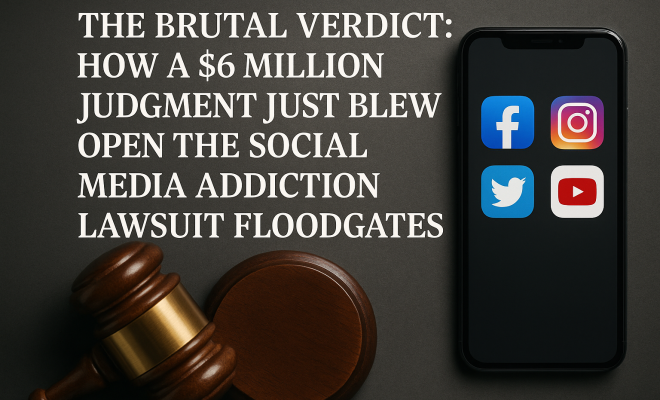
A California jury found both Meta (the parent company of Facebook and Instagram) and Google (which owns YouTube) negligent. They were ordered to pay a staggering $6 million to a woman who argued that her severe mental health issues were directly caused by her prolonged and addictive use of their platforms. Let’s be clear: $6 million is not pocket change, even for tech giants. This isn’t just a financial hit; it’s a categorical declaration by a jury that these companies bear responsibility for the harms their products inflict. This verdict isn’t just a win for one plaintiff; it’s a seismic shift that will reverberate through every single one of the thousands of pending social media addiction lawsuits, giving immense leverage to plaintiffs and putting immense pressure on the defendants.
Echoes of Big Tobacco: A Troubling Historical Parallel
If you’re wondering why this legal battle feels so familiar, you’re not alone. Legal experts and commentators are drawing striking parallels between the current social media addiction lawsuit wave and the landmark litigation against the tobacco industry. For decades, Big Tobacco vehemently denied that nicotine was addictive or that their products caused cancer, despite mounting scientific evidence and, as later revealed, internal company documents suggesting they knew otherwise. The turning point came when those internal documents, exposing decades of deception and calculated efforts to hook consumers, became public. The result was a cascade of lawsuits, massive settlements, and ultimately, a fundamental reshaping of how tobacco products are marketed and regulated.
The strategy in the social media cases is strikingly similar. Plaintiffs’ attorneys are tirelessly seeking internal documents, emails, and presentations from Meta, Google, TikTok, and Snap. They believe these documents will reveal that company executives were not only aware of the addictive potential of their platforms but actively designed features specifically to maximize engagement, even if it meant exploiting the psychological vulnerabilities of young users. Think about features like infinite scroll, notification pings, curated feeds designed to trigger dopamine hits, and algorithmic recommendations that pull users deeper into content. If plaintiffs can prove that these design choices were made with full knowledge of their potential to foster addiction and cause harm, especially to minors, the parallels to Big Tobacco become chillingly clear. This isn’t just about a product being incidentally harmful; it’s about a product allegedly being engineered for harm, and that distinction is crucial in the eyes of the law. (See: CDC on mental health issues.) See also impact of violence on children.
The Psychology of Addiction: How Platforms Are Allegedly Designed to Hook Users
So, what exactly are the plaintiffs alleging regarding design? It goes far beyond simply providing a fun app. The lawsuits contend that social media companies employ sophisticated psychological tactics and algorithmic designs to maximize user engagement, blurring the line between connection and compulsion. These tactics are often rooted in behavioral psychology principles that are incredibly effective at creating habit loops.
- Variable Reward Schedules: This is a core concept. Think of a slot machine – you don’t know when you’ll win, but you know you *might*. Similarly, every time you refresh your feed, you don’t know what new, interesting, or validating content you’ll find. This uncertainty keeps you coming back, reinforcing the checking behavior.
- Social Validation: Likes, comments, shares, and follower counts are powerful forms of social validation. Our brains are wired to seek approval and connection, and these metrics provide instant, tangible feedback. The fear of missing out (FOMO) also plays a huge role, driving constant checking to stay abreast of social happenings.
- Infinite Scroll and Autoplay: These features eliminate natural stopping points. There’s no end to the content, no natural break in the experience, making it incredibly easy to lose track of time and consume content passively for hours.
- Personalized Algorithms: The algorithms are designed to learn your preferences and feed you more of what you like, creating an echo chamber of appealing content that’s hard to disengage from. They keep you in your ‘comfort zone’ of content, making it less likely you’ll navigate away.
- Push Notifications: Constant pings, alerts, and badges draw users back to the app, interrupting other activities and reinforcing the habit of checking.
When you combine these elements, you get a highly potent, engaging, and for some, an incredibly difficult-to-resist product. The legal argument isn’t just that these features exist, but that they are intentionally deployed and optimized with full knowledge of their potential to create addictive behaviors, particularly in the still-developing brains of adolescents. The younger the user, the more susceptible they are to these psychological hooks, and that’s precisely where the allegations of negligence become most potent.
Beyond the Verdict: TikTok and YouTube’s Settlements
While the $6 million verdict against Meta and Google made headlines, it’s crucial not to overlook other significant developments in this rapidly evolving legal landscape. TikTok and YouTube (owned by Google, of course) have also faced their own bellwether trials, and in both instances, they opted to settle. We don’t have the exact figures for these settlements, as they are often confidential, but the fact that these companies chose to settle rather than risk a jury verdict speaks volumes.
Settlements in bellwether trials often indicate that the defendants perceive a significant risk of an unfavorable outcome at trial, or they want to avoid the negative publicity and potential precedent-setting impact of a large public verdict. For TikTok, a platform that has exploded in popularity among younger demographics, and YouTube, a long-standing video giant, these settlements are a clear indication of the growing pressure. They suggest an acknowledgment, even if not explicitly stated, that the legal arguments against them carry substantial weight. These settlements, alongside the Meta/Google verdict, form a powerful one-two punch that strengthens the position of all plaintiffs in the remaining 2,900 lawsuits. It tells them: ‘Your claims are valid, and these companies are feeling the heat.’ (comprehensive mental health resource)
The Human Cost: Mental Health Harms and the Allegations
At the heart of every social media addiction lawsuit is a story of human suffering. These aren’t abstract legal arguments; they represent individuals, often young people, whose lives have been profoundly impacted. The types of mental health harms alleged are varied but consistently severe. We’re talking about a spectrum of issues that can cripple a young person’s ability to function, thrive, and develop normally.
- Increased Anxiety and Depression: Constant exposure to idealized lives, cyberbullying, and the pressure to maintain a perfect online persona can lead to chronic feelings of inadequacy, stress, and sadness.
- Eating Disorders and Body Dysmorphia: Filtered images and unrealistic beauty standards perpetuated on platforms like Instagram have been directly linked to body image issues and the development of disorders like anorexia and bulimia.
- Sleep Deprivation: Late-night scrolling, the compulsion to check notifications, and the stimulating nature of screen time can severely disrupt sleep patterns, which in turn exacerbates other mental health problems.
- Self-Harm and Suicidal Ideation: Perhaps the most tragic and alarming allegations involve direct links between social media use and self-harm behaviors or suicidal thoughts. The constant exposure to negative content, cyberbullying, and feelings of isolation despite being ‘connected’ can push vulnerable individuals to desperate measures.
- Loss of Social Skills and Real-World Connections: Over-reliance on online interactions can stunt the development of crucial in-person social skills, leading to loneliness and isolation in real life.
The plaintiffs argue that these are not mere coincidences or individual vulnerabilities. They contend that the platforms’ addictive designs amplify existing risks and, in many cases, directly cause these severe mental health outcomes, especially for adolescents whose brains are still undergoing critical development and are more susceptible to external influences and peer pressure.
Expert Perspectives: What Researchers and Clinicians Say
The legal arguments in social media addiction lawsuits aren’t just based on legal precedent; they are heavily supported by a growing body of scientific research and clinical observations. Child psychologists, neuroscientists, and public health experts have been sounding the alarm for years, and their insights are now playing a crucial role in these cases.
For instance, neuroscientists point to the developing prefrontal cortex in adolescents, the part of the brain responsible for impulse control, decision-making, and understanding long-term consequences. This part of the brain isn’t fully developed until the mid-20s, making teenagers particularly susceptible to the immediate gratification and dopamine hits offered by social media. Clinicians often report seeing a clear correlation between increased screen time on social platforms and a rise in anxiety, depression, and self-esteem issues in their young patients. They often describe patterns of compulsive checking, withdrawal symptoms when access is removed, and a preoccupation with online validation – all hallmarks of addictive behavior.
Public health researchers, on the other hand, often focus on the societal impact. They highlight statistics showing a significant increase in mental health crises among adolescents since the widespread adoption of social media. While acknowledging that many factors contribute to mental health, they argue that the pervasive and often unsupervised use of these platforms is a major contributing factor, creating a “perfect storm” for vulnerable youth. The combined weight of these expert perspectives lends significant credibility to the plaintiffs’ claims, transforming anecdotal evidence into scientifically backed allegations of harm.
The Global Landscape: International Responses to Social Media Harms
This legal wave isn’t confined to the United States. Governments and legal systems worldwide are grappling with similar concerns about social media’s impact on youth. Various countries are exploring or implementing their own strategies, showcasing a global shift in how these platforms are viewed and regulated. (See: New York Times on social media addiction.)
- European Union: The EU has been at the forefront of digital regulation with initiatives like the General Data Protection Regulation (GDPR) and the Digital Services Act (DSA). The DSA, in particular, imposes strict rules on large online platforms regarding content moderation, transparency of algorithms, and protection of minors. It mandates risk assessments for systemic risks, including negative effects on mental health.
- United Kingdom: The UK’s Online Safety Bill aims to make social media companies more accountable for harmful content, including content that promotes self-harm or eating disorders. It places a duty of care on platforms to protect children and gives regulators the power to levy substantial fines.
- Australia: Australia has also introduced legislation focusing on online safety, particularly combating cyberbullying and image-based abuse. There’s ongoing discussion about further measures to protect children from potentially addictive design features.
- Canada: Similar to its counterparts, Canada is exploring legislation to hold social media companies accountable for content and design choices that negatively impact youth mental health.
These international efforts, while varied in their specifics, collectively demonstrate a growing consensus that social media companies must bear greater responsibility for the well-being of their users, especially children. This global scrutiny adds another layer of pressure on the tech giants, suggesting that a piecemeal, country-by-country approach to regulation might eventually converge into more unified international standards, pushing for systemic change across the industry. Related reading: social media exposure pros and cons.
What This Means for the Future of Social Media Regulation
These ongoing trials and substantial verdicts aren’t just about individual compensation; they are generating massive public interest and fueling a broader conversation about the need for greater regulation of social media. The widespread use of these platforms, coupled with growing concerns over youth mental health, has created a fertile ground for legislative action. We’re already seeing governments around the world, and indeed here in the U.S., grappling with how to effectively rein in the power of tech giants and protect vulnerable users.
Potential regulatory avenues could include:
- Age Verification and Restrictions: Stricter enforcement of minimum age requirements and potentially even higher age gates for certain features.
- Design Standards: Mandating specific design changes to reduce addictive features, such as limiting infinite scroll, imposing usage timers, or altering notification systems.
- Transparency Requirements: Forcing companies to be more transparent about their algorithms, data collection practices, and internal research on user well-being.
- Mental Health Impact Assessments: Requiring social media companies to conduct and publish independent assessments of their platforms’ impact on user mental health, particularly for minors, before launching new features.
- Liability Reform: Revisiting Section 230 of the Communications Decency Act, which currently shields platforms from liability for user-generated content, to potentially hold them more accountable for their own design choices and algorithmic amplification of harmful content.
The legal victories and settlements are providing powerful ammunition for policymakers, demonstrating that the courts are recognizing the harms. This could very well be the catalyst for a new era of digital regulation, shifting from a hands-off approach to one that prioritizes public health over unchecked corporate growth.
The Road Ahead: Challenges and Potential Outcomes
While the recent developments are highly favorable for plaintiffs, the road ahead in this massive social media addiction lawsuit is still long and fraught with challenges. Tech companies are not going to roll over easily. They have virtually limitless legal resources and will fight tooth and nail. They will argue that they are simply providing a service, that personal responsibility plays a significant role, and that the benefits of social connection outweigh the alleged harms. They’ll also likely argue that proving a direct causal link between platform use and specific mental health outcomes is incredibly complex, given the myriad factors that influence a person’s mental well-being.
However, the momentum is clearly shifting. With nearly 2,900 lawsuits still pending, and the bellwether trials showing a clear path to successful litigation, the pressure on Meta, Google, TikTok, and Snap will only intensify. We could see more settlements, potentially even a global settlement that resolves a large portion of the outstanding cases. Alternatively, if more bellwether trials result in large plaintiff verdicts, it could force these companies to fundamentally rethink their business models and design philosophies. This isn’t just about paying damages; it’s about reshaping an entire industry to prioritize user well-being, especially for our youth, over pure engagement metrics. It’s a fight for the digital soul of a generation, and the legal system is now firmly engaged.
Frequently Asked Questions About Social Media Addiction Lawsuits
Q1: What exactly is a social media addiction lawsuit?
A social media addiction lawsuit is a legal claim brought against social media companies, such as Meta (Facebook, Instagram), Google (YouTube), TikTok, and Snap, alleging that their platforms are intentionally designed to be addictive, causing severe mental health harms, particularly in young users. Plaintiffs argue that these companies negligently created and maintained features that exploit psychological vulnerabilities for profit. (See: WHO on adolescent mental health.) We covered recognizing mental health in youth in more detail.
Q2: Who can file a social media addiction lawsuit?
Typically, these lawsuits are filed by individuals who have experienced significant mental health issues (like severe anxiety, depression, eating disorders, or self-harm) that they attribute directly to their prolonged and addictive use of social media platforms as minors. In many cases, parents or guardians file on behalf of their children, or young adults who are now older but experienced the harm during their adolescence.
Q3: What kind of evidence is needed to support these claims?
Plaintiffs typically need to demonstrate a direct causal link between their specific social media use and their mental health decline. This often involves medical records, psychological evaluations, testimony from therapists or doctors, detailed usage data (if available), and personal accounts of how the addiction manifested and impacted their life. The lawsuits also rely heavily on internal company documents that reveal design intentions and knowledge of potential harms.
Q4: What is a “multidistrict litigation” (MDL) and why is it used here?
An MDL is a special federal legal procedure that consolidates many similar lawsuits from different jurisdictions into one federal court before a single judge. This is done to streamline the discovery process, avoid conflicting rulings, and manage the vast number of cases efficiently. The social media addiction lawsuits involve thousands of individual claims with common questions of fact, making an MDL an appropriate and necessary mechanism to handle the immense scale of the litigation.
Q5: What are “bellwether trials” and how do they impact the overall litigation?
Bellwether trials are test cases selected from the larger group of lawsuits within an MDL. Their outcomes help both sides gauge how juries might react to the evidence and legal arguments. The results of bellwether trials often heavily influence settlement negotiations and the overall strategy for the remaining cases. A significant plaintiff victory, like the $6 million verdict against Meta and Google, can strengthen the position of all other plaintiffs and put pressure on defendants to settle.
Q6: Are there any defenses social media companies are using?
Yes, social media companies typically argue that they provide valuable communication tools, that users bear personal responsibility for how they use the platforms, and that proving a direct causal link between platform use and specific mental health issues is incredibly complex due to numerous confounding factors. They may also invoke protections like Section 230 of the Communications Decency Act, though its applicability to design-based claims is often debated.
Q7: What is the potential impact of these lawsuits on the future of social media?
These lawsuits could lead to significant changes in how social media platforms are designed and regulated. Potential outcomes include mandated design changes to reduce addictive features, stricter age verification, increased transparency about algorithms, and even a reevaluation of legal liability shields for tech companies. The goal is to shift the industry towards prioritizing user well-being, especially for minors, over purely engagement-driven metrics.
Trending Now
Frequently Asked Questions
What is the social media addiction lawsuit about?
The social media addiction lawsuit alleges that tech giants like Meta, Google, TikTok, and Snap designed their platforms to be addictive, exploiting young users' psychological vulnerabilities. Plaintiffs claim this has led to severe mental health issues, including anxiety, depression, and self-harm, sparking a significant legal challenge.
What are the effects of social media on mental health?
Research indicates that excessive social media use can negatively impact mental health, particularly among young people. Issues such as anxiety, depression, eating disorders, and self-harm have been reported, prompting legal actions against companies for their role in fostering addictive behaviors.
How does multidistrict litigation work?
Multidistrict litigation (MDL) is a legal procedure that consolidates multiple similar lawsuits into a single case to streamline the process. This approach helps avoid repetitive discovery and inconsistent rulings, making it easier to manage complex cases, such as the ongoing social media addiction lawsuits.
What are the potential outcomes of the social media lawsuits?
The outcomes of the social media lawsuits could lead to significant financial judgments against tech companies, changes in how they design their platforms, and increased accountability for the mental health impacts of their services. These cases may also spark a larger conversation about technology's role in society.
Why are parents concerned about social media use among children?
Parents are increasingly worried about social media because of its addictive nature and its potential to harm children's mental health. Reports of anxiety, depression, and other serious issues linked to excessive screen time have raised alarms, prompting legal action against the tech companies responsible.
Agree or disagree? Drop a comment and tell us what you think.