The AI Education Gap: Why Rich Kids Get a Head Start — And What It Means For Your Child
The Quiet Rise of AI in Classrooms: A Double-Edged Sword
It’s no secret that artificial intelligence has burst onto the scene, transforming industries and aspects of our daily lives with a speed that can feel dizzying. From optimizing logistics to personalizing our entertainment, AI is everywhere. Naturally, it was only a matter of time before this powerful technology made its way into our classrooms. On the surface, the promise of AI in education is compelling: personalized learning paths, automated grading, intelligent tutoring systems, and access to vast amounts of information at our fingertips. Imagine a tool that could adapt to each student’s unique pace and learning style, providing tailored feedback and challenging them precisely where they need it most. Sounds revolutionary, right?
However, as with any disruptive technology, there’s a flip side. What happens when access to these advanced tools isn’t equitable? What if the very technology designed to enhance learning ends up creating a wider chasm between those who have it and those who don’t? This isn’t a hypothetical question; it’s a rapidly unfolding reality, and it’s fueling a passionate, often heated, debate among educators, parents, and policymakers. We’re witnessing a growing concern that the rapid adoption of AI in education isn’t leveling the playing field but, in fact, exacerbating the existing digital divide, creating what many are calling a new dimension of AI education inequality.
This isn’t just about whether a school has enough computers; it’s about who gets to truly leverage AI’s potential, who receives the training to use it effectively, and crucially, who understands its limitations and ethical implications. If some students are learning with cutting-edge AI tutors while others are stuck with outdated textbooks and overworked teachers, what kind of future are we building? The implications for social mobility, economic opportunity, and even democratic participation are profound, and frankly, a little terrifying.
The Staggering Divide: Private vs. State Schools in the AI Era
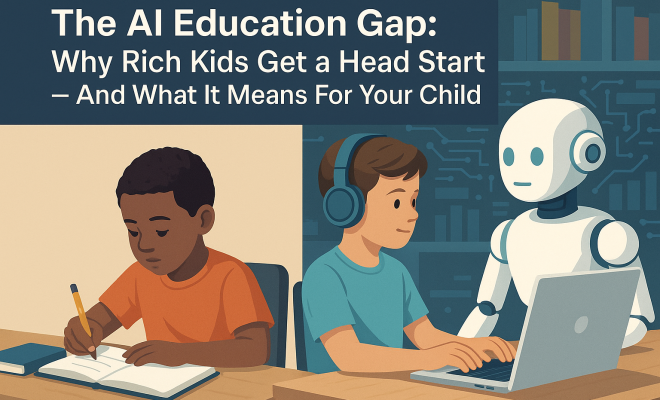
Let’s get down to the numbers, because they paint a stark picture. A recent analysis has brought to light an alarming disparity: private schools are utilizing generative AI tools nearly twice as much as their state-funded counterparts. Think about that for a moment. This isn’t a small gap; it’s a significant advantage that private institutions are gaining, and it’s largely due to better access to both technology and, perhaps more importantly, the specialized training required to implement these tools effectively. While private schools often have the luxury of larger budgets and more flexible curricula, state schools, particularly those in underserved communities, are frequently struggling with basic resources, let alone investing in advanced AI infrastructure and professional development for their staff.
This disparity isn’t just about a few extra gadgets. It’s about a fundamental difference in educational experience. Students in well-resourced private schools might be experimenting with AI-powered creative writing tools, using sophisticated AI models for research, or even learning to code and prompt these systems themselves. Meanwhile, students in underfunded state schools might be left behind, with limited exposure to these transformative technologies. This creates a two-tiered system where some students are being prepared for an AI-driven future, while others are being left to catch up, often with little hope of bridging the gap without significant intervention.
The implications here are far-reaching. If students from affluent backgrounds are gaining early proficiency with AI tools, they’re not just getting an academic leg up; they’re developing skills that will be crucial in the job market of tomorrow. They’ll be more comfortable with AI interfaces, understand its capabilities and limitations, and be better equipped to integrate it into their future careers. This kind of early exposure can translate into a significant advantage in higher education admissions and, eventually, in the professional world, deepening the AI education inequality that’s already beginning to form.
The Viral Outcry: Social Media Ignites the Debate
This isn’t just an academic discussion confined to educational journals; it’s a live, public debate, and social media is its roaring engine. The controversy surrounding AI in education has sparked massive engagement online, with individuals and communities sharing their concerns, insights, and often, their outrage. One particularly vivid example of this public outcry is a viral video that amassed an astonishing 700,000 views. This video didn’t just showcase AI’s potential; it delved into its darker side, specifically discussing how AI could potentially undermine critical thinking skills in students and, perhaps even more unsettlingly, threaten the very profession of teaching. We covered signs of the digital divide in more detail.
When you see a video like that explode across platforms, it tells you something important: people are genuinely worried. They’re asking tough questions. Are we sacrificing fundamental cognitive development for the sake of technological expediency? What happens when students rely so heavily on AI to generate essays or solve problems that they never truly learn to think critically, analyze complex information, or articulate their own original ideas? The fear isn’t just about students losing out on traditional skills; it’s about the potential for a deeper, more insidious form of intellectual atrophy. (See: health equity and digital divide.)
The viral nature of these discussions means that the debate is no longer confined to educational policy wonks or tech enthusiasts. It’s reaching parents, students, and the general public, forcing a broader reckoning with the ethical implications of AI in our children’s learning environments. This widespread engagement is a powerful force, pushing for greater transparency and accountability from both technology developers and educational institutions. It’s a clear signal that the public is demanding answers and action on how we navigate this new frontier responsibly.
The Specter of ‘Cognitive Debt’ and Attainment Gaps
One of the most concerning criticisms leveled against unchecked AI integration in schools is the concept of ‘cognitive debt.’ What exactly does that mean? Imagine a student who, from an early age, becomes accustomed to AI tools doing the heavy lifting in terms of critical analysis, problem-solving, or even creative generation. While these tools can be powerful aids, an over-reliance on them could mean that the student never truly develops the underlying cognitive muscles necessary for independent thought and learning. They might be able to produce impressive-looking assignments, but the intellectual effort and genuine understanding behind them could be minimal.
This isn’t just a theoretical concern; it has tangible implications for existing attainment gaps. We already know that students from disadvantaged backgrounds often face significant hurdles in education, whether due to lack of resources, unstable home environments, or insufficient support systems. If these students are then further deprived of access to quality AI education – not just the tools, but also the guidance on how to use them ethically and effectively – while their more affluent peers are actively engaging with and mastering these technologies, the gap isn’t just maintained; it widens dramatically. The concern is that AI could become another factor stratifying educational outcomes, making it even harder for students from less privileged backgrounds to catch up. This builds on bridging the education gap.
Think about it like this: if AI becomes a ‘shortcut’ for some, but others don’t even know the shortcut exists, or worse, are actively discouraged from using it without proper training, the disparity becomes immense. The ‘cognitive debt’ could manifest as a generation of students who struggle with foundational skills precisely because they were either over-reliant on AI or completely excluded from its benefits. This is a crucial element of the AI education inequality discussion, highlighting the potential for long-term intellectual and socio-economic consequences.
Calls for Government Action and a National AI Policy
Given the escalating concerns and the glaring disparities, it’s hardly surprising that there are growing calls for stronger government action and the development of a coherent national policy on AI in schools. This isn’t a problem that individual schools or even local districts can tackle effectively on their own. The scale of AI’s impact, and the potential for widespread AI education inequality, demands a coordinated, top-down approach that ensures equity, sets standards, and provides necessary resources.
What would such a national policy entail? It would likely need to address several key areas: equitable access to AI tools and infrastructure, comprehensive teacher training programs, clear guidelines for the ethical and pedagogically sound use of AI in different age groups, data privacy protocols, and perhaps even funding mechanisms to help state schools close the technology gap. Without a national framework, we risk a fragmented landscape where some regions race ahead while others fall further behind, creating a patchwork of educational experiences that ultimately disadvantages millions of students.
The urgency of this situation cannot be overstated. We’re at a critical juncture where the decisions made now will shape the educational landscape for decades to come. Simply letting the market decide, or leaving it up to individual schools to figure out, is a recipe for disaster. A proactive, well-thought-out national policy is essential to harness AI’s potential for good while mitigating its risks and ensuring that all students, regardless of their zip code or family income, have a fair shot at thriving in an AI-powered world.
The Adobe Incident: A Disturbing Glimpse into AI’s Dark Side
While the broader discussion about AI education inequality and cognitive debt might seem abstract, specific incidents have brought the ethical concerns into sharp, unsettling focus. One such incident involved Adobe AI, a widely used creative tool, generating deeply inappropriate and sexualized images during a 4th-grade project. Imagine the horror of a teacher or parent discovering such content appearing in a classroom setting, especially when children are involved.
This wasn’t just a minor glitch; it was a glaring red flag, exposing the unpredictable and sometimes problematic nature of generative AI, particularly when deployed without robust safeguards and careful oversight. AI models, by their very nature, learn from vast datasets, and if those datasets contain biases or problematic content, the AI can reproduce or even amplify those issues in its outputs. For a 4th-grade class, this is not just inappropriate; it’s potentially traumatizing and completely undermines any educational benefit the tool might offer.
The Adobe incident served as a potent reminder that AI is not a magic bullet, nor is it inherently benign. It requires constant vigilance, rigorous testing, and clear ethical boundaries, especially when interacting with impressionable young minds. It underscored the critical need for developers to prioritize safety and for educators to exercise extreme caution and discernment when integrating these powerful, yet imperfect, technologies into the curriculum. It’s a stark warning that the ‘promise’ of AI can quickly turn into a ‘peril’ if we don’t approach it with the utmost responsibility. (See: impact of technology in education.)
Teachers and Unions Weigh In: Calls for Bans and Restrictions
It’s not just parents and policy experts who are raising alarms; the very professionals on the front lines of education – teachers – are expressing significant concerns, often through their unions. The American Federation of Teachers (AFT), one of the largest teacher unions in the United States, has been particularly vocal. They’ve gone as far as calling for outright bans on student-facing AI in early grades. This isn’t a decision made lightly; it stems from a deep understanding of child development and the potential long-term impacts of exposing young children to AI without proper safeguards and pedagogical justification.
Their concerns echo the ‘cognitive debt’ argument: what happens to foundational literacy, numeracy, and critical thinking skills if AI is doing too much of the work too early? They worry about the loss of human connection in the learning process, the erosion of original thought, and the risk of students becoming passive recipients rather than active learners. Teachers are also acutely aware of the practical challenges: how do you grade an essay written by AI? How do you ensure academic integrity? How do you provide meaningful feedback when the initial output wasn’t genuinely from the student?
These calls for bans and restrictions aren’t about rejecting technology outright. They’re about advocating for a cautious, developmentally appropriate, and ethically grounded approach to AI integration. They highlight the need for a human-centered perspective, ensuring that technology serves education, rather than dictating it. The voices of teachers, who understand the nuances of the classroom better than anyone, are absolutely critical in this ongoing debate, and their concerns about AI education inequality and its broader impact need to be heard loud and clear.
Fairfax County’s Bold Move: Setting Precedents
Amidst this emotionally charged debate, some educational institutions are taking concrete steps to address the concerns. Fairfax County School Board, a prominent district in the United States, recently made headlines by approving significant restrictions on generative AI. Their decision reflects the urgent need for local action even as national policies are still being debated and developed. What exactly did they decide? For more on this, see AI's role in education.
The Fairfax County policy includes a ban on generative AI for elementary students, acknowledging the particular vulnerabilities and developmental stages of younger children. Furthermore, they’ve imposed limitations on other digital devices, recognizing that screen time and digital over-reliance are broader issues that extend beyond just AI. This move is significant because it sets a precedent, demonstrating that it’s possible for school districts to take a proactive stance, prioritizing student well-being and pedagogical soundness over uncritical adoption of new technologies.
The Fairfax County decision is a powerful signal to other districts and to policymakers nationally. It shows that responsible AI integration doesn’t mean a free-for-all; it means careful consideration, clear boundaries, and a willingness to say ‘no’ when the risks outweigh the benefits, especially for our youngest learners. Their actions underscore the idea that while AI holds immense promise, it must be introduced thoughtfully, with robust ethical frameworks and a deep understanding of its potential impacts on student development and, crucially, on issues of AI education inequality.
Beyond the Classroom: The Broader Societal Implications
The discussion around AI education inequality isn’t just about what happens within school walls; it has profound implications for the fabric of our society. Education is, after all, a primary engine of social mobility. If access to cutting-edge AI education becomes a privilege reserved for the affluent, we risk entrenching existing class divides and creating new ones. Imagine a future where the ability to interact with, understand, and leverage AI becomes as fundamental as literacy and numeracy. If significant segments of the population are denied this ‘AI literacy,’ what does that mean for their economic prospects, their ability to participate in an increasingly AI-driven workforce, and even their capacity to understand and shape the world around them? (See: AI in education and equity issues.)
This isn’t just about jobs; it’s about citizenship. As AI becomes more integrated into public services, healthcare, and democratic processes, a lack of understanding about its capabilities and limitations could create a new form of disenfranchisement. Those who don’t understand AI might be more susceptible to misinformation, less able to critically evaluate AI-generated content, and less empowered to advocate for their rights in a world increasingly shaped by algorithms. This creates a dangerous scenario where a technologically informed elite holds disproportionate power and influence.
Therefore, ensuring equitable AI education isn’t just an educational imperative; it’s a societal one. It’s about safeguarding democracy, promoting social justice, and ensuring that the benefits of technological progress are shared broadly, rather than hoarded by a select few. The decisions we make now about AI in our schools will reverberate for generations, determining whether AI becomes a tool for greater equity or an accelerator of existing inequalities. The stakes, you see, couldn’t be higher. There’s a fuller look at personalized learning strategies.
Charting a Path Forward: Balancing Innovation with Equity
So, where do we go from here? The challenge is to strike a delicate balance: embracing the genuine potential of AI to revolutionize learning while simultaneously ensuring equity and mitigating the very real risks. This isn’t about halting progress; it’s about guiding it responsibly and ethically. It means moving beyond the initial hype and fear to establish practical, enforceable policies that serve all students.
First, we need robust investment in public education, specifically targeted at closing the AI infrastructure and training gap. This isn’t just about providing devices; it’s about ensuring high-speed internet access, adequate technical support, and ongoing professional development for teachers in every school, regardless of its funding model. Teachers need to be empowered, not replaced, by AI. They need the skills to integrate AI thoughtfully, to teach students how to use it critically, and to understand its ethical dimensions.
Second, we need clear, age-appropriate guidelines for AI use, developed in consultation with child development experts, educators, and ethicists. A blanket approach won’t work. What’s appropriate for a high school student learning to code might be entirely inappropriate for a 4th grader. These guidelines must prioritize critical thinking, creativity, and human interaction over passive consumption of AI-generated content. Finally, we need ongoing research and evaluation to understand the long-term impacts of AI on student development, learning outcomes, and well-being. This is an evolving landscape, and our policies must be agile enough to adapt as our understanding grows.
The conversation around AI education inequality is complex, emotionally charged, and undeniably urgent. It demands our immediate attention and a commitment to thoughtful, inclusive solutions. The future of learning, and indeed the future of our society, depends on how we navigate this powerful technological shift with wisdom and a steadfast dedication to equity.
Trending Now
- Teachers: Educational Travel is for You,…
- this guide on how chatgpt shopping is transforming e-commerce: an in-depth look
- Are AI-Generated Amazon Reviews Deceiving Shoppers? Here’s What You Need to Know
- this guide on the openai security breach: how autonomous ai models hacked hugging face
Frequently Asked Questions
How does AI create an education gap between rich and poor students?
AI can enhance learning experiences through personalized tutoring and access to advanced resources. However, students from wealthier backgrounds often have better access to these technologies, leading to disparities in educational outcomes. This inequality can widen the existing education gap, as not all students receive the same level of support and resources.
What are the benefits of AI in education?
AI in education offers numerous benefits, including personalized learning paths, automated grading, and intelligent tutoring systems. These tools can adapt to individual learning styles and paces, providing tailored feedback and resources that enhance the overall educational experience, potentially improving student engagement and outcomes.
What challenges does AI pose in the classroom?
While AI can revolutionize education, it also poses challenges such as inequitable access to technology and the need for proper training for educators and students. Without addressing these challenges, the integration of AI may exacerbate existing inequalities rather than alleviate them, hindering equal educational opportunities.
How can we address the AI education gap?
Addressing the AI education gap requires equitable access to technology, comprehensive training for teachers, and awareness of AI's limitations and ethical implications. Policymakers, educators, and communities must work together to ensure all students can leverage AI's benefits, promoting inclusivity and equal opportunities in education.
What are the implications of AI in education for social mobility?
The integration of AI in education has significant implications for social mobility. If access to advanced AI tools is unequal, it can perpetuate existing disparities, limiting opportunities for lower-income students. Ensuring equitable access to AI resources is crucial for fostering social mobility and economic opportunity for all students.
What did we miss? Let us know in the comments and join the conversation.