Phonemic vs. Phonological Awareness: Key Differences for Reading Success
“`html
The foundational elements of reading often hinge on how well a child processes sounds in language. Two terms that frequently come up in discussions about reading skills are phonemic awareness and phonological awareness. Though they may seem interchangeable, they have distinct meanings and implications for literacy development. Understanding the nuances of phonemic awareness vs phonological awareness can significantly impact teaching strategies, learning outcomes, and ultimately a child’s reading success.
1. Defining Phonological Awareness
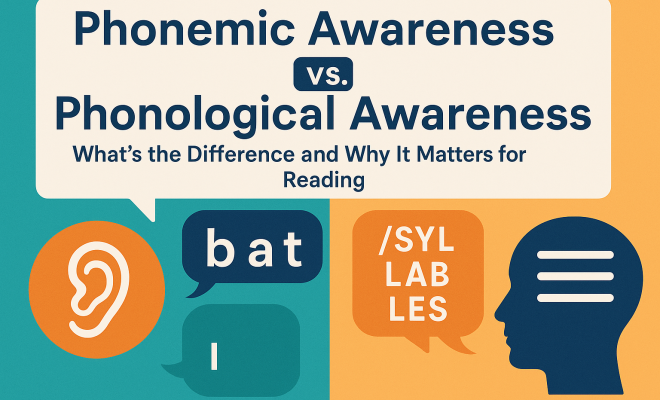
Phonological awareness is an umbrella term that encompasses the broad skills related to the sound structure of language. It includes the ability to recognize and manipulate sounds in spoken words, ranging from larger units like syllables to the individual sounds or phonemes. Children with strong phonological awareness can engage in tasks such as identifying rhymes, counting syllables, and segmenting words into their constituent parts.
For example, when a child is asked to clap for each syllable in the word “banana,” they’re demonstrating a level of phonological awareness. This skill is vital for early literacy because it allows children to develop an understanding of the rhythmic and melodic aspects of language, which are foundational for reading and writing.
2. Understanding Phonemic Awareness
On the other hand, phonemic awareness is a more specialized subset of phonological awareness. It focuses specifically on the recognition and manipulation of phonemes, the smallest units of sound that can distinguish meaning in spoken language. Phonemic awareness activities might involve tasks such as blending sounds to form words, segmenting words into individual sounds, or deleting sounds from words.
An example of phonemic awareness would be asking a child to say the word “cat” and then asking them to isolate the first sound (/k/). Mastery of phonemic awareness is critical for learning to read because it helps children connect spoken language with written symbols, thus aiding in decoding and recognition of words.
3. The Importance of Phonemic Awareness vs Phonological Awareness
Understanding the distinction between these two forms of awareness is crucial for educators and parents alike. Phonological awareness serves as the foundational skill set that encompasses various aspects of sound processing, whereas phonemic awareness zeroes in on a specific skill that is essential for reading fluency.
Research has shown that strong phonemic awareness is a leading predictor of how well children will learn to read. In fact, children who struggle with phonemic awareness are at a higher risk for developing reading difficulties. Therefore, interventions that focus on enhancing these skills can significantly improve literacy outcomes.
4. Developmental Stages of Phonological and Phonemic Awareness
The development of phonological awareness typically occurs in stages. In early childhood, children start with broader skills, such as recognizing rhythmic patterns and playing with the sounds of language through nursery rhymes and songs. As they grow, they begin to break down these patterns into smaller elements.
Phonemic awareness generally develops later, often between ages 4 and 7, as children become more familiar with the alphabet and the relationship between sounds and letters. Effective teaching practices often target these stages to ensure children build a solid foundation for reading. For instance, activities like sound sorting and phoneme manipulation can be integrated into early education curricula to bolster these skills.
5. Practical Strategies for Enhancing Phonological and Phonemic Awareness
There are numerous strategies that educators and parents can employ to foster phonological and phonemic awareness in children. Here are some effective methods:
- Rhyming Games: Engage children in rhyming games or songs that help them recognize sound patterns.
- Syllable Clapping: Encourage children to clap out the syllables in their names or familiar words.
- Sound Manipulation: Use phoneme manipulation exercises, such as asking children to change the first sound in a word to create a new word.
- Read Aloud: Reading aloud to children exposes them to rich language and sound patterns, enhancing their phonological awareness.
- Phoneme Segmentation: Practice breaking words into individual sounds. For example, say a word slowly and ask the child to identify each sound.
Incorporating these strategies into everyday activities can make learning engaging and effective. The key is to provide consistent practice to help children strengthen their abilities in both areas.
6. The Role of Assessment in Phonological and Phonemic Awareness
Assessing a child’s phonological and phonemic awareness is vital for understanding their reading development and identifying any areas of concern. Teachers often use various screening tools and assessments to gauge these skills. For instance, standardized assessments may include tasks that measure a child’s ability to rhyme, segment syllables, or manipulate sounds. (See: Teaching children to read.)
Understanding a child’s proficiency in these areas allows educators to tailor interventions to meet individual needs. If a child struggles with phonemic tasks, targeted interventions can be implemented to address those specific weaknesses. Regular assessments also help track progress and adapt instruction accordingly, ensuring that each child receives support suited to their developmental stage.
7. Current Trends and Innovations in Teaching Phonological and Phonemic Awareness
In recent years, there has been a growing emphasis on the importance of phonological and phonemic awareness in early literacy curricula. Educators are increasingly leveraging technology to enhance these skills through interactive apps and software that make learning fun and engaging.
Moreover, there’s a shift towards incorporating a more holistic approach to literacy, where phonological awareness is integrated into broader literacy instruction. This includes combining phonological activities with comprehension strategies and vocabulary development, recognizing that reading is a multifaceted skill that extends beyond mere sound recognition.
Current research continues to illuminate the ways that phonemic awareness training can be effectively implemented in diverse learning environments. For instance, culturally responsive teaching methods are being explored to ensure that all children, regardless of their linguistic background, receive access to effective phonemic and phonological instruction.
8. Addressing Misconceptions About Phonological and Phonemic Awareness
A common misconception is that phonological awareness is not relevant for older students. In reality, phonological and phonemic awareness skills can continue to benefit learners throughout their educational journey. Even older students who struggle with reading can enhance their reading skills by revisiting these foundational concepts.
Another misconception is that phonemic awareness training is only necessary for struggling readers. In truth, all children benefit from developing these skills, as they are critical for mastering the complexities of reading. Educators should incorporate phonological and phonemic awareness into their teaching strategies for all students, fostering a balanced literacy approach.
9. Key Differences Between Phonological and Phonemic Awareness
To better understand the differences between these two concepts, let’s break down some key distinctions:
- Scope: Phonological awareness covers a wide range of skills, while phonemic awareness is focused solely on individual phonemes.
- Developmental Timing: Phonological awareness usually develops earlier in childhood, while phonemic awareness is often developed as children begin to learn about letters and spelling.
- Types of Activities: Activities that target phonological awareness might involve rhymes or syllables, whereas phonemic awareness activities will include phoneme manipulation and segmentation.
- Importance for Reading: Phonemic awareness is particularly critical for decoding words in reading, making it a vital skill for literacy success.
10. Statistics and Research Findings
Research underscores the importance of phonemic and phonological awareness. For instance, a study published in the Journal of Educational Psychology found that children who participated in phonemic awareness training showed a 25% improvement in their reading abilities compared to those who did not receive such training.
Another significant finding from the National Reading Panel indicated that phonemic awareness instruction can lead to substantial improvements in reading, especially for students who find reading particularly challenging. This panel emphasized that such instruction should be systematic and explicit, ensuring that children grasp the necessary skills to thrive.
According to the National Assessment of Educational Progress (NAEP), about 66% of fourth-grade students in the United States read below the proficient level. Many of these students struggle with phonemic awareness, further highlighting the need for effective early interventions.
11. Expert Perspectives on Phonological and Phonemic Awareness
Experts in literacy education consistently emphasize the necessity of phonemic and phonological awareness. Dr. Timothy Shanahan, a renowned literacy expert, notes that “the ability to play with sounds in words is the starting point for reading.” He advocates for structured phonemic awareness instruction as a means to combat reading difficulties.
Dr. Marilyn Jager Adams, another literacy authority, highlights the role of phonemic awareness in language development. She states, “Without understanding the sounds in words, children will struggle to connect these sounds to the letters in print.” This connection is vital for successful reading and writing development.
12. Effective Interventions for Struggling Readers
For children who struggle with phonological or phonemic awareness, targeted interventions can make a significant difference. Here are a few effective strategies:
- Explicit Phonemic Instruction: Structured programs that focus on phoneme isolation, blending, and segmentation can benefit struggling readers.
- Multi-sensory Approaches: Engaging multiple senses through visual aids, tactile activities, and auditory exercises can enhance learning outcomes.
- Small Group Instruction: Providing small group settings allows for more individualized attention and tailored instruction based on specific needs.
These interventions should be based on ongoing assessments to ensure that they are meeting the child’s needs effectively and adjusting as needed. (See: Literacy and health education.)
13. Building a Language-Rich Environment
Creating a language-rich environment at home and in the classroom is crucial for supporting phonological and phonemic awareness. Here are some strategies to consider:
- Read Daily: Reading a variety of texts exposes children to new vocabulary and sound patterns.
- Encourage Storytelling: Allow children to tell their own stories, which can help them play with sounds and structures in language.
- Use Word Games: Games like Scrabble, Boggle, or even online phonics games can be both fun and educational.
By fostering a language-rich environment, you’re helping to support children’s development in both phonological and phonemic awareness.
14. Frequently Asked Questions (FAQ)
What is the difference between phonemic awareness and phonological awareness?
Phonological awareness is a broad skill that includes the ability to recognize and manipulate sounds at different levels, from whole words down to syllables and phonemes. Phonemic awareness, however, is a specific aspect of phonological awareness that focuses solely on the manipulation of phonemes.
At what age should children start developing phonemic awareness?
Phonemic awareness typically starts to develop between ages 4 and 7. However, activities that promote phonological awareness can begin much earlier, as young as toddler age, through nursery rhymes and songs.
Can phonemic awareness skills be taught to older children?
Absolutely! While phonemic awareness is critical in early literacy, older children struggling with reading can still benefit from targeted phonemic awareness instruction. Revisiting these skills can help improve their reading abilities.
How can parents support their child’s phonological and phonemic awareness at home?
Parents can support their child’s phonological and phonemic awareness by reading aloud regularly, engaging in rhyming games, and incorporating sound manipulation activities into everyday conversations. Simple games and activities can make learning fun and impactful.
Is phonemic awareness instruction effective for all children?
Yes, effective phonemic awareness instruction benefits all children, not just those struggling with reading. Developing these skills is essential for mastering the complexities of reading, and all children can improve their literacy skills through this foundational training.
15. The Lasting Impact of Phonological and Phonemic Awareness
In summary, understanding the differences between phonemic awareness vs phonological awareness is essential for anyone involved in education and literacy development. These foundational skills not only pave the way for successful reading but also impact a child’s overall academic performance.
As we continue to explore effective teaching strategies and interventions, it is clear that phonological and phonemic awareness will play a pivotal role in shaping the future of literacy education. By prioritizing these essential skills, we can help all children develop the confidence and competence they need to succeed in reading and beyond.
16. Additional Insights into Phonological and Phonemic Awareness
Recognizing the importance of phonemic and phonological awareness in literacy development extends beyond just teaching techniques. It’s crucial to understand how these skills interconnect with other aspects of language learning. For instance, children who develop phonemic awareness early often show improved spelling and writing skills, as they learn to associate sounds with letters and letter combinations.
Research also suggests that phonemic awareness can impact a child’s ability to learn second languages. A study published in the International Journal of Bilingual Education and Bilingualism found that children who displayed strong phonemic awareness skills were better able to pick up the sounds and structures of a new language, providing them with an advantage in language acquisition.
17. Phonological Awareness in Different Languages
While phonological and phonemic awareness are often discussed in the context of English literacy, these concepts are relevant across languages. Different languages have varying phonetic structures, which can influence how phonological and phonemic awareness develop. For example, languages like Spanish have a more consistent phoneme-to-grapheme correspondence than English, which can affect how children learn to read and write in those languages.
In multilingual settings, educators must be aware of the phonological and phonemic awareness skills in each language a child is exposed to, as these skills can transfer from one language to another. Research indicates that bilingual children can draw on their phonological awareness skills from their first language to aid in learning a second language, making it critical for educators to support this development in multiple languages.
18. Parental Involvement and Community Support
Parental involvement is pivotal in nurturing phonological and phonemic awareness. Parents who engage in literacy activities with their children, such as reading, playing word games, or listening to audiobooks, can significantly enhance their children’s skills. Community programs that offer workshops for parents on how to support literacy development at home can also be beneficial.
Libraries, for example, play a crucial role by hosting storytimes and literacy events designed to promote phonological awareness. These community efforts not only support children’s learning but also empower parents to actively participate in their children’s literacy journey.
19. Challenges in Teaching Phonological and Phonemic Awareness
Despite the recognized importance of phonological and phonemic awareness, educators face several challenges in teaching these skills effectively. One significant hurdle is the varying levels of background knowledge and experience among students. For example, some children may come from language-rich environments, while others may not have had the same exposure, leading to disparities in phonological awareness skills.
Additionally, educators are often tasked with teaching in inclusive classrooms where students with diverse learning needs are present. Tailoring instruction to meet the varying needs of these students can be difficult, but it’s essential for ensuring that all children have the opportunity to develop strong phonological and phonemic awareness.
20. Future Directions in Phonological and Phonemic Awareness Research
The field of literacy education is continually evolving, with ongoing research seeking to uncover the most effective strategies for teaching phonological and phonemic awareness. Future studies may explore the impact of technology on these skills, particularly how digital resources can enhance phonemic awareness instruction in interactive and engaging ways.
Another promising area of research is the examination of culturally responsive practices in phonemic awareness instruction. Understanding how children from different cultural backgrounds perceive and process sounds can lead to more effective teaching strategies tailored to diverse learners.
As we gain more insights into phonological and phonemic awareness, it will be crucial for educators to stay informed about new findings and methodologies to continue supporting literacy development for all children.
“`
Trending Now
Frequently Asked Questions
What is the difference between phonemic awareness and phonological awareness?
Phonological awareness is a broad skill involving the recognition and manipulation of sounds in language, including syllables and rhymes. Phonemic awareness, however, is a specific subset that focuses solely on the smallest units of sound, or phonemes, which are crucial for distinguishing meaning in spoken language.
Why is phonemic awareness important for reading?
Phonemic awareness is vital for reading as it enables children to understand how sounds form words. Mastery of this skill allows them to blend, segment, and manipulate sounds, which are essential processes for decoding and comprehending written text.
What are some examples of phonological awareness activities?
Activities that develop phonological awareness include identifying rhymes, counting syllables in words, and clapping for each syllable. For instance, clapping for the syllables in 'banana' helps children grasp the rhythmic structure of language, which supports early literacy.
How can phonemic awareness be taught to children?
Phonemic awareness can be taught through interactive activities such as sound blending, segmenting words into individual sounds, and playing games that involve manipulating sounds. These engaging exercises help children develop the skills necessary for effective reading.
What role does phonological awareness play in literacy development?
Phonological awareness plays a crucial role in literacy development as it lays the foundation for reading and writing. By understanding sound structures and relationships in language, children can better decode words, which enhances their overall reading skills.
What’s your take on this? Share your thoughts in the comments below — we read every one.