Odisha Assembly President’s Ruling Sparks Political Outrage
“`html
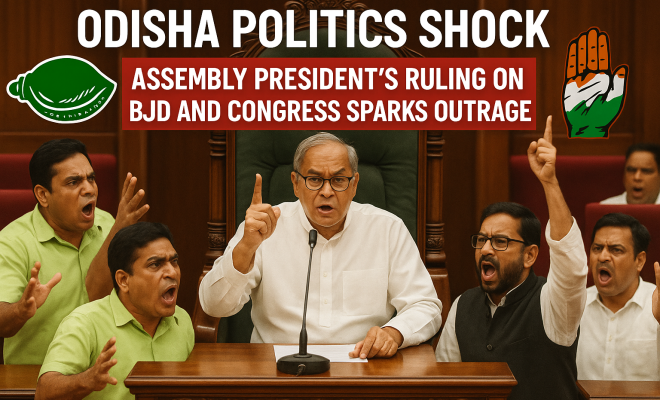
The political landscape in Odisha is brimming with tension following the Odisha Assembly President’s recent ruling that has left many legislators on edge. As the news about the rejection of a petition seeking to disqualify legislators from the Biju Janata Dal (BJD) and the Indian National Congress spreads, it has caught fire on social media and is trending on Google. This decision raises significant questions about legislative integrity and the power dynamics within the state. In this article, we’ll analyze the implications of this ruling and its impact on Odisha politics.
The Context Behind the Ruling
The backdrop to the Assembly President’s decision is a complicated political scene in Odisha, where many view the BJD as a major player shaping the state’s governance. Led by Chief Minister Naveen Patnaik, the BJD has maintained a dominant position in the state since 2000. However, the recent petition aimed at disqualifying certain legislators has sparked a fiery debate about the legitimacy and fairness of such actions.
The petition itself was fueled by allegations of misconduct among certain legislators. Critics argued that disqualification would serve as a necessary check against what they termed “corrupt practices.” However, proponents of the BJD and Congress deemed the effort a politically motivated maneuver aimed at destabilizing their parties. As the Assembly President rejected the petition, the consequences of this decision reverberated through the halls of Odisha’s political arena.
The Reactions from Political Leaders
Political leaders across the spectrum have reacted vehemently to the Assembly President’s decision. Leaders from the BJD celebrated the ruling as a victory for democracy, asserting that it upheld the integrity of the legislative process. BJD spokespersons emphasized the importance of allowing elected representatives to serve their terms without undue pressure from opposition parties.
Conversely, Congress leaders have criticized the decision, claiming it reveals a deeper malaise within Odisha’s governance. They argue that the rejection of the petition undermines accountability and perpetuates a culture of impunity among legislators. This divide has intensified the discourse surrounding Odisha politics, as each party attempts to leverage the ruling to its advantage.
The Public’s Response
The public reaction has been equally polarized, with many taking to social media to voice their opinions. Hashtags related to Odisha politics news have been trending, showcasing the intensity of the debate. Supporters of the ruling point to the need for stability in governance, arguing that disqualifying elected officials could lead to chaos and undermine the trust of the electorate.
Opponents of the ruling, however, have raised concerns about the implications for democracy. They argue that allowing legislators to escape accountability sets a dangerous precedent. Many are sharing their thoughts on platforms like Twitter and Facebook, with posts ranging from calls for reform to outright condemnation of the Assembly President’s decision.
The Impact on Governance in Odisha
As the dust settles, one cannot overlook the potential impact of this ruling on governance in Odisha. By rejecting the disqualification petition, the Assembly President has allowed the status quo to persist. For many, this decision represents a turning point in how political power is exercised in the state.
The implications are multi-faceted. Continued dominance by the BJD may lead to a concentration of power that some fear could stifle dissent and discourage opposition. Conversely, the ruling may galvanize the Congress party and other opposition groups to present a united front against what they perceive as a threat to democratic principles.
A Historical Perspective
To understand the significance of this ruling, it’s essential to look at the historical context of political disqualifications in India. Disqualification of legislators is a serious matter, often seen as a last resort in cases of severe misconduct or malpractice. Historically, these actions have been rare, which makes the recent petition and its rejection all the more significant. (See: Politics of Odisha.)
Past instances of disqualification have usually led to political upheaval. For example, in 2013, the disqualification of certain lawmakers in Andhra Pradesh resulted in significant political turmoil and realignment of party loyalties. This backdrop highlights the risks associated with disqualifying elected representatives and the potential for backlash against the ruling party.
The Role of Social Media in Shaping Opinions
The rise of social media has dramatically changed how political narratives are formed and spread. In this case, reactions to the Assembly President’s decision have taken on a life of their own online. Pundits, analysts, and ordinary citizens are all contributing to the conversation, and their comments are shaping public perception.
Platforms like Twitter have become battlegrounds for ideological debates, where users share memes, articles, and personal opinions. The virality of such content amplifies the stakes, making it crucial for political parties to engage with their constituents effectively. The trending nature of the topic underscores the urgency with which the public is approaching these issues, as they seek clarity and accountability in governance.
The Future of Odisha Politics
Looking ahead, the implications of this ruling could shape the trajectory of Odisha politics for years to come. The BJD’s ability to maintain its dominance in the coming elections will depend not only on its governance but also on how it manages dissent within the party and the broader political landscape.
For the Congress party and other opposition groups, this decision could serve as a rallying cry. Mobilizing public sentiment against perceived injustices may become a central theme as they gear up for future elections. Their strategy will likely focus on highlighting the need for accountability and transparency in governance.
Expert Opinions on the Matter
Experts in political science and governance are weighing in on the ramifications of the Assembly President’s ruling. Some argue that the decision is a reflection of the broader challenges facing democracy in India today. Political analyst Dr. Suresh Patnaik suggests that the ruling signals a trend toward consolidating power within certain parties, which could be detrimental to democratic practices in the long run.
Others, however, view the ruling as a necessary step to maintain stability in governance. Dr. Anjali Mishra points out that while accountability is crucial, the chaos that could ensue from disqualifying legislators may outweigh the benefits. This debate among experts highlights the complexity of the situation and the delicate balance that must be struck between accountability and stability.
New Developments in Odisha Politics
In the wake of the ruling, there have been numerous developments that could further influence the political landscape. BJD leaders have begun initiatives aimed at public engagement, attempting to address the concerns raised by opponents. These initiatives include town hall meetings and outreach programs designed to foster dialogue with constituents. Some BJD leaders have emphasized their commitment to transparency and accountability, even as they navigate the fallout from the recent decision.
Meanwhile, the Congress party has ramped up its campaign efforts, with targeted advertisements and public demonstrations aimed at mobilizing dissent against the ruling. Their focus is not only on disqualifications but also on broader issues such as poverty, unemployment, and education, seeking to connect with voters on a more personal level.
Comparative Analysis: Odisha and Other States
When examining the situation in Odisha, it’s enlightening to compare it with political scenarios in other Indian states. For instance, Uttar Pradesh and West Bengal have also faced similar challenges regarding the disqualification of legislators. In Uttar Pradesh, the Yogi Adityanath government has seen its fair share of controversies involving accountability and governance, leading to intense political rivalries. West Bengal, under the leadership of Mamata Banerjee, has also encountered significant opposition regarding its governance model. (See: BBC report on Indian politics.)
These comparisons highlight a broader trend in Indian politics where allegations of misconduct and calls for disqualifications have become commonplace. The stakes are often high, as these decisions can sway public opinion and lead to significant electoral consequences.
Statistical Insights into Voter Behavior
Understanding voter behavior in Odisha, particularly in light of recent political developments, is crucial. A survey conducted by the Odisha Political Research Institute revealed that 63% of respondents are concerned about political integrity and accountability among elected officials. This concern is coupled with a growing sentiment that political parties, especially the BJD, should prioritize transparency in their actions.
The same study showed that 58% of voters are more likely to support candidates who advocate for reforms aimed at increasing governmental accountability. With the upcoming elections on the horizon, these statistics could serve as a wake-up call for political parties striving to connect with the electorate.
Frequently Asked Questions
What was the basis for the disqualification petition?
The disqualification petition was based on allegations of misconduct among certain legislators within the BJD and Congress. Critics argued that these actions warranted a thorough investigation and potential disqualification to uphold the integrity of the legislative process.
How does this ruling affect the BJD’s political strategy?
The ruling allows the BJD to maintain its current legislative composition, providing an advantage as they continue to push their agenda. However, it also places pressure on the party to enhance its accountability measures to counter growing public scrutiny.
What are the potential long-term effects of this ruling?
Long-term effects could include a shift in voter sentiment towards greater accountability demands, prompting political parties to adapt their strategies. This ruling may also inspire similar petitions in the future, potentially leading to further political conflicts.
How are opposition parties responding to this ruling?
Opposition parties, particularly Congress, are framing the decision as part of a broader issue of accountability in governance. They are using this opportunity to mobilize supporters around calls for reform and to critique the BJD’s governance model.
What role does social media play in shaping public perception of this issue?
Social media has become a critical platform for discussions about Odisha politics news. It amplifies diverse opinions and allows instant communication, often leading to heightened awareness and mobilization of public sentiment around political issues.
Regional Influences on Odisha Politics
Odisha’s political dynamics are not only influenced by internal factors but also by regional contexts. Being situated next to states like West Bengal, Jharkhand, and Chhattisgarh, the political climate in these areas can significantly impact Odisha’s governance strategies and electoral politics. For example, the rise of the Trinamool Congress in West Bengal has led to increased political competition in border districts of Odisha, forcing local BJD leaders to adapt their strategies to maintain voter loyalty. (See: New York Times coverage of Odisha.)
Similarly, the Congress party, which has faced challenges in Odisha, can learn from its successes and failures in neighboring states. The political strategies adopted in these states, especially in relation to local issues such as land rights, tribal rights, and resource management, often resonate with Odisha’s electorate. As these parties strategize for upcoming elections, the cross-border political influences may lead them to align more closely with regional sentiments to win voter trust and support.
The Economic Landscape and its Impact on Politics
The economic conditions in Odisha play a critical role in shaping the political narrative. As one of India’s mineral-rich states, Odisha has a significant advantage; however, the management of these resources has often been a contentious issue. The BJD government has been criticized for its handling of land acquisition and the displacement of local communities for industrial projects. This discontent can fuel opposition narratives and become a focal point in the political discourse leading up to elections.
In recent years, public protests over land acquisition for projects like the POSCO steel plant have illustrated the rising tensions between local populations and governmental decisions. The manner in which these economic initiatives are perceived by the electorate can determine electoral outcomes. Economic policies that prioritize local employment and community benefits are likely to garner public approval, while perceived exploitation could lead to significant backlash, especially in a state where agriculture remains a crucial part of the economy.
The Role of Women in Odisha Politics
Another vital dimension to consider in Odisha politics is the role of women. The increasing participation of women in politics is a notable trend, with more female candidates emerging in recent elections. This shift is partly due to social movements advocating for women’s representation and empowerment. The BJD, for instance, has made strides to include more women in its ranks, which could influence voter perceptions and choices in a state where women often play a pivotal role in family and community decision-making.
Engaging women voters is crucial, especially in rural areas where they significantly impact electoral outcomes. Political parties that prioritize issues affecting women, such as education, health care, and employment, are likely to strengthen their support base. As the state progresses towards the next election cycle, the ability of parties to tap into this demographic will be a key factor in shaping their success or failure.
Conclusion: What Lies Ahead for Odisha?
The rejection of the disqualification petition by the Odisha Assembly President is more than just a political decision; it’s a reflection of the state’s evolving political dynamics. With both the BJD and Congress gearing up for what promises to be a contentious electoral landscape, the coming months will be crucial for understanding how this ruling impacts governance and accountability in Odisha.
As citizens and political observers closely monitor the developments, one thing is certain: the discourse surrounding Odisha politics news will only grow more intense. Whether this ruling strengthens or complicates the political arena remains to be seen, but it has undoubtedly set the stage for a lively and unpredictable political season in Odisha.
“`
Trending Now
- read the full story
- this guide on “the three core considerations of dap: age, individual, and cultural appropriateness”
- “Why Neuroscientists Say Learning Styles Theory…
- our breakdown of “how to teach to different learning preferences without limiting student growth”
- the complete explanation
Frequently Asked Questions
What is the recent ruling by the Odisha Assembly President about?
The Odisha Assembly President recently ruled against a petition seeking to disqualify certain legislators from the Biju Janata Dal (BJD) and the Indian National Congress, which has sparked significant outrage and debate about legislative integrity in the state.
Why was there a petition to disqualify BJD and Congress legislators?
The petition aimed to disqualify certain legislators due to allegations of misconduct, with critics arguing that such disqualification was necessary to address what they termed 'corrupt practices' within the assembly.
How did political leaders react to the Assembly President's decision?
Political leaders reacted strongly, with BJD leaders celebrating the ruling as a victory for democracy, while Congress leaders criticized it as a politically motivated maneuver aimed at undermining their party.
What implications does the ruling have for Odisha politics?
The ruling raises significant questions about the power dynamics and legislative integrity in Odisha politics, potentially impacting the stability and governance of the state as it continues to unfold.
Who leads the Biju Janata Dal in Odisha?
The Biju Janata Dal (BJD) is led by Chief Minister Naveen Patnaik, who has maintained a dominant position in Odisha's governance since the year 2000.
What’s your take on this? Share your thoughts in the comments below — we read every one.