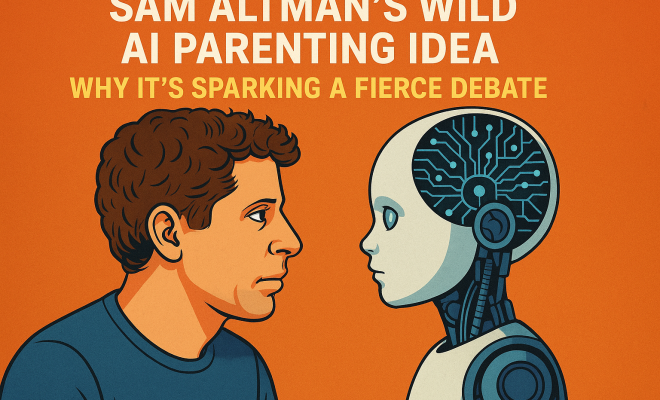
Sam Altman’s Wild AI Parenting Idea: Why It’s Sparking a Fierce Debate
“`html
OpenAI CEO Sam Altman, a name synonymous with pushing the boundaries of artificial intelligence, recently ignited a firestorm of discussion across the internet. On August 7, 2026, he floated an AI parenting idea that, seemingly innocuous at first glance, quickly polarized opinions: using ChatGPT to generate personalized podcasts for children. Imagine this – a bespoke audio experience, crafted in real-time by AI, perfectly aligning with your child’s daily schedule and current fascinations. Sounds like something out of a sci-fi novel, right? Well, it’s closer to reality than you might think, and the implications for how we raise our kids are profound and, for many, deeply concerning. Ardelia's comprehensive review offers useful background here.
This isn’t just about a new tech gadget; it’s about the very fabric of family life and the role technology will play in shaping the next generation. The debate isn’t merely theoretical; it delves into fundamental questions about human connection, the nature of learning, and what it truly means to parent effectively in an increasingly AI-driven world. From meal planning to homework assistance, AI parenting ideas are already creeping into our homes, and Altman’s podcast suggestion simply shone a spotlight on a much larger, simmering conversation about our collective future.
1. The Viral Spark: Personalized Podcasts for Kids: A Double-Edged Sword?
Altman’s specific AI parenting idea that got everyone talking was the notion of dynamically generated podcasts for children. The concept is straightforward yet revolutionary: instead of relying on pre-recorded shows or human-curated content, an AI like ChatGPT could create audio stories, lessons, or even interactive adventures tailored precisely to a child’s individual interests and daily routine. If your child is obsessed with dinosaurs one week and space exploration the next, the AI adapts. If they need a calming story before bed or an energetic one during playtime, the AI delivers.
This level of personalization is incredibly compelling from a technological standpoint. It promises an endless stream of engaging, relevant content designed to capture and hold a child’s attention. Think about the potential for educational enrichment: imagine an AI-generated story that seamlessly integrates a science concept your child is struggling with, presented in a narrative style they adore. For busy parents juggling countless responsibilities, the allure of an AI assistant that can consistently entertain and educate their child with minimal effort is undeniable.
2. The ‘Gravity Falls’ Creator’s Critique: Is AI Replacing Human Connection?
Almost immediately, the internet reacted, and not everyone was on board with Altman’s vision. One of the most prominent voices to raise concerns was Alex Hirsch, the acclaimed creator of the beloved animated series ‘Gravity Falls.’ Hirsch’s critique cut right to the heart of the matter: does technology like this, however sophisticated, risk replacing genuine human interaction? There’s a fuller look at impact of digital tech in education.
His argument, echoed by countless parents and educators, centers on the irreplaceable value of shared experiences. When a parent reads a story, tells a joke, or even just listens to a child’s rambling thoughts, it’s not just about the content; it’s about the connection. It’s about the subtle cues, the shared laughter, the comforting presence. An AI, no matter how advanced, cannot replicate the emotional nuance of a human-to-human bond. The fear is that by outsourcing these moments to AI, we might inadvertently diminish the very interactions that are crucial for a child’s social and emotional development.
3. Broader Implications for Education and Family Life: Beyond Podcasts
The conversation quickly expanded beyond personalized podcasts. Altman’s suggestion became a lightning rod for a much larger debate about the pervasive influence of AI in parenting, education, and family life as a whole. We’re already seeing AI tools emerge for a myriad of domestic tasks. Meal planning apps powered by AI can suggest recipes based on dietary restrictions and available ingredients. Homework helper bots can explain complex concepts or even assist with essay structures (a truly contentious point for educators).
Even more intriguingly, AI is being developed for more nuanced conversations, capable of offering emotional support or acting as a sounding board. While these tools offer undeniable convenience and potential benefits, they also force us to confront uncomfortable questions: Where do we draw the line? How much of our children’s learning, entertainment, and even emotional processing should be mediated by algorithms? The ease of delegating tasks to AI is tempting, but the long-term impact on family dynamics and child development remains largely uncharted territory.
4. Data Privacy and Security Concerns: A Digital Minefield for Kids
As AI parenting ideas become more sophisticated and integrated into our lives, the issue of data privacy looms large, particularly when children are involved. For an AI to create truly personalized content, it needs data – a lot of it. This could include a child’s interests, their daily schedule, their learning pace, even their emotional responses to certain stimuli. Who owns this data? How is it stored? Who has access to it?
These aren’t hypothetical questions; they are critical concerns that demand robust solutions. Parents rightly worry about the potential for misuse, breaches, or even the subtle manipulation of their children’s preferences and beliefs by algorithms. The idea of an AI constantly monitoring and adapting to a child’s life, while offering convenience, also presents a digital minefield for privacy and security. Companies developing these tools will need to demonstrate an unwavering commitment to ethical data practices and transparency to earn parental trust. (See: AI and parenting discussions.)
5. The Risk of Over-Reliance on AI: Stifling Independent Thought?
Another significant concern raised by the debate is the potential for over-reliance on AI. If AI can provide all the answers, generate all the entertainment, and even facilitate learning, what does that do to a child’s capacity for independent thought, problem-solving, and creativity? The human brain thrives on challenge, on grappling with uncertainty, and on the sometimes messy process of discovery.
When an AI is always ready with the perfect solution or the most engaging story, there’s a risk that children might not develop the resilience and critical thinking skills that come from navigating difficulties on their own. The art of boredom, for instance, often sparks creativity. If AI is constantly filling every void, are we inadvertently robbing children of the space to imagine, invent, and simply be? It’s a tricky balance to strike between leveraging AI’s power and ensuring children develop essential human capabilities.
6. Impact on Social and Emotional Development: The Human Element
Perhaps the most emotionally charged aspect of the AI parenting debate centers on its impact on children’s social and emotional development. Childhood is a period of intense learning, not just of facts and figures, but of empathy, social cues, conflict resolution, and emotional regulation. These skills are primarily honed through interactions with other humans – parents, siblings, friends, and teachers.
If children spend significant portions of their day interacting with AI, even sophisticated AI, what does that mean for their ability to read human emotions, understand complex social dynamics, or form deep, meaningful relationships? AI can simulate empathy, but it cannot genuinely feel it. It can offer comforting words, but it cannot provide the warmth of a human hug. The fear is that a generation raised with an overabundance of AI-mediated experiences might struggle with the nuances of human connection, leading to potential deficits in social and emotional intelligence.
7. The Viral Nature of the Debate: Why It Resonates So Deeply
The controversy surrounding Sam Altman’s AI parenting idea has gone viral for several compelling reasons, reflecting deeper societal anxieties and hopes. First, it taps into the primal, emotionally charged nature of parenting. There are few topics that evoke such strong feelings as the well-being and upbringing of children. Any suggestion that fundamentally alters this landscape is bound to generate passionate responses.
Second, the involvement of a prominent tech figure like Sam Altman, CEO of OpenAI, lends significant weight and visibility to the discussion. His words carry authority and signal potential future directions for technology, making his ideas impossible to ignore. Finally, the surprising implications for the future of family dynamics resonate with almost everyone. This isn’t just about a niche tech trend; it’s about how our homes, our relationships, and our children’s futures might fundamentally change. The debate touches on our hopes for technological progress and our fears about losing what makes us uniquely human. (summer learning strategies)
8. Commercial Opportunities and Future Landscape: Investing in AI Solutions
Despite the ethical debates, the commercial opportunities surrounding AI parenting ideas are substantial and rapidly expanding. The online education sector, in particular, is ripe for innovation, with a growing demand for ‘best AI educational apps for kids.’ Companies are investing heavily in personalized learning platforms, intelligent tutoring systems, and adaptive content delivery, all powered by AI.
Beyond education, the market for parental control software reviews and AI privacy solutions for families is also booming. As more AI tools enter the home, parents are increasingly seeking ways to manage screen time, monitor content, and protect their children’s digital footprints. Affiliate partnerships for various AI-powered parenting and learning tools are becoming lucrative, indicating a robust commercial ecosystem forming around these technologies. This commercial interest, while driving innovation, also underscores the urgent need for ethical guidelines and robust regulatory frameworks to ensure responsible development and deployment.
9. Navigating the Future of AI Parenting: A Balanced Approach
So, where do we go from here? The conversation sparked by Sam Altman’s AI parenting idea isn’t going to disappear. Instead, it’s a critical early warning signal that we need to actively shape the future of AI in our homes, rather than passively let it happen to us. It’s not about rejecting AI wholesale, but about discerning how to integrate it thoughtfully and responsibly.
A balanced approach will likely involve leveraging AI for its strengths – personalization, efficiency, and access to information – while fiercely protecting the irreplaceable human elements of parenting. This means being intentional about when and how we introduce AI tools, prioritizing human interaction, fostering critical thinking skills, and advocating for strong data privacy protections. Ultimately, the goal isn’t to replace parents with algorithms, but to empower parents with tools that genuinely support their children’s holistic development, ensuring that technology serves humanity, rather than the other way around. The choices we make now will profoundly impact the next generation’s capacity for connection, creativity, and critical thought.
10. The Nuance of Personalization: Beyond Simple Preferences
When we talk about AI personalizing content for kids, it’s important to understand this goes way beyond just knowing if your child likes dinosaurs or space. Sophisticated AI could analyze a child’s emotional state through voice inflections, facial expressions (if cameras are involved, which raises another privacy flag), or even their engagement patterns. Imagine an AI detecting signs of frustration during a learning activity and subtly shifting to a more encouraging tone or simplifying the explanation. Or recognizing boredom and introducing a playful, interactive element. This level of responsiveness is incredibly powerful. (See: importance of parenting in child development.)
However, this deep personalization also brings up questions about autonomy. If an AI is constantly optimizing for engagement, does it risk creating a feedback loop where a child is only exposed to what the AI predicts they will like, potentially limiting their exposure to new ideas or challenges? We want our kids to explore, to sometimes be uncomfortable, and to develop resilience when things don’t immediately click. An AI that’s too good at keeping them “happy” or “engaged” might inadvertently prevent these crucial developmental experiences.
11. Expert Perspectives: Developmental Psychologists Weigh In
The discussion around AI parenting isn’t just a tech debate; it’s a profound concern for developmental psychologists. Many experts highlight the critical role of ‘serve and return’ interactions in early childhood development. This isn’t just about language; it’s about a child initiating an action or sound, and a parent (or caregiver) responding in a meaningful, reciprocal way. This back-and-forth builds neural pathways and forms the foundation for social, emotional, and cognitive growth. See also support for ADHD students.
Dr. Sarah K. Gish, a child psychologist specializing in technology’s impact, stated in a recent interview, “While AI can simulate responsiveness, it cannot genuinely ‘serve and return’ in the way a human can. The subtle, often subconscious cues parents pick up – a child’s fleeting glance, a slight shift in posture – are vital for understanding their internal state. AI, for all its data, lacks true intuition and the capacity for spontaneous, empathetic connection that defines human interaction.” Her point emphasizes that even the most advanced algorithms can’t replace the organic, messy, and deeply human process of raising a child.
12. The Role of Regulations: Safeguarding the Future
As AI rapidly integrates into our daily lives, particularly in sensitive areas like childcare, the need for robust regulatory frameworks becomes glaringly obvious. Currently, many laws designed to protect children online, like COPPA in the US, primarily focus on data collection and direct marketing. However, AI parenting ideas introduce new complexities. Who is liable if an AI provides incorrect educational information that harms a child’s learning? What are the ethical guidelines for AI shaping a child’s worldview or preferences?
Governments and international bodies are starting to grapple with these questions, but progress is slow. We need clear standards for transparency in AI algorithms, strict auditing processes for child-facing AI tools, and mechanisms for accountability when things go wrong. Without these guardrails, we risk a Wild West scenario where commercial interests might inadvertently override the best interests of children. Parents, educators, and policymakers must collaborate to create a future where AI serves as a tool for good, not a potential hazard.
13. Comparisons to Other Technological Shifts: Lessons from the Past
It’s helpful to look at past technological shifts to gain perspective on the AI parenting debate. Think about the advent of television, then video games, and later the internet and smartphones. Each new technology brought its own wave of moral panic and dire predictions about the downfall of society or the corruption of youth. While some concerns were valid (e.g., excessive screen time), humanity generally adapted, finding ways to integrate these tools while preserving core human values.
The difference with AI, however, is its capacity for adaptive intelligence and the potential for genuine interaction, however artificial. It’s not just a passive medium; it can actively engage and respond. This makes the stakes higher. We can learn from the past by not dismissing AI outright, but by approaching it with thoughtful caution, focusing on responsible integration rather than outright prohibition. The key is to be proactive in shaping its use, rather than reactive to its consequences.
14. Practical AI Parenting Ideas for Today: What’s Already Available?
While Sam Altman’s podcast idea sparked a futuristic debate, many AI parenting tools are already here and can be used effectively and ethically. Think of smart home devices that help manage routines (“Alexa, remind Liam to brush his teeth”). Educational apps use AI to adapt lessons to a child’s pace, identifying areas where they need more help and providing targeted exercises. AI-powered language learning apps offer personalized feedback on pronunciation and grammar, something a human tutor might not always be available to do.
Even things like smart calendars that coordinate family schedules or AI-driven recipe generators that cater to picky eaters can fall under the umbrella of AI parenting ideas. The goal here isn’t to replace parental involvement but to free up mental load and time, allowing parents to focus on the truly irreplaceable aspects of connection and emotional support. It’s about using AI to augment, not to substitute, the human experience.
Frequently Asked Questions About AI Parenting
Q1: Is AI replacing parents?
Absolutely not. While AI tools can assist with many parenting tasks, they cannot replicate the emotional connection, intuition, or nuanced understanding that human parents provide. AI can be a helpful assistant, but it’s not a substitute for human love, guidance, and presence. (See: impact of technology on family life.)
Q2: What are the main benefits of using AI in parenting?
The main benefits include personalized learning experiences, assistance with routine tasks (like scheduling or meal planning), access to information, and potentially freeing up parental time for deeper engagement. AI can offer efficiency and customization that’s hard to achieve otherwise.
Q3: What are the biggest risks of AI parenting ideas?
Key risks include data privacy concerns (who owns your child’s data?), the potential for over-reliance on AI hindering critical thinking, negative impacts on social and emotional development due to reduced human interaction, and algorithmic bias in content delivery.
Q4: How can parents ensure their child’s privacy with AI tools?
Parents should carefully research privacy policies of any AI tool they use, opt for services with robust encryption and data protection, understand what data is being collected and why, and advocate for stronger regulations. Parental control software and privacy settings are also crucial.
Q5: How can I balance AI use with human connection for my child?
The key is intentionality. Set clear boundaries for screen time, prioritize face-to-face interactions like reading together or playing games, use AI tools as supplements rather than primary sources of entertainment or education, and engage in conversations with your child about their AI experiences. Always remember that AI is a tool, not a caregiver.
Q6: Are AI-generated stories and podcasts good for kids?
They can be, but with caveats. They offer incredible personalization and can spark interest in new topics. However, they shouldn’t replace human storytelling or shared reading experiences. The value of a parent reading a story isn’t just the words; it’s the shared moment, the cuddles, and the discussion that follows. AI content should be one part of a diverse media diet. Related reading: academic success for ADD children.
Q7: What regulations are in place for AI in children’s products?
Regulations vary by country. In the U.S., COPPA (Children’s Online Privacy Protection Act) aims to protect children’s online privacy, particularly regarding data collection by websites and online services. However, as AI capabilities expand, new legislation and ethical guidelines are needed globally to address the unique challenges AI poses to child development and safety.
Q8: Should I be worried about AI influencing my child’s beliefs?
This is a valid concern. AI algorithms are designed to learn from data, and if that data contains biases or if the AI is programmed to optimize for certain outcomes, it could subtly influence a child’s worldview. Critical thinking skills, open dialogue with parents, and diverse sources of information are essential to counteract potential algorithmic influence.
“`
Trending Now
- the complete explanation
- this guide on shocking: judge declares meta a ‘public nuisance’ – what it means for your kids’ mental health
- our breakdown of revealed: 8 must-know alternatives to save plan student loans before it’s too late
- the complete explanation
- the complete explanation
Frequently Asked Questions
What is Sam Altman's AI parenting idea?
Sam Altman's AI parenting idea involves using ChatGPT to create personalized podcasts for children. These podcasts dynamically adapt to a child's interests and daily routines, providing tailored audio experiences instead of relying on pre-recorded content.
Why is Sam Altman's idea controversial?
The controversy surrounding Altman's idea stems from concerns about the impact of AI on human connection and parenting. Critics worry that relying on AI for children's learning and entertainment could undermine essential family interactions and traditional learning methods.
How could AI-generated podcasts benefit children?
AI-generated podcasts can benefit children by providing personalized content that engages them based on their current interests. This tailored approach can enhance learning, keep children entertained, and adapt to their evolving preferences.
What are the implications of AI in parenting?
The implications of AI in parenting include changes in family dynamics, the nature of learning, and how children interact with technology. As AI tools become more integrated into daily life, they raise fundamental questions about effective parenting in an AI-driven world.
What are the potential risks of using AI for children's content?
Potential risks of using AI for children's content include over-reliance on technology for learning and entertainment, which may diminish human interaction and critical thinking skills. Additionally, concerns about data privacy and the appropriateness of AI-generated content for children are significant.
What's your take on this? Share your thoughts in the comments below — we read every one.