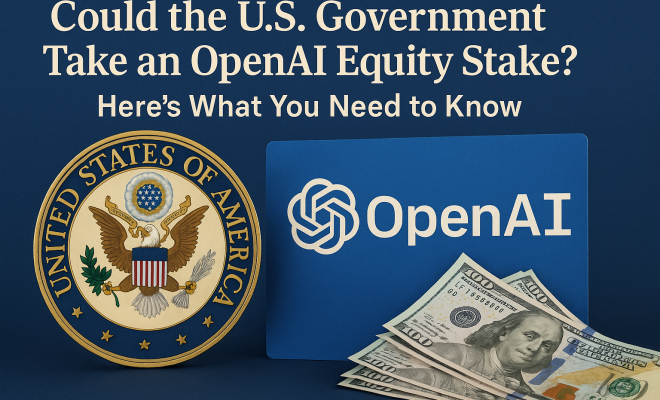
US Government OpenAI Equity Stake: What You Need to Know
“`html
The potential for a U.S. government OpenAI equity stake is stirring the pot across various sectors, blending the worlds of artificial intelligence, politics, and entrepreneurship. The discussions between OpenAI and the White House are not just about funding or investment; they implicate questions of regulation, national security, and the future of AI technology in America. As these conversations progress, many are left wondering what government ownership would mean for both the startup and the broader technology landscape.
1. The Emergence of OpenAI: A Brief Overview
Founded in December 2015, OpenAI has quickly risen to prominence in the tech world. Initially set up as a non-profit, the organization transitioned to a capped-profit model in 2019 to attract necessary investments while still prioritizing its mission to ensure that artificial general intelligence benefits all of humanity. Key products include the language model GPT-3 and the multimodal model DALL-E, which have disrupted various sectors, from content creation to art generation.
OpenAI’s rapid scaling has made it a crucial player in the AI field, making the discussions about a U.S. government equity stake even more complex. The company’s valuation has soared to tens of billions, attracting attention and investment from tech giants like Microsoft. Still, the fundamental questions regarding its governance and regulatory framework remain unresolved.
2. What Would an Equity Stake Mean?
A potential equity stake for the U.S. government in OpenAI raises numerous implications. First, it could offer the government a direct say in how the technology is developed and deployed. This involvement could align with national interests, particularly as AI becomes increasingly integral to various sectors, including defense, healthcare, and finance.
Moreover, such a stake could establish a precedent for government involvement in private sector innovation. As the lines blur between public interest and private enterprise, the U.S. might set a model for how other countries manage their AI ecosystems. Critically, it would also challenge the notion of a purely capitalist approach to technological advancement.
3. Regulatory Concerns and National Security
In a world where AI technology can be weaponized or exploited, national security is paramount. The discussions regarding an OpenAI equity stake coincide with growing fears about data privacy and the geopolitical implications of AI. Are we ready to let a privately-owned, possibly foreign-managed company dictate the future of a technology that could redefine warfare, surveillance, and even everyday life?
Regulation in AI has lagged behind innovation, prompting calls for frameworks that can safeguard the public while still promoting growth. If the government were to hold an equity stake, it could develop stringent guidelines that govern AI deployment, ensuring its ethical use and protecting American interests.
4. The Political Landscape: A Bipartisan Issue
The idea of the U.S. government acquiring an OpenAI equity stake transcends party lines. Lawmakers from both sides of the aisle recognize the potential risks and rewards of engaging with this frontier technology. This bipartisan concern arises from the understanding that AI can disrupt job markets, propel economic inequality, and influence social structures.
As discussions evolve, we can expect to see proposals that range from moderate oversight to more drastic measures. The political ramifications of such a move could lead to intense debates, not only regarding AI but also about the very nature of government regulation in innovation.
5. The Public’s Reaction: Mixed Feelings
Public sentiment around the idea of a government equity stake in OpenAI is decidedly mixed. On one hand, many see it as a proactive step towards ensuring the responsible development of AI technology, while others view it as an encroachment on the free market. Concerns about government overreach and inefficiency resonate with a segment of the population that values innovation driven by private enterprise.
Moreover, there is skepticism about the government’s ability to effectively manage a technology that evolves at a breakneck pace. Would bureaucratic processes slow down the very innovation that the equity stake aims to protect? These questions are critical as stakeholders weigh the merits of government involvement. (See: OpenAI – Wikipedia Overview.)
6. International Implications: The Global AI Race
The prospect of a U.S. government OpenAI equity stake could send ripples across the globe. Countries like China and the European Union are investing heavily in their AI capabilities, and a U.S. stake in a leading AI company could either position the U.S. as a leader in the AI race or provoke international tensions.
As nations look to harness AI’s potential for economic growth and military applications, how the U.S. structures its involvement with OpenAI could set a global precedent. If successful, it could serve as a model for similar collaborations in allied nations, promoting a coordinated approach to AI development.
7. Future Trajectory of OpenAI: What’s Next?
As discussions about an OpenAI equity stake continue, the future trajectory of the company itself hangs in the balance. How will a potential government investment influence OpenAI’s mission and operations? Could it lead to changes in leadership, priorities, or even product offerings?
OpenAI’s trajectory isn’t just about corporate growth; it’s also about public perception and its role in society. A government equity stake could alter its image from a groundbreaking startup to a quasi-government entity, potentially affecting consumer trust and investor confidence.
8. Comparative Analysis: Government Involvement in Tech
Looking globally, countries like China have embraced state-owned enterprises to drive innovation and technological advancement. On the other hand, the U.S. has historically favored a more laissez-faire approach to its tech industry. The prospect of an OpenAI equity stake challenges this conventional wisdom, presenting an interesting case study for how government involvement can shape industry outcomes.
By examining other nations’ models, U.S. policymakers could devise a unique approach that balances private innovation with public interest, creating a framework that not only addresses current needs but anticipates future challenges in AI development.
9. The Bottom Line: What It All Means
The discussions about a U.S. government equity stake in OpenAI may be one of the most significant conversations happening in tech today. As the implications of these talks unfold, they will inevitably affect not only the future of OpenAI but also the landscape of the AI industry as a whole.
Whether this move will lead to enhanced innovation, improved regulation, or the stifling of entrepreneurship remains to be seen. However, one thing is clear: the intersection of government, technology, and society is more intricate than ever, and the outcomes of these discussions could shape our collective future.
10. Economic Implications of a U.S. Government Equity Stake
The economic implications of a U.S. government equity stake in OpenAI could be profound. An investment of this nature could catalyze a new wave of funding and innovation, signaling to other investors that AI is a secure and valued field. Such a move might also encourage the private sector to align more closely with governmental objectives, knowing that public interests are now intertwined with the direction of AI technology.
On the flip side, government involvement could raise concerns about favoritism and market distortion. Critics may argue that preferential treatment for OpenAI could hinder competition, slowing down innovation across the broader tech landscape. Countries with more openly competitive markets may gain an edge if they don’t have similar government stakes in their leading AI companies.
11. Expert Perspectives on OpenAI and the Equity Stake
Industry experts have varied opinions on the implications of a U.S. government equity stake in OpenAI. Dr. Kate Crawford, an AI researcher and co-founder of the AI Now Institute, has expressed concerns that government ownership might lead to increased surveillance and control over AI technology. She argues that while some regulation is essential, the government must proceed cautiously to avoid overreach.
Conversely, Dr. Stuart Russell, a leading AI scientist, posits that government investment could provide an essential counterbalance to the unchecked power of private tech giants. He believes that by having a stake in OpenAI, the government could help ensure that AI development aligns with societal values and ethical considerations.
12. Technological Advancements and Government Partnerships
The relationship between government and technology isn’t new; it has historically driven key advancements. For instance, the U.S. government has played a crucial role in the development of the internet and GPS technology. A similar partnership with OpenAI could lead to breakthroughs in AI, healthcare, and environmental management. (See: New York Times on OpenAI and regulation.)
For instance, AI technologies developed with government backing could enhance predictive models for natural disasters, improving emergency response times. Additionally, partnerships could also see AI used in public health initiatives, optimizing resource allocation and response strategies during pandemics.
13. Potential Challenges of Government Stake
While the potential benefits are significant, challenges also loom large. The government’s inherent bureaucracy could slow down the agility that is often needed in the fast-paced tech world. Decision-making processes might become elongated, leading to missed opportunities for rapid innovation.
Furthermore, the ethical implications of a government stake could lead to public distrust. Many might view this as government overreach into technology sectors that should remain independent. Ensuring transparency and accountability will be crucial for alleviating any public concerns that may arise.
14. Frequently Asked Questions (FAQ)
What is OpenAI’s current valuation?
As of late 2023, OpenAI’s valuation is estimated to be in the tens of billions, bolstered by significant investments from major tech companies such as Microsoft.
Why is the government considering an equity stake in OpenAI?
Discussions about a government equity stake in OpenAI stem from concerns about national security, economic implications, and the ethical development of AI technologies that could impact society at large.
How might a government stake influence OpenAI’s operations?
A government stake could lead to changes in governance and perhaps shift OpenAI’s mission to focus more on public-sector interests, potentially affecting its product development and market strategies.
Could this lead to increased regulation of AI?
Yes, government involvement through an equity stake could prompt the establishment of regulatory frameworks designed to ensure the ethical use of AI and safeguard public interests.
What are the risks associated with government ownership of tech companies?
Some risks include potential bureaucratic inefficiencies, public distrust regarding privacy and surveillance, and the possibility of stifling competition and innovation within the tech sector.
How does this compare with international approaches to AI governance?
Countries like China have a more direct government involvement in technology firms, promoting state-owned enterprises to drive innovation. The U.S. model might differ by emphasizing a balance between public interest and private innovation.
What do experts think about the potential stake?
Experts are divided: some see it as a necessary move to align technology with societal values, while others worry about government overreach and the potential for misuse of power.
What could be the long-term implications for OpenAI?
The long-term implications could include a notable shift in public perception, changes in operational strategies, and a greater focus on ethical AI development, which could redefine OpenAI’s role in the tech landscape. (See: CDC Youth Risk Behavior Surveillance.)
15. Case Studies: Global Government Involvement in AI
Examining how different countries manage their AI sectors offers insights into potential outcomes of a U.S. government stake in OpenAI. For example, China’s approach includes substantial state funding for AI research, which has led to rapid advancements in facial recognition and surveillance technologies. These developments raise ethical concerns regarding privacy and civil liberties but have positioned China as a leader in AI capabilities.
In contrast, the European Union adopts a regulatory-focused approach, emphasizing ethical standards for AI development. The EU’s AI Act aims to establish a framework that governs AI usage, ensuring compliance with human rights and safety standards. This model shows how government oversight can coexist with innovation, potentially informing the U.S. approach should an equity stake in OpenAI materialize.
16. Future Scenarios: What Could Happen Next?
Looking ahead, several scenarios could unfold depending on whether the U.S. government secures an equity stake in OpenAI. One possibility is a collaborative model emerging, where public and private sectors work in tandem to set ethical standards and regulatory frameworks that promote innovation while safeguarding public interests.
Another scenario is a more contentious environment, with pushback from tech advocates who argue that such a stake could stifle innovation and create barriers to entry for smaller startups. This could lead to a fragmented landscape where large players dominate the market, making it difficult for new entrants to compete.
Alternatively, if managed well, a government stake could foster a new era of responsible AI development, where technology is not only advanced but also aligned with societal values, ensuring that benefits are distributed equitably across the population.
17. The Ethical Considerations of AI Governance
The ethical dimension of AI governance is paramount, especially with initiatives like a U.S. government equity stake in OpenAI. Key questions arise: How can we ensure that AI serves all of humanity rather than a select few? What accountability mechanisms should be in place to address unintended consequences of AI deployment?
Engaging ethicists, technologists, and the public in discussions about governance can help create frameworks that prioritize transparency, responsibility, and justice. This broad-based approach can ensure that the development of AI technologies aligns with ethical standards that respect human rights and promote social good.
18. Final Thoughts: Navigating the Future of AI
The dialogue surrounding a potential U.S. government equity stake in OpenAI encapsulates the complex interplay between technology, public policy, and societal outcomes. As we navigate this uncharted territory, it’s essential to balance innovation with ethical considerations and public interest. The future of AI presents both opportunities and challenges, and how we choose to engage with them will shape our world for generations to come.
“`
Trending Now
Frequently Asked Questions
Could the U.S. government invest in OpenAI?
Yes, discussions are ongoing about the possibility of the U.S. government taking an equity stake in OpenAI. This potential investment raises questions regarding regulation, national security, and the future of AI technology in America.
What does an equity stake mean for OpenAI?
An equity stake from the U.S. government would give it a direct influence over how OpenAI's technology is developed and deployed, potentially aligning its advancements with national interests across various sectors.
Why is OpenAI important to the U.S. government?
OpenAI is crucial due to its rapid growth and significant contributions to artificial intelligence. Its technologies impact sectors like defense and healthcare, making it a key player in ensuring that AI advancements align with national priorities.
What is the history of OpenAI?
Founded in December 2015, OpenAI started as a non-profit organization but transitioned to a capped-profit model in 2019. It aims to ensure that artificial general intelligence benefits all of humanity, with key products like GPT-3 and DALL-E.
How would government ownership affect AI innovation?
Government ownership in OpenAI could set a precedent for public sector involvement in private innovation. It might reshape how technology is regulated and developed, blurring the lines between public interest and private enterprise.
What’s your take on this? Share your thoughts in the comments below — we read every one.