
The Edvocate

Top Menu

Main Menu

  • Start Here
    • Our Brands
    • Governance
      • Lynch Education Consulting, LLC.
      • Dr. Lynch’s Personal Website
      • Careers
    • Write For Us
    • Books
    • The Tech Edvocate Product Guide
    • Contact Us
    • The Edvocate Podcast
    • Edupedia
    • Pedagogue
    • Terms and Conditions
    • Privacy Policy
  • PreK-12
    • Assessment
    • Assistive Technology
    • Best PreK-12 Schools in America
    • Child Development
    • Classroom Management
    • Early Childhood
    • EdTech & Innovation
    • Education Leadership
    • Equity
    • First Year Teachers
    • Gifted and Talented Education
    • Special Education
    • Parental Involvement
    • Policy & Reform
    • Teachers
  • Higher Ed
    • Best Colleges and Universities
    • Best College and University Programs
    • HBCU’s
    • Diversity
    • Higher Education EdTech
    • Higher Education
    • International Education
  • Advertise
  • The Tech Edvocate Awards
    • The Awards Process
    • Finalists and Winners of The 2026 Tech Edvocate Awards
    • Finalists and Winners of The 2025 Tech Edvocate Awards
    • Finalists and Winners of The 2024 Tech Edvocate Awards
    • Finalists and Winners of The 2023 Tech Edvocate Awards
    • Finalists and Winners of The 2021 Tech Edvocate Awards
    • Finalists and Winners of The 2022 Tech Edvocate Awards
    • Finalists and Winners of The 2020 Tech Edvocate Awards
    • Finalists and Winners of The 2019 Tech Edvocate Awards
    • Finalists and Winners of The 2018 Tech Edvocate Awards
    • Finalists and Winners of The 2017 Tech Edvocate Awards
    • Award Seals
  • Apps
    • GPA Calculator for College
    • GPA Calculator for High School
    • Cumulative GPA Calculator
    • Grade Calculator
    • Weighted Grade Calculator
    • Final Grade Calculator
  • The Tech Edvocate
  • Post a Job
  • AI Powered Personal Tutor

logo

The Edvocate

  • Start Here
    • Our Brands
    • Governance
      • Lynch Education Consulting, LLC.
      • Dr. Lynch’s Personal Website
        • My Speaking Page
      • Careers
    • Write For Us
    • Books
    • The Tech Edvocate Product Guide
    • Contact Us
    • The Edvocate Podcast
    • Edupedia
    • Pedagogue
    • Terms and Conditions
    • Privacy Policy
  • PreK-12
    • Assessment
    • Assistive Technology
    • Best PreK-12 Schools in America
    • Child Development
    • Classroom Management
    • Early Childhood
    • EdTech & Innovation
    • Education Leadership
    • Equity
    • First Year Teachers
    • Gifted and Talented Education
    • Special Education
    • Parental Involvement
    • Policy & Reform
    • Teachers
  • Higher Ed
    • Best Colleges and Universities
    • Best College and University Programs
    • HBCU’s
    • Diversity
    • Higher Education EdTech
    • Higher Education
    • International Education
  • Advertise
  • The Tech Edvocate Awards
    • The Awards Process
    • Finalists and Winners of The 2026 Tech Edvocate Awards
    • Finalists and Winners of The 2025 Tech Edvocate Awards
    • Finalists and Winners of The 2024 Tech Edvocate Awards
    • Finalists and Winners of The 2023 Tech Edvocate Awards
    • Finalists and Winners of The 2021 Tech Edvocate Awards
    • Finalists and Winners of The 2022 Tech Edvocate Awards
    • Finalists and Winners of The 2020 Tech Edvocate Awards
    • Finalists and Winners of The 2019 Tech Edvocate Awards
    • Finalists and Winners of The 2018 Tech Edvocate Awards
    • Finalists and Winners of The 2017 Tech Edvocate Awards
    • Award Seals
  • Apps
    • GPA Calculator for College
    • GPA Calculator for High School
    • Cumulative GPA Calculator
    • Grade Calculator
    • Weighted Grade Calculator
    • Final Grade Calculator
  • The Tech Edvocate
  • Post a Job
  • AI Powered Personal Tutor
  • Apply to Get a Free Kinsa Smart Thermometer for Every Family at Your School

  • California’s Game-Changing Move: Can New Laws Finally Protect Kids from Big Tech’s Grasp?

  • This Bill Could Devastate Vulnerable Kids, Warns Veteran Lawman

  • Revealed: The Untold 9/11 Health Crisis Quietly Affecting a New Generation

  • Unprecedented AI Restrictions in Schools: Why Millions of Students Are Losing Access

  • The Future of Instructional Design Careers: Skills Needed for Success with AI Tools like ezSuite™

  • The AI Revolution: Is This New Tool the Ultimate Game-Changer for Instructional Designers?

  • The AI Revolution in EdTech: 8 Ways ezSuite Will Change How You Create Content

  • The AI Content Revolution: Why Publishers Are Scrambling to Adapt

  • The Looming Crisis: How Ghana’s Faculty Recruitment Wars Threaten Academic Freedom

EdTech & Innovation
Home›EdTech & Innovation›Inspiring English Language Learners in the Library

Inspiring English Language Learners in the Library
By Chris Piehler
March 31, 2017
0
Spread the love

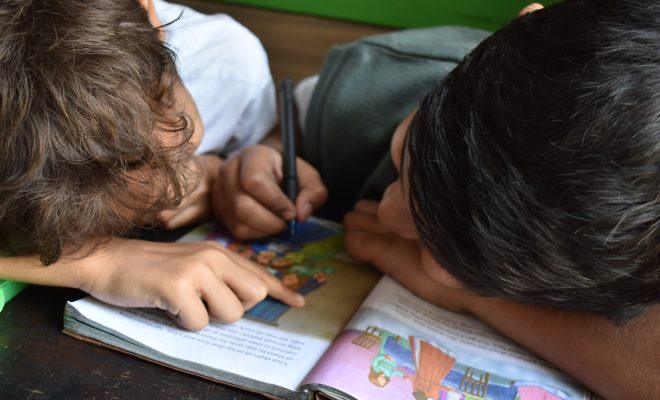
An elementary school librarian uses a kid-friendly digital database to teach ELLs both language and research skills.

By Melanie Curl

Being a school librarian is about much more than just organizing and scanning books. The library is the central hub in the school, where students can gather to explore the world, research their interests, and be exposed to exciting new technologies and ideas. Librarians play a pivotal role in engaging students with their learning, beyond the confines of a single subject. Librarians interact with the entire student body, and as such they have a unique opportunity—and responsibility—to ensure all students have access to the information the library contains, regardless of their reading ability or native language.

At Bean Elementary, we have about 50-60% ELL students. We are a Title I school: about 90% of our students are eligible for free/reduced lunch. We are also a dual-language school where pre-K–5th grade have two classes that are taught in both English and Spanish. In these classes teachers conduct Monday, Wednesday, and Friday classes in Spanish; and Tuesday and Thursday classes in English.

To help support ESL/ELL students, we also have a designated Spanish section in the library, and we provide multiple technology resources to assist our ELLs. One of these resources is a kid-friendly digital database called PebbleGo, which has non-fiction articles in both English and Spanish. A read-aloud feature helps teachers looking to bridge the gap between Spanish and English. Even teachers who are not dual-language use this feature to support ELL/ESL students in their classrooms. Plus, the non-fiction content helps introduce academic vocabulary—words like “habitat”—that gives students the content knowledge they need, regardless of the language in which they have the most proficiency.

When it comes to reading, vocabulary is the biggest area in which I see ELL students struggle. Translating the nuances of meaning from one language to another can be difficult, particularly for younger students who simply don’t yet have the English vocabulary to read English fluently. PebbleGo helps by providing dictionary definitions for words that may be troublesome for students to understand the meaning of, and the read-aloud component helps them understand the proper pronunciation of these words. It allows them to learn new things, even if they have difficulty reading in English.

The simple visual layout of PebbleGo also creates a friendly reading experience for our ELLs (and native English speakers). Pictures, videos, and graphic organizers help support reading and comprehension skills, and the simplicity of the design allows our students to search and discover new things without feeling frustrated or hopeless. They learn information, whether in their native language or not. This, in turn, increases their enthusiasm for reading and research.

Teachers are always looking for multiple resources for research, and PebbleGo has helped them teach their students about finding reliable sources. In an age when “fake news” has become the latest buzzword, teaching students about finding credible sources of information is important, especially for ELL/ESL students. When English learners are reading nonfiction, their focus is on understanding the words, and it may not occur to them that what they’re reading may be opinion or fiction. Students are naturally trusting of the information provided to them. Teaching research skills at a young age is a great way to teach them about the difference between reliable and non-reliable sources. Students are now growing up in a very technology-based world, and information surrounds them daily. We teach them how to look for valid information and research topics deeply.

As the librarian at Bean Elementary, I believe it’s my job to enhance the knowledge of both the students and staff. I make sure a variety of types of resources are available, and introduce them to teachers and students. The library affords everyone in the school the opportunity to explore new interests and knowledge. PebbleGo has changed how I work with all students, but especially with our ELLs. It has helped me show them different databases and resources available to them, and helped them find information in a fun, engaging, and non-frustrating way.

Melanie Curl is a librarian at Bean Elementary in Lubbock, TX.

Previous Article

Bridging the Digital Divide: Students Without Home ...

Next Article

A Free College Education: A Basic American ...

Chris Piehler

Related articles More from author

  • EdTech & InnovationTeachers

    Energizing the collaborative classroom

    March 16, 2016
    By Matthew Lynch
  • EdTech & Innovation

    More states moving towards virtual classes for K-12 students

    September 22, 2016
    By Matthew Lynch
  • EdTech & InnovationlistMatthew Lynch

    3 Disturbing Trends Made Prevalent By Technology

    November 27, 2015
    By Matthew Lynch
  • EdTech & InnovationTrending Topics

    The Ultimate Guide to Using Open Educational Resources

    June 18, 2017
    By Matthew Lynch
  • EdTech & Innovation

    Why Self-Service Portals are EdTech’s Next Big Thing

    February 28, 2017
    By Matthew Lynch
  • EdTech & InnovationHBCU'sHigher Education

    US losing its dominance in global higher education market

    January 15, 2016
    By Matthew Lynch

Search

Registration and Login

  • Log in
  • Entries feed
  • Comments feed
  • WordPress.org

Newsletter

Signup for The Edvocate Newsletter and have the latest in P-20 education news and opinion delivered to your email address!

RSS feed: Matthew on Education Week Matthew on Education Week

  • Au Revoir from Education Futures November 20, 2018 Matthew Lynch
  • 6 Steps to Data-Driven Literacy Instruction October 17, 2018 Matthew Lynch
  • Four Keys to a Modern IT Approach in K-12 Schools October 2, 2018 Matthew Lynch
  • What's the Difference Between Burnout and Demoralization, and What Can Teachers Do About It? September 27, 2018 Matthew Lynch
  • Revisiting Using Edtech for Bullying and Suicide Prevention September 10, 2018 Matthew Lynch

About Us

The Edvocate was created in 2014 to argue for shifts in education policy and organization in order to enhance the quality of education and the opportunities for learning afforded to P-20 students in America. What we envisage may not be the most straightforward or the most conventional ideas. We call for a relatively radical and certainly quite comprehensive reorganization of America’s P-20 system.

That reorganization, though, and the underlying effort, will have much to do with reviving the American education system, and reviving a national love of learning.  The Edvocate plans to be one of key architects of this revival, as it continues to advocate for education reform, equity, and innovation.

Newsletter

Signup for The Edvocate Newsletter and have the latest in P-20 education news and opinion delivered to your email address!

Contact

The Edvocate
910 Goddin Street
Richmond, VA 23230
(601) 630-5238
[email protected]
  • situs togel online
  • dentoto
  • situs toto 4d
  • situs toto slot
  • toto slot 4d
Copyright (c) 2026 Matthew Lynch. All rights reserved.