How Conscious Discipline Teaches Conflict Resolution in Elementary Classrooms
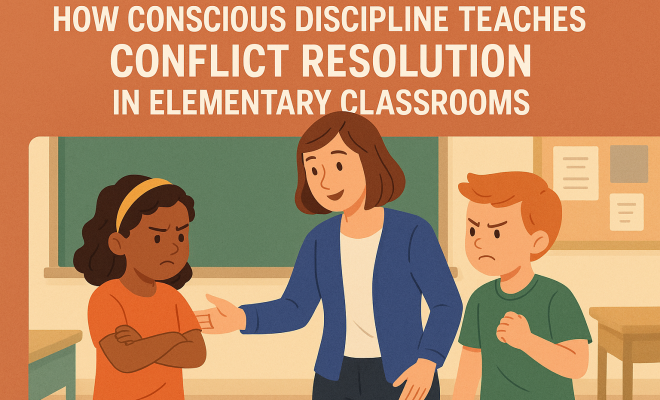
“`html
Understanding Conscious Discipline
Conscious Discipline is more than just a classroom management strategy; it’s an intentional approach designed to cultivate social-emotional learning while enhancing students’ conflict resolution skills. Developed by Dr. Becky Bailey, Conscious Discipline is rooted in brain research, child development, and trauma-informed care. It offers educators a framework that not only addresses behavioral issues but also nurtures a positive school culture.
The methodology promotes self-regulation, empathy, and problem-solving among students, enabling them to manage conflicts constructively. As educators increasingly recognize the importance of emotional intelligence in academic success, Conscious Discipline has gained traction in classrooms across the nation.
The Importance of Conflict Resolution in Early Education
Conflict is an inevitable part of human interaction and learning to navigate it effectively is crucial for children. Research shows that children who develop strong conflict resolution skills are more likely to experience academic success, maintain healthier relationships, and manage their emotions better as adults. By introducing conflict resolution strategies in elementary classrooms, educators set the foundation for students to communicate effectively, understand diverse perspectives, and collaborate with peers.
Consider this: a study published in the Journal of Educational Psychology found that effective conflict resolution skills are significantly associated with improved academic performance. Hence, integrating Conscious Discipline’s principles can help students learn how to approach conflicts with empathy and understanding, which ultimately leads to healthier social interactions.
Key Concepts of Conscious Discipline
At the heart of Conscious Discipline are five key components: Safety, Connection, Problem-Solving, Self-Regulation, and Conflict Resolution. Each of these components plays an essential role in developing a harmonious classroom atmosphere.
- Safety: Creating a safe environment is vital for students to express themselves without fear. This safety encompasses physical, emotional, and social dimensions.
- Connection: Building strong relationships among students and between students and teachers fosters a sense of belonging. This connection is critical for effective conflict resolution.
- Problem-Solving: Encouraging students to view conflicts as problems to be solved collaboratively rather than battles to be won shifts their perspective.
- Self-Regulation: Teaching students to manage their emotions and behaviors allows them to respond rather than react during conflicts.
- Conflict Resolution: Providing students with tools and strategies to resolve disagreements peacefully is essential for their social development.
How Conscious Discipline Enhances Conflict Resolution Skills
Conscious Discipline equips students with a variety of conflict resolution strategies that empower them to handle disputes constructively. These strategies include:
- Active Listening: Students learn to genuinely hear what others are saying, which builds mutual respect and understanding.
- Empathy Development: Activities and discussions around empathy help students understand different viewpoints, fostering compassion.
- Collaborative Problem Solving: Students are guided to work together to find amicable solutions, promoting teamwork and respect.
- Emotion Regulation Techniques: Techniques like deep breathing, mindfulness, and self-talk enable students to maintain composure during conflicts.
By incorporating these techniques into daily routines, educators not only help students resolve conflicts but also instill lifelong skills that extend beyond the classroom.
Practical Insights for Implementing Conscious Discipline
Implementing Conscious Discipline requires training and a commitment to creating a supportive environment. Here are some practical steps educators can take:
- Professional Development: Schools should invest in training teachers and staff in Conscious Discipline principles to ensure a consistent approach.
- Create a Safe Space: Designate areas in the classroom for students to take a break or cool down when they feel overwhelmed.
- Model Behavior: Teachers should demonstrate effective conflict resolution and emotional regulation, serving as role models for students.
- Engage Families: Involve parents and guardians by sharing strategies and encouraging consistent reinforcement of conflict resolution skills at home.
Success Stories: Real-World Applications
Several schools across the country have successfully integrated Conscious Discipline into their curricula, leading to notable improvements in student behavior and conflict resolution capabilities. For example, a school in Austin, Texas, reported a significant decrease in disciplinary actions after adopting Conscious Discipline. Teachers noted that students were more engaged and better equipped to handle interpersonal conflicts.
Another case study in a New York City school highlighted how implementing Conscious Discipline helped reduce bullying incidents. Students learned to approach conflicts with empathy, which fostered a culture of kindness and inclusivity. Reports showed that not only did conflict resolution skills improve, but overall academic performance also increased, showcasing the interconnectedness of emotional well-being and learning.
Current Relevance of Conscious Discipline in Education
In the wake of the COVID-19 pandemic, the need for social-emotional learning has never been more pressing. Many children have experienced trauma, anxiety, and disruptions to their education, making it essential to provide support for their emotional well-being. Conscious Discipline addresses these needs head-on by prioritizing emotional health in school settings. (See: study on conflict resolution skills.)
Moreover, as schools seek to create inclusive environments, Conscious Discipline’s focus on connection and empathy can help bridge gaps between students of diverse backgrounds. By equipping students with the skills to understand and respect differences, educators can cultivate a more harmonious and equitable classroom.
Challenges and Considerations
While the principles of Conscious Discipline offer a promising framework, it’s not without its challenges. One of the primary obstacles is the need for consistent training and buy-in from all staff members. Without a unified approach, the effectiveness of Conscious Discipline may diminish.
Additionally, some educators may feel overwhelmed by the shift from traditional discipline methods to a more relational approach. It’s essential to provide ongoing support and resources to ensure that all staff members feel equipped to implement these practices successfully.
Future Directions for Conscious Discipline
The future of Conscious Discipline looks bright as more educators recognize its potential to transform classroom environments. Schools are now looking to further integrate social-emotional learning into their curricula, and Conscious Discipline plays a vital role in this evolution.
Future efforts may include expanding training programs, creating online resources, and establishing peer support networks among educators. By continuing to adapt and innovate, Conscious Discipline can remain relevant and effective in addressing the needs of today’s learners.
Deeper Analysis: The Role of Emotional Intelligence
One of the foundational pillars of Conscious Discipline is emotional intelligence. This concept involves the ability to understand, use, and manage your emotions in positive ways to relieve stress, communicate effectively, empathize with others, and overcome challenges. Studies indicate a direct correlation between high emotional intelligence and improved conflict resolution skills.
When students learn to recognize their feelings and the feelings of others, they can respond thoughtfully instead of reacting impulsively. For instance, a student who feels frustrated during a group project can identify that emotion, communicate it to their peers, and work together to find a resolution, rather than allowing frustration to escalate into conflict.
The development of emotional intelligence can also lead to long-term benefits. Research from the Collaborative for Academic, Social, and Emotional Learning (CASEL) found that students participating in social-emotional learning programs showed an 11-point gain in academic achievement on average. This data highlights how fostering emotional skills not only aids in immediate conflict resolution but also contributes to academic success.
Practical Techniques for Enhancing Emotional Intelligence
Educators can incorporate specific practices within Conscious Discipline that enhance emotional intelligence in students. Here are some effective techniques:
- Emotion Vocabulary Building: Teach students a wide range of emotion words. This helps them articulate their feelings accurately, which is essential for conflict resolution.
- Role-Playing Scenarios: Use role-play to allow students to experience different perspectives in conflict situations, promoting empathy and understanding.
- Mindfulness Activities: Introduce mindfulness practices that help students become aware of their emotions and the emotions of others, such as meditation or guided imagery.
- Journaling: Encourage students to keep journals where they can reflect on their feelings and conflicts, fostering self-awareness and emotional regulation.
Statistics Supporting Social-Emotional Learning
Understanding the impact of social-emotional learning (SEL) can bolster the case for implementing Conscious Discipline in classrooms. A comprehensive analysis by the National Institute for Early Education Research found that SEL programs can lead to a 42% improvement in social skills among students.
Additionally, research from the University of Illinois indicated that students with strong SEL skills are 20% more likely to graduate from high school and 25% more likely to pursue higher education. These statistics underline the transformative potential of integrating emotional intelligence training through Conscious Discipline into educational curricula.
Frequently Asked Questions (FAQ)
What is the goal of Conscious Discipline?
The main goal of Conscious Discipline is to create a safe, supportive, and nurturing environment where students learn to manage their emotions and resolve conflicts positively. It aims to enhance social-emotional learning, develop self-regulation skills, and foster healthy relationships. (See: U.S. Department of Education on conflict resolution.)
How can teachers start using Conscious Discipline?
Teachers can begin by familiarizing themselves with the principles of Conscious Discipline, participating in training sessions, and gradually implementing its strategies in their classrooms. Starting small, such as introducing emotion check-ins, can be a practical first step.
Can Conscious Discipline be used in non-classroom settings?
Absolutely! While it’s primarily designed for educational settings, the principles of Conscious Discipline can be effectively applied in homes, community organizations, and other environments where emotional and social skills are essential.
What age group is Conscious Discipline suited for?
Conscious Discipline is versatile and can be adapted for various age groups, from preschoolers to high school students. The strategies can be tailored to meet the developmental needs and understanding of different age ranges.
How does Conscious Discipline differ from traditional discipline methods?
Unlike traditional discipline methods that often focus on punishment and compliance, Conscious Discipline prioritizes relational approaches, emotional understanding, and problem-solving. It encourages students to take ownership of their behavior and learn from conflict rather than simply avoiding it.
What are the long-term benefits of implementing Conscious Discipline?
Long-term benefits include improved emotional intelligence, better academic performance, enhanced social skills, reduced behavioral issues, and the ability to navigate complex social situations with empathy and understanding. Students equipped with these skills are better prepared for life beyond school.
The Role of Educators in Conflict Resolution
Educators play a pivotal role in teaching and modeling effective conflict resolution strategies. They set the tone in the classroom by demonstrating how to handle disagreements respectfully and constructively. This includes not only verbal de-escalation techniques but also non-verbal cues such as body language and facial expressions.
Moreover, educators can create conflict resolution plans tailored to their classroom dynamics, empowering students to take an active role in resolving disputes. For instance, they might implement a system where students can anonymously submit conflict scenarios and collaboratively work on solutions as a class. This practice promotes a sense of community and shared responsibility.
Integrating Technology into Conscious Discipline
In today’s digital age, technology can enhance the teaching of Conscious Discipline. There are various apps and online platforms that provide resources and activities focused on social-emotional learning and conflict resolution. For example, platforms such as ClassDojo offer tools that help educators communicate with parents about their child’s emotional development, reinforcing the home-school connection.
Moreover, interactive games and simulations can help students practice conflict resolution skills in a safe, virtual environment. These technologies can make learning fun and relatable, catering to the digital-native generation while reinforcing the principles of Conscious Discipline.
The Impact of Conscious Discipline on School Culture
Implementing Conscious Discipline can significantly shift the overall culture within a school. When students, teachers, and staff practice these principles, a more supportive and inclusive atmosphere emerges. Schools that embrace Conscious Discipline often report lower instances of bullying and a greater sense of belonging among students.
Additionally, when conflict resolution becomes a shared responsibility, students learn to value each other’s perspectives and engage in meaningful conversations. This cultural shift not only enhances student relationships but also promotes a positive school climate conducive to learning and growth.
Real-World Examples of Successful Implementation
Case studies from schools that have adopted Conscious Discipline highlight its effectiveness in fostering a peaceful learning environment. For example, a school in California reported that after a year of implementing Conscious Discipline, the number of student referrals to the office decreased by over 50%. Teachers noted that students were more engaged in class discussions and worked collaboratively on projects.
Another example comes from a middle school in Seattle, where students participated in weekly “circle time” sessions focused on conflict resolution. These sessions allowed students to share their thoughts and feelings in a safe space, leading to a marked improvement in peer relationships. The principal emphasized that the initiative not only reduced conflicts but also promoted a greater sense of community within the school.
Tips for Parents to Reinforce Conflict Resolution at Home
Parents play a crucial role in reinforcing the principles of Conscious Discipline at home. Here are some tips for parents to help their children develop effective conflict resolution skills:
- Model Constructive Behavior: Children learn by observing their parents. Demonstrating healthy conflict resolution in your own interactions can set a positive example.
- Encourage Open Communication: Create an environment where children feel safe expressing their feelings and thoughts without fear of judgment.
- Teach Problem-Solving Techniques: Engage children in discussions about resolving conflicts they may encounter, guiding them through possible solutions and approaches.
- Practice Empathy: Encourage children to consider the perspectives of others by discussing different viewpoints during conflicts, which fosters understanding and cooperation.
Ongoing Support and Professional Development for Educators
To maximize the impact of Conscious Discipline, ongoing support and professional development are essential. Schools should prioritize regular training sessions and workshops for teachers to deepen their understanding of conflict resolution strategies and emotional intelligence.
Additionally, creating a mentorship program where experienced teachers can support their peers in implementing Conscious Discipline practices can help sustain enthusiasm and commitment. Regular feedback sessions can also enhance the learning process, allowing educators to share experiences and challenges, thereby refining their approach and honing their skills.
Conclusion: A Foundation for Lifelong Skills
Incorporating Conscious Discipline into elementary classrooms not only teaches children how to resolve conflict but also lays the groundwork for emotional intelligence and resilience. By fostering a culture of safety, connection, and problem-solving, educators empower students to navigate conflicts constructively, enhancing their overall learning experience. As we continue to prioritize social-emotional learning, Conscious Discipline stands out as a vital tool in shaping well-rounded individuals ready to face life’s challenges.
“`
Trending Now
Frequently Asked Questions
What is Conscious Discipline?
Conscious Discipline is an intentional approach aimed at fostering social-emotional learning and conflict resolution skills in students. Developed by Dr. Becky Bailey, it combines brain research, child development, and trauma-informed care to create a positive school culture while addressing behavioral issues.
How does Conscious Discipline help with conflict resolution?
Conscious Discipline teaches students self-regulation, empathy, and problem-solving skills, enabling them to manage conflicts constructively. By integrating these principles, educators equip students to approach conflicts with understanding, ultimately leading to healthier social interactions.
Why is conflict resolution important in elementary education?
Conflict resolution is crucial in early education as it helps children develop skills that enhance academic success and foster healthier relationships. Teaching these skills lays the foundation for effective communication and collaboration among peers.
What are the key components of Conscious Discipline?
The key components of Conscious Discipline include Safety, Connection, Problem-Solving, Self-Regulation, and Conflict Resolution. Each component plays a vital role in helping students navigate their emotions and interactions with others.
How can teachers implement Conscious Discipline in the classroom?
Teachers can implement Conscious Discipline by incorporating its five key components into daily classroom routines. This includes creating a safe environment, fostering connections among students, teaching problem-solving techniques, and encouraging self-regulation during conflicts.
Have you experienced this yourself? We’d love to hear your story in the comments.