Idaho Leads the Way: Cloud Seeding’s Impact on Weather Management
“`html
In recent years, the concept of cloud seeding has garnered renewed interest, especially following notable studies conducted in Idaho. The state’s Department of Water Resources has been at the forefront of exploring how weather modification techniques can alleviate drought conditions and enhance winter precipitation. With a history that stretches back to the early 1950s, Idaho’s cloud seeding initiatives have evolved significantly, combining rigorous scientific research with the pressing needs of water management.
The Origins of Cloud Seeding in Idaho
Cloud seeding in Idaho began in the early 1950s as a response to the growing concerns over water supply and agricultural needs. Researchers and meteorologists quickly recognized the potential of this technology to influence weather patterns and increase precipitation. The concept is simple yet innovative: by dispersing substances like silver iodide into the atmosphere, scientists can stimulate cloud condensation processes, potentially leading to increased rainfall or snowfall.
Over the decades, Idaho has become a laboratory for cloud seeding research. The state’s unique geographic and climatic conditions provide a natural testing ground for various cloud seeding techniques. This long-standing commitment to weather modification has positioned Idaho as a leader in the field, attracting attention from both local and national stakeholders interested in the viability and effectiveness of such practices.
The SNOWIE Experiment: A Breakthrough in Cloud Seeding Research
One of the most significant milestones in Idaho’s cloud seeding history was the launch of the SNOWIE (Seeded and Natural Orographic Wintertime Precipitation Study) experiment in 2017. This initiative aimed to provide the first unambiguous field evidence that seeded clouds can indeed produce winter precipitation. The results from this experiment were not only instrumental in advancing the science of cloud seeding but also in demonstrating its practical applications.
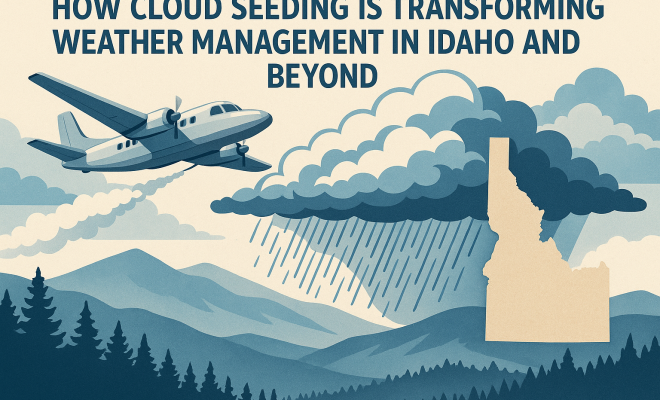
During the SNOWIE experiment, researchers utilized aircraft to release silver iodide plumes directly into targeted clouds. This meticulous approach was complemented by both ground-based and airborne instruments that tracked the changes within the clouds. The data collected allowed scientists to create a comprehensive 4D visualization of the clouds’ transformation, providing critical insights into how cloud seeding influences precipitation patterns.
How Does Cloud Seeding Work?
The science behind cloud seeding involves understanding the microphysical processes that govern cloud formation and precipitation. Clouds are composed of tiny water droplets or ice crystals, and for precipitation to occur, these particles must grow large enough to overcome gravitational forces. Cloud seeding introduces additional nuclei, such as silver iodide, around which water vapor can condense, thereby accelerating the formation of larger droplets or ice crystals.
- Seeding Agents: Silver iodide is a common seeding agent due to its structural similarity to ice. Other materials, like sodium chloride and dry ice, can also be used, depending on the atmospheric conditions.
- Delivery Methods: The seeding agents are typically dispersed from aircraft or ground-based generators, targeting specific cloud systems that show potential for precipitation.
- Monitoring Techniques: Advanced weather radar systems, satellites, and ground-based observations are employed to assess the effectiveness of the seeding efforts by measuring changes in precipitation rates before and after seeding.
Impact on Water Management and Drought Mitigation
Idaho’s cloud seeding efforts have direct implications for water management, particularly in the context of drought. With increasing concerns about climate change and water scarcity, the ability to enhance precipitation through cloud seeding can provide a crucial buffer against drought impacts, especially in agricultural regions reliant on consistent moisture.
Research has shown that cloud seeding can lead to a measurable increase in snowfall in mountainous areas, which is vital for replenishing water supplies in lakes and reservoirs. For instance, the Idaho Department of Water Resources reported that cloud seeding could yield an increase in snowpack by an average of 10-15%, a figure that translates into significant additional water for irrigation, drinking, and ecosystem sustainability.
Controversies and Challenges Surrounding Cloud Seeding
Despite its potential benefits, cloud seeding is not without controversy. Critics question the environmental impacts of introducing foreign substances into the atmosphere and whether such interventions are ethical or necessary. The debate often centers around the effectiveness of cloud seeding, with some studies suggesting that the increases in precipitation may not justify the costs associated with the programs.
Additionally, there are concerns about potential unintended consequences, such as altering local ecosystems or impacting weather patterns in neighboring regions. The delicate balance between maximizing precipitation and ensuring environmental safety remains a contentious issue within the scientific community and among policymakers.
The Role of Public Perception and Skepticism
Public perception plays a significant role in the discourse surrounding cloud seeding. Many individuals are intrigued by the idea of controlling the weather, while others remain skeptical about the technology’s efficacy. Such skepticism is often heightened by sensational media reports and anecdotal claims that suggest cloud seeding is either a miracle solution for drought or an unproven science. (See: Cloud Seeding FAQ by NOAA.)
Education and transparency are vital in addressing public concerns. By providing clear, accessible information about how cloud seeding works, its benefits, and the limitations, stakeholders can foster a more informed dialogue. Community engagement initiatives, including public forums and informational campaigns, can also help bridge the gap between scientists and the general public.
Global Perspectives on Cloud Seeding
The application of cloud seeding is not limited to Idaho or even the United States. Countries around the world, from China to the United Arab Emirates, have invested in cloud seeding programs as part of their broader strategies for water management and climate adaptation. These international efforts highlight the increasing recognition of weather modification as a potential tool for addressing water scarcity and environmental challenges.
For example, China has implemented large-scale cloud seeding operations to enhance rainfall, especially in arid regions. The country’s investment in weather modification technology underscores its strategic priority in ensuring food security and water availability for its vast population. Similarly, the UAE has launched ambitious cloud seeding projects aimed at boosting rainfall in its desert climate, reflecting a growing trend among nations to explore innovative solutions to water stress.
Future Directions in Cloud Seeding Research
As the science of cloud seeding progresses, several avenues for future research emerge. Continued advancements in technology, including improved modeling and remote sensing techniques, will enhance the ability to target clouds more precisely and evaluate the outcomes of seeding efforts. This, in turn, will contribute to more effective management of water resources.
Moreover, interdisciplinary collaboration between meteorologists, environmental scientists, and policymakers will be crucial in addressing the multifaceted challenges associated with cloud seeding. By integrating scientific research with practical applications, stakeholders can develop more robust frameworks that maximize the benefits of weather modification while minimizing potential risks.
Conclusion: Can We Make It Rain?
The question of whether we can genuinely influence precipitation through cloud seeding remains at the heart of ongoing debates and research. As Idaho’s programs showcase, there is promising evidence that cloud seeding can enhance winter precipitation, offering a potential lifeline for regions facing water scarcity. However, the path forward requires careful navigation of ethical considerations, environmental impacts, and public perceptions.
Ultimately, the effectiveness of cloud seeding lies in its integration into comprehensive water management strategies that account for regional needs, environmental sustainability, and community involvement. As we look to the future, continued innovation, transparency, and collaboration will be vital in shaping the role of cloud seeding in addressing the challenges of a changing climate.
Further Scientific Insights into Cloud Seeding
The complexities of cloud seeding extend beyond its basic operational mechanisms. Studies have identified various atmospheric conditions that can significantly impact the effectiveness of cloud seeding. For instance, the temperature, humidity, and existing cloud structure all play critical roles in determining whether seeding will lead to meaningful precipitation increases. Research indicates that cold clouds, typically found at higher altitudes, are the most effective targets for seeding, as they contain supercooled water droplets that can readily freeze upon contact with silver iodide particles.
Data from the SNOWIE experiment highlighted that seeding was most effective in clouds with a certain threshold of moisture content. In cases where the relative humidity was below 95%, the seeding efforts were less successful. Enhanced understanding of these parameters allows meteorologists to be more selective in their approach, ensuring resources are used efficiently and effectively.
Case Studies of Successful Cloud Seeding Programs
Across the globe, several successful cloud seeding initiatives serve as notable examples of how the practice can be implemented effectively. The program in the state of Wyoming, which began in the 1970s, has shown consistent results in increasing winter snowpack levels. The Wyoming program reported average increases of 15-20% in snow accumulation in the areas targeted by cloud seeding operations, demonstrating a successful model that other regions may look to replicate.
Similarly, the California Department of Water Resources has initiated cloud seeding projects aimed at combating drought conditions. During the 2014-2016 drought, the program reported increases in precipitation within targeted storm systems, contributing to snowpack replenishment and water supply augmentation in reservoirs. The California initiative illustrates how cloud seeding can complement other water management strategies, particularly during periods of extreme drought.
Statistics and Economic Considerations
Understanding the economic implications of cloud seeding is critical when evaluating its feasibility and effectiveness. A report by the Idaho Water Resources Board estimated that every dollar spent on cloud seeding could yield an economic return of $4 to $6 in water savings for agricultural use. This cost-benefit analysis is pivotal for policymakers when considering funding for cloud seeding programs, as it highlights the potential for significant economic benefits alongside environmental enhancement.
Furthermore, studies have suggested that larger-scale cloud seeding operations can result in substantial increases in annual precipitation. A study conducted in the central Sierra Nevada region of California indicated that systematic cloud seeding could potentially yield an additional 2 million acre-feet of water annually, a volume that could transform water availability for both agriculture and urban areas. (See: Scientific research on cloud seeding.)
FAQ: Key Questions About Cloud Seeding
What is cloud seeding?
Cloud seeding is a weather modification technique that involves dispersing substances such as silver iodide into the atmosphere to stimulate precipitation from clouds. The goal is to enhance rainfall or snowfall, especially in drought-affected areas.
How effective is cloud seeding?
The effectiveness of cloud seeding can vary based on atmospheric conditions, but studies have shown that it can increase precipitation by 10-20% in some regions under optimal conditions. Factors such as humidity, temperature, and cloud type play critical roles in its success.
Is cloud seeding safe for the environment?
While cloud seeding is generally considered safe, there are ongoing debates about the environmental impacts of introducing substances like silver iodide into the atmosphere. Research continues to monitor the long-term effects of these interventions on ecosystems.
How is cloud seeding conducted?
Cloud seeding is typically conducted using aircraft that release seeding agents directly into targeted cloud systems. Ground-based generators can also be used, which release particles into the air that can be carried into clouds by wind currents.
What are the main challenges facing cloud seeding initiatives?
Challenges include public skepticism, regulatory hurdles, environmental concerns, and the need for further scientific research to optimize seeding techniques. Additionally, funding and resource allocation for cloud seeding programs can also pose significant obstacles.
Can cloud seeding be used to combat climate change?
While cloud seeding may alleviate certain impacts of climate change, such as drought, it is not a solution to the broader issues of climate change. It can be part of a suite of strategies to manage water resources, but it should not replace efforts to reduce greenhouse gas emissions and promote sustainable practices.
Are there any countries successfully using cloud seeding?
Yes, numerous countries have successfully implemented cloud seeding programs, including the United States, China, Australia, and the United Arab Emirates. These programs have shown varying degrees of success in enhancing precipitation and addressing water scarcity.
Final Thoughts on the Future of Cloud Seeding
As scientific understanding of cloud seeding continues to grow, so too does the potential for its application in water resource management. The evolving technology, coupled with an increasing need for sustainable water solutions in the face of climate change, positions cloud seeding as a promising tool for the future. Continued dialogue among scientists, policymakers, and the public is essential to ensure that cloud seeding is implemented responsibly and effectively, maximizing its benefits while minimizing any potential risks.
Innovations in Cloud Seeding Technology
The future of cloud seeding lies in the development of innovative technologies that can improve the efficiency and accuracy of this weather modification technique. One such innovation is the use of drones for cloud seeding. Drones can be equipped with seeding agents and deployed in remote areas or difficult-to-reach locations, allowing for more targeted and strategic seeding operations. This technology minimizes human risk while maximizing data collection capabilities.
Furthermore, advancements in satellite technology provide a better understanding of cloud formations, atmospheric conditions, and moisture levels. Satellites can monitor cloud properties in real time, enabling meteorologists to make informed decisions regarding the timing and location of seeding efforts. Enhanced forecasting models that incorporate machine learning can also optimize seeding strategies, predicting which clouds are likely to yield the best results based on historical data and current conditions. (See: New York Times on cloud seeding.)
Ethical Considerations in Cloud Seeding
As cloud seeding technology advances, ethical considerations come to the fore. The notion of “playing God” with weather patterns raises questions about the responsibility researchers and governments hold in manipulating natural systems. There are debates regarding the right to modify weather, especially in the context of potential impacts on neighboring regions that may not consent to such interventions. Establishing ethical guidelines and regulatory frameworks is crucial to ensure that cloud seeding initiatives operate transparently and responsibly.
Moreover, the effects of cloud seeding on local ecosystems must be closely monitored. While the immediate goal may be to increase precipitation, unintended consequences could arise, such as changes in soil chemistry or impacts on local flora and fauna. Ongoing research is needed to ensure that the benefits of enhanced precipitation do not come at the cost of ecological balance.
The Future of Water Resource Management
As the global population continues to grow and climate change exacerbates water scarcity, innovative strategies like cloud seeding will play an essential role in water resource management. However, it should be noted that cloud seeding is not a standalone solution. It must be used in conjunction with conservation efforts, sustainable water practices, and comprehensive policy frameworks to address the complex challenges surrounding water availability.
Investment in infrastructure, such as improved irrigation systems and rainwater harvesting, alongside cloud seeding initiatives, can create a multifaceted approach to water management. By integrating various strategies, communities can build resilience against drought and ensure a sustainable water supply for future generations.
Community Engagement in Cloud Seeding Initiatives
Engaging local communities in cloud seeding initiatives is vital for the success and acceptance of these programs. Community input can provide valuable insights into local needs, and concerns can help shape the direction of cloud seeding projects. Hosting workshops, informational sessions, and public forums will foster transparency and collaboration between scientists and community members, leading to a more informed public.
Moreover, citizen science initiatives can be encouraged to involve local residents in data collection and monitoring efforts. This participatory approach not only empowers community members but also enhances the quality of research data collected, contributing to more effective cloud seeding practices.
Conclusion: A Promising Tool for Climate Adaptation
Cloud seeding presents a promising tool for addressing the challenges of climate change and water scarcity. As technology continues to evolve and research deepens, the effectiveness and sustainability of cloud seeding will likely improve. However, it is vital that this technology is approached with caution, consideration, and respect for the complexities of natural systems.
By fostering collaboration among scientists, policymakers, and the public, we can ensure that cloud seeding is utilized responsibly, maximizing its potential benefits while minimizing risks. As we face an increasingly uncertain climate future, cloud seeding may prove to be a vital component of a comprehensive strategy for managing precious water resources.
“`
Trending Now
Frequently Asked Questions
What is cloud seeding and how does it work?
Cloud seeding is a weather modification technique that involves dispersing substances like silver iodide into the atmosphere to stimulate cloud condensation. This process can potentially enhance precipitation, leading to increased rainfall or snowfall, thus helping to manage water resources.
How has cloud seeding been used in Idaho?
Idaho has been a pioneer in cloud seeding since the 1950s, using it to address water supply concerns and agricultural needs. The state's unique conditions provide an ideal environment for testing various cloud seeding techniques, making it a leader in weather modification research.
What was the SNOWIE experiment in Idaho?
The SNOWIE (Seeded and Natural Orographic Wintertime Precipitation Study) experiment, launched in 2017, aimed to provide clear evidence that cloud seeding can produce winter precipitation. Its results have significantly advanced the understanding and effectiveness of cloud seeding practices.
What are the benefits of cloud seeding?
Cloud seeding can help alleviate drought conditions, enhance winter precipitation, and improve water supply for agricultural needs. By potentially increasing rainfall and snowfall, it plays a crucial role in water management strategies, especially in regions facing water scarcity.
Is cloud seeding scientifically proven to be effective?
Yes, recent studies, including the SNOWIE experiment in Idaho, have provided strong evidence supporting the effectiveness of cloud seeding in producing precipitation. Ongoing research continues to enhance the understanding of its mechanisms and potential benefits.
What did we miss? Let us know in the comments and join the conversation.