Cosmic Collision Transformed Small Magellanic Cloud
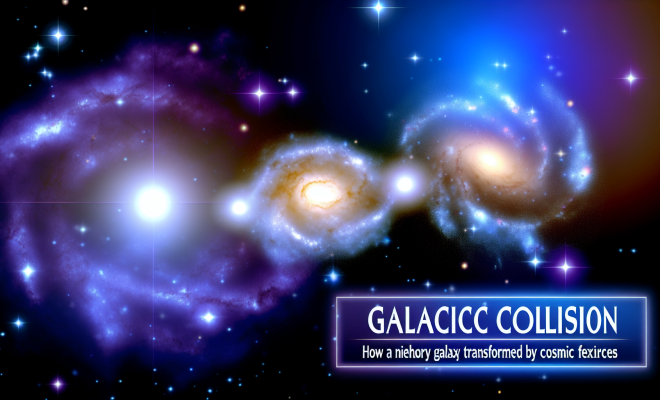
In a groundbreaking study, astronomers from the University of Arizona have unveiled new insights into the Small Magellanic Cloud (SMC), a nearby galaxy that has undergone significant upheaval due to a cosmic collision with its larger neighbor. This discovery, led by graduate student Himansh Rathore from the Steward Observatory, marks a pivotal moment in our understanding of galaxy evolution and challenges the SMC’s long-held status as a typical benchmark in astronomical studies.
The Chaotic Dance of Stars
The Small Magellanic Cloud, located approximately 200,000 light-years from Earth, is known for its irregular shape and rich star formation history. However, recent observations reveal that the movements of stars within the SMC are anything but ordinary. Rathore and his team have determined that the chaotic motion of stars in the SMC is a direct consequence of a collision that took place millions of years ago with its larger galactic neighbor, the Large Magellanic Cloud (LMC).
This collision injected an enormous amount of energy into the SMC, effectively stretching and transforming its structure. The resulting chaos has created an illusion of gas rotation, which had previously puzzled astronomers. The study of these stellar movements provides a unique opportunity to witness a galaxy evolving in real time, offering a dynamic view of the processes at play in the universe.
Revealing the Mysteries of Galactic Interactions
The researchers utilized advanced simulation models alongside observational data to understand the implications of the collision. The findings indicate that the SMC’s irregularity is not merely a result of its intrinsic properties but rather a significant alteration due to external forces. According to Rathore, this realization not only challenges the conventional understanding of the SMC but also highlights the intricate relationships between galaxies.
Key Findings from the Study
- Chaotic Star Movements: The star movements within the SMC are indicative of a disrupted structure caused by the collision with the LMC.
- Illusion of Gas Rotation: The energy from the collision has led to the misinterpretation of gas rotation within the galaxy.
- Real-Time Evolution: The study provides a rare glimpse into the transformation of a galaxy, emphasizing the dynamic nature of galactic evolution.
- Resolution of Contradictions: The findings help resolve long-standing contradictions regarding the observations of gas and star movements in the SMC.
Implications for Galaxy Evolution
The implications of this research extend beyond the SMC itself. By understanding how collisions between galaxies can alter their structure and behavior, astronomers can gain deeper insights into the processes that govern galaxy formation and evolution across the universe. The SMC, once viewed as a stable benchmark for studying galaxy evolution, now serves as a reminder of the dynamic and often chaotic nature of cosmic interactions.
The discovery also raises questions regarding the frequency and impact of such collisions in the cosmos. As galaxies continue to interact, merge, and evolve, the resultant transformations can lead to new star formation and altered galactic structures, further enriching the tapestry of the universe.
Future Research Directions
Looking ahead, Rathore and his team plan to conduct further research to explore the full extent of the SMC’s transformation and its implications for other galaxies. By employing advanced technologies such as next-generation telescopes and simulation software, they aim to refine their models and expand our understanding of galactic dynamics.
Moreover, investigations into other neighboring galaxies that may have undergone similar collisions could provide valuable comparative data, shedding light on various evolutionary paths taken by galaxies across different environments. Understanding the outcomes of such interactions may also enhance our grasp of the fundamental processes that shape the cosmos.
Conclusion
The recent findings regarding the Small Magellanic Cloud underscore the importance of viewing galaxies as dynamic entities shaped by their interactions with other cosmic bodies. As astronomers continue to unravel the complexities of galactic collisions, the SMC stands as a testament to the transformative power of cosmic events. This research not only enriches our understanding of the SMC but also offers broader insights into the nature of the universe, reminding us that even the most stable celestial objects can be dramatically altered by the forces of nature.