ELL Students and IEPs: When Is Special Education Appropriate?
“`html
In today’s increasingly diverse classrooms, teachers and administrators face unique challenges, particularly when it comes to supporting English Language Learners (ELLs). The intersection of ELL students and Individualized Education Programs (IEPs) is a complex topic that warrants careful consideration. This article explores when special education is appropriate for ELL students, the processes involved, and practical insights for educators and parents alike.
The Landscape of ELL Students
English Language Learners represent a growing segment of the student population in the United States. According to the National Center for Education Statistics, as of 2020, there were approximately 5 million ELL students enrolled in public schools. This demographic encompasses a wide range of backgrounds, cultures, and languages. While these students bring rich diversity to classrooms, they often face significant language barriers that can impede their academic success.
ELL students are not a homogeneous group; they vary in age, proficiency in their native languages, and level of exposure to English. Understanding these differences is crucial for educators, as these factors can influence both learning experiences and educational needs. Some ELL students may require special education services, but how does one determine when it’s appropriate to categorize them as needing an IEP?
Understanding IEPs
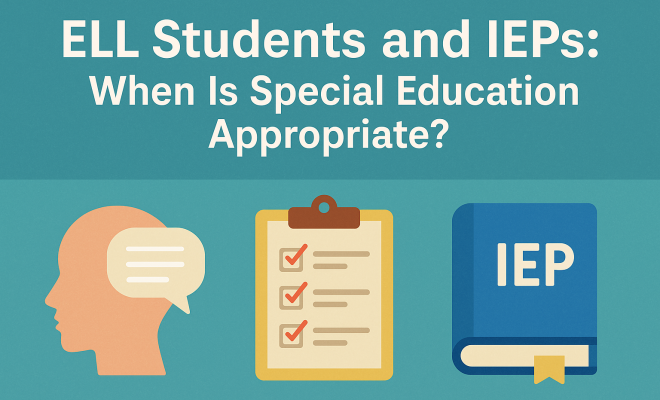
An Individualized Education Program, or IEP, is a legally binding document created for students who qualify for special education services under the Individuals with Disabilities Education Act (IDEA). The IEP outlines the specific educational needs of the student, the services they will receive, and how their progress will be measured. IEPs are designed to ensure that students with disabilities receive a Free Appropriate Public Education (FAPE) tailored to their unique needs.
The IEP process involves multiple steps, including initial evaluations, developing the IEP document, and ongoing reviews to adjust the program as necessary. It is a collaborative process involving educators, parents, and other specialists who contribute insights into the students’ needs. But where do ELL students fit into this framework?
Identifying Learning Disabilities vs. Language Acquisition
One of the most critical challenges educators face is distinguishing between language acquisition issues and learning disabilities. ELL students may struggle academically due to their limited proficiency in English, which can sometimes be mistaken for a learning disability. For example, a student who is still learning English vocabulary and grammar may perform poorly on assessments, leading to concerns about potential learning disabilities.
Research suggests that ELL students often need time to develop proficiency in a new language. According to the American Council on the Teaching of Foreign Languages, it may take several years for an ELL student to achieve full academic language proficiency. Therefore, it’s essential for educators to consider whether the difficulties an ELL student is experiencing are indeed the result of a learning disability or simply a byproduct of the language acquisition process.
Best Practices for Evaluating ELL Students
When evaluating ELL students for special education services, it’s vital to utilize culturally and linguistically responsive assessment tools. Traditional assessment methods may not accurately reflect the true abilities of ELLs, as these tests often favor native English speakers. To ensure a fair evaluation process, consider the following best practices: (See: National Center for Education Statistics data.)
- Use Multiple Measures: Rely on a combination of assessments, including qualitative observations, language proficiency tests, and standardized tests that account for language background.
- Include Parent Input: Gathering information from parents who understand their child’s background and strengths can provide crucial insights.
- Collaborate with Bilingual Specialists: Involving bilingual educators or specialists can help ensure that evaluations are conducted fairly and accurately.
- Consider the Student’s Native Language: Assessments should be available in the student’s native language to provide a clearer picture of their abilities.
Common Misconceptions About ELL Students and IEPs
Misunderstanding the needs of ELL students can lead to unnecessary placements in special education programs. Some common misconceptions include:
- All ELLs Need an IEP: Not every ELL student requires special education services. Many can succeed with appropriate language support and instructional strategies.
- Language Acquisition Equals Disability: Struggling with English language acquisition does not indicate a learning disability; rather, it reflects the natural process of learning a new language.
- Once Labeled, Always Labeled: Some educators believe that once a student is placed on an IEP, it is a permanent status. In reality, students can exit special education services if they no longer require them.
Legal Framework Surrounding ELLs and Special Education
The legal landscape regarding ELL students and IEPs is shaped by key federal laws, primarily the IDEA and Title VI of the Civil Rights Act. Under these regulations, schools are required to identify and evaluate students who may need special education services, including ELLs. Importantly, schools must ensure that ELL students are not disproportionately placed in special education programs due to language barriers.
The Office for Civil Rights emphasizes that schools must provide equal access to educational resources and programs, regardless of a student’s English proficiency. This means that schools should implement effective teaching strategies that accommodate ELLs without resorting to special education placements unless truly warranted.
The Role of Cultural Competence in Education
Cultural competence is essential for educators working with ELL students. Understanding the cultural backgrounds and experiences of these students can significantly enhance teaching efficacy and foster a supportive learning environment. Educators should be aware of cultural differences in communication styles, family dynamics, and educational expectations.
Building relationships with ELL families can also facilitate better communication and support for students. Schools can invite families to participate in school events, offer workshops, and provide resources in their native languages to encourage engagement and involvement.
Supporting ELL Students Within the Classroom
Classroom strategies that effectively support ELL students can significantly reduce the need for special education services. Here are some recommended practices:
- Differentiated Instruction: Tailor lessons to meet the diverse needs of students. This could involve varying the complexity of assignments or using visuals to support understanding.
- Scaffolding: Provide temporary support structures to help ELLs grasp new concepts, gradually removing these supports as students become more proficient.
- Collaborative Learning: Encourage group work and peer interactions that enable ELL students to practice language skills in a supportive environment.
- Use of Technology: Incorporate educational technology that offers language support, such as translation apps or interactive learning platforms.
The Importance of Ongoing Support and Monitoring
Once an ELL student is identified for special education services, ongoing monitoring and support are crucial. This requires regular reviews of the student’s progress to determine if the IEP is effectively meeting their needs. Teachers and special education staff should regularly assess whether the support provided is helping the student improve academically and socially.
Feedback from students and parents plays a vital role in this process. Engaging families in the IEP review process not only promotes transparency but also empowers parents to advocate for their children’s educational needs. (See: CDC on special education and ELLs.)
Strategies for Collaborating with Families of ELL Students
Engaging families of ELL students is paramount for their success in the classroom. When schools collaborate with families, they foster a supportive community that values each student’s unique background. Here are some strategies for effective family engagement:
- Language Access: Ensure that all communications with families are available in their native language. Hiring interpreters for meetings can help bridge communication gaps.
- Educational Workshops: Organize workshops that educate families on the school system, available resources, and ways to support their child’s learning at home.
- Regular Updates: Keep families informed about their child’s progress and school happenings through newsletters, phone calls, or home visits, if feasible.
- Encourage Participation: Invite families to participate in school governance, committees, and events to help them feel more connected to the school community.
Real-Life Success Stories
Highlighting success stories can motivate educators and families alike. For instance, a young ELL student named Maria struggled in her early years in school due to language barriers. With the support of a dedicated teacher who understood her background and provided tailored instruction, Maria excelled. The teacher incorporated visuals and interactive activities that allowed Maria to engage with the content. Over time, Maria not only improved her English skills but also became a peer mentor for other ELL students in her class.
An example at the school level is a district in California that implemented a dual-language program. This initiative allowed ELL students to learn both English and their native language, fostering a sense of identity and belonging. As a result, the district reported higher graduation rates among ELL students, showcasing the effectiveness of culturally responsive education practices.
Statistics on ELL Students and IEPs
Understanding the statistics surrounding ELL students and IEPs can shed light on the broader issues at play. For example:
- According to the National Education Association, around 9% of ELL students receive special education services compared to 14% of the overall student population. This indicates that ELL students are underrepresented in special education.
- A study from the University of California found that ELL students who were provided with bilingual education had 40% higher test scores in reading compared to those who were only in English-only programs.
- The Center for Applied Linguistics reports that ELL students often take 5-7 years to reach academic proficiency in English, emphasizing the need for ongoing support.
- According to the U.S. Department of Education’s Office for English Language Acquisition, 75% of ELL students are born in the United States. This statistic highlights the importance of ensuring equitable access to educational resources for ELL students who may not have the familial or community support systems that non-ELL students benefit from.
- Research from the Migration Policy Institute shows that around 20% of ELL students are living in poverty, which can further complicate their educational experiences and access to resources that could assist in their language acquisition and overall academic success.
Frequently Asked Questions (FAQ)
1. How can teachers differentiate between language acquisition difficulties and learning disabilities in ELL students?
Teachers can look for patterns in a student’s progress over time. If a student is making gradual improvements in language acquisition but still struggles with academic skills, it may indicate a language barrier rather than a learning disability. Collaborating with specialists who understand both language acquisition and learning disabilities can also provide valuable insights.
2. What role do cultural factors play in the education of ELL students?
Cultural factors greatly influence students’ learning styles, attitudes towards education, and parental involvement. Understanding these factors can help educators tailor their approaches, ensuring they respect cultural backgrounds while providing effective education.
3. How can schools ensure they are not misidentifying ELL students as needing special education?
Schools can implement a multi-tiered system of support (MTSS) that includes language support as part of the general education framework. By doing so, they can provide interventions for struggling students without automatically assuming they need an IEP. Regular training for educators on the needs of ELLs can also prevent misidentification.
4. What are some effective interventions for ELL students who are struggling?
Effective interventions include using visual aids, integrating technology that supports language development, and providing opportunities for peer collaboration. Programs that focus on bilingual education can also offer a supportive environment for ELL students. (See: NIH information on IEPs.)
5. How often should IEPs be reviewed for ELL students?
IEPs should be reviewed at least annually; however, more frequent reviews may be beneficial for ELL students to ensure their changing language needs are accurately reflected and addressed.
6. What are the benefits of bilingual education for ELL students?
Bilingual education has been shown to improve academic performance in ELL students. Studies indicate that students who are taught in both their native language and English tend to perform better in subjects like mathematics and literacy. This approach not only fosters better language skills but also enhances cognitive development and cultural identity.
7. How can teachers create a more inclusive classroom environment for ELL students?
Teachers can foster an inclusive environment by incorporating diverse cultural perspectives into the curriculum, using collaborative learning strategies, and ensuring that all students have a voice in classroom discussions. Encouraging peer support systems and promoting respect for all cultures can also create a more welcoming atmosphere for ELL students.
8. What are some resources available for teachers working with ELL students?
There are numerous resources available for teachers, including professional development workshops, online courses, and organizations dedicated to ELL education. Websites like Colorín Colorado and the WIDA Consortium provide valuable materials, best practices, and strategies specifically designed to support educators in meeting the needs of ELL students.
Conclusion: Ensuring Equity and Access for ELL Students
Determining the appropriateness of IEPs for ELL students requires a nuanced understanding of language acquisition and learning disabilities. As educators, we have a responsibility to ensure that all students, regardless of their language proficiency, have access to a quality education tailored to their needs. By employing culturally responsive strategies and remaining vigilant against misidentification, we can better support ELL students—ultimately fostering an inclusive educational environment that benefits everyone.
“`
Trending Now
Frequently Asked Questions
What is the relationship between ELL students and IEPs?
The relationship between English Language Learners (ELLs) and Individualized Education Programs (IEPs) involves determining when ELL students may require special education services. ELLs often face unique challenges due to language barriers, and understanding their diverse needs is essential for educators to assess whether they qualify for an IEP under the Individuals with Disabilities Education Act (IDEA).
How can teachers identify ELL students who need an IEP?
Teachers can identify ELL students who may need an IEP by observing their language proficiency, academic performance, and response to instruction. It's important to differentiate between language acquisition difficulties and learning disabilities, as ELLs may struggle due to language barriers rather than inherent learning challenges.
What steps are involved in the IEP process for ELL students?
The IEP process for ELL students includes initial evaluations to assess their educational needs, collaboration among educators, parents, and specialists, and the development of a tailored IEP. This document outlines specific goals, services, and progress measures to support the student's learning effectively.
When is special education appropriate for ELL students?
Special education is appropriate for ELL students when they exhibit significant learning difficulties that persist despite appropriate language support. If language barriers are impacting their ability to access the curriculum or demonstrate their knowledge, a comprehensive evaluation may be warranted to determine eligibility for an IEP.
What challenges do ELL students face in accessing special education services?
ELL students often face challenges in accessing special education services due to language barriers, cultural differences, and a lack of understanding about their needs. Misidentification can occur when educators confuse language acquisition issues with learning disabilities, making it crucial to conduct thorough assessments.
Have you experienced this yourself? We’d love to hear your story in the comments.