CBE vs. SBG: Unpacking Competency-Based Education & Standards-Based Grading
“`html
Introduction: Education is a dynamic field that constantly evolves to meet the needs of students and society. Among the various educational frameworks, competency-based education (CBE) and standards-based grading (SBG) have gained traction. Both aim to improve learning outcomes but differ significantly in their approach and implementation. In this article, we will explore the similarities and differences between competency-based education and standards-based grading, shedding light on their implications for educators, students, and parents.
1. What is Competency-Based Education?
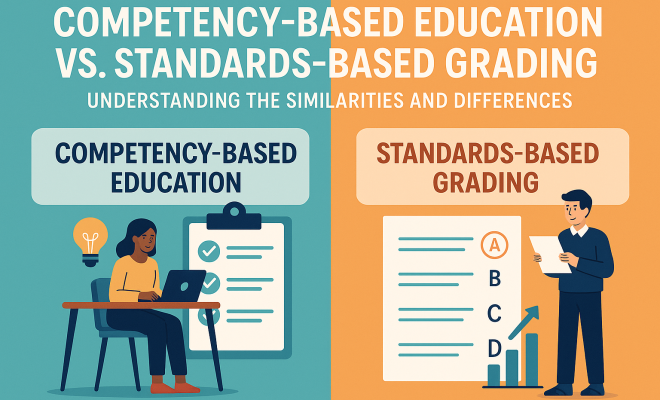
Competency-based education is an instructional model that focuses on students demonstrating mastery of specific skills or knowledge before progressing to the next level. This approach shifts the emphasis from traditional seat time to actual learning outcomes. CBE allows students to learn at their own pace, ensuring that they fully understand a topic before moving on.
In this model, competencies are clearly defined and assessed through various means, such as projects, tests, or presentations. For example, a student must show proficiency in algebraic concepts before advancing to geometry. This tailored approach caters to individual learning styles and paces, making education more personalized than ever.
To illustrate how CBE works in practice, consider the case of a high school that offers a CBE framework in its mathematics curriculum. Instead of a fixed timeline, students may be grouped based on their current understanding of mathematical concepts, allowing them to work on specific modules that align with their proficiency levels. For instance, a student struggling with fractions may spend more time on that topic until they are ready to move on, while another student adept at geometry can progress to more complex concepts like trigonometry without delay. This flexibility not only enhances their understanding but also increases motivation to learn at their own pace.
2. What is Standards-Based Grading?
On the other hand, standards-based grading is a method that uses a set of predefined learning standards to evaluate student performance. In SBG, grades reflect students’ mastery of specific standards rather than their overall performance or effort. This can involve grading on a scale that indicates how well a student has met each standard.
For instance, rather than receiving a single letter grade for a course, students might receive separate scores for different skills relevant to the curriculum. This nuanced grading system helps educators identify areas of strength and weakness, guiding instruction and intervention efforts.
One example of SBG in action is a middle school science class where students receive grades based on their mastery of specific scientific practices, such as conducting experiments, analyzing data, and communicating findings. Instead of a single grade for the entire semester, students might be given scores on a 1-4 scale for each of these competencies. This approach encourages students to focus on developing the skills necessary for scientific inquiry rather than simply aiming for a high letter grade.
3. Key Similarities Between CBE and SBG
Despite their differing approaches, competency-based education and standards-based grading share several commonalities. Firstly, both models prioritize student learning and mastery over rote memorization or standardized testing. They encourage a deeper understanding of material, pushing students to engage with content actively.
Furthermore, both CBE and SBG promote transparency in the assessment process. Students know exactly what is expected of them, and educators can provide targeted feedback to help them improve. This clear communication fosters a supportive learning environment where students can take ownership of their educational journeys.
Both models also support differentiated instruction, allowing educators to tailor teaching methods to meet diverse learning needs. For instance, a teacher utilizing CBE might incorporate project-based learning, allowing students with different learning preferences to demonstrate mastery in a way that resonates with them. Similarly, standards-based grading can inform instructional strategies, as teachers can prioritize areas where students show less mastery, thus providing targeted support.
4. Key Differences Between CBE and SBG
While CBE and SBG converge in their focus on learning outcomes, they diverge significantly in their implementation. The most notable difference is that CBE allows for personalized pacing, enabling students to progress when they demonstrate mastery, while SBG generally follows a traditional academic calendar. (See: Competency-Based Education overview.)
Moreover, competency-based education often involves a broader assessment framework that can include skills such as collaboration, critical thinking, and creativity, whereas standards-based grading typically emphasizes subject-specific knowledge and skills. This distinction can influence how educators design their curricula and assessments.
To illustrate this further, a school that adopts CBE might integrate cross-disciplinary projects that require students to apply skills from multiple subject areas, such as using math in a science project. In contrast, a school using SBG may focus strictly on individual subjects, providing scores on how well each student meets specific criteria in those areas alone. This difference can shape not just assessment methods but also how students perceive their learning and the connections between different fields of study.
5. Implementation Challenges
Implementing either CBE or SBG can pose unique challenges for educators and institutions. In the case of competency-based education, schools may struggle with curriculum design, especially when developing assessments that accurately measure mastery. Educators need proper training and resources to effectively implement CBE.
Similarly, standards-based grading can be challenging to adopt due to the need for educators to redefine their grading practices. This often requires professional development to ensure that teachers understand how to effectively assess and report on standards. Resistance from stakeholders, including parents and students, can further complicate the implementation process.
In addition to these challenges, schools must also consider the logistics of tracking student progress under CBE. For instance, establishing a system that allows for real-time updates on student mastery can be resource-intensive. Administrators may need to invest in training sessions for staff, as well as systems for data collection and analysis, which can be a barrier for schools with limited budgets.
6. The Role of Technology in CBE and SBG
Technology plays a significant role in both competency-based education and standards-based grading. CBE often incorporates online platforms that allow students to progress through coursework at their own pace, offering a wealth of resources such as video lectures and interactive modules. These platforms can provide immediate feedback, enabling students to address gaps in their understanding swiftly.
In standards-based grading, technology can streamline the grading process, making it easier for educators to track student performance on specific standards. Learning management systems can automate assessments and quickly compile data to inform instructional decisions, enhancing the overall efficiency of the grading process.
For example, a learning management system might allow students to submit assignments online, automatically grade quizzes, and provide analytics for teachers to monitor progress across standards. This level of efficiency not only helps teachers save time but also gives students immediate insights into their learning journey, empowering them to make necessary adjustments before assessments or finals.
7. Real-World Examples of CBE and SBG
Several educational institutions have successfully implemented competency-based education. For instance, Western Governors University (WGU) is a well-known online university that uses a CBE model, allowing students to advance through courses based on their demonstrated skills rather than time spent in class. This approach has been particularly effective for non-traditional students who may have work or family commitments.
On the other hand, many K-12 schools have adopted standards-based grading as a means to provide more accurate assessments of student learning. Schools in districts like Kettle Moraine, Wisconsin, have embraced SBG, reporting improved student engagement and understanding of their academic progress. By focusing on specific standards, these schools have allowed students to take charge of their learning in a more meaningful way.
Another notable example is the New Hampshire Innovation Lab Network, which has developed a CBE model that allows students to progress based on their demonstrated competencies across various subjects. This initiative has shown promising results; schools in the network report increased student motivation and better retention rates. Similarly, districts in California are experimenting with SBG methods, revealing that students are more likely to strive for mastery when they understand how their grades are derived from specific standards.
8. Current Relevance and Future Trends
The discussion around competency-based education and standards-based grading is increasingly relevant in today’s educational landscape. As schools continue to seek innovative ways to better educate students, there is a growing recognition of the need for personalized learning. CBE aligns well with this trend, making it a popular choice among modern educational institutions.
Meanwhile, standards-based grading is gaining traction as educators recognize the limitations of traditional grading systems. The movement towards more flexible and accurate assessments is likely to continue, pushing schools to refine their grading practices further. Both CBE and SBG could shape the future of education, promoting more meaningful learning experiences for students. (See: U.S. Department of Education resources.)
Incorporating feedback from students and parents has also become a priority in both models. Schools are beginning to see the value in gathering input about teaching methods and grading systems, which can lead to broader community support and engagement. In the coming years, it’s likely we’ll see even more schools adopt hybrid models that combine elements of both CBE and SBG, allowing for a more comprehensive approach to student learning.
9. Additional Perspectives on CBE and SBG
To gain a deeper understanding of the effectiveness of competency-based education and standards-based grading, it’s helpful to consider various perspectives from educational leaders and researchers. Experts often highlight how these models can lead to improved student outcomes, but they also caution that successful implementation is key.
Dr. Linda Darling-Hammond, an education expert, emphasizes that competency-based education allows students to demonstrate their learning in a more authentic way. According to her, this model can bridge the gap between theoretical knowledge and practical application, preparing students for real-world challenges. She cites examples where CBE has led to increased student motivation and engagement, as learners feel empowered to take charge of their educational paths.
On the other hand, proponents of standards-based grading argue that traditional grading systems can often mask true student abilities. For instance, Dr. Thomas Guskey, a well-known author and researcher in the field of education, suggests that SBG provides clearer insight into what students have mastered. He believes that when students receive feedback on specific skills, they can better focus their efforts on areas needing improvement, ultimately leading to deeper learning.
10. Making the Right Choice: CBE or SBG?
Choosing between competency-based education and standards-based grading ultimately depends on the specific needs of the students and the educational context. Each model has its strengths and weaknesses, and what works for one institution may not work for another. Understanding these differences will empower educators, administrators, and parents to make informed decisions that best serve students’ educational journeys.
In practice, some schools may find that a combination of both approaches serves their students best. For example, a school might implement CBE across its mathematics curriculum while using SBG in language arts. This hybrid approach allows for flexibility in teaching and assessment, catering to the diverse needs of learners.
Recognizing the broader trends in education, such as the push for personalized learning and data-driven decision-making, it’s clear that both CBE and SBG can contribute significantly to modern educational frameworks.
11. Frequently Asked Questions (FAQ)
What are the main benefits of competency-based education?
Competency-based education offers several benefits, including personalized learning paths, increased student agency, and the ability to tailor assessments to individual learning styles. This model can help ensure that students achieve mastery before moving on to more advanced concepts, leading to better overall understanding and retention of material.
How does standards-based grading improve student learning?
Standards-based grading enhances student learning by providing clear, specific feedback on each competency. This allows students to understand exactly where they stand in their learning journey, encouraging them to focus on improvement in areas where they may be struggling. This targeted approach can lead to greater motivation and engagement.
Can schools implement both CBE and SBG simultaneously?
Yes, many schools are beginning to explore hybrid models that incorporate both competency-based education and standards-based grading. By combining elements from both approaches, educators can create a more robust learning framework that addresses diverse student needs while maintaining a focus on mastery and clear assessment standards. (See: Understanding learning and education.)
What challenges do educators face when transitioning to CBE or SBG?
Transitioning to competency-based education or standards-based grading can be challenging for educators. They may face resistance from parents or students who are accustomed to traditional grading methods. Additionally, teachers need professional development and resources to effectively redesign curricula and assessment practices to align with these models.
Are there any research studies that support the effectiveness of CBE and SBG?
Yes, various studies have shown positive outcomes associated with both competency-based education and standards-based grading. Research indicates that CBE can lead to better student engagement, improved academic performance, and higher retention rates. Similarly, studies on standards-based grading suggest that it can enhance student motivation and provide more accurate assessments of learning.
How can parents support their children in competency-based education and standards-based grading?
Parents can play a significant role in supporting their children through these educational models. For CBE, they can encourage a growth mindset by celebrating progress and mastery rather than focusing solely on grades. Engaging in discussions about learning goals and competencies can also help students take ownership of their education.
For standards-based grading, parents can stay informed about the specific standards their children are working to meet. This understanding can facilitate meaningful conversations about their child’s progress and areas for improvement, reinforcing the importance of mastery over traditional grading metrics.
What role do teachers play in the success of CBE and SBG?
Teachers are instrumental in the success of both competency-based education and standards-based grading. They must be adept at creating engaging and effective learning experiences that align with the competencies and standards. Continuous professional development is often necessary to equip educators with the skills to assess student performance accurately and provide constructive feedback.
Effective communication between teachers, students, and parents is also crucial. Teachers should facilitate discussions that clarify expectations and support students in their learning journeys, whether through personalized learning paths in CBE or targeted feedback in SBG.
How do CBE and SBG prepare students for the future?
Both competency-based education and standards-based grading prepare students for the future by emphasizing mastery of skills and knowledge that are relevant in real-world contexts. CBE encourages learners to become self-directed and adaptable, qualities that are essential in a rapidly changing job market. SBG fosters a clear understanding of individual strengths and weaknesses, empowering students to take actionable steps toward improvement.
Ultimately, as education continues to evolve, models like CBE and SBG will pave the way for students to thrive in their future endeavors, ensuring they possess not only the knowledge needed but also the critical skills to navigate complex challenges.
“`
Trending Now
Frequently Asked Questions
What is competency-based education?
Competency-based education (CBE) is an instructional model that emphasizes students demonstrating mastery of specific skills or knowledge before progressing. Unlike traditional education that focuses on seat time, CBE allows learners to advance at their own pace, ensuring they fully understand a topic before moving on.
How does standards-based grading work?
Standards-based grading (SBG) assesses students based on their mastery of specific learning standards rather than traditional letter grades. This method provides a clearer picture of student progress and understanding, allowing educators to identify areas where students may need additional support.
What are the benefits of competency-based education?
CBE offers personalized learning experiences, allowing students to progress at their own pace. It caters to individual learning styles and ensures mastery of concepts before moving on, which can enhance understanding, motivation, and overall educational outcomes.
What are the key differences between competency-based education and standards-based grading?
The key difference lies in their focus: CBE prioritizes individual mastery of skills before advancement, while SBG emphasizes assessment based on predefined standards. CBE is more flexible in pacing, whereas SBG provides a structured framework for evaluating student performance.
Can competency-based education improve student motivation?
Yes, competency-based education can significantly improve student motivation by allowing learners to take control of their learning pace and focus on mastering concepts. This personalized approach encourages students to engage more deeply with the material and fosters a growth mindset.
What’s your take on this? Share your thoughts in the comments below — we read every one.