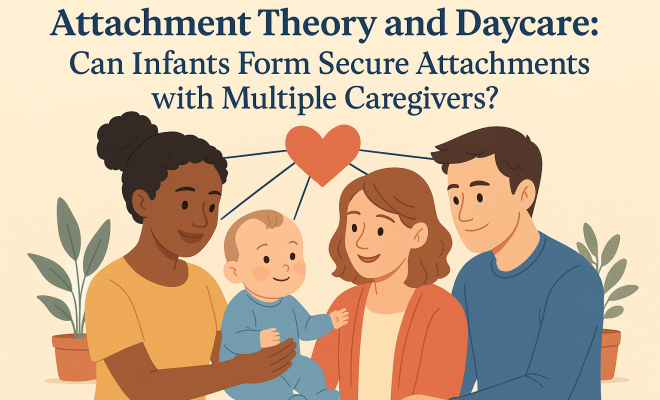
Daycare & Attachment: Can Infants Bond with Multiple Caregivers?
“`html
Understanding Attachment Theory
Attachment theory, developed by psychologist John Bowlby in the 20th century, offers crucial insights into how infants connect emotionally with their caregivers. At its core, the theory posits that the bonds formed during early childhood—particularly with primary caregivers—play a pivotal role in shaping a child’s emotional and social development. These early attachments can significantly influence a child’s future relationships and even their mental health.
According to Bowlby, secure attachment occurs when caregivers are responsive, nurturing, and consistently available to their infants. When a child feels safe and understood, they are more likely to explore the world confidently, knowing they can return to their caregiver for reassurance. In contrast, insecure attachments can arise from inconsistent or neglectful caregiving, leading to anxiety, avoidance, or disorganized behavior in relationships.
Daycare Dynamics: A New Environment
As more parents return to work shortly after childbirth, daycare has become an increasingly common solution for childcare. The question arises: can infants form secure attachments in daycare settings? This is a critical issue, particularly as early childhood experiences lay the foundation for lifelong emotional health.
In daycare environments, infants are often cared for by multiple caregivers throughout the day. This situation raises concerns about whether a child can form the same level of emotional security with multiple individuals as they would with a single primary caregiver at home. Fortunately, research suggests that infants can indeed develop secure attachments in daycare settings, provided certain conditions are met.
Key Factors Influencing Attachment in Daycare
Several factors contribute to the ability of infants to form secure attachments with multiple caregivers in daycare environments:
- Consistency in Caregiving: A stable group of caregivers who are consistently present can help infants feel secure. Familiarity breeds trust, and when infants see the same faces repeatedly, they’re more likely to develop bonds.
- Responsive Caregiving: Caregivers who are attentive, warm, and responsive to the needs of infants foster a sense of security. This responsiveness is crucial in helping infants understand that their needs will be met, regardless of which caregiver is present.
- Quality of Interactions: The nature of interactions between infants and caregivers matters. Positive, engaging interactions—like eye contact, physical touch, and verbal communication—can help strengthen attachments.
- Child’s Temperament: Each child’s personality plays a role in how they respond to multiple caregivers. Children who are naturally more adaptable may find it easier to form connections with various caregivers.
When these factors align, research shows that infants can indeed feel secure in daycare settings, debunking the myth that only one primary attachment figure is necessary for healthy emotional development.
Research Insights: Studies on Attachment in Daycare
Numerous studies have examined the dynamics of attachment theory in daycare settings. A notable 2019 study published in the journal Child Development found that infants who attended daycare programs with high-quality, responsive caregivers displayed secure attachment behaviors comparable to those of children cared for at home by their parents.
Another research project conducted by the National Institute of Child Health and Human Development (NICHD) contributed to our understanding of the relationship between childcare quality and child outcomes. The study’s findings indicated that infants in high-quality daycare settings, where caregivers were nurturing and consistent, exhibited greater social competence and emotional regulation.
These insights highlight that the quality of care in daycare settings can significantly impact an infant’s emotional and social development, challenging the assumption that daycare is inherently less beneficial than home care.
Attachment Styles and Their Long-Term Effects
Understanding different attachment styles is essential to grasp the broader implications of attachment theory in daycare settings. The four primary attachment styles—secure, avoidant, ambivalent, and disorganized—can influence a child’s behavior in relationships throughout their life.
1. **Secure Attachment:** Children with secure attachments tend to have positive self-esteem, build healthy relationships, and navigate social environments effectively. They are more likely to be independent while also feeling comfortable seeking help when needed. (See: Attachment Theory overview on Wikipedia.)
2. **Avoidant Attachment:** Children with avoidant attachment may struggle with intimacy and often distance themselves emotionally from others. They might not seek comfort from caregivers and could appear indifferent when separated.
3. **Ambivalent Attachment:** Ambivalently attached children often have mixed feelings about closeness and can exhibit clingy behavior coupled with resistance to being comforted. This may stem from inconsistent caregiving, which leaves them unsure about the availability of support.
4. **Disorganized Attachment:** Children with disorganized attachment often display confusing behaviors, showing signs of both avoidance and ambivalence. This style can arise from trauma or neglect, and it can lead to significant emotional and social challenges later in life.
Understanding these attachment styles is critical for parents and caregivers, as it can inform strategies to promote secure attachments even in daycare settings.
Practical Strategies for Daycare Providers
To foster secure attachments among infants in daycare, providers can implement several practical strategies:
- Training Caregivers: Ensuring caregivers receive training in attachment theory can enhance their understanding of the importance of responsive care and the nuances of infant emotional needs.
- Consistent Caregiver Assignments: Assigning specific caregivers to groups of infants can create a sense of stability and trust. This consistency allows infants to form bonds with their caregivers over time.
- Creating a Nurturing Environment: A warm and inviting atmosphere can help infants feel safe and comfortable. Incorporating familiar routines and activities can also provide structure and predictability.
- Encouraging Parent Involvement: Engaging parents in daycare activities can strengthen the bridge between home and daycare, reinforcing the child’s sense of security and connection with both environments.
By implementing these strategies, daycare providers can create environments that support the emotional security of infants, thereby aligning with the principles of attachment theory.
Parental Concerns and Considerations
While many parents rely on daycare as a childcare solution, concerns often arise regarding the impact of separation on attachment. Parents may worry whether their child will have the same emotional bond with multiple caregivers as they would with a stay-at-home parent. It’s essential for parents to recognize that their involvement and the quality of daycare can significantly influence attachment outcomes.
Here are some considerations for parents:
- Choose Quality Daycare: Research daycare options thoroughly. Look for facilities with high caregiver-to-child ratios, trained staff, and positive reviews from other parents.
- Stay Engaged: Regularly communicate with daycare providers to stay informed about your child’s behavior and progress. This connection can bridge the gap between home and daycare.
- Establish Routines: Create consistent drop-off and pick-up routines to help your child feel secure and know what to expect.
- Be Responsive at Home: Balance daycare experiences with quality time at home. Ensure your interactions are warm, responsive, and nurturing, reinforcing the bond you share.
By actively participating in their child’s daycare experience, parents can help mitigate concerns and promote secure attachments, even within a multifaceted caregiving environment.
The Role of Culture in Attachment Theory and Daycare
It’s crucial to consider that cultural beliefs and practices can shape how attachment is perceived and enacted, particularly in daycare settings. Cultures vary in their views on independence and interdependence, which can influence how caregivers interact with children.
In collectivist cultures, for instance, caregiving may involve broader community participation, allowing infants to connect with many caregivers. Research indicates that in such environments, children can develop secure attachments with multiple figures, as long as those caregivers are attentive and nurturing.
Conversely, in individualistic cultures, where independence is emphasized, parents may feel pressure to ensure that their child forms a strong attachment to them exclusively. This cultural lens can lead to misconceptions about the efficacy of daycare in fostering healthy attachments, emphasizing the need to understand diverse perspectives on caregiving and attachment.
Conclusion: Embracing the Complexities of Attachment in Daycare
Attachment theory provides a valuable framework for understanding how infants can forge secure bonds with multiple caregivers in daycare settings. By fostering stable, responsive, and nurturing environments, both parents and daycare providers play crucial roles in promoting healthy attachments. With the right strategies in place, daycare can serve as a positive space for emotional and social development, allowing infants to thrive even in the presence of multiple caregivers.
The conversation surrounding attachment theory and daycare is evolving, inviting further research and dialogue. As societal norms shift and childcare needs change, it’s vital to remain open to the complexities of attachment, ensuring that every infant has the opportunity to build secure, healthy relationships, regardless of their caregiving circumstances. (See: CDC on child attachment and mental health.)
FAQs about Attachment Theory and Daycare
As parents and caregivers navigate the complexities of attachment theory in daycare settings, several common questions often arise. Here are some frequently asked questions to clarify concerns and provide further insights:
1. Can a child have multiple secure attachments?
Yes, a child can have multiple secure attachments. Secure attachments can form with different caregivers, provided those caregivers are responsive and nurturing. Children can thrive emotionally and socially with various figures, allowing for healthy development in daycare settings.
2. What are the signs of secure attachment in infants?
Indicators of secure attachment include seeking comfort from caregivers when distressed, showing joy upon reunification, exploring their environment confidently, and demonstrating curiosity and engagement with both caregivers and peers.
3. How can I recognize an insecure attachment style in my child?
Signs of an insecure attachment may include excessive clinginess, reluctance to explore, avoidance of caregivers, or difficulty managing emotional responses. If you notice these behaviors, it’s essential to assess the caregiving environment and consider strategies to enhance attachment.
4. What role do daycare ratios play in attachment?
Caregiver-to-child ratios are vital in fostering secure attachments. Smaller ratios allow caregivers to provide more individualized attention and responsive care, which can lead to stronger emotional bonds between children and caregivers.
5. How long should my child attend daycare each day?
The ideal amount of time spent in daycare can vary based on the child’s temperament and the quality of care provided. Generally, shorter days with high-quality interactions are preferable for younger infants, while toddlers may adapt better to longer hours.
6. Is it possible for daycare to negatively impact attachment?
While high-quality daycare can support healthy attachments, poor quality—characterized by neglectful, inconsistent care—can negatively impact a child’s ability to form secure attachments. Parents should choose daycare providers carefully to ensure a nurturing environment.
7. Can I help my child develop a secure attachment while they are in daycare? (See: NIH resources on child attachment.)
Absolutely! You can foster secure attachments by maintaining open communication with caregivers, engaging in your child’s daycare experience, and ensuring that home life is nurturing and predictable. Your involvement reinforces the child’s sense of security.
8. What are some common misconceptions about daycare and attachment?
Many people believe that daycare inherently undermines secure attachment, but research shows that high-quality daycare can foster secure relationships. It’s also a misconception that infants can only attach to one primary caregiver; instead, they can bond with multiple responsive figures.
9. How does attachment theory inform daycare policies?
Many daycare centers are increasingly adopting attachment-informed policies based on research. These policies may include training staff in attachment theory, ensuring low child-to-caregiver ratios, and emphasizing the importance of familiar routines. This approach is designed to create a nurturing environment that supports emotional bonding.
10. Are there any long-term studies on children from daycare settings?
Yes, several long-term studies have followed children who attended daycare from infancy through adolescence. These studies often find that children who experienced high-quality daycare show positive outcomes in social skills, emotional regulation, and academic performance later in life, suggesting that early daycare experiences can be beneficial when caregiving quality is high.
11. What can daycare centers do to communicate with parents about attachment?
Daycare centers can hold workshops, send newsletters, and offer one-on-one meetings to discuss attachment theory and its relevance. Transparency regarding caregiving practices and child development can empower parents to engage meaningfully in their child’s daycare experience.
12. How can we measure the quality of attachment in daycare settings?
Measuring the quality of attachment in daycare settings can involve observations of caregiver interactions, feedback from parents about their children’s comfort and happiness, and assessments of children’s behavior in social situations. Tools like the Strange Situation procedure, developed by Mary Ainsworth, can also be adapted for use in evaluating attachment in group care settings.
By addressing these FAQs, parents and caregivers can better understand attachment theory as it relates to daycare, leading to more informed choices about childcare and fostering secure relationships for their children.
“`
Trending Now
- read the full story
- “Temperament and Sibling Conflict: Why Children from the Same Family Can Be So Different”
- “Should My Child Attend TK or…
- our breakdown of “why phonological awareness predicts reading success better than letter knowledge”
- our breakdown of “the safe place in conscious discipline: creating calming spaces for emotional regulation”
Frequently Asked Questions
Can infants form secure attachments in daycare?
Yes, infants can form secure attachments in daycare settings. Research indicates that with consistent and nurturing caregivers, children can develop emotional security similar to that found with a primary caregiver at home.
What is attachment theory in child development?
Attachment theory, developed by John Bowlby, explains how early emotional bonds with caregivers influence a child's social and emotional development. Secure attachments promote confidence and exploration, while insecure attachments can lead to anxiety and relationship issues.
How does daycare affect a child's emotional development?
Daycare can positively impact a child's emotional development if caregivers are responsive and consistent. A stable caregiving environment helps infants feel safe and understood, fostering secure attachments that are crucial for their growth.
What factors influence attachment in daycare settings?
Key factors influencing attachment in daycare include consistency in caregiving, the quality of interactions between caregivers and infants, and the overall environment of the daycare, which should be nurturing and supportive.
What are the effects of insecure attachments in early childhood?
Insecure attachments can lead to various challenges in later life, including anxiety, difficulty in relationships, and disorganized behavior. Addressing these issues early on through supportive caregiving is essential for healthy emotional development.
What did we miss? Let us know in the comments and join the conversation.