The Edvocate

Top Menu

Main Menu

  • Start Here
    • Our Brands
    • Governance
      • Lynch Education Consulting, LLC.
      • Dr. Lynch’s Personal Website
      • Careers
    • Write For Us
    • Books
    • The Tech Edvocate Product Guide
    • Contact Us
    • The Edvocate Podcast
    • Edupedia
    • Pedagogue
    • Terms and Conditions
    • Privacy Policy
  • PreK-12
    • Assessment
    • Assistive Technology
    • Best PreK-12 Schools in America
    • Child Development
    • Classroom Management
    • Early Childhood
    • EdTech & Innovation
    • Education Leadership
    • Equity
    • First Year Teachers
    • Gifted and Talented Education
    • Special Education
    • Parental Involvement
    • Policy & Reform
    • Teachers
  • Higher Ed
    • Best Colleges and Universities
    • Best College and University Programs
    • HBCU’s
    • Diversity
    • Higher Education EdTech
    • Higher Education
    • International Education
  • Advertise
  • The Tech Edvocate Awards
    • The Awards Process
    • Finalists and Winners of The 2026 Tech Edvocate Awards
    • Finalists and Winners of The 2025 Tech Edvocate Awards
    • Finalists and Winners of The 2024 Tech Edvocate Awards
    • Finalists and Winners of The 2023 Tech Edvocate Awards
    • Finalists and Winners of The 2021 Tech Edvocate Awards
    • Finalists and Winners of The 2022 Tech Edvocate Awards
    • Finalists and Winners of The 2020 Tech Edvocate Awards
    • Finalists and Winners of The 2019 Tech Edvocate Awards
    • Finalists and Winners of The 2018 Tech Edvocate Awards
    • Finalists and Winners of The 2017 Tech Edvocate Awards
    • Award Seals
  • Apps
    • GPA Calculator for College
    • GPA Calculator for High School
    • Cumulative GPA Calculator
    • Grade Calculator
    • Weighted Grade Calculator
    • Final Grade Calculator
  • The Tech Edvocate
  • Post a Job
  • AI Powered Personal Tutor

logo

The Edvocate

  • Start Here
    • Our Brands
    • Governance
      • Lynch Education Consulting, LLC.
      • Dr. Lynch’s Personal Website
        • My Speaking Page
      • Careers
    • Write For Us
    • Books
    • The Tech Edvocate Product Guide
    • Contact Us
    • The Edvocate Podcast
    • Edupedia
    • Pedagogue
    • Terms and Conditions
    • Privacy Policy
  • PreK-12
    • Assessment
    • Assistive Technology
    • Best PreK-12 Schools in America
    • Child Development
    • Classroom Management
    • Early Childhood
    • EdTech & Innovation
    • Education Leadership
    • Equity
    • First Year Teachers
    • Gifted and Talented Education
    • Special Education
    • Parental Involvement
    • Policy & Reform
    • Teachers
  • Higher Ed
    • Best Colleges and Universities
    • Best College and University Programs
    • HBCU’s
    • Diversity
    • Higher Education EdTech
    • Higher Education
    • International Education
  • Advertise
  • The Tech Edvocate Awards
    • The Awards Process
    • Finalists and Winners of The 2026 Tech Edvocate Awards
    • Finalists and Winners of The 2025 Tech Edvocate Awards
    • Finalists and Winners of The 2024 Tech Edvocate Awards
    • Finalists and Winners of The 2023 Tech Edvocate Awards
    • Finalists and Winners of The 2021 Tech Edvocate Awards
    • Finalists and Winners of The 2022 Tech Edvocate Awards
    • Finalists and Winners of The 2020 Tech Edvocate Awards
    • Finalists and Winners of The 2019 Tech Edvocate Awards
    • Finalists and Winners of The 2018 Tech Edvocate Awards
    • Finalists and Winners of The 2017 Tech Edvocate Awards
    • Award Seals
  • Apps
    • GPA Calculator for College
    • GPA Calculator for High School
    • Cumulative GPA Calculator
    • Grade Calculator
    • Weighted Grade Calculator
    • Final Grade Calculator
  • The Tech Edvocate
  • Post a Job
  • AI Powered Personal Tutor
  • The Wild New Alliance: Why Democrats and Republicans Are Uniting on Child Care Support

  • This Viral Fake Ultrasound Video Is a Parental Deception Scandal

  • Bizarre Cat in the Hat AI Trend Ignites School Safety Fears, Arrests Follow

  • The College Student Who Went Viral: His Shocking Journey 11 Years Later

  • Flashcard Game Grades 3-5

  • The Disturbing ‘Cat in the Hat’ Hoax Fueling Panic in Schools — And What Parents MUST Know

  • The Chilling Truth: Why Parents Are Erasing Every Photo of Their Kids Online

  • Baffling: Feds Slash Youth Mental Health Funding Amid Crisis — What It Means For Your Kids

  • Apply to Get a Free Kinsa Smart Thermometer for Every Family at Your School

  • California’s Game-Changing Move: Can New Laws Finally Protect Kids from Big Tech’s Grasp?

Uncategorized
Home›Uncategorized›2026 Asteroids Approach Earth: What NASA Discovered

2026 Asteroids Approach Earth: What NASA Discovered
By Matthew Lynch
April 29, 2026
0
Spread the love

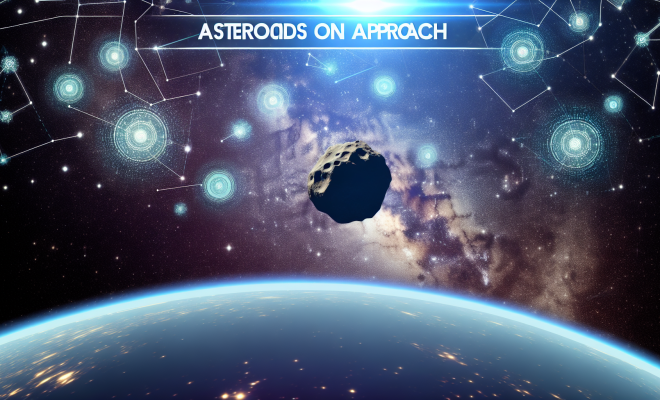
On April 29, 2026, two asteroids, designated as 2026 HL3 and 2026 HP3, are set to make their closest approach to Earth in what has become a routine but fascinating event for astronomers and space enthusiasts alike. These two celestial bodies, each comparable in size to a small airplane, will pass at distances of approximately 1.6 million miles and 3.68 million miles from our planet, respectively. Despite their close proximity in astronomical terms, both NASA and scientists caution that there is no cause for alarm.

Understanding the Asteroids

The asteroids 2026 HL3 and 2026 HP3 are classified as near-Earth objects (NEOs), which are defined as any small Solar System body whose orbit brings it into proximity with Earth. As space agencies continue to monitor NEOs, both for potential threats and for opportunities to learn more about the formation of our Solar System, these upcoming flybys are part of ongoing research efforts.

Characteristics of the Asteroids

  • 2026 HL3: This asteroid is estimated to be around the size of a small airplane, making it a relatively small object in astronomical terms.
  • 2026 HP3: Similar in size to HL3, HP3 is another small asteroid that will follow closely behind at a greater distance.

A Routine Event

The upcoming passage of these two asteroids is not an unusual occurrence. NASA and other space agencies frequently track numerous NEOs, many of which pass by Earth without incident. The close approach of 2026 HL3 and 2026 HP3 serves as a reminder of the vast number of celestial objects that orbit our planet, many of which remain undetected until they come within range of our observational technology.

NASA’s Monitoring Systems

NASA has established a comprehensive network of telescopes and satellites dedicated to tracking NEOs. This system includes:

  • NEOWISE: A space-based infrared telescope that has discovered thousands of asteroids and comets.
  • Pan-STARRS: A wide-field telescope system located in Hawaii that scans the night sky for new celestial objects.
  • Asteroid Watch: A public outreach program that provides updates and information about NEOs and their potential impact on Earth.

Why Scientists Are Not Alarmed

The distances at which 2026 HL3 and 2026 HP3 will pass are substantial in cosmic terms, translating to approximately 1.6 million and 3.68 million miles, respectively. For context, the average distance from the Earth to the Moon is about 238,855 miles. Therefore, these asteroids will be well outside the range where any potential impact could occur.

Safety Protocols and Research Opportunities

While the asteroids pose no threat, their flybys present valuable opportunities for scientific study. Researchers can analyze the trajectory and characteristics of these asteroids to enhance our understanding of their composition and behavior. Such information is crucial for improving our asteroid tracking capabilities and developing potential mitigation strategies for future threats.

Asteroids: A Window into the Solar System’s Past

Asteroids are remnants from the early Solar System, providing insights into the conditions that existed over 4.5 billion years ago. By studying these celestial objects, scientists can gather data about the formation of planets and the materials that contributed to their development.

The Role of Asteroids in Space Research

  • Composition Analysis: Understanding the minerals and organic compounds present in asteroids can shed light on the origins of water and life on Earth.
  • Impact History: Studying past asteroid impacts helps scientists understand the frequency and consequences of such events on Earth and other celestial bodies.
  • Potential Resources: As interest in space exploration grows, asteroids are being examined for their potential as sources of metals and other resources.

Public Interest and Engagement

The upcoming flybys of 2026 HL3 and 2026 HP3 have sparked interest within the scientific community and the public. Events like this serve as a reminder of humanity’s place in the universe and the importance of ongoing research in astronomy.

Education and Outreach

NASA and other space agencies actively engage in outreach efforts to educate the public about asteroids and their significance. Programs like:

  • STEM Initiatives: Encouraging students to pursue careers in science, technology, engineering, and mathematics through dedicated programs.
  • Public Webinars and Lectures: Offering insights from experts on current research and discoveries in the field of astronomy.
  • Social Media Campaigns: Utilizing platforms to share real-time updates and fascinating facts about ongoing asteroid research.

Looking Ahead: The Future of Asteroid Research

The routine monitoring of NEOs, including the upcoming visit of 2026 HL3 and 2026 HP3, reflects the continuous advancements in our ability to track and study these celestial bodies. As technology improves, so too does our understanding of the cosmos.

Innovations in Detection and Tracking

Future developments in telescope technology and data analysis techniques promise to enhance our detection capabilities and provide even more detailed insights into the structure and behavior of asteroids. With the potential for new discoveries on the horizon, scientists remain focused on harnessing these advancements.

Conclusion

The impending flybys of asteroids 2026 HL3 and 2026 HP3 serve as an important reminder of the dynamic nature of our Solar System. With NASA and other space agencies diligently monitoring these objects, the public can rest assured that the threat of asteroid impacts is being taken seriously. As we continue to explore our universe, the study of asteroids will remain a vital component of our quest for knowledge and understanding.

Previous Article

Tech Earnings & Fed Decisions: Market Impact ...

Next Article

SN Winny: Rare Supernova Reveals Universal Expansion ...

Matthew Lynch

Related articles More from author

  • Uncategorized

    14 Anxiety Books for Kids, As Chosen by Educators

    January 2, 2025
    By Matthew Lynch
  • Uncategorized

    Trump Admin Threatens Media Over Iran Coverage in 2026

    March 15, 2026
    By Matthew Lynch
  • Uncategorized

    2026 – 2027 Best Bachelor’s Degree Programs in Accounting

    June 29, 2026
    By Matthew Lynch
  • Uncategorized

    Cheesy, LOL Music Jokes Your Students Will Love

    January 2, 2025
    By Matthew Lynch
  • Uncategorized

    Twitter Accusations Strain HBCUs Relationship

    October 11, 2016
    By Matthew Lynch
  • Uncategorized

    Fastest Growing YouTube Niches in 2026: A Creator’s Guide

    May 23, 2026
    By Matthew Lynch

Search

Registration and Login

  • Log in
  • Entries feed
  • Comments feed
  • WordPress.org

Newsletter

Signup for The Edvocate Newsletter and have the latest in P-20 education news and opinion delivered to your email address!

RSS feed: Matthew on Education Week Matthew on Education Week

  • Au Revoir from Education Futures November 20, 2018 Matthew Lynch
  • 6 Steps to Data-Driven Literacy Instruction October 17, 2018 Matthew Lynch
  • Four Keys to a Modern IT Approach in K-12 Schools October 2, 2018 Matthew Lynch
  • What's the Difference Between Burnout and Demoralization, and What Can Teachers Do About It? September 27, 2018 Matthew Lynch
  • Revisiting Using Edtech for Bullying and Suicide Prevention September 10, 2018 Matthew Lynch

About Us

The Edvocate was created in 2014 to argue for shifts in education policy and organization in order to enhance the quality of education and the opportunities for learning afforded to P-20 students in America. What we envisage may not be the most straightforward or the most conventional ideas. We call for a relatively radical and certainly quite comprehensive reorganization of America’s P-20 system.

That reorganization, though, and the underlying effort, will have much to do with reviving the American education system, and reviving a national love of learning.  The Edvocate plans to be one of key architects of this revival, as it continues to advocate for education reform, equity, and innovation.

Newsletter

Signup for The Edvocate Newsletter and have the latest in P-20 education news and opinion delivered to your email address!

Contact

The Edvocate
910 Goddin Street
Richmond, VA 23230
(601) 630-5238
[email protected]
  • situs togel online
  • dentoto
  • situs toto 4d
  • situs toto slot
  • toto slot 4d
Copyright (c) 2026 Matthew Lynch. All rights reserved.