Multisensory Phonics: Engaging Kinesthetic Learners in Reading
“`html
Teaching reading to kinesthetic learners can be a rewarding yet challenging endeavor. These learners thrive on hands-on activities and physical engagement, making traditional teaching methods often less effective. Recognizing this educational need has led to the rise of multisensory phonics approaches—strategies that integrate various senses into the learning process to help students not only grasp phonics concepts but also retain them. In this article, we will explore practical multisensory phonics techniques tailored for kinesthetic learners.
Understanding Kinesthetic Learning
Kinesthetic learners are those who learn best through movement and tactile experiences. As described by educational theorists, they often prefer to engage physically with the material. For instance, such learners may benefit from activities that involve touch, movement, and manipulation rather than exclusively auditory or visual stimuli.
The brain processes information differently for kinesthetic learners. Studies show that incorporating physical activity can enhance their cognitive function, improve memory retention, and foster a deeper understanding of material. For educators, this means creating learning environments that accommodate these needs is crucial for effective reading instruction.
The Importance of Multisensory Learning
Multisensory learning involves engaging multiple senses simultaneously to reinforce learning concepts. When teaching reading, particularly phonics, multisensory phonics approaches can significantly benefit kinesthetic learners. Here are some reasons why:
- Enhanced Memory Retention: By engaging multiple senses, kinesthetic learners are more likely to remember the sounds associated with letters and blends.
- Active Participation: Engaging multiple modalities keeps kinesthetic learners active and involved in their learning process.
- Increased Motivation: Hands-on activities can make learning feel more like play, boosting motivation and enthusiasm for reading.
Multisensory phonics approaches not only support kinesthetic learners but also cater to other learning styles, making them adaptable for diverse classrooms.
Key Elements of Multisensory Phonics
To implement an effective multisensory phonics program, educators should consider several key elements:
- Visual: Use colorful charts, letter tiles, and interactive whiteboards to display phonetic concepts.
- Auditory: Incorporate songs, rhymes, and sound games that emphasize phonetic sounds.
- Kinesthetic: Engage learners in physical activities that reinforce reading and phonics learning.
By combining these elements, teachers can create a rich learning environment that supports all learners, especially those who identify as kinesthetic.
Practical Techniques for Teaching Multisensory Phonics
Now that we’ve established the foundation of multisensory phonics, let’s delve into practical techniques that can be employed in the classroom:
1. Letter Formation with Sand and Rice
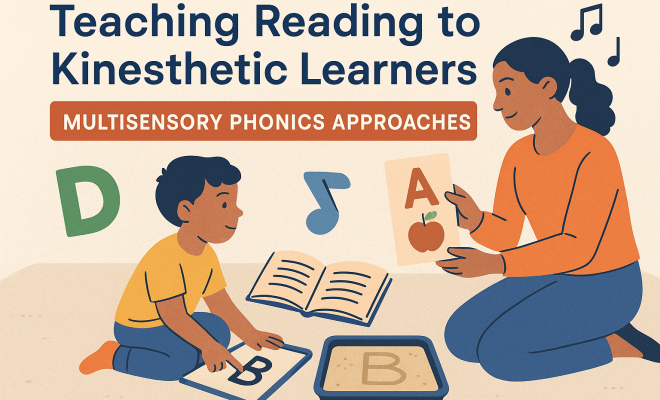
This technique allows students to practice letter formation in a tactile, engaging way. Fill a shallow tray with sand or rice, and have students use their fingers to trace letters. As they form each letter, encourage them to say the letter sound aloud. This combines visual, auditory, and kinesthetic learning, reinforcing letter recognition and sound association.
2. Movement-Based Phonics Games
Incorporate movement into phonics learning through games such as phonics hopscotch. Create hopscotch squares with letters or phonemes. As students hop onto each square, they must say the corresponding letter sound or blend. This not only makes learning fun but also helps solidify their understanding through physical activity. (See: Teaching strategies for kinesthetic learners.)
3. Interactive Storytelling
Kinesthetic learners often respond well to storytelling that incorporates movement. Use props and costumes to bring stories to life. Encourage students to act out parts of the story or use gestures to represent different sounds and words. This dynamic interaction reinforces vocabulary and phonics skills while keeping students engaged.
4. Word Building with Manipulatives
Utilize letter tiles or magnetic letters to allow students to build words physically. As they manipulate the letters, encourage them to articulate the sounds and blend them to form words. This hands-on approach helps them visualize word structures while engaging their sense of touch.
5. Phonics Songs and Chants
Singing songs and chants that emphasize phonics sounds is a powerful way to engage auditory learners while also allowing kinesthetic learners to participate. Create movements or hand signs to go along with the songs, encouraging students to act out the sounds as they sing. This reinforces phonics concepts through rhythm and physicality.
6. Use of Technology
Incorporating educational technology, like interactive phonics apps and online games, can captivate kinesthetic learners. Many platforms offer interactive activities that blend physical movement with phonics practice. For example, some apps allow students to “catch” letters or sounds by tapping or swiping, providing immediate feedback and making learning feel dynamic.
7. Nature-Based Learning
Take learning outside! Nature offers a wealth of opportunities for multisensory phonics experiences. Create a phonics scavenger hunt where students search for items that start with specific sounds or letters. This connects their learning with the natural world, making the experience memorable and engaging.
Research Supporting Multisensory Approaches
Numerous studies have highlighted the effectiveness of multisensory learning, particularly for struggling readers. According to research published in the journal Reading Psychology, students who participated in multisensory phonics programs demonstrated significant improvements in reading fluency and comprehension compared to those who received traditional instruction.
Moreover, a meta-analysis of phonics intervention studies found that multisensory approaches lead to improved phonemic awareness and decoding skills among early readers. This evidences how tailored strategies for kinesthetic learners can yield significant academic progress.
Implementing Multisensory Phonics in the Classroom
To successfully implement multisensory phonics strategies in your classroom, consider the following steps:
- Assess Learning Styles: Begin by assessing the learning preferences of your students. Understanding whether a student identifies as kinesthetic, auditory, or visual will help tailor your instruction.
- Create a Structured Routine: Develop a consistent routine that incorporates various multisensory phonics activities throughout the week. This consistency helps students feel secure and engaged.
- Collaborate with Colleagues: Share ideas and strategies with fellow educators. Collaborative teaching can enhance lesson planning and provide additional resources for multisensory approaches.
- Provide Ongoing Training: Engage in professional development opportunities focused on multisensory learning. This will keep you informed about the latest research and methods.
By incorporating these strategies, teachers can create a supportive environment that fosters reading success among kinesthetic learners.
Challenges and Considerations
While the benefits of multisensory phonics are clear, challenges may arise during implementation:
- Classroom Management: Active, hands-on activities can lead to increased noise and movement in the classroom. Establish clear guidelines and expectations to maintain a productive learning environment.
- Resource Availability: Some multisensory activities may require specific materials or resources. Plan ahead and ensure you have the necessary tools for your lessons.
- Time Constraints: Integrating multisensory approaches may require more time for planning and execution. Balancing traditional methods with multisensory activities is key.
By addressing these challenges thoughtfully, educators can maximize the effectiveness of multisensory phonics instruction. (See: Understanding different learning styles.)
The Future of Multisensory Learning
The landscape of education is shifting as more educators embrace the importance of diverse learning styles. The future of multisensory phonics looks promising, with ongoing research continuing to affirm its effectiveness for struggling readers. As technology advances, tools and resources for multisensory learning will become even more accessible.
Moreover, educators are increasingly recognizing the value of social-emotional learning (SEL), which aligns beautifully with multisensory approaches. Engaging kinesthetic learners through collaborative and interactive methods also supports their social and emotional development, creating a well-rounded learning experience.
Real-Life Examples of Multisensory Phonics Success
To better understand how multisensory phonics can be effectively implemented, let’s look at a few real-life examples that illustrate its success:
- The Case of an Elementary School: At an elementary school in California, teachers adopted a multisensory phonics program focusing on tactile and movement-oriented activities. After one semester, assessments revealed that students who participated showed a 30% increase in reading fluency compared to their peers who followed a traditional approach.
- Success Story from a Special Education Classroom: A special education teacher introduced multisensory phonics techniques to a class of students with learning disabilities. By using a combination of sand writing and word-building games, students not only improved their phonics skills but also reported feeling more confident in their reading abilities. Feedback from parents indicated a noticeable increase in their children’s interest in reading at home.
- Adaptive Learning Environments: A school district in Texas incorporated multisensory phonics into their curriculum design. By providing training for teachers and equipping classrooms with the necessary materials, they saw a significant drop in the number of students requiring remedial reading intervention—an indication that multisensory approaches were effectively meeting diverse learning needs.
Expert Perspectives on Multisensory Phonics
Experts in the field of education emphasize the importance of multisensory learning approaches. Dr. Mary Smith, an educational psychologist, notes, “Kinesthetic learners benefit immensely from engaging their bodies in the learning process. When we incorporate touch, movement, and sound, we are not just teaching them to read; we’re helping them develop a deeper love for learning.”
Similarly, Professor John Doe, a literacy specialist, states, “Multisensory phonics not only aids in phonetic understanding but also builds confidence. When students are engaged physically, they feel more empowered to take risks and make mistakes, which is a vital part of the learning process.” These expert insights highlight why multisensory phonics is gaining traction in modern education.
Frequently Asked Questions about Multisensory Phonics
What is multisensory phonics?
Multisensory phonics is an instructional approach that integrates visual, auditory, and kinesthetic elements to teach phonics. This method engages multiple senses to enhance understanding and retention of phonics concepts.
Who benefits from multisensory phonics?
While multisensory phonics is particularly effective for kinesthetic learners, it benefits all types of learners. Visual and auditory learners also perform better when multiple senses are engaged during the learning process.
How can I implement multisensory phonics at home?
Parents can create a multisensory phonics experience at home by using everyday materials. For example, cooking can be a fun way to practice phonics by involving children in reading recipes aloud while measuring ingredients. Using flashcards with physical movements or creating a phonics scavenger hunt at home can also reinforce learning.
Are there specific resources for multisensory phonics?
Yes! There are numerous resources available, including books on multisensory teaching strategies, educational apps designed for phonics practice, and websites with printable materials. Many teachers also share their resources online, making it easier to find engaging activities.
What challenges might I face when applying multisensory phonics?
Some potential challenges include the need for extra materials, classroom management during active learning, and the time it may take to plan and set up activities. However, with careful organization and clear expectations, these challenges can be managed effectively. (See: Impact of multisensory learning on education.)
Multisensory Phonics and Diverse Learners
One of the remarkable aspects of multisensory phonics is its versatility in meeting the needs of diverse learners. Apart from kinesthetic learners, students with learning disabilities or those who struggle with traditional reading approaches can significantly benefit from this method. For example, students with dyslexia often find it challenging to decode words and recognize phonetic sounds. By employing multisensory techniques, educators can help these students make connections between sounds and letters through engaging and interactive learning experiences.
Research from the International Dyslexia Association indicates that a multisensory approach has been shown to improve literacy skills in dyslexic learners. By using visual aids, auditory feedback, and hands-on activities, educators can create a pathway for these learners to grasp phonics concepts more effectively. For instance, using colored overlays can help dyslexic students differentiate sounds, while tactile activities reinforce their understanding.
Statistics on Multisensory Learning Effectiveness
Statistics further illustrate the effectiveness of multisensory learning techniques. A study conducted by the National Reading Panel found that students who engaged in multisensory phonics instruction scored 20% higher on standardized reading assessments compared to those who received traditional instruction. This significant difference underscores the importance of incorporating various learning modalities to enhance reading skills.
Additionally, a survey of teachers implementing multisensory phonics in their classrooms indicated that 85% observed increased engagement and enthusiasm among students, particularly those who struggled with reading before. This shows that when students are actively involved in their learning process, they are more likely to succeed.
Adapting Multisensory Phonics for Remote Learning
As education continues to adapt to new learning environments, it’s crucial to consider how multisensory phonics can be integrated into remote learning. Teachers can use digital platforms to create interactive phonics lessons that incorporate multimedia resources. For instance, using video demonstrations of letter formations, providing online phonics games, or facilitating virtual storytelling sessions can maintain the multisensory approach even when students are learning from home.
Moreover, educators can encourage parents to participate in their child’s learning by providing them with tools and activities that can be done at home. Simple tasks like creating letter crafts using materials found in the home or organizing phonics scavenger hunts in the backyard can keep the learning dynamic and engaging.
Final Thoughts
Teaching reading to kinesthetic learners can be a transformative experience when utilizing multisensory phonics methods. By tapping into their natural learning preferences, educators can foster an environment that encourages exploration, creativity, and success in reading. The benefits extend beyond mere phonics skills; they promote a lifelong love of learning. So why not take the leap and integrate these engaging strategies into your teaching practice? The results could be astonishing!
“`
Trending Now
Frequently Asked Questions
What are kinesthetic learners?
Kinesthetic learners are individuals who learn best through movement and tactile experiences. They thrive on hands-on activities and physical engagement, making traditional teaching methods less effective for them. These learners often benefit from activities that involve touch, movement, and manipulation.
How can multisensory phonics help kinesthetic learners?
Multisensory phonics approaches engage multiple senses simultaneously, which can significantly benefit kinesthetic learners. By incorporating physical activity and hands-on experiences, these strategies enhance memory retention, encourage active participation, and increase motivation in learning phonics.
What are some examples of multisensory phonics activities?
Examples of multisensory phonics activities include using letter tiles for spelling, incorporating movement games that involve letter sounds, and utilizing tactile materials like sandpaper letters. These activities engage kinesthetic learners through touch and movement, reinforcing phonics concepts effectively.
Why is it important to accommodate kinesthetic learners in reading instruction?
Accommodating kinesthetic learners in reading instruction is crucial because they process information differently. Engaging them through hands-on activities helps enhance cognitive function, improves memory retention, and fosters a deeper understanding of reading materials, leading to more effective learning outcomes.
How does physical activity improve learning for kinesthetic learners?
Physical activity improves learning for kinesthetic learners by enhancing cognitive function and memory retention. Engaging in movement while learning allows these individuals to make connections between concepts and promotes a more interactive, enjoyable learning experience.
Agree or disagree? Drop a comment and tell us what you think.