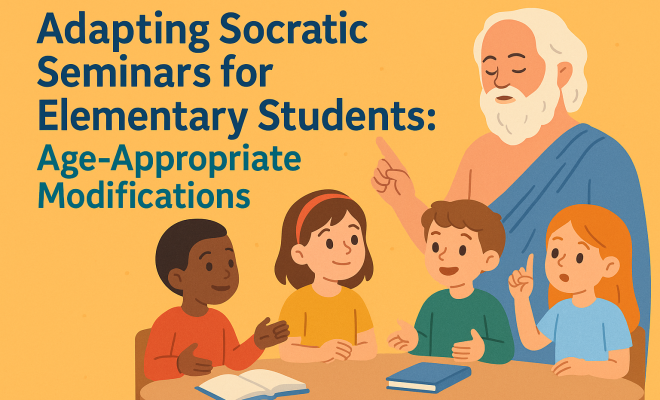
“Adapting Socratic Seminars for Elementary Students: Age-Appropriate Modifications”
“`html
When discussing effective pedagogical strategies, one intriguing method that has gained traction across various educational settings is the Socratic seminar. Traditionally utilized in secondary and post-secondary education, this approach can also be adapted for Socratic seminars for elementary students. At first glance, it might seem that the depth and complexity of Socratic questioning aren’t suitable for young learners. However, with thoughtful modifications, this method can foster critical thinking, collaboration, and engagement in elementary classrooms.
Understanding the Socratic Seminar Model
The Socratic seminar is rooted in the philosophies of Socrates, who believed in the power of dialogue and inquiry as a means to foster understanding and enlightenment. It typically involves open-ended questions that provoke discussion among participants. Instead of a traditional teacher-led lecture, the focus shifts to student-led conversations, promoting critical thinking and deeper comprehension.
At its core, the Socratic seminar encourages students to express their thoughts, challenge assumptions, and engage with diverse perspectives. This model can be particularly beneficial for elementary students, who are often eager to share their ideas but may lack the skills to articulate them in a structured format.
Benefits of Socratic Seminars for Elementary Students
Adapting the Socratic seminar for a younger audience carries numerous benefits. Here are some key advantages:
- Enhanced Critical Thinking: Engaging in discussions encourages students to analyze and evaluate their viewpoints and those of their peers.
- Improved Communication Skills: Students learn to articulate their thoughts clearly and listen actively, which are vital skills in both academic and social contexts.
- Cultivating Empathy: Exposure to different perspectives fosters empathy and respect for others’ opinions, which is fundamental in a diverse classroom.
- Increased Engagement: A student-centered approach can ignite enthusiasm for learning, making discussions more dynamic and interactive.
Age-Appropriate Modifications
To successfully implement Socratic seminars for elementary students, certain adaptations are necessary to ensure that the activities are age-appropriate and engaging. Here are some effective modifications:
1. Simplified Language and Concepts
When formulating questions, use age-appropriate vocabulary and concepts. For younger students, this might mean avoiding complex terminology or abstract ideas. Instead, focus on concrete examples from their everyday experiences. For instance, instead of asking, “What is justice?”, consider a more relatable question like, “How do we decide what’s fair?”
2. Structured Guidelines
Provide clear expectations and guidelines for discussions. Young learners thrive on structure. You might introduce a simple framework, such as:
- One person speaks at a time.
- Respond to someone else’s idea before introducing a new thought.
- Use sentence starters for support, like “I agree with that because…” or “I see it differently…”
These guidelines help students feel more comfortable participating, especially those who are shy or hesitant to speak out.
3. Visual Aids and Props
Incorporating visual aids can significantly enhance comprehension and engagement. Use charts, images, or even physical props that relate to the discussion topic. For instance, if discussing a story, consider using character puppets or illustrations. Visual aids cater to various learning styles and can help students articulate their thoughts more effectively.
4. Small Group Discussions
Before diving into a whole-class seminar, consider starting with smaller groups. This allows students to practice their speaking and listening skills in a less intimidating setting. Small group discussions can help build confidence, allowing students to share their ideas and prepare for larger discussions. Afterward, representatives from each group can share insights with the entire class.
5. Interactive Formats
To maintain engagement, consider a variety of formats. Instead of a traditional roundtable discussion, you might implement a “fishbowl” approach, where a small group discusses a topic while others observe. This can help keep attention levels high and allow for reflection before participating.
Creating an Inclusive Environment
Inclusion is critical when implementing Socratic seminars for elementary students. Here are several strategies to ensure all students feel valued and heard:
1. Diverse Perspectives
Select texts and materials that encompass diverse perspectives and experiences. This approach not only enriches the discussion but also supports students in connecting with the content on a personal level. Whether it’s literature from various cultures or discussions about community issues, diverse content helps every child feel represented. (See: Socratic method overview.)
2. Encouraging Participation
Some students may dominate discussions while others may remain silent. To balance participation, implement strategies such as:
- Randomly selecting speaking order using popsicle sticks with student names.
- Assigning roles, such as a moderator who ensures everyone has a chance to speak.
- Implementing a “talking stick” that designates who has the floor.
These methods ensure that every voice is heard and valued.
3. Continuous Reflection
After discussions, provide opportunities for reflection. This can be done through journaling or group sharing about what they learned and how they felt. Such practices help students internalize their experiences and consider how they might approach future discussions. It also reinforces that their opinions matter and encourages them to think critically about what they’ve heard.
Assessment in Socratic Seminars
Assessing student participation and comprehension can be challenging in a discussion-based format. However, it’s essential to gauge understanding and provide feedback. Here are some methods to consider:
1. Participation Rubrics
Create a simple rubric that outlines what effective participation looks like. Criteria might include:
- Ability to articulate thoughts clearly.
- Active listening and responding to peers.
- Use of evidence or examples to support points.
This rubric allows for constructive feedback and helps students identify areas for improvement.
2. Self-Assessment
After the seminar, have students reflect on their contributions and set goals for future discussions. Self-assessment encourages ownership of their learning and helps them understand the value of their input.
3. Peer Feedback
Incorporate peer feedback into the assessment process. After discussions, students can provide constructive comments on their classmates’ contributions. This strategy reinforces a supportive classroom culture and promotes collaboration among students.
Challenges and Solutions
While there are many advantages to adapting Socratic seminars for elementary students, challenges may arise. Here are some common obstacles and strategies to overcome them:
1. Limited Critical Thinking Skills
Young students may not yet possess the critical thinking skills necessary for rich discussions. To address this, use scaffolding techniques to build these skills over time. Start with simpler questions and gradually increase complexity as students become more comfortable with the format.
2. Managing Classroom Dynamics
Keeping discussions respectful and productive can be challenging, especially when emotions run high. Establish clear norms for discussions and model respectful disagreement. Revisit these norms regularly and ensure students understand the importance of maintaining a positive environment.
3. Time Constraints
Finding time in a packed curriculum for Socratic seminars can be daunting. Integrate discussions into existing subjects, using them as a tool for exploring themes in literature, history, or science. This way, you can maintain curricular goals while fostering essential discussion skills.
Real-World Applications of Socratic Seminars
As educators witness the benefits of Socratic seminars for elementary students, many are finding innovative ways to incorporate them into various subjects. Here are a few real-world applications:
1. Literature Discussions
In literature classes, Socratic seminars can facilitate deep dives into narratives. Students can explore character motivations, themes, and the author’s message. For example, while reading a book like “Charlotte’s Web,” students can discuss friendship and sacrifice’s significance. The open-ended nature of the discussion encourages students to connect personally with the material. (See: Social emotional learning resources.)
2. Social Studies Insights
In social studies, seminars can provoke discussions on historical events or cultural practices. After studying a significant event, students might discuss its impact on society today. This encourages them to consider multiple perspectives and engage with history actively rather than passively.
3. Science Exploration
Even in science, Socratic seminars can be applied. After conducting an experiment, students might discuss their observations and hypotheses. This method fosters a scientific mindset where questioning and exploration are central to learning.
Expert Perspectives on Socratic Seminars
To deepen our understanding of the effectiveness of Socratic seminars for elementary students, we can look at insights from educational professionals who have successfully implemented this model:
1. Dr. Jane Smith, Educational Psychologist
Dr. Smith emphasizes the role of Socratic questioning in developing cognitive skills. “When students engage in open dialogue, they are not just learning to speak; they’re learning to think critically about their own beliefs and the beliefs of others,” she says. “This kind of dialogue is essential for young learners as they begin to form their worldviews.”
2. Mr. Tom Johnson, Elementary School Teacher
Mr. Johnson has been using Socratic seminars in his classroom for over five years. He notes that “the energy in the room changes when students lead discussions. They become more invested in the learning process, and the quality of their questions improves as they grow more comfortable with the format.”
3. Dr. Emily Chen, Curriculum Developer
Dr. Chen points out the long-term benefits of Socratic seminars. “Not only do these discussions enhance critical thinking skills, but they also prepare students for future collaborative environments, whether in higher education or the workforce. The ability to articulate thoughts and engage in respectful debate is invaluable in today’s society.”
Statistics Supporting the Use of Socratic Seminars
Research shows that implementing Socratic seminars can lead to notable improvements in student performance and engagement:
- A study by the University of North Florida found that students who participated in Socratic seminars demonstrated a 25% increase in critical thinking skills compared to those who did not.
- According to the National Education Association, classrooms that incorporate student-led discussions report a 30% higher engagement rate among elementary students.
- A survey conducted by Edutopia indicated that 85% of teachers who utilized Socratic seminars noticed an improvement in their students’ ability to express ideas and arguments coherently.
FAQs About Socratic Seminars for Elementary Students
If you’re considering implementing Socratic seminars for your elementary students, you might have some questions. Here are answers to common inquiries:
1. What age group is best suited for Socratic seminars?
Socratic seminars can be adapted for students as young as third grade. However, the complexity of the questions and topics should be adjusted according to their developmental level.
2. How long should a Socratic seminar last?
For younger students, seminars can be shorter, ranging from 20 to 30 minutes. This maintains their focus and interest while allowing for meaningful dialogue.
3. Can Socratic seminars be used in all subjects?
Absolutely! Socratic seminars can be applied to any subject, including literature, science, social studies, and even math, as long as the questions are framed appropriately.
4. How can I prepare students for their first Socratic seminar?
Introduce the concept of Socratic questioning and practice discussing simpler topics. Provide examples of open-ended questions, and conduct role-plays to familiarize them with the structure of the seminar.
5. What if some students don’t want to participate?
It’s common for some students to hesitate. Encourage participation by creating a safe, supportive environment. Consider using strategies like small group discussions or one-on-one check-ins to build their confidence.
Additional Strategies for Implementing Socratic Seminars
Adapting Socratic seminars for young learners can be an ongoing process. Here are some additional strategies to enhance the experience further:
1. Use of Technology
Incorporating technology can add an interactive layer to Socratic seminars. For instance, using platforms like Flipgrid allows students to record their thoughts ahead of time. This not only gives them the opportunity to refine their ideas but also allows students who are nervous about speaking in front of peers to share their insights confidently.
2. Connect to Real-World Issues
Engaging students in discussions about current events or real-world problems can make the seminars more relevant. For example, discussing topics like environmental issues or community service can help students feel connected to the world around them. This relevance can spark more profound interest and investment in the conversation.
3. Incorporate Art and Music
Consider integrating art or music into the seminars to help students express themselves. After discussing a piece of art or a song, students can share their interpretations and feelings about it. This can open up new avenues for dialogue and help students articulate their thoughts creatively.
Long-Term Benefits of Socratic Seminars
Participating in Socratic seminars can have long-lasting effects on students’ educational journeys. Here are some potential long-term benefits:
1. Foundation for Advanced Studies
As students progress to higher grades, the skills developed in Socratic seminars can provide a foundation for more complex discussions found in advanced courses. They will be more prepared to tackle challenging subjects in high school and beyond.
2. Lifelong Learning Skills
Being able to engage in thoughtful discussions is a vital skill that extends beyond the classroom. Students who practice these skills are more likely to become lifelong learners, willing to explore new ideas and engage respectfully with diverse perspectives in adulthood.
3. Leadership Skills
Students who participate in Socratic seminars often develop leadership qualities. As they learn to articulate their thoughts and guide discussions, they build confidence in their abilities to lead and collaborate with others. These skills are beneficial not just in academic settings but also in future employment opportunities and community engagement.
Conclusion: Looking Ahead
As educators aim to create engaging and effective learning environments, adapting Socratic seminars for elementary students presents an exciting opportunity. Though challenges exist, the benefits—enhanced critical thinking, improved communication, and a deeper understanding of diverse perspectives—far outweigh them. By utilizing thoughtful modifications, educators can cultivate a classroom culture that champions inquiry, dialogue, and respect for different viewpoints. As we look to the future of education, fostering these skills in our youngest learners will undoubtedly prepare them for the complexities of a rapidly changing world. The journey begins with creating an open forum for conversation and inquiry, allowing students to engage with ideas that matter.
“`
Trending Now
- this guide on “phonological awareness intervention programs: what works for struggling readers?”
- this guide on “temperament and sibling conflict: why children from the same family can be so different”
- “Should My Child Attend TK or…
- “The Safe Place in Conscious Discipline: Creating Calming Spaces for Emotional Regulation”
Frequently Asked Questions
What is a Socratic seminar?
A Socratic seminar is a teaching method that encourages dialogue and inquiry through open-ended questions. It shifts the focus from teacher-led lectures to student-led discussions, promoting critical thinking and deeper understanding among participants.
How can Socratic seminars be adapted for elementary students?
Socratic seminars for elementary students can be adapted by simplifying questions, using age-appropriate materials, and providing structured formats to help young learners articulate their ideas and engage in discussions effectively.
What are the benefits of Socratic seminars for young learners?
The benefits include enhanced critical thinking, improved communication skills, and the cultivation of empathy. These seminars help students analyze viewpoints, articulate thoughts, and respect diverse opinions, fostering a collaborative classroom environment.
What skills do students develop through Socratic seminars?
Students develop critical thinking and communication skills through Socratic seminars. They learn to articulate their thoughts clearly, listen actively, and engage with various perspectives, which are essential for both academic success and social interactions.
Why are Socratic seminars effective in elementary education?
Socratic seminars are effective in elementary education because they promote active participation and dialogue among students, helping them express their ideas, challenge assumptions, and engage with peers, which can enhance their learning experience.
Have you experienced this yourself? We’d love to hear your story in the comments.