
Socratic Seminar vs. Traditional Discussion: Student-Led Dialogue Benefits
“`html
1. Understanding the Socratic Method
The Socratic method, named after the ancient Greek philosopher Socrates, is a form of cooperative dialogue that encourages critical thinking and illuminates ideas through questioning. Unlike traditional teaching methods where the instructor imparts knowledge, the Socratic method prioritizes dialogue, where students engage with each other to uncover deeper insights. This method fosters an environment where learners can articulate their thoughts and challenge one another, leading to a richer understanding of topics.
Originating from Socrates’ teaching practices, this approach has evolved into various educational applications, one of which is the Socratic seminar. This format emphasizes open-ended questions and encourages students to explore complex ideas through discussion. The Socratic method not only enhances comprehension but also promotes the development of critical thinking skills, making it a vital educational tool in today’s learning environments.
2. Traditional Class Discussion: A Look at Common Practices
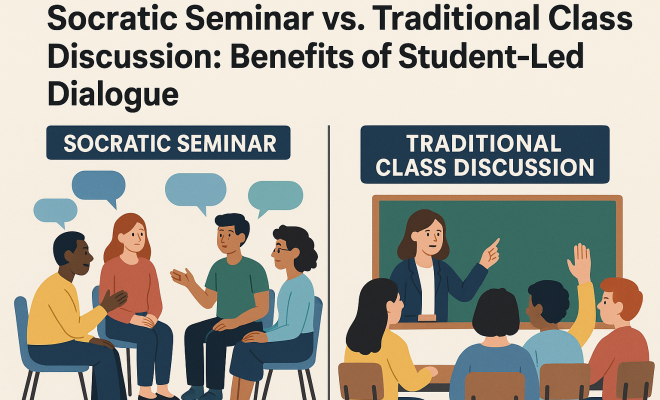
Traditional class discussions often revolve around a more teacher-centered approach, where the educator directs the conversation and imparts knowledge to students. This style typically involves the teacher asking questions and students responding, which can create a situation where only a few voices dominate the conversation, leaving others hesitant to participate. The focus is frequently on right or wrong answers, which can stifle creativity and discourage risk-taking in sharing ideas.
In such settings, students may become passive recipients of information rather than active participants in their learning. This can lead to a lack of engagement and motivation, as the emphasis on rote memorization and standardized testing overshadows the value of dialogue and critical analysis. While traditional discussions have their place, they often miss out on the potential for deep, meaningful interaction that student-led discussions can provide.
3. Key Differences Between Socratic Seminars and Traditional Discussions
One of the most significant distinctions between Socratic seminars and traditional discussions lies in the role of the teacher. In a Socratic seminar, the teacher acts more as a facilitator, guiding the discussion with probing questions rather than delivering content. This shift empowers students to take ownership of their learning process, promoting autonomy and self-directed inquiry.
Additionally, the structure of a Socratic seminar encourages students to listen actively and build on each other’s ideas. This collaborative atmosphere contrasts sharply with traditional discussions, where the focus may often be on individual contributions. The Socratic method emphasizes dialogue rather than debate, fostering a sense of community and shared learning among participants.
4. Benefits of Student-Led Dialogue
The benefits of student-led dialogue are manifold, impacting not only academic performance but also interpersonal skills. First and foremost, engaging in a Socratic seminar can enhance critical thinking abilities. Students learn to analyze, evaluate, and synthesize information rather than merely recall facts. This level of engagement fosters a deeper understanding of the subject matter, which is particularly beneficial in complex topics that require nuanced thinking.
Moreover, student-led discussions promote communication skills. When students articulate their thoughts and respond to peers, they practice conveying ideas clearly and persuasively. This is invaluable preparation for real-world situations where effective communication is essential. The ability to engage in thoughtful dialogue can also enhance emotional intelligence, as students learn to empathize with differing viewpoints and navigate complex social interactions.
5. Implementation Strategies for Educators
For educators interested in incorporating Socratic seminars into their classrooms, specific strategies can facilitate a smooth transition. First, setting clear expectations for student participation is crucial. Establishing ground rules for respectful dialogue and encouraging students to build on each other’s contributions can help create a safe and inclusive environment.
Additionally, teachers can model effective questioning techniques. Providing examples of open-ended questions that encourage exploration rather than simple yes or no answers can be an effective way to guide discussions. Educators should also be prepared to step back and allow students to take the lead, stepping in only when necessary to steer the conversation or pose additional questions.
6. Challenges in Implementing Socratic Seminars
While the Socratic method offers numerous benefits, it is not without its challenges. One significant hurdle is overcoming the ingrained habits of traditional teaching methods. Some students may initially struggle with the open-ended nature of Socratic seminars, feeling uncomfortable expressing their thoughts in front of peers.
Moreover, there can be resistance from educators accustomed to a more authoritative teaching style. Transitioning to a facilitator role requires a shift in mindset and comfort with ambiguity in the classroom. To address these challenges, professional development opportunities for teachers can provide valuable support and resources as they implement Socratic seminars in their instruction. (See: Socratic method overview on Wikipedia.)
7. Success Stories: Schools Embracing the Socratic Method
Many schools across the United States and beyond have successfully integrated Socratic seminars into their curricula. For instance, the El Paso Independent School District in Texas has reported increased student engagement and improved academic performance since implementing student-led discussions. By prioritizing critical thinking and dialogue, students have shown remarkable growth in their ability to communicate and collaborate effectively.
Another example is the use of Socratic seminars in international baccalaureate programs, where students engage deeply with texts and global issues. These programs highlight the effectiveness of student-led dialogue in preparing learners for the complexities of a global society. As more schools recognize the Socratic seminar benefits, the adoption of this method continues to grow.
8. Measuring the Impact of Socratic Seminars
As educators embrace the Socratic method, measuring its impact becomes vital for continuous improvement. Assessment strategies can include student reflections, peer evaluations, and observing changes in classroom dynamics. Gathering feedback from participants can provide insights into the efficacy of discussions and highlight areas for growth.
Furthermore, standardized test scores can serve as one metric of success, but they should not be the sole measure of effectiveness. The qualitative benefits of increased engagement, critical thinking, and communication skills are just as important and should be captured through comprehensive evaluation methods.
9. The Future of Student-Led Learning
As education evolves, the relevance of student-led learning approaches like the Socratic seminar will likely increase. With a growing emphasis on critical thinking, creativity, and collaboration in the 21st-century workforce, cultivating these skills early on is essential. Socratic seminars provide a framework for developing these competencies, preparing students for the challenges ahead.
Furthermore, the rise of technology and online learning platforms opens new avenues for Socratic dialogues to take place beyond traditional classroom settings. As educators continue to innovate, the potential for engaging students through Socratic seminars will only expand, solidifying its position as a cornerstone of modern education.
10. Deeper Analysis of Socratic Seminar Benefits
Analyzing the benefits of Socratic seminars reveals a wealth of educational advantages that extend beyond mere academic achievement. For one, studies have shown that students participating in Socratic seminars often exhibit higher levels of engagement compared to traditional classroom formats. According to a study conducted by the National Education Association, schools that implemented Socratic seminars reported a 30% increase in student participation rates. This spike in engagement is critical, as research indicates that actively engaged students are more likely to retain information, leading to improved learning outcomes.
Moreover, the Socratic seminar format promotes collaborative learning. In such an environment, students are encouraged to ask questions, challenge assumptions, and explore alternative viewpoints. This interaction not only enhances their understanding of the subject matter but also prepares them for real-world situations where teamwork and collaboration are essential. Companies today often cite the ability to work well in teams as one of the most desirable traits in prospective employees.
11. Real-World Applications of Socratic Seminars
Socratic seminars aren’t just limited to the classroom; they have real-world applications that can prepare students for a variety of situations. For instance, in professional environments, the ability to discuss complex ideas clearly and confidently is invaluable. Many companies utilize brainstorming sessions that mirror the Socratic method, encouraging employees to voice opinions and collaborate on solutions. This approach can lead to innovative ideas and foster a culture of open communication within organizations.
Additionally, in the field of law, the Socratic method is deeply ingrained in legal education. Law students engage in discussions simulating courtroom scenarios, honing their ability to think critically and argue effectively. This practice not only prepares them for their future careers but also instills a sense of confidence when discussing contentious issues.
12. Statistics Supporting Socratic Seminars
To further underscore the effectiveness of Socratic seminars, consider the following statistics: A survey conducted by the American Association of Colleges and Universities found that 78% of educators believe that critical thinking skills are essential for college readiness. Among those who implement Socratic seminars, 85% reported improvements in their students’ critical thinking abilities. Furthermore, schools that have integrated Socratic methods into their curricula have observed a 40% increase in student satisfaction rates regarding their learning experiences.
Moreover, cognitive science research indicates that students who engage in discussions rather than passive lectures are 50% more likely to remember what they learned after six months. This long-term retention is a testament to the deep learning that occurs within Socratic seminars, where students actively engage with content rather than passively receiving information.
13. Expert Perspectives on Socratic Seminars
Experts in education consistently highlight the transformative impact of Socratic seminars. Dr. Linda Elder, an educational psychologist and president of the Foundation for Critical Thinking, emphasizes that “the Socratic method not only enhances critical thinking but also fosters a culture of inquiry and respect for diverse viewpoints.” This sentiment is echoed by educators nationwide who have adopted this format, noting its ability to create a safe space for students to express their thoughts without fear of judgment.
Furthermore, Dr. Bell Hooks, a prominent cultural critic and educator, argues that Socratic discussions can empower marginalized voices in the classroom. By encouraging all students to participate, the Socratic method can help dismantle traditional hierarchies in education, allowing for a more equitable learning experience. (See: Harvard Business School on Socratic method.)
14. Frequently Asked Questions about Socratic Seminars
What is the primary goal of a Socratic seminar?
The primary goal of a Socratic seminar is to foster deep understanding through dialogue and inquiry. Students engage with each other’s ideas, exploring complex questions and challenging assumptions to arrive at a richer understanding of the subject matter.
How are Socratic seminars structured?
Socratic seminars typically follow a structured format but prioritize open dialogue. They usually start with a text or prompt that students discuss collaboratively. A facilitator (often the teacher) guides the discussion with probing questions, but the students lead the conversation.
Can any subject benefit from Socratic seminars?
Absolutely! Socratic seminars can be applied across disciplines, from literature and history to science and mathematics. Any subject that involves critical thinking and discussion can benefit from this method.
How can teachers assess student understanding during a Socratic seminar?
Assessment can take various forms, including observation of student participation, reflective writing assignments, or peer evaluations. Teachers may also use rubrics that focus on criteria such as engagement, critical thinking, and respect for differing viewpoints.
What are some common misconceptions about Socratic seminars?
One common misconception is that Socratic seminars are unstructured chaos. While they promote open dialogue, they are guided by careful questioning and set expectations. Another misconception is that they are only suitable for advanced students; in reality, students at all levels can engage in meaningful discussions with appropriate scaffolding.
How can I prepare my students for a Socratic seminar?
Preparation can include teaching students how to craft open-ended questions, encouraging them to read and annotate texts critically, and modeling effective discussion techniques. Establishing ground rules for respectful dialogue also helps set a positive tone for engagement.
15. Expanding the Scope of Socratic Seminars
Beyond traditional subjects, Socratic seminars can be effectively utilized in extracurricular settings, such as debate clubs and student councils. In these environments, students can practice articulating their views on various topics, employing the same principles of inquiry and dialogue that characterize the classroom seminars. This expansion into non-academic arenas enhances students’ abilities to engage in civic discussions, fostering a generation that is not only knowledgeable but also actively involved in their communities.
Additionally, digital platforms have made it easier for schools to host Socratic seminars online, creating opportunities for students to engage with peers from different backgrounds or across geographic boundaries. Virtual seminars can incorporate multimedia resources, allowing students to interact with a diverse array of perspectives, enriching the dialogue further.
16. Building a Culture of Inquiry
Implementing Socratic seminars effectively contributes to establishing a culture of inquiry within educational institutions. When students are encouraged to question, explore, and discuss, they develop a mindset that values curiosity and critical analysis. This cultural shift can permeate beyond individual classrooms, influencing the entire school environment. As students become accustomed to engaging deeply with content, the notion of inquiry can inspire their approach to learning across subjects and lifelong education.
Moreover, a culture of inquiry can help educators reflect on their teaching practices. With an emphasis on open dialogue, teachers can gain insights into student perspectives, leading to adjustments in instructional methods that better meet learners’ needs. This reciprocal relationship between teaching and learning reinforces the benefits of Socratic seminars in shaping educational experiences.
17. The Role of Technology in Enhancing Socratic Seminars
Technology plays an increasingly vital role in enhancing the efficacy of Socratic seminars. Tools like discussion boards, video conferencing, and collaborative platforms allow students to engage in discussions asynchronously or synchronously. For instance, using platforms like Google Classroom or Padlet, students can contribute to discussions before the seminar, adding depth to the conversation during the live session.
Additionally, teachers can record seminars and share them with students for later reflection. This process allows students to review discussions, deepen their understanding, and prepare for future seminars. The use of technology not only makes seminars more accessible but also caters to different learning styles, ensuring that all students have the opportunity to contribute meaningfully.
18. The Impact of Socratic Seminars on Diverse Learners
Socratic seminars can be particularly beneficial for diverse learners, including English language learners and students with different learning needs. The emphasis on spoken dialogue and collaborative inquiry allows these students to practice language skills in a supportive environment. They can engage with peers to clarify concepts and express their thoughts without the pressure of formal assessments.
Furthermore, the inclusive nature of Socratic seminars promotes an appreciation for diverse perspectives. Students are encouraged to share their unique backgrounds and experiences, enriching the discussion and fostering empathy among classmates. This exposure to varied viewpoints can promote cultural competence, which is crucial in today’s globalized world.
19. Frequently Asked Questions about Socratic Seminars
How can Socratic seminars support emotional and social development?
Socratic seminars support emotional and social development by encouraging students to express their emotions and opinions openly. This practice fosters a sense of belonging and community, as students learn to respect and appreciate each other’s perspectives. The discussions help build confidence and improve social skills, which are essential for personal and professional success.
What role does feedback play in Socratic seminars?
Feedback is crucial in Socratic seminars, as it helps students refine their thinking and discussion skills. Constructive feedback can be provided by peers and teachers, focusing on how well students articulated their ideas or engaged with others. This practice encourages continuous improvement and a growth mindset among participants.
How can I integrate Socratic seminars into existing curriculum frameworks?
Integrating Socratic seminars into existing curriculum frameworks can be achieved by aligning discussion topics with current lessons. Educators can identify key themes or questions within the curriculum that lend themselves to open dialogue, creating a seamless incorporation. Additionally, using texts or materials already included in the syllabus as springboards for discussions can enhance the relevance of seminars.
What is the best way to handle disagreements during a Socratic seminar?
Disagreements can be constructive and should be managed respectfully. Encouraging students to express their differing opinions while maintaining a focus on evidence and reasoning can lead to richer discussions. Teachers can remind participants of ground rules regarding respectful dialogue and help mediate any heated exchanges, ensuring that all voices are heard and valued.
What are some recommended texts for Socratic seminars?
Recommended texts for Socratic seminars vary by grade level and subject area but generally include thought-provoking literature, philosophical writings, and historical documents. Texts that pose ethical dilemmas or complex questions are particularly effective at stimulating discussion. Some popular options include works by authors like Plato, Harper Lee, and George Orwell, as well as contemporary essays and articles that tackle current events or social issues.
20. Conclusion: Embracing Socratic Seminars for a Brighter Educational Future
The Socratic seminar method stands as a powerful approach to fostering critical thinking, collaboration, and effective communication among students. By engaging learners in meaningful dialogue, educators are not only enhancing academic performance but also preparing them for the complexities of the real world. With its emphasis on inquiry, respect for diverse perspectives, and the development of interpersonal skills, the Socratic seminar is a vital component of modern education that can shape the leaders of tomorrow.
“`
Trending Now
- “Phonological Awareness Intervention Programs: What Works for Struggling Readers?”
- our breakdown of “temperament and sibling conflict: why children from the same family can be so different”
- “Should My Child Attend TK or Wait for Kindergarten? A Decision-Making Guide for Parents”
- read the full story
- “The Safe Place in Conscious Discipline: Creating Calming Spaces for Emotional Regulation”
Frequently Asked Questions
What is the Socratic method in education?
The Socratic method is a form of cooperative dialogue that encourages critical thinking through questioning. It emphasizes student-led discussions where learners engage with each other to explore and articulate their thoughts, leading to deeper insights and enhanced comprehension.
How does a Socratic seminar differ from traditional discussions?
A Socratic seminar focuses on open-ended questions and student-led dialogue, fostering an environment of collaboration and critical thinking. In contrast, traditional discussions are often teacher-centered, where the instructor directs the conversation and students respond, leading to less engagement and participation.
What are the benefits of student-led dialogue?
Student-led dialogue promotes active participation, critical thinking, and deeper understanding of topics. It allows students to challenge each other's ideas, enhancing their ability to articulate thoughts and engage in meaningful discussions, which can lead to greater motivation and engagement in learning.
Why are traditional discussions less effective?
Traditional discussions can stifle creativity and risk-taking by focusing on right or wrong answers and often lead to passive learning. This teacher-centered approach may limit student participation, resulting in a lack of engagement and a missed opportunity for meaningful interaction.
What skills does the Socratic method develop?
The Socratic method develops critical thinking skills, effective communication, and the ability to articulate thoughts. By encouraging students to engage in dialogue and challenge each other's ideas, it fosters a deeper understanding of complex topics and enhances analytical abilities.
Agree or disagree? Drop a comment and tell us what you think.



