Phonological Awareness & Spelling in Elementary Students
“`html
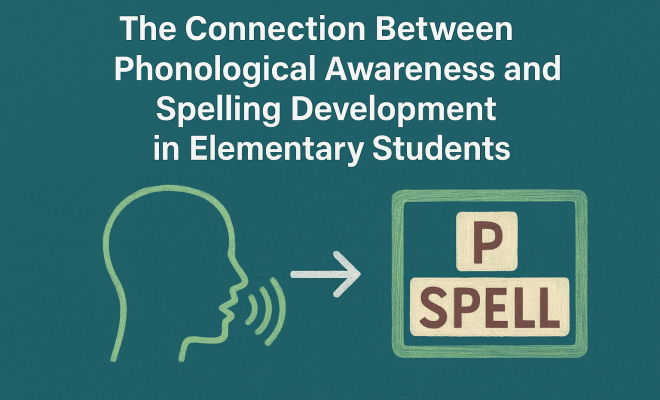
When it comes to teaching reading and writing in elementary schools, two components frequently come into play: phonological awareness and spelling. The connection between phonological awareness and spelling development is not only crucial for literacy but serves as a foundational skill set that influences a child’s academic journey. Understanding this relationship can empower educators, parents, and caregivers to implement effective strategies that foster stronger spelling skills in young learners.
Understanding Phonological Awareness
Phonological awareness refers to the ability to recognize and manipulate the sound structures of language. It encompasses a range of skills, from the recognition of words in a sentence to the ability to identify syllables and individual phonemes. Phonemic awareness, a subset of phonological awareness, is particularly important as it focuses specifically on the smallest units of sound.
Research indicates that children who develop strong phonological awareness tend to excel in reading and writing. This ability allows them to understand the relationship between sounds and letters, an essential skill for spelling. When children can break down words into their constituent sounds, they are better equipped to spell those words correctly.
Why Spelling Matters
Spelling is not merely the act of writing words correctly; it plays a significant role in the overall literacy development of children. Good spelling skills contribute to effective communication, enhancing reading fluency, and overall comprehension. Interestingly, studies have shown that there is a direct correlation between spelling proficiency and reading ability. When students can spell accurately, it often reflects their understanding of language structure and vocabulary.
In elementary education, developing spelling skills is particularly critical as it forms a bridge between oral language and written expression. Children who struggle with spelling may face challenges in expressing their thoughts and ideas on paper, which can lead to frustration and disengagement from learning.
The Developmental Stages of Phonological Awareness
Phonological awareness develops in stages, typically beginning in preschool and advancing through elementary school. Understanding these stages can provide insight into when children are likely to acquire specific phonological skills:
- Stage 1: Word Awareness – Recognizing that sentences are made up of words.
- Stage 2: Syllable Awareness – Identifying and counting syllables in words.
- Stage 3: Onset-Rime Awareness – Understanding the initial consonant sounds (onset) and the vowel sound along with the following consonants (rime) in syllables.
- Stage 4: Phoneme Awareness – The ability to isolate, blend, and segment individual sounds in words.
Each of these stages builds upon the previous one, laying a solid foundation for spelling skills. For instance, children who can identify syllables may find it easier to spell multisyllabic words. Phoneme awareness, as the most advanced skill, is especially critical, as it helps children connect spoken language to written letters.
The Interplay Between Phonological Awareness and Spelling
Research highlights a reciprocal relationship between phonological awareness and spelling. As children develop phonological skills, they become more adept at spelling. Conversely, engaging in spelling activities can also enhance children’s phonological awareness. For example, when a child practices spelling a word, they are breaking it down into its phonetic components, reinforcing their understanding of the sounds associated with each letter.
This interplay suggests that teaching these skills in conjunction can be particularly effective. Programs that integrate phonological awareness training with spelling instruction show promising results in improving literacy outcomes for elementary students. This integrated approach not only helps students with spelling but also enhances their overall reading proficiency.
Practical Strategies for Educators
Understanding the connection between phonological awareness and spelling opens doors to practical applications in the classroom. Here are some effective strategies educators can implement: (See: Understanding phonological awareness.)
- Explicit Instruction: Teach phonological awareness skills systematically. Use direct instruction to guide students through identifying sounds, syllables, and phonemes.
- Multi-sensory Approaches: Engage students with activities that appeal to various senses. For example, using letter tiles to manipulate sounds physically can reinforce phoneme awareness.
- Word Families: Introduce word families to highlight common phonetic patterns. This can help students see how changing a sound can alter a word, enhancing their spelling skills.
- Games and Activities: Incorporate fun games that focus on sound manipulation, such as rhyming games or phoneme segmentation activities, to make learning enjoyable.
By employing these strategies, teachers can create a more effective learning environment that prioritizes phonological awareness while simultaneously strengthening spelling skills.
The Role of Parents and Caregivers
Parents and caregivers also play a pivotal role in fostering phonological awareness and spelling at home. Simple activities can make a significant impact:
- Reading Together: Engage in shared reading sessions that focus on phonetic elements. Point out sounds and letters as you read, asking children to identify them.
- Phonemic Games: Play games that involve identifying sounds, such as I Spy with sounds or rhyming challenges.
- Writing Practice: Encourage children to write stories or lists, helping them sound out words as they write to reinforce spelling.
By integrating these practices into daily routines, parents can reinforce what children learn in school, fostering greater phonological awareness and effective spelling.
Current Trends in Literacy Education
The field of literacy education is constantly evolving, with new research shedding light on effective teaching practices. Recent trends emphasize the significance of phonological awareness as a precursor to spelling and reading success. Educators are increasingly adopting evidence-based approaches that prioritize these essential skills.
One such trend is the shift towards phonics-based instruction, which focuses on teaching the relationships between sounds and their corresponding letters. This method aligns closely with promoting phonological awareness, creating a comprehensive framework for literacy education. Schools are also using technology to facilitate phonics and phonological awareness training through interactive programs and apps, making learning more engaging for young students.
Challenges in Teaching Phonological Awareness and Spelling
While the benefits of focusing on phonological awareness and spelling are clear, educators often face challenges in implementation. One significant hurdle is the varying levels of phonological awareness among students. Some children may come to school with well-developed skills, while others may struggle significantly.
Additionally, teachers may lack the training or resources needed to effectively integrate phonological awareness into their spelling instruction. This can lead to inconsistencies in teaching approaches and hinder student progress. It’s crucial for educational institutions to provide ongoing professional development and resources for teachers, ensuring that they feel equipped to support all students in their literacy journey.
Practical Exercises to Enhance Phonological Awareness and Spelling
Beyond classroom strategies, there are specific exercises that can help enhance both phonological awareness and spelling. These exercises can be integrated into daily routines or used as fun activities at home:
- Sound Sorting: Create a collection of objects or pictures that begin with different sounds. Have children sort them into groups based on the initial sound. This reinforces the concept of phonemes while encouraging spelling through sound recognition.
- Chanting and Clapping: Use clapping to break down words into syllables. For example, when saying the word “banana,” clap thrice to represent the three syllables. This physical reinforcement helps students internalize the structure of words.
- Phoneme Manipulation with Blocks: Use blocks or magnetic letters to build words. Kids can manipulate the letters to form words, helping them visualize and hear the sounds as they spell.
- Spelling Bees: Organize fun spelling bees with a twist. Instead of just spelling words, have children say a word and then break it down into its phonemes before spelling it out loud.
Statistics on Phonological Awareness and Spelling
Data underscores the importance of phonological awareness in literacy development. For instance, research from the National Reading Panel (2000) suggests that students with strong phonological awareness skills are more likely to perform better in spelling and reading assessments. According to a meta-analysis conducted by the Institute of Education Sciences, children who receive phonological awareness training show an increase in reading ability by an average of 30% compared to those who do not receive such training.
Additionally, a study by the University of Michigan found that students who engaged in phonics-based instruction had spelling test scores 20% higher than their peers who were taught using traditional methods. This data points to the efficacy of strategic interventions that combine phonological awareness with spelling instruction.
Expert Perspectives on Effective Practices
Educational experts emphasize the need for a structured approach to teaching phonological awareness and spelling. Dr. Louisa Moats, a well-known literacy expert, states that “Effective literacy instruction must include a focus on phonological awareness and spelling, as they are intrinsically linked to the ability to read.”
Another expert, Dr. Timothy Shanahan, highlights that “Teachers must understand the progression of phonological skills and ensure that instruction is tailored to meet the diverse needs of learners.” These insights stress the importance of a careful, research-based approach to literacy education that prioritizes sound awareness and spelling skills. (See: Importance of phonological awareness.)
Comparing Different Instructional Approaches
When it comes to teaching phonological awareness and spelling, there are various instructional approaches. Some of the most common include:
- Phonics Instruction: Focuses on the relationship between sounds and letters. This method emphasizes the decoding of words and is effective in helping children understand how sounds correspond to written language.
- Whole Language Approach: Encourages reading in context and values the overall meaning of texts over specific phonetic elements. While this approach has its merits, it may underemphasize the importance of phonological awareness.
- Balanced Literacy: A combination of phonics and whole language instruction. This approach seeks to balance both phonological awareness and comprehension, providing a more holistic view of literacy education.
Research suggests that phonics instruction, particularly when integrated with phonological awareness activities, tends to yield the best results in spelling and reading outcomes. The balanced literacy approach remains popular as it allows for flexibility, but educators are encouraged to ensure that phonological skills are not neglected.
Frequently Asked Questions (FAQ)
What is phonological awareness?
Phonological awareness refers to the ability to recognize and manipulate the sound structures in language, including the ability to identify words, syllables, and phonemes.
How does phonological awareness impact spelling?
Phonological awareness directly impacts spelling because it helps children understand the relationship between sounds and letters. Children who can break down words into sounds are more successful at spelling them correctly.
At what age should phonological awareness skills be introduced?
Phonological awareness skills typically begin to develop in preschool, around ages 3 to 5. Early introduction can set the foundation for successful literacy development.
Are there specific phonological awareness activities for parents to do at home?
Yes! Parents can engage in activities such as reading aloud, playing rhyming games, or using sound sorting exercises to support their children’s phonological awareness and spelling skills.
What role does technology play in developing phonological awareness?
Technology offers interactive programs and apps designed to teach phonological awareness and spelling. These tools can make learning engaging and provide personalized feedback for students.
Addressing Diverse Learning Needs
Every child is unique, and their learning needs can vary significantly. Some students may have learning disabilities such as dyslexia, which can make phonological awareness and spelling particularly challenging. Tailoring instruction to meet these diverse needs is essential in ensuring that all students can develop their literacy skills.
For instance, students with dyslexia may benefit from explicit phonics instruction that breaks down the components of words into manageable parts. They might also thrive from more visual aids, such as color-coded phonemes or multi-sensory learning experiences that incorporate touch, sound, and sight. Understanding these differences allows educators to create a more inclusive learning environment.
Integrating Phonological Awareness into Curricula
Integrating phonological awareness into existing curricula is a practical approach to enhancing literacy skills across subjects. This can be accomplished through cross-curricular activities that link phonological skills with content areas such as science, social studies, and math. For example, when studying a unit on animals, teachers can create rhyming activities related to different species, helping students practice sound manipulation while engaging with exciting content. (See: Phonological awareness and spelling development.)
Furthermore, using literature that emphasizes phonological elements can also support learning. Books filled with rhymes and alliteration can naturally draw attention to the sounds within words, reinforcing the connection between phonological awareness and spelling during storytime.
Recent Research Findings
Recent studies continue to highlight the critical role of phonological awareness in literacy development. A study published in the Journal of Educational Psychology found that students who received targeted phonological awareness training showed a 25% improvement in their spelling abilities compared to their peers. This reinforces the idea that early intervention can lead to significant gains in literacy skills.
Moreover, longitudinal studies have indicated that children with strong phonological awareness skills are less likely to experience reading difficulties as they progress through school. This suggests that investing in phonological awareness early on can have long-lasting benefits for students as they develop their literacy capabilities.
The Importance of Collaboration
The collaboration between educators, parents, and specialists is vital in supporting phonological awareness and spelling development. Schools should encourage open communication with parents, providing them with resources and training to reinforce learning at home. This partnership creates a cohesive support system for children as they navigate their literacy journey.
Involving specialists, such as speech-language pathologists, can also be beneficial. These professionals can offer insights and tailored strategies to support students struggling with phonological awareness, ensuring that all children receive the assistance they need to thrive.
The Future of Literacy Education
As we look to the future of literacy education, understanding the relationship between phonological awareness and spelling will remain crucial. Continuous research and innovative teaching practices will help educators refine their approaches, ensuring that they meet the needs of an ever-diversifying student population. By prioritizing phonological awareness alongside spelling instruction, we can foster a generation of proficient readers and writers who are equipped for academic success.
Investing in these foundational skills will not only enhance individual literacy outcomes but will also contribute to a more literate society as a whole. The path forward involves collaboration, research-based practices, and a commitment to fostering phonological awareness and spelling in every classroom.
“`
Trending Now
Frequently Asked Questions
What is phonological awareness?
Phonological awareness is the ability to recognize and manipulate the sound structures of language. It includes skills such as identifying words in sentences, syllables, and individual phonemes. This foundational skill is critical for literacy development, enabling children to connect sounds with letters, which is essential for spelling.
How does phonological awareness affect spelling development?
Strong phonological awareness helps children break down words into their individual sounds, making it easier for them to spell those words correctly. Research shows that children with good phonological skills tend to excel in both reading and writing, highlighting the importance of these skills in spelling development.
Why is spelling important for children?
Spelling is crucial for effective communication and enhances reading fluency and comprehension. It reflects a child's understanding of language structure and vocabulary. Good spelling skills also form a bridge between oral language and written expression, making them essential for overall literacy development.
What strategies can improve phonological awareness in students?
To improve phonological awareness, educators and caregivers can implement activities such as rhyming games, sound matching exercises, and syllable segmentation tasks. These strategies help children recognize and manipulate sounds, thereby enhancing their ability to spell and read effectively.
Is there a relationship between spelling and reading ability?
Yes, there is a direct correlation between spelling proficiency and reading ability. Students who can spell accurately often demonstrate a better understanding of language structure and vocabulary, which contributes to their overall reading fluency and comprehension.
Have you experienced this yourself? We’d love to hear your story in the comments.