
“What is Competency-Based Education and How Does It Differ from Traditional Grading?”
“`html
Imagine a world where education is tailored to your personal pace and understanding rather than a rigid timeline set by an academic calendar. This is the premise of competency-based education (CBE), a system that prioritizes mastery of skills over the traditional methods of grading. In this comprehensive exploration, we’ll delve into what competency-based education truly entails, how it fundamentally differs from traditional grading systems, and why it matters more than ever in today’s rapidly evolving educational landscape.
What Is Competency-Based Education?
Competency-based education is an instructional strategy that focuses on the learner’s ability to demonstrate mastery of skills and knowledge before advancing to the next level or topic. Unlike conventional education systems that often rely on time-based measures—like semesters, grades, and credit hours—CBE allows students to progress upon mastering specific competencies, which are clearly defined skills or knowledge areas.
This approach is particularly beneficial for adult learners, who may have prior knowledge or skills that they can demonstrate without going through conventional coursework. For instance, a nurse with years of experience may not need to take a refresher course in basic patient care, instead showing competency through practical assessments.
A Brief History of Competency-Based Education
The roots of competency-based education can be traced back to the 1960s when educators began to recognize that traditional schooling was not serving all students effectively. The competency movement was fueled by the need for an educational system that could adapt to different learning styles and paces.
In the 1970s and 1980s, various institutions began to experiment with CBE frameworks, especially in vocational training and higher education. However, it gained significant traction in the 21st century due to technological advancements and the need for more personalized learning experiences in the face of diverse student populations.
Core Principles of Competency-Based Education
Understanding the core principles of CBE allows for a deeper appreciation of its framework. Here are several key aspects:
- Mastery over Time: In CBE, a student progresses only after demonstrating mastery of content, rather than simply spending a designated amount of time in class.
- Personalized Learning: The approach fosters personalized educational experiences that cater to individual learning styles and paces.
- Clear Expectations: Competencies are clearly defined, measurable, and focused on real-world applications, making it easier for students to understand what is expected of them.
- Assessment for Learning: Assessment is used to inform students about their progress and areas needing improvement, rather than serving solely as a judgment tool.
How Does Competency-Based Education Differ from Traditional Grading?
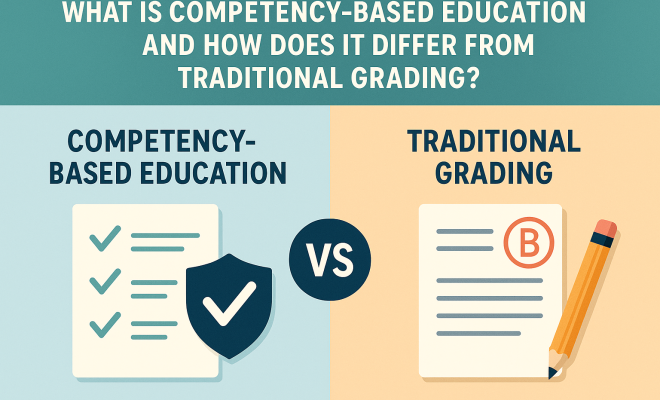
At its core, CBE fundamentally differs from traditional grading in several ways. Traditional grading typically relies on a letter or numerical system that reflects students’ performance over a specific time period. Here, we analyze some of the most significant distinctions:
1. Focus on Mastery vs. Performance: Traditional grading often rewards performance on tests and assignments, which may not accurately reflect a student’s true understanding or skill level. CBE shifts the focus to actual mastery of content, ensuring that students have the necessary skills before moving forward.
2. Flexibility vs. Rigidity: In traditional education models, students are often required to follow a strict timeline that may not account for individual learning paces. CBE allows students to progress when they are ready, which can reduce anxiety and improve outcomes.
3. Continuous Feedback vs. Summative Assessment: Traditional grading often culminates in a final grade based on a summative assessment, which can create a high-stakes environment. In contrast, CBE incorporates ongoing assessments that provide feedback throughout the learning process, preparing students for eventual mastery.
4. Applications Beyond the Classroom: CBE aligns more closely with real-world skills and competencies. Employers increasingly seek candidates who possess specific competencies and can demonstrate them, which gives CBE graduates a competitive edge. (See: Competency-based education overview.)
The Role of Technology in Competency-Based Education
Technology plays a pivotal role in the success of competency-based education. Learning management systems (LMS) and digital platforms facilitate personalized learning experiences, allowing students to progress at their own pace. These tools can include adaptive learning technologies that assess a student’s knowledge and adjust the curriculum accordingly.
Moreover, online resources—like videos, interactive simulations, and quizzes—provide students with diverse ways to engage with material. This integration of technology not only enhances learning but also makes it more accessible, particularly for adult learners balancing education with other commitments.
Implementation of Competency-Based Education
Implementing competency-based education requires a thoughtful approach. Educational institutions must clearly define the competencies they wish to teach and develop assessments that accurately reflect student mastery. Here are some steps to consider when transitioning to a CBE model:
- Define Learning Objectives: Clearly outline what competencies students should achieve by the end of a course or program.
- Develop Assessments: Design assessments that allow students to demonstrate their mastery of the competencies.
- Utilize Technology: Leverage learning management systems and digital tools to facilitate personalized learning experiences.
- Train Educators: Provide training for educators to adapt their teaching methods to support a competency-based approach.
Challenges Facing Competency-Based Education
Despite its many advantages, the shift to competency-based education is not without challenges. Here are some hurdles that institutions may encounter:
1. Cultural Shift: Moving away from traditional grading practices can be a significant cultural shift for both educators and students. Resistance to change is common, and it may take time for all stakeholders to embrace the new model.
2. Assessment Validity: Ensuring that assessments accurately measure student competency can be complex. Institutions may struggle with creating valid, reliable assessments that reflect true mastery.
3. Resource Allocation: Implementing CBE often requires substantial investment in technology and training. Schools with limited budgets may find it challenging to make the necessary changes.
4. Accreditation Concerns: Some institutions may face difficulties in receiving accreditation for competency-based programs, as traditional accreditation processes may not align with CBE practices.
Current Relevance of Competency-Based Education
As we continue to navigate a world increasingly influenced by technology and rapid change, the relevance of competency-based education becomes more pronounced. Employers are increasingly looking for skills rather than degrees, and CBE aligns perfectly with this demand. Educational institutions are compelled to equip learners with practical competencies that can be immediately applied in the workforce.
In light of the COVID-19 pandemic, many educational institutions have adopted more flexible learning models. CBE’s focus on mastery rather than time spent in a classroom has proven attractive in a remote learning environment, allowing students to continue their education on their terms.
Success Stories in Competency-Based Education
Several institutions have successfully implemented competency-based education programs, showcasing the model’s potential. For example, Western Governors University (WGU) is a pioneer in the CBE space, offering an entirely online, competency-based curriculum. WGU has seen significant growth and success, with graduates reporting higher levels of job placement and satisfaction.
Similarly, Southern New Hampshire University has also embraced CBE, providing adult learners with personalized, competency-based programs that prepare them for real-world challenges. These success stories illustrate the effectiveness of CBE in promoting student achievement and workforce readiness.
Future of Competency-Based Education
The future of competency-based education looks bright. As the demand for personalized, flexible learning solutions continues to grow, more institutions are expected to adopt CBE frameworks. Innovations in technology will further enhance the effectiveness of these programs, offering students increasingly tailored learning experiences. (See: CDC on competency-based education.)
Additionally, as employers continue to prioritize skills over traditional degrees, competency-based education will likely play a critical role in bridging the gap between education and the workforce. Educational institutions that embrace this model will not only prepare their students for immediate employment but also equip them with the lifelong learning skills necessary to adapt to an ever-changing job landscape.
Taking Action: What You Can Do
If you’re an educator, administrator, or student interested in exploring competency-based education, here are some actionable steps to consider:
- Research and Learn: Familiarize yourself with the principles and practices of CBE by attending workshops, webinars, or reading relevant literature.
- Engage with Stakeholders: Collaborate with fellow educators, administrators, and students to identify competencies that are relevant and necessary.
- Pilot Programs: Start small by implementing pilot programs within your institution to test the CBE model and gather feedback.
- Advocate for Change: Be an advocate for competency-based education in your community to foster a culture of continuous improvement and adaptability.
By taking these steps, you can play a role in shaping the future of education towards a more personalized and competency-focused approach.
Benefits of Competency-Based Education
Competency-based education offers a range of benefits that can positively impact students, educators, and employers alike:
- Enhanced Engagement: Because students can learn at their own pace, they often feel more engaged and motivated. When learners take control of their education, they tend to be more invested in their outcomes.
- Reduced Dropout Rates: The flexibility of CBE may lead to lower dropout rates. By allowing students to progress according to their own understanding, they can avoid the frustration that often accompanies traditional educational models.
- Relevance to the Workplace: CBE programs often incorporate real-world applications, ensuring that students acquire skills that are immediately relevant to their chosen careers. Employers value this alignment, which can lead to higher employment rates for graduates.
- Greater Lifelong Learning Skills: CBE fosters a mindset of continuous improvement, preparing students not just for their first job, but for an entire career of learning and adapting.
Statistics on Competency-Based Education
Understanding the impact of competency-based education is essential for appreciating its growing prominence in the educational landscape. Here are some compelling statistics that highlight the effectiveness and adoption of CBE:
- According to a 2021 report by the U.S. Department of Education, institutions that have implemented CBE programs have reported a 20% increase in learner retention compared to traditional models.
- A survey conducted by the Online Learning Consortium found that 80% of employers said that they value skills over degrees when hiring, emphasizing the importance of competency-based education.
- Research from WGU indicates that graduates from CBE programs launch their careers with a starting salary that can be 10-15% higher than those from traditional degree programs.
- A study by the Lumina Foundation revealed that 90% of CBE programs have seen an increase in student engagement and motivation, which correlates with higher graduation rates.
Expert Perspectives on Competency-Based Education
Educators and industry leaders often share their insights on the evolution of competency-based education. Here are some expert perspectives:
Dr. Judith V. Boettcher, an education consultant, states, “The future of education lies in the ability to provide students with personalized pathways. Competency-based education not only meets them where they are but also prepares them for the real world in a way that traditional education has struggled to do.”
Mark Milliron, co-founder of the Civitas Learning, highlights, “CBE aligns with the modern learner’s experience. As technology evolves, so does the need for education that reflects the fast-paced world we live in. CBE provides a more relevant and engaging approach to learning.”
Dr. Amy Laitinen, Director for Higher Education at the New America Foundation, adds, “In today’s job market, it’s not just about what you know, but what you can do with that knowledge. Competency-based education gives students the tools to demonstrate their capabilities effectively.”
FAQs about Competency-Based Education
What types of competencies are typically measured in CBE programs?
Competencies can vary widely depending on the field of study but generally include both technical skills and soft skills. For example, in healthcare, competencies might include patient care and communication skills, whereas in IT, they might involve programming languages and cybersecurity practices.
Is competency-based education suitable for all learners?
While CBE can be beneficial for many students, especially adult learners or those with prior knowledge, it may not be the best fit for everyone. Some learners thrive in structured environments and may prefer traditional education models. (See: AP News on education trends.)
How are assessments conducted in CBE programs?
Assessments in CBE programs can take various forms, including practical demonstrations, projects, and portfolios. They are designed to provide students with opportunities to showcase their mastery and skills continuously.
How does CBE impact faculty roles?
In competency-based education, faculty roles often shift from traditional lecturing to facilitating learning. Instructors become guides and mentors, helping students navigate their personalized learning paths and providing support as needed.
Can competency-based education be implemented in K-12 settings?
Yes, many K-12 institutions are beginning to adopt competency-based education models. These frameworks can help address diverse learning needs and ensure that all students achieve mastery before moving on to new material.
What is the future of accreditation for CBE programs?
As CBE becomes more widely accepted, accreditation processes are likely to evolve to recognize and accommodate competency-based models. Some accrediting bodies are already adapting their standards to reflect this shift in educational approaches.
Comparative Analysis: CBE vs. Traditional Education
Understanding the differences between competency-based education and traditional education can help clarify the potential benefits of CBE. Here’s a comparative analysis:
| Aspect | Competency-Based Education | Traditional Education |
|---|---|---|
| Learning Pace | Self-paced; students progress upon mastery | Time-based; students progress based on term schedules |
| Assessment Method | Ongoing, formative assessments used for feedback | Summative assessments at the end of a term |
| Focus | Mastery of competencies and skills | Grades and overall performance |
| Flexibility | Highly flexible; accommodates individual schedules | Less flexible; structured class times |
| Real-World Application | Directly aligned with industry needs | Often theoretical with less emphasis on practical skills |
Barriers to Adoption of Competency-Based Education
While the benefits of CBE are clear, several barriers can hinder its adoption:
- Institutional Resistance: Some educational institutions may be hesitant to shift from traditional methods, fearing resistance from faculty and students alike.
- Misunderstanding CBE: Misconceptions about CBE can lead to skepticism. Some educators may believe it lacks rigor or accountability compared to traditional models.
- Lack of Training: Educators may not be adequately prepared to implement CBE effectively, lacking the necessary training and resources to adapt their teaching styles.
- Policy and Regulation Challenges: Existing regulatory frameworks may not support the flexibility needed for effective CBE implementation, creating obstacles for institutions.
Future Directions for Competency-Based Education
The future of competency-based education holds exciting possibilities. As technology continues to evolve, we can expect to see advancements such as:
- Increased Use of Artificial Intelligence: AI could personalize learning even further, assessing students’ performance and adapting learning pathways in real time.
- Integration of Virtual Reality: VR could provide immersive learning experiences that enhance skill acquisition and application in real-world scenarios.
- Global Collaboration: The rise of online education may foster international collaboration on competency frameworks, sharing best practices and resources across borders.
- Focus on Micro-Credentials: Institutions may increasingly offer micro-credentials or badges for specific competencies, allowing learners to stack skills for career advancement.
Competency-based education is not just a trend; it’s a transformative approach that holds the potential to redefine learning and assessment as we know it. By understanding its principles and embracing its practices, we can create a more equitable and effective educational system that meets the needs of all learners.
“`
Trending Now
- the complete explanation
- “Using Bloom’s Taxonomy to Write Better Learning Objectives for Lesson Plans”
- “Bloom’s Taxonomy for Parents: How to…
- our breakdown of “piaget’s conservation tasks: simple activities to assess your preschooler’s cognitive development”
- the complete explanation
Frequently Asked Questions
What is competency-based education?
Competency-based education (CBE) is an instructional strategy that emphasizes mastering specific skills and knowledge before advancing. Unlike traditional education, which relies on time-based measures like grades and semesters, CBE allows students to progress at their own pace once they demonstrate competency in defined areas.
How does competency-based education differ from traditional education?
CBE differs from traditional education by focusing on mastery of skills rather than time spent in the classroom. While traditional systems often use grades and credit hours, CBE allows students to advance based on their ability to demonstrate understanding and application of specific competencies.
What are the benefits of competency-based education?
The benefits of competency-based education include personalized learning, flexibility in pacing, and the ability to leverage prior knowledge. This approach is especially advantageous for adult learners, allowing them to demonstrate skills without retaking courses, ultimately leading to a more efficient educational experience.
Who can benefit from competency-based education?
Competency-based education is particularly beneficial for adult learners and individuals with prior knowledge or experience in a subject area. It allows these learners to demonstrate their skills through practical assessments, rather than following a traditional course path that may not be necessary for them.
What is the history of competency-based education?
The history of competency-based education dates back to the 1960s when educators recognized the limitations of traditional schooling. The movement gained momentum in the 1970s and 1980s, especially in vocational and higher education, and has become increasingly popular in the 21st century due to technological advancements and the demand for personalized learning.
What did we miss? Let us know in the comments and join the conversation.


