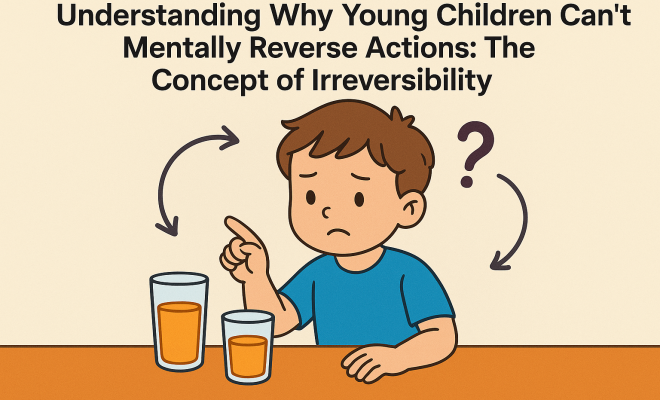
“Understanding Why Young Children Can’t Mentally Reverse Actions: The Concept of Irreversibility”
“`html
When you think about how children learn and grow, a fascinating concept emerges: the idea of irreversibility in young children. This cognitive limitation often presents itself during early childhood development, influencing how kids perceive their environment and process information. To fully appreciate this concept, we need to explore its roots, implications, and how it shapes young minds.
What is Irreversibility?
Irreversibility refers to the inability to mentally reverse an action. This cognitive phenomenon is particularly observable in young children, typically those aged between 2 and 7 years, according to developmental psychologist Jean Piaget. At this stage, often referred to as the preoperational stage, children begin to develop their thinking processes but remain limited by various cognitive constraints, including irreversibility.
The Role of Piaget in Understanding Irreversibility
Jean Piaget, a Swiss psychologist renowned for his work in developmental psychology, extensively studied how children think and learn. He posited that children move through specific stages of cognitive development. During the preoperational stage, children are egocentric and struggle with tasks that require them to consider multiple perspectives. The concept of irreversibility often manifests when they cannot comprehend that actions can be undone or reversed.
For example, consider a child who has poured liquid from a short, wide glass into a tall, narrow one. When asked which glass contains more liquid, a young child will often say the tall glass has more, failing to recognize that the amount remains unchanged, simply in a different form. This example illustrates not just a lack of understanding about volume but also an inability to mentally reverse the pouring action.
Developmental Implications of Irreversibility
The implications of irreversibility stretch far beyond simple cognitive tasks. This limitation can affect a child’s problem-solving abilities and decision-making skills. Young children may struggle with understanding cause and effect, which can influence their behavior and social interactions. For instance, if a child is told to clean up after a messy play session but cannot mentally reverse the action of making the mess, they may resist the cleanup. This resistance is symptomatic of their cognitive development stage.
Furthermore, the inability to reverse actions can hinder their emotional understanding. Children might not grasp that once a word is spoken or an action taken, it cannot be taken back. This can lead to misunderstandings in social situations, where they might not recognize the lasting impact of their words and actions on others.
Examples of Irreversibility in Everyday Situations
To further illustrate the concept of irreversibility, let’s delve into some everyday scenarios. One common instance is during playtime. If a child builds a tower with blocks and knocks it down, they often do not comprehend that they can rebuild it. They might express frustration or sadness over the destruction without recognizing their ability to reconstruct it.
Another example occurs during meals. If a parent asks a child to finish their plate and then offers dessert, the child might insist on dessert without understanding that they must finish their current food first. The inability to grasp the sequence of actions illustrates how irreversibility influences their decision-making.
How Children Develop Understanding of Reversibility
As children grow and enter the next stage of cognitive development, known as the concrete operational stage (ages 7 to 11), they begin to overcome the limitations of irreversibility. During this period, they start to understand that actions can be reversed and learn to think logically about concrete events. This shift is critical as it lays the foundation for more complex reasoning and problem-solving skills. (See: Jean Piaget's contributions to psychology.)
Educators and parents can facilitate this transition by engaging children in activities that require them to reverse actions. For example, playing games that involve undoing actions, such as building and rebuilding structures or engaging in storytelling where events are revisited, can help. Over time, children will start to grasp that they can change their minds, undo actions, and reason through problems more effectively.
Practical Insights for Parents and Educators
Understanding irreversibility in young children can vastly improve how parents and educators interact with them. Here are a few practical insights:
- Be Patient: Recognize that children are developing their cognitive abilities. Patience is paramount when guiding them through learning processes.
- Encourage Exploration: Provide opportunities for children to experiment with actions and see the outcomes, reinforcing their understanding of cause and effect.
- Utilize Games: Engage in games that promote reversal of actions, such as building blocks or puzzles, to help them understand that they can undo actions.
- Use Concrete Examples: When explaining concepts, use tangible objects and situations to make your points clear. For instance, using different containers to explain volume can be more effective than abstract reasoning.
The Current Relevance of Irreversibility
In an age where educational systems are increasingly focusing on cognitive development, the concept of irreversibility remains relevant. Understanding this limitation can help educators tailor their teaching methods to meet the needs of young learners more effectively. Research continues to explore the nuances of cognitive development, particularly in the context of early education.
Additionally, as discussions around childhood education evolve, acknowledging the significance of cognitive stages can guide curriculum development. Innovations in educational psychology stress the importance of creating learning environments that cater to children’s developmental stages, including their understanding of irreversible actions.
The Impact of Technology on Cognitive Development
As technology becomes more ingrained in education, it’s essential to consider how digital tools may affect cognitive development concerning irreversibility. On one hand, interactive apps and games can foster learning through play and experimentation. On the other hand, excessive screen time may inhibit opportunities for hands-on learning, which is integral for children to grasp concepts like reversibility.
Educators and parents must strike a balance. While technology can provide valuable resources, it’s critical to ensure that children have ample opportunities for physical play and real-world problem-solving scenarios. This combination can support their cognitive development and help them move beyond the limitations of irreversibility.
Understanding Irreversibility Through Play
Play is an essential component of childhood development, and it serves as a practical avenue for children to explore the concept of reversibility. During play, children often engage in behaviors that allow them to enact scenarios where actions are undone or reversed, even if they do not consciously register this process. For instance, during a game of “house,” a child might pretend to cook a meal and later “clean up,” illustrating a basic understanding of sequence and reversal, despite their cognitive limitations.
In structured play activities, such as role-playing or building projects, children can experience the consequences of their actions in a safe environment. For instance, when they build a model and then dismantle it, they are engaging in a form of learning that implicitly teaches them about the reversibility of actions. This experience can enhance their understanding of cause and effect, a critical component in overcoming cognitive limitations.
Expert Perspectives on Irreversibility in Early Childhood Education
To gain a deeper understanding of irreversibility, let’s consider insights from child development experts. Dr. Maria Montessori emphasized the importance of hands-on learning experiences that allow children to explore their environment at their own pace. She believed that children learn best when they can physically manipulate objects, thereby experiencing the consequences of their actions in real-time.
Similarly, Dr. Lev Vygotsky’s theories on social constructivism highlight that cognitive development occurs through social interactions. Engaging with peers in play can help children navigate their cognitive limitations, including irreversibility. Collaborative play encourages children to verbalize their thoughts and strategies, thus fostering critical thinking skills as they learn from one another.
Statistics on Cognitive Development in Young Children
Understanding the impact of irreversibility on cognitive development is not just theoretical; it is backed by research. According to the National Association for the Education of Young Children (NAEYC), children who engage in play-based learning show a 20% increase in problem-solving abilities compared to those who do not. Furthermore, studies suggest that experiential learning significantly enhances children’s understanding of reversibility, with 65% of children reporting higher confidence in their decision-making skills after engaging in guided play activities. (See: CDC on child development stages.)
Frequently Asked Questions (FAQ)
What age do children typically begin to show signs of irreversibility?
Children usually exhibit signs of irreversibility around the ages of 2 to 7 years, particularly during the preoperational stage of cognitive development as defined by Piaget.
How can I help my child understand the concept of reversibility?
Engaging your child in play-based activities, especially those that involve building and reconstructing, can help them grasp the concept of reversibility. Using tangible examples, such as manipulating play dough or sorting objects, can also reinforce understanding.
Are there specific activities that promote understanding of reversibility?
Absolutely! Activities like baking (where ingredients are mixed and then transformed into a final product), puzzle-solving, and games that involve taking turns can all help children understand that actions can be reversed.
How does language development relate to irreversibility?
Language development is crucial for understanding irreversibility. As children learn to articulate thoughts and feelings, they become better at processing sequences of events, which can help them conceptualize the reversibility of actions. Encouraging dialogue about their experiences can aid this understanding.
What role do parents play in addressing cognitive limitations like irreversibility?
Parents play a crucial role in addressing cognitive limitations by providing a supportive environment where children feel free to explore and make mistakes. By being patient and engaging in conversations that encourage critical thinking, parents can help children navigate their cognitive development effectively.
Embracing Irreversibility as a Developmental Tool
Recognizing and understanding irreversibility in young children offers valuable insights into child development. This cognitive limitation is not merely an obstacle but a stepping stone in the journey toward more complex reasoning and problem-solving abilities. By employing strategies that account for this stage of cognitive development, parents and educators can foster resilience and adaptability in young learners. Through patience, encouragement, and innovative teaching methods, we can help children navigate their cognitive limitations and prepare them for future challenges.
Comparing Irreversibility with Other Cognitive Limitations
Inevitably, irreversibility does not exist in isolation during cognitive development. It is often accompanied by other limitations, including egocentrism and centration. Egocentrism, a term popularized by Piaget, describes young children’s difficulty in seeing situations from viewpoints other than their own. Centration, meanwhile, refers to the tendency to focus on one aspect of a situation while ignoring others. For instance, a child might focus on the height of liquid in a glass without considering its width, similar to the way they might see a single friend’s point of view without recognizing other friends’ feelings or perspectives.
Understanding these interconnected limitations can provide a more comprehensive view of a child’s cognitive development. It can also offer educators and parents multiple touchpoints to address as they guide children toward a more rounded understanding of the world. For example, activities that encourage perspective-taking, such as storytelling with multiple characters or role-play scenarios, can help mitigate these limitations alongside irreversibility.
Cultural Differences in Perceptions of Irreversibility
It’s interesting to note that cultural background can significantly affect how young children perceive and deal with irreversibility. Various cultures promote different values and educational methods that can shape children’s cognitive development. For instance, in collectivist cultures, where group harmony and community are emphasized, children might learn to appreciate the consequences of their actions more deeply, as they are taught the importance of considering others’ feelings and outcomes.
Conversely, in more individualistic cultures, the focus on personal achievement and self-expression may lead children to develop a stronger sense of agency, yet they could also struggle with the emotional repercussions of their irreversible actions. This cultural lens informs how educators and parents can approach teaching about reversibility, tailoring their strategies to fit the values and expectations prevalent in their environments.
Innovative Educational Strategies Addressing Irreversibility
As educators and parents continue to navigate the complexities of irreversibility, new teaching methods are being developed with a focus on nurturing cognitive growth. Project-based learning is one innovative approach that allows children to engage in extended inquiries into real-world issues. In these projects, children often encounter situations where they can explore the consequences of their actions and decisions, reinforcing the understanding of reversibility as they iterate and improve their work.
Similarly, technology can offer tools that enhance understanding through interactive simulations. For example, educational apps that allow children to manipulate variables in a controlled environment can illustrate the concept of reversibility effectively. Virtual experiments where children can try different outcomes and see the effects of their choices contribute to a deeper understanding of causality and reversal in a dynamic and engaging way.
The Future of Understanding Irreversibility in Education
As research in cognitive development evolves, we can expect more insights into how to effectively teach young children about concepts like irreversibility. The integration of neuroscience and educational psychology is leading to a better understanding of how children learn and develop cognitively. For instance, neuroimaging techniques are now allowing researchers to identify how children’s brains process concepts of reversibility and the neural pathways involved.
These advancements will likely inform future educational practices, leading to more adaptable teaching methods that align with children’s cognitive stages. Early childhood educators may increasingly incorporate findings from this research into their curricula, ensuring that children engage with materials and experiences that support their cognitive growth and understanding of reversibility.
Conclusion: A Journey Through Irreversibility
From simple liquid measurements to complex emotional situations, irreversibility in young children shapes how they interact with the world. Recognizing its significance not only allows parents and educators to better support children through their developmental stages but also enriches our understanding of how young minds grow. By fostering environments that challenge and stimulate cognitive abilities, we can help children navigate their limitations and emerge as thoughtful, capable individuals ready to face a world full of possibilities.
“`
Trending Now
Frequently Asked Questions
What does irreversibility mean in child development?
Irreversibility in child development refers to the inability of young children, typically aged 2 to 7, to mentally reverse an action. This cognitive limitation affects how they perceive changes in their environment, such as misunderstanding that pouring liquid from one container to another does not change the actual amount.
How does Piaget explain irreversibility?
Jean Piaget explains irreversibility as a cognitive constraint present during the preoperational stage of development. Children in this stage are egocentric and struggle to understand that actions can be undone, leading to misconceptions about quantities and other concepts that require mental reversal.
At what age do children show signs of irreversibility?
Children typically show signs of irreversibility between the ages of 2 and 7. During this preoperational stage, they begin to develop their thinking processes but are limited in their ability to mentally reverse actions or understand the concepts of conservation.
What are the effects of irreversibility on children's learning?
Irreversibility can significantly impact children's learning and problem-solving abilities. It limits their understanding of concepts like volume and quantity, which can hinder their ability to engage in more complex cognitive tasks that require flexible thinking and perspective-taking.
Can children overcome irreversibility as they grow?
Yes, as children grow and progress through Piaget's stages of cognitive development, they typically overcome irreversibility. With maturity and more advanced cognitive skills, they become better at understanding that actions can be reversed and grasping the concept of conservation.
Have you experienced this yourself? We’d love to hear your story in the comments.