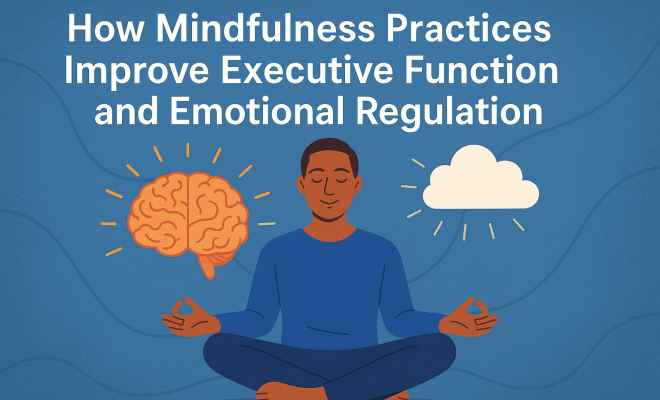
How Mindfulness Practices Improve Executive Function and Emotional Regulation
“`html
In recent years, the intersection of mindfulness and cognitive science has garnered significant attention, especially regarding how mindfulness practices can enhance executive function and emotional regulation. As we delve into this topic, we’ll uncover the mechanisms through which mindfulness can lead to improved cognitive abilities, explore its psychological benefits, and offer practical insights on integrating these practices into daily life.
Understanding Executive Function and Emotional Regulation
Before we dive into the benefits of mindfulness, let’s clarify what we mean by executive function and emotional regulation. Executive function is a set of cognitive processes that includes skills like working memory, flexible thinking, and self-control. These skills are crucial for planning, decision-making, problem-solving, and goal-directed behavior.
Emotional regulation, on the other hand, refers to the ability to manage and respond to emotional experiences in a healthy way. It involves recognizing one’s emotions, understanding their triggers, and employing strategies to cope with emotional distress. Together, these abilities play a pivotal role in our everyday lives, influencing academic performance, workplace efficiency, and personal relationships.
The Science Behind Mindfulness and Cognitive Function
Mindfulness, defined as the practice of being present and fully engaged with the current moment, can have profound effects on the brain. Numerous studies have shown that mindfulness practices, such as meditation and deep breathing, can lead to structural and functional changes in the brain regions associated with executive function and emotional regulation.
For instance, research published in the journal Psychological Science found that individuals who engaged in mindfulness meditation exhibited increased grey matter density in the prefrontal cortex, a region critical for executive function. This suggests that regular mindfulness practice can physically alter brain structures, enhancing cognitive capabilities.
Benefits of Mindfulness for Executive Function
So, how exactly does mindfulness bolster executive function? Here are some key benefits:
- Enhanced Attention Control: Mindfulness practices train individuals to focus their attention. This leads to improved selective attention, allowing for better concentration on tasks without becoming easily distracted.
- Improved Working Memory: Studies indicate that mindfulness can enhance working memory capacity, which is crucial for tasks that require the manipulation and retention of information.
- Increased Cognitive Flexibility: Mindfulness fosters a more adaptable thought process, enabling individuals to shift their thinking and adapt to new information or changes in their environment.
- Better Decision-Making: By promoting a calm and centered state of mind, mindfulness can lead to more rational and less impulsive decision-making, which is essential in both personal and professional contexts.
Mindfulness and Emotional Regulation: A Symbiotic Relationship
Mindfulness is not just about enhancing cognitive function; it plays a vital role in emotional regulation as well. The practice encourages individuals to become more aware of their emotional states, leading to better insights and coping strategies. Here are a few ways mindfulness aids in emotional regulation:
- Increased Emotional Awareness: Mindfulness teaches individuals to observe their emotional responses without judgment, leading to greater self-awareness and understanding of emotional triggers.
- Reduced Reactivity: By practicing mindfulness, individuals can learn to respond to emotional stimuli more thoughtfully rather than reacting impulsively, which often leads to regret.
- Enhanced Resilience: Regular mindfulness practice can foster a sense of resilience, equipping individuals with tools to manage stress and bounce back from challenging situations more effectively.
- Improved Interpersonal Relationships: Mindfulness enhances empathy and compassion, leading to better communication and conflict resolution in relationships.
Real-World Applications of Mindfulness Practices
The benefits of mindfulness extend beyond individual practice; they can be integrated into various settings such as schools, workplaces, and therapeutic environments. Implementing mindfulness programs can yield significant improvements in executive function and emotional regulation across different demographics.
Mindfulness in Education
Schools across the globe are recognizing the value of incorporating mindfulness into their curricula. Programs designed to teach students mindfulness techniques have shown promise in enhancing focus and emotional well-being. For instance, a program called Mindful Schools has been successfully implemented in various educational institutions, allowing children to learn skills that improve their attention and emotional coping mechanisms.
Additionally, research from the University of California, Los Angeles, highlighted that students who participated in mindfulness programs reported a 25% decrease in stress levels and a 20% increase in their overall emotional well-being. These findings underscore the importance of early exposure to mindfulness techniques, which can cultivate healthier coping mechanisms for children as they grow. (See: Mindfulness and executive function study.)
Mindfulness in the Workplace
In professional settings, companies are beginning to adopt mindfulness practices as a means to improve employee productivity and well-being. Organizations like Google have introduced mindfulness training programs, resulting in reduced stress levels and increased job satisfaction among employees. Studies show that mindfulness training can lead to fewer errors, heightened creativity, and enhanced teamwork.
In fact, a study conducted by the Mindfulness Institute reported that employees who engaged in workplace mindfulness programs experienced a 31% increase in productivity and a 42% reduction in stress-related absenteeism. These statistics illustrate the tangible benefits of mindfulness practices in enhancing not only individual performance but also overall workplace culture.
Therapeutic Applications
Mindfulness-based therapies, such as Mindfulness-Based Stress Reduction (MBSR) and Mindfulness-Based Cognitive Therapy (MBCT), are increasingly being utilized in clinical settings to support individuals dealing with anxiety, depression, and other mental health challenges. Research indicates that these therapies can lead to significant improvements in emotional regulation and cognitive functioning.
A meta-analysis published in the journal JAMA Internal Medicine found that mindfulness practices significantly reduced symptoms of anxiety and depression in more than 3,500 participants. This compelling evidence emphasizes the role of mindfulness in therapeutic contexts and its potential to serve as an adjunct to traditional treatment methods.
Practical Strategies for Cultivating Mindfulness
If you’re intrigued by the potential of mindfulness to bolster your executive function and enhance emotional regulation, incorporating some practical strategies into your daily routine can be beneficial. Here are a few actionable suggestions:
- Start Small: Begin with short mindfulness exercises, such as five minutes of deep breathing or a body scan. Gradually increase the duration as you become more comfortable.
- Mindful Moments: Integrate mindfulness into your daily activities. Practice being present while eating, walking, or even during conversations. Focus on your senses and experiences in the moment.
- Use Guided Meditations: Utilize apps or online resources for guided meditations that can help you establish a consistent practice.
- Establish a Routine: Consistency is key. Set aside a specific time each day for mindfulness practice, whether it’s in the morning, during lunch, or before bed.
- Join a Group: Participating in a mindfulness group or class can provide motivation and support as you embark on your mindfulness journey.
- Practice Mindful Listening: During conversations, focus entirely on the speaker, avoiding distractions. This practice not only enhances mindfulness but also improves relationships through deeper connections.
- Engage in Nature: Spend time outdoors and practice mindfulness in nature. Observing your surroundings can enhance your awareness and connection to the present moment.
Mindfulness Research: Current Findings and Future Directions
As the field of mindfulness research continues to evolve, new studies are shedding light on how mindfulness practices influence executive function and emotional regulation. Recent meta-analyses indicate significant positive outcomes associated with mindfulness interventions, particularly in enhancing cognitive flexibility and emotional control.
Future research aims to explore the long-term effects of mindfulness on brain structure and function, seeking to establish a more comprehensive understanding of how these practices can be integrated into therapeutic interventions. Additionally, ongoing studies are investigating the potential of mindfulness to address specific populations, such as individuals with ADHD or those struggling with substance abuse disorders.
For example, a study conducted at Harvard University found that mindfulness training can significantly improve attention spans in children with ADHD, offering a promising avenue for treatment. As researchers continue to uncover the multifaceted benefits of mindfulness, the potential for its application across various domains remains vast and exciting.
Challenges and Misconceptions about Mindfulness
While the benefits of mindfulness are compelling, there are challenges and misconceptions that can hinder individuals from fully embracing these practices. One common misconception is that mindfulness requires a significant time commitment or that it’s only for those in crisis. In reality, mindfulness can be adapted to fit anyone’s lifestyle, even in short bursts throughout the day.
Moreover, some individuals may find it difficult to quiet their minds or feel overwhelmed by their thoughts during practice. It’s crucial to approach mindfulness with patience and self-compassion, understanding that it’s a skill that develops over time. Additionally, some may perceive mindfulness as a trend or a fad, overlooking its empirical support and historical roots in various contemplative traditions worldwide. (See: Research on mindfulness and emotional regulation.)
Mindfulness Executive Function: Key Statistics and Findings
Understanding the impact of mindfulness on executive function can be enhanced through various statistics and research findings. For example, a study published in Frontiers in Human Neuroscience highlighted that participants who practiced mindfulness meditation showed a 16% improvement in their cognitive flexibility compared to those who did not engage in mindfulness practices. Additionally, a survey of over 1,000 educators revealed that implementing mindfulness programs led to a 30% increase in students’ focus and classroom engagement.
Another significant finding from a longitudinal study indicated that consistent mindfulness practice over six months resulted in a 25% reduction in impulsive decision-making among participants. This suggests a direct correlation between mindfulness practices and improvements in self-control, an essential component of executive function.
Furthermore, a survey conducted by the American Psychological Association found that 68% of adults who practiced mindfulness reported a significant reduction in their symptoms of anxiety and a 54% improvement in their overall cognitive function within a three-month period. These findings illustrate the extensive benefits mindfulness can have not just on emotional well-being, but also on cognitive processes.
Mindfulness vs. Traditional Cognitive Training
While traditional cognitive training techniques have been widely used to enhance executive function, mindfulness offers a unique approach that many researchers believe can be more effective. Traditional cognitive training often focuses on repetitive tasks to improve specific cognitive skills; however, mindfulness fosters a holistic improvement in cognitive flexibility, attention, and emotional regulation.
A meta-analysis comparing mindfulness training to traditional cognitive training found that participants in mindfulness programs demonstrated greater improvements in various cognitive measures, including working memory and response inhibition. This evidence suggests that incorporating mindfulness into cognitive training programs could yield superior outcomes.
Additionally, researchers at Stanford University found that participants engaged in mindfulness exercises had a 29% improvement in their ability to follow complex directions compared to those who underwent conventional cognitive exercises. This highlights the expansive nature of mindfulness in enhancing various cognitive areas beyond mere task completion.
FAQ: Mindfulness and Executive Function
What is executive function?
Executive function refers to a set of cognitive processes that include working memory, cognitive flexibility, and inhibitory control. These skills are essential for planning, decision-making, and goal-directed behavior.
How does mindfulness improve executive function?
Mindfulness practices enhance executive function by promoting better attention control, cognitive flexibility, and emotional regulation. This leads to improved focus, decision-making, and the ability to adapt to new situations.
Can mindfulness help with stress management?
Yes! Mindfulness is widely recognized for its ability to reduce stress and anxiety. Practicing mindfulness allows individuals to become more aware of their thoughts and feelings, enabling them to manage stress more effectively.
How often should one practice mindfulness to see results?
While every individual is different, studies suggest that practicing mindfulness for just 10 to 20 minutes a day can lead to noticeable improvements in cognitive function and emotional regulation. Consistency is key, so finding a routine that works for you is essential.
Are there specific mindfulness techniques that are most effective for enhancing executive function?
Techniques such as mindfulness meditation, body scans, and mindful breathing are particularly effective. Additionally, practices that involve conscious attention to daily activities, like mindful eating or walking, can also enhance executive function.
Is mindfulness suitable for children?
Absolutely! Many schools are incorporating mindfulness practices into their curricula, and research shows that children can benefit significantly from mindfulness. It can enhance focus, emotional regulation, and overall well-being in young learners.
Can mindfulness be integrated with other therapeutic methods?
Yes, mindfulness can effectively complement other therapeutic approaches. It is often used alongside cognitive-behavioral therapy (CBT) to enhance treatment outcomes for anxiety and depression. This combination can provide clients with practical skills for managing their thoughts and emotions.
What should I do if I find it hard to focus during mindfulness practice?
It’s normal to experience difficulty focusing at first. Try to approach mindfulness with a gentle mindset. If your thoughts wander, acknowledge them without judgment and gently bring your focus back to your breath or the present moment. Consistent practice will gradually improve your ability to concentrate.
How can I introduce mindfulness to my family?
Start by demonstrating mindfulness practices during family activities. Engage your family in simple exercises, like mindful breathing or walking in nature together. Sharing discussions about feelings and emotions can also foster a mindfulness culture at home.
Conclusion: A Path to Enhanced Cognitive and Emotional Well-Being
In summary, the integration of mindfulness practices into daily life can lead to remarkable improvements in executive function and emotional regulation. By fostering greater awareness and promoting thoughtful responses to emotional stimuli, mindfulness equips individuals with the tools necessary to navigate the complexities of modern life. Whether in educational settings, workplaces, or therapeutic environments, the potential of mindfulness to transform cognitive and emotional well-being is becoming increasingly clear. As you embark on your own mindfulness journey, remember that every moment of awareness is a step toward unlocking your full potential.
“`
Trending Now
- our breakdown of how to differentiate instruction without relying on learning styles
- Why Developmentally Appropriate Practice Matters for…
- this guide on bloom’s taxonomy in elementary school: age-appropriate applications
- this guide on socratic seminar vs. traditional discussion: key differences
- Bloom’s Taxonomy Question Stems for Every…
Frequently Asked Questions
How does mindfulness improve executive function?
Mindfulness improves executive function by fostering structural and functional changes in the brain, particularly in the prefrontal cortex. Regular practices like meditation enhance skills such as working memory, flexible thinking, and self-control, which are essential for effective decision-making and problem-solving.
What is the relationship between mindfulness and emotional regulation?
Mindfulness enhances emotional regulation by helping individuals recognize and understand their emotions and triggers. This awareness allows for healthier responses to emotional experiences, enabling better coping strategies for managing emotional distress.
Can mindfulness practices be integrated into daily life?
Yes, mindfulness practices can easily be incorporated into daily routines. Techniques such as meditation, deep breathing, and mindful observation can be practiced during daily activities, helping to cultivate presence and engagement in the moment.
What are the cognitive benefits of mindfulness?
Mindfulness offers numerous cognitive benefits, including improved focus, enhanced memory, and greater cognitive flexibility. By regularly practicing mindfulness, individuals can develop better planning and decision-making skills, which contribute to overall cognitive function.
What are executive function and emotional regulation?
Executive function refers to cognitive processes such as working memory, flexible thinking, and self-control, essential for planning and decision-making. Emotional regulation involves managing emotional responses and coping with emotional distress, both of which are crucial for effective personal and professional interactions.
What’s your take on this? Share your thoughts in the comments below — we read every one.