Official vs. Unofficial Transcript: What’s the Difference?
“`html
When it comes to academic records, understanding the difference between an official vs unofficial transcript is crucial for students and professionals alike. Whether you’re applying for college, seeking a job, or transferring schools, knowing which type of transcript you need can significantly impact your opportunities. In this comprehensive guide, we’ll explore the nuances of official and unofficial transcripts, the contexts in which each is used, and the implications of choosing one over the other.
1. What is an Official Transcript?
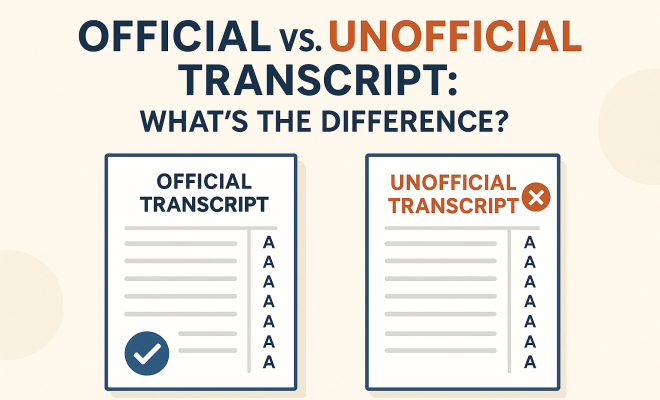
An official transcript is a formal academic record that is issued directly by a school, college, or university. This document is typically printed on official letterhead, sealed with a stamp, and often includes the institution’s signature. Official transcripts provide a complete and verified account of a student’s academic performance, including courses taken, grades received, and degrees conferred.
Most educational institutions stipulate that official transcripts be sent directly to the requesting party—such as another school, a prospective employer, or a licensing board—ensuring authenticity. This is why you’ll often see official transcripts required for college admissions and employment verification. They serve as a reliable source of information regarding a candidate’s educational history, making it difficult to contest the validity of the details provided.
2. What is an Unofficial Transcript?
In contrast, an unofficial transcript is often a simpler document that students can access through their institution’s online portal or request directly from their registrar’s office. It contains much of the same information as an official transcript—course names, grades, and credits earned—but it lacks the formal features that authenticate an official document.
Unofficial transcripts may be used for personal reference, academic advising, or informal situations where formal verification isn’t required. They can be beneficial for students who want to keep track of their academic progress or apply for internships where an official record might not be strictly necessary. However, it’s essential to understand that unofficial transcripts are generally not accepted for formal processes like college applications or job applications that require verified records.
3. The Key Differences Between Official and Unofficial Transcripts
Understanding the differences between official and unofficial transcripts can save you time and prevent potential pitfalls. Here are the key distinctions:
- Authentication: Official transcripts are authenticated with seals and signatures, while unofficial transcripts are not.
- Access: You usually have to request official transcripts through a formal process, whereas unofficial transcripts can often be downloaded or printed directly online.
- Use Cases: Official transcripts are required for applications to schools and jobs, while unofficial transcripts are often used for personal tracking or informal situations.
- Cost: Some institutions may charge a fee for official transcripts, whereas unofficial ones are frequently available for free.
4. When Do You Need an Official Transcript?
There are several scenarios where an official transcript is essential. For instance, when you’re applying to colleges or universities, they typically require an official transcript to verify your academic history. This requirement ensures that you have completed the necessary coursework and attained the grades needed for admission.
Another important instance is when applying for jobs that require proof of education. Employers in fields like education, healthcare, and engineering often demand official transcripts as part of their hiring process. These transcripts confirm your qualifications and provide a trustworthy account of your academic achievements.
5. When Can You Use an Unofficial Transcript?
While official transcripts are crucial for formal processes, unofficial transcripts still hold significant value. For students in college, unofficial transcripts can be useful for monitoring your academic progress. You can use them to check your GPA and ensure that you’re on track for graduation.
Furthermore, unofficial transcripts may be sufficient for applying to internships or entry-level jobs where educational verification isn’t as stringent. They can showcase your current coursework and grades to potential employers, giving them a snapshot of your academic performance without the need for formal verification. (See: U.S. Department of Education.)
6. How to Obtain Official and Unofficial Transcripts
The process to obtain both types of transcripts varies by institution. For official transcripts, you’ll typically need to make a formal request through the registrar’s office, which may involve filling out a form and paying a fee. Many schools have online systems set up to facilitate this process, allowing you to order transcripts from the comfort of your home.
On the other hand, obtaining an unofficial transcript is generally much simpler. Most colleges and universities provide students with online access to their unofficial transcripts. You can log into your student portal, find the transcripts section, and either view or print your unofficial transcript without any cost.
7. Potential Issues and Considerations
Despite their differences, both types of transcripts can lead to misunderstandings if not used appropriately. For instance, using an unofficial transcript when an official one is required can result in complications such as delayed admissions or job offers. Always check the requirements of the institution or employer to ensure you’re providing the correct documentation.
Additionally, it’s important to keep your unofficial transcript updated. Regularly accessing it allows you to track your progress, spot any discrepancies, and address them with your institution if necessary. Being proactive in managing your academic records can prevent headaches down the road.
8. Current Relevance in Education and Employment
In today’s competitive academic and job markets, understanding the distinction between official and unofficial transcripts is more relevant than ever. With many students pursuing higher education and jobs that require proof of academic achievements, being equipped with the right documents can set you apart from the competition.
Moreover, as remote learning becomes increasingly prevalent, the way institutions manage transcripts is evolving. Some schools are beginning to offer digital official transcripts, adding another layer of convenience for students. However, it’s essential to ensure that these digital transcripts are indeed recognized as official by the receiving party.
9. Statistical Overview of Transcript Usage
To give you a clearer picture of the relevance of official and unofficial transcripts, consider these statistics:
- A recent survey showed that approximately 85% of employers in the U.S. request official transcripts during the hiring process.
- According to data from the National Center for Education Statistics, around 76% of colleges require official transcripts for admission applications.
- In a study conducted by the National Association of Colleges and Employers, about 60% of internships were filled by candidates who submitted unofficial transcripts as part of their application.
These figures highlight the importance of understanding when and how to use each type of transcript based on your career stage and educational pursuits.
10. Expert Perspectives on Transcripts
Experts in educational administration, such as university registrars and academic advisors, emphasize the importance of transcripts in the holistic review process that many institutions use for admissions.
Dr. Jessica Lee, a registrar at a prominent university, states, “Official transcripts act as a verification tool that can bolster a student’s application. We encourage students to maintain their records meticulously to ensure they reflect their true academic journey.”
Additionally, career coaches suggest that students shouldn’t underestimate the power of unofficial transcripts. “While official documents are essential for formal applications, unofficial transcripts can provide a more immediate insight into a student’s current academic standing, which can be beneficial in informal discussions or networking opportunities,” explains Mark Thompson, a career counselor. (See: New York State Education Department.)
11. Comparative Analysis: Official vs Unofficial Transcripts
When deciding between official and unofficial transcripts, it’s essential to consider several factors beyond just their definitions. Here’s a comparative analysis of both types:
| Criteria | Official Transcript | Unofficial Transcript |
|---|---|---|
| Legitimacy | High – formally issued by the institution | Moderate – student-generated or accessed |
| Required for Applications | Yes – for colleges, jobs, and licenses | No – generally not acceptable for formal verification |
| Cost | Often involves a fee | Typically free |
| Processing Time | May take several days or weeks | Instant access through online portals |
| Privacy | More secure; sent directly to the institution | Less secure; can be accessed by the student |
12. Frequently Asked Questions (FAQ)
What is the major benefit of having an official transcript?
The primary benefit of an official transcript is its credibility. It provides assurance to colleges or employers that the information is accurate and verified by the institution.
Can I use my unofficial transcript for graduate school applications?
Generally, you cannot use an unofficial transcript for graduate school applications, as most programs require official documentation to confirm your academic history.
How long do official transcripts take to process?
The processing time for official transcripts can vary widely depending on the institution, but it typically ranges from a few days to several weeks, especially during peak application periods.
What should I do if I find an error on my transcript?
If you notice an error on either your official or unofficial transcript, contact your institution’s registrar’s office immediately. They will provide you with steps to rectify the issue.
Do employers accept digital copies of official transcripts?
Many employers accept digital copies of official transcripts, but it’s crucial to ensure that these documents are sent directly from the institution to the employer to maintain their official status.
13. Additional Considerations When Choosing Between Official and Unofficial Transcripts
Choosing the right type of transcript can depend on various factors, including where you are in your academic journey, the specific requirements of the institutions or employers you’re dealing with, and your personal circumstances. Here are some additional considerations to keep in mind:
Academic Transitions
If you’re transitioning between different levels of education (for example, from high school to college), understanding which transcripts are required can be critical. High schools may provide both official and unofficial transcripts, but colleges will typically require official documents for admissions. Keeping track of these requirements can help simplify the transition process.
International Considerations
For students looking to study abroad or apply for jobs in another country, the rules surrounding transcripts can vary significantly. Some countries may have specific requirements regarding the type of transcript needed. Familiarizing yourself with these rules can save you a lot of stress later on. For example, while applying for universities in Europe, official translations of your transcripts may also be required. (See: Wikipedia on Academic Transcripts.)
Maintaining Records
It’s also a good practice to regularly check both types of transcripts for accuracy. This means verifying grades, ensuring courses are listed correctly, and checking that your degree is accurately reflected. Institutions can sometimes make errors, and being proactive can help you catch mistakes before they become bigger issues.
Value in Networking
Unofficial transcripts can be particularly useful in networking situations. If you’re attending a career fair or meeting potential employers, having an unofficial transcript on hand can serve as an informal resume supplement. It allows you to discuss your coursework and relevant experiences without the need for formal documentation, which can open doors for conversations and opportunities.
14. Common Misconceptions Regarding Transcripts
It’s easy to misunderstand the purpose and function of transcripts. Here are some common misconceptions:
Misconception 1: All Transcripts Are the Same
Some people believe that all transcripts are interchangeable. This isn’t true; each type serves its own purpose and has specific requirements for usage. Always check what is needed for your particular situation.
Misconception 2: Transcripts Are Only Important for College Applications
While transcripts are indeed crucial for college applications, they are equally important for job applications, internships, and other professional opportunities. Employers may request transcripts to verify educational qualifications, making it essential to understand their significance beyond just academic settings.
Misconception 3: Unofficial Transcripts Are Not Worth Keeping
Some students might think unofficial transcripts are obsolete. However, they are valuable for personal tracking, advising, and even networking. Keeping them updated can provide a quick reference for both students and advisors.
15. Conclusion: Making the Right Choice
In summary, understanding the differences between official vs unofficial transcript is vital for anyone navigating the academic and professional landscape. Knowing when to use each type of transcript can save you time, effort, and potential complications. Remember to always check the specific requirements of the institutions or employers you are dealing with and keep your records up to date. Your academic history is a critical part of your journey, and managing it wisely can help you achieve your goals.
“`
Trending Now
Frequently Asked Questions
What is the difference between an official and unofficial transcript?
The main difference lies in their authentication. An official transcript is issued directly by an educational institution, printed on official letterhead, and often sealed, making it a validated document. In contrast, an unofficial transcript is typically accessible online or through a registrar's office and lacks the formal authentication features, making it suitable for personal reference or informal situations.
When do you need an official transcript?
An official transcript is often required for college admissions, job applications, and professional licensing. Institutions and employers usually request these documents to verify your academic history and ensure the authenticity of the information provided, as they carry a higher level of credibility compared to unofficial transcripts.
Can an unofficial transcript be used for college applications?
Generally, unofficial transcripts are not accepted for college applications, as most institutions require official transcripts to verify academic performance. However, unofficial transcripts may be used for preliminary assessments or advising, but official documents will ultimately be needed for final admissions decisions.
How can I obtain my unofficial transcript?
You can typically obtain your unofficial transcript by accessing your educational institution's online portal or by requesting it directly from the registrar's office. Most schools allow students to view and print unofficial transcripts for personal use or academic advising without any formal request process.
What does an official transcript include?
An official transcript includes a complete record of a student's academic performance, such as courses taken, grades received, and degrees conferred. It is printed on official letterhead, often sealed, and may also include the institution's signature, ensuring its authenticity for verification purposes.
What did we miss? Let us know in the comments and join the conversation.