Parallel Play vs. Associative Play: Developmental Stages Explained
“`html
1. What Is Parallel Play?
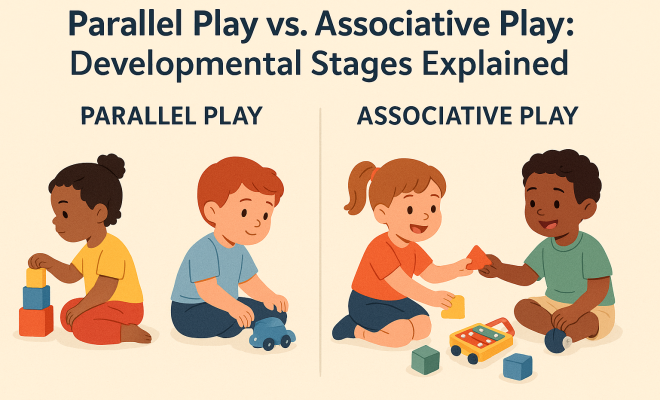
Parallel play is a vital phase in early childhood development, typically observed in children aged 2 to 3 years. During this stage, young children play alongside one another, engaging in similar activities without direct interaction. For example, two toddlers may build with blocks next to each other, but they do not share their creations or collaborate. This form of play is essential as it allows children to explore social dynamics without the pressure of cooperation.
This stage of play is characterized by independent behavior where children are focused on their own activities while being aware of their peers. It’s an important precursor to more collaborative forms of play, promoting social awareness and encouraging children to learn from one another’s actions. Experts like developmental psychologist Jean Piaget emphasized that this type of play supports cognitive development, helping children understand their environment and how to interact within it.
2. Characteristics of Parallel Play
When examining the characteristics of parallel play, we find several key traits that define this stage. First, children engage in similar activities but do so independently. For instance, even if two children are drawing side by side, they will focus on their own paper and may not even acknowledge each other. This lack of interaction does not signify a lack of awareness; rather, it indicates that children are still developing their social skills.
Another defining feature is the absence of structured rules or a goal in play. Children are not yet interested in collaboration, making their play experience more about individual expression. While parallel play is not entirely devoid of social interaction, it primarily serves as a foundation for later stages of play, such as associative play, where cooperative engagement begins to emerge.
3. The Role of Parallel Play in Development
The importance of parallel play in child development cannot be overstated. This stage allows children to build essential skills such as self-regulation and understanding social cues. For instance, while a child observes another child building a tower, they may learn about balance and structure simply by watching, even if they don’t engage directly. This observational learning is crucial during the parallel play stage.
Moreover, parallel play fosters creativity and independence. Children often experiment with different materials and ideas without the constraints of working with a partner. This freedom encourages innovation and individual thinking, which are critical components of cognitive development. As they grow and develop these skills, they naturally transition into more interactive forms of play.
4. What Is Associative Play?
Associative play emerges as children grow, typically around the ages of 3 to 4 years. During this stage, children begin to interact and engage with one another during play, albeit without a structured or organized approach. For example, children might share toys, exchange ideas, or talk about what they’re doing, but they may not be working together toward a common goal. This shift from parallel play to associative play is a critical step in social development.
Associative play allows children to express their thoughts and feelings more openly and to start understanding the concept of sharing and cooperation. While they still engage in their activities independently, the interaction significantly enhances their social skills, helping them navigate friendships and group dynamics. It’s during this stage that children begin to understand the value of collaboration while still maintaining their own identity within the play.
5. Characteristics of Associative Play
Associative play is characterized by a noticeable increase in social interaction among children. They may engage in conversations, share toys, and demonstrate a willingness to be involved in one another’s play activities. For example, one child might offer another a toy to use, and they may discuss their play scenarios, which fosters a sense of community. However, it’s important to note that there is still a lack of organized play with rules; rather, each child is still primarily focused on their independent experience.
Another hallmark of associative play is the development of empathy and negotiation skills. As children start to interact more, they learn to express their feelings, understand the feelings of others, and negotiate terms for sharing toys or taking turns. This stage lays the groundwork for cooperative play, where children will learn to work together towards a common goal, enhancing their overall social capabilities. (See: CDC on child development stages.)
6. The Transition from Parallel to Associative Play
The transition from parallel play to associative play is a subtle yet significant shift in a child’s development. This change often occurs naturally as children grow and gain more social experience. Typically, children begin to show interest in each other’s activities, leading them to experiment with interactions. For instance, a child who previously played alongside another child might start asking questions about their activity or suggest an idea for collaborative play.
Factors that influence this transition include the social environment, peer relationships, and individual temperament. For example, children who have siblings may develop associative play skills earlier due to increased interaction opportunities. Similarly, children in group settings, such as daycare or preschool, may also experience this transition more rapidly as they are surrounded by peers who model cooperative behaviors.
7. Importance of Understanding Parallel Play vs Associative Play
Understanding the differences between parallel play and associative play is crucial for parents, educators, and caregivers. Recognizing these developmental stages can help adults provide appropriate support and opportunities for children to thrive. For instance, in a preschool setting, teachers can design activities that encourage associative play, such as group projects or games that require collaboration and sharing.
Furthermore, understanding these stages allows adults to set realistic expectations for children’s social behavior. Rather than expecting immediate cooperation, adults can appreciate the value of parallel play as a critical precursor to more complex social interactions. This knowledge empowers adults to foster a nurturing environment that promotes healthy development and enhances children’s social skills over time.
8. Practical Insights for Encouraging Play Development
To support children in navigating the stages of play, it’s essential to create environments that encourage both parallel and associative play. For parallel play, providing a variety of materials and toys can engage children individually while still allowing them to observe others. Activities like building blocks, art supplies, or sensory bins can stimulate creativity and independent exploration, essential for the parallel play phase.
As children transition to associative play, incorporating cooperative games or group activities becomes key. For example, group art projects or team-based games encourage sharing and collaboration, allowing children to practice their social skills in a structured yet flexible environment. Adults can facilitate these interactions by modeling sharing behavior, guiding children through negotiation, and providing positive reinforcement for collaborative efforts.
9. Current Relevance: The Impact of Technology on Play
In today’s digital age, the dynamics of play have been significantly influenced by technology. Children are increasingly engaging with digital devices, which can impact their development of social skills and the balance between parallel and associative play. While technology can offer innovative ways to connect and play, it often reduces face-to-face interactions necessary for developing essential social skills.
To mitigate these effects, it’s crucial for parents and educators to encourage a healthy balance between screen time and physical play. Engaging children in traditional play activities, such as outdoor games or cooperative art projects, can promote the valuable skills associated with associative play. By fostering environments that prioritize social interaction, we can help children develop the necessary competencies for successful relationships in their future.
10. Long-term Effects of Parallel and Associative Play
The foundational experiences children have during parallel and associative play can have lasting impacts on their social, emotional, and cognitive development. Studies show that children who engage in rich play experiences tend to have better problem-solving skills and are more adept at forming relationships later in life. This is largely because play during these formative years helps them develop skills like communication, empathy, and conflict resolution.
For example, children who regularly participate in associative play often find it easier to transition into structured environments, such as classrooms, where cooperation and teamwork are essential. They are already familiar with the nuances of sharing and negotiating with peers, which can significantly reduce anxiety and improve their ability to navigate group dynamics.
Research conducted by the American Academy of Pediatrics highlights that play is a crucial component of healthy development. The skills learned during play, such as taking turns and understanding boundaries, are carried into adulthood. These skills influence how individuals interact in professional settings and personal relationships, showcasing the profound impact of early play experiences on lifelong social competence.
11. Expert Perspectives on Play Development
Experts in child development emphasize that play is not just leisure time; it is an essential part of learning. Renowned child psychologist Dr. David Elkind notes that play allows children to make sense of the world around them. Through play, children practice adult roles, refine their cognitive skills, and develop emotional regulation. He argues that both parallel and associative play contribute significantly to a child’s ability to adapt to different social situations. (See: NIH on learning and development.)
In her research, Dr. Laura Berk, a prominent developmental psychologist, discusses how play is integral to cognitive development. She explains that during associative play, children learn to collaborate and solve problems together, skills that are critical in academic settings and later in life. This collaborative nature of associative play teaches children how to communicate effectively and work as a team, which are essential skills in today’s interconnected world.
12. Comparative Analysis: Parallel Play vs Associative Play
When comparing parallel play to associative play, it’s essential to consider the context in which each occurs. While both stages are vital for development, they serve different purposes. Parallel play is primarily focused on individual exploration and self-discovery, whereas associative play emphasizes social interaction and the development of interpersonal skills.
For instance, children engaged in parallel play may enjoy solitary activities, but they are still influenced by the presence of others. On the other hand, during associative play, the interaction becomes the focal point, with children sharing ideas and integrating their activities more fluidly. This shift marks the evolution from solitary play to a more communal approach, paving the way for cooperative play, where teamwork and shared objectives become paramount.
Understanding this distinction can help parents and educators tailor their approaches to meet children’s developmental needs. For example, strategies that support parallel play, such as providing varied and engaging materials, differ from those that promote associative play, which often involve structured group activities and open opportunities for discussion and collaboration.
13. FAQs About Parallel Play and Associative Play
What age do children typically start parallel play?
Children usually begin engaging in parallel play around the age of 2 years. This is when they become more aware of their peers but still prefer to play independently.
How can I encourage my child to engage in associative play?
To foster associative play, provide opportunities for group activities that require sharing and communication, such as cooperative games, team projects, or joint creative endeavors like building a large structure with blocks.
Is parallel play a sign of social skills development?
Yes, parallel play is an important phase in developing social skills. While children may not interact directly, they are learning to be aware of others and observing social behaviors, which lays the groundwork for later interactions.
Can children skip stages of play?
While every child develops at their own pace, most children will experience both parallel and associative play. However, certain factors such as the child’s environment, social opportunities, and individual temperament may influence how quickly they progress through these stages.
How does play impact learning in the classroom?
Play significantly enhances learning in the classroom by promoting engagement, critical thinking, and social skills. Children who play together develop better collaboration skills, which help them in group projects and discussions in school.
What should I do if my child prefers solitary play?
If your child prefers solitary play, it’s important to respect their comfort level while gently encouraging social interactions. You can arrange playdates with one or two peers to facilitate a less overwhelming social setting. Gradually introducing cooperative play in small doses can help your child build confidence.
Are there any negative effects of too much parallel play?
While parallel play is a natural stage of development, too much time spent in solitary play can limit opportunities for social skills development. It’s important to balance independent play with social interactions to ensure a well-rounded development.
How can technology influence play?
Technology can influence play in both positive and negative ways. While it can provide new forms of interactive play, too much screen time may reduce meaningful face-to-face interactions. Encouraging a balance between digital play and physical activities is key to healthy development.
14. Recent Studies on Play Development
Recent research has delved into the nuances of parallel and associative play, shedding light on how these interactions shape cognitive and social growth. A study published in the “International Journal of Child Development” found that children who engage in both types of play demonstrate more advanced problem-solving skills. These children were also observed to be more adaptable in social settings, suggesting that the interplay between independent and social play fosters a robust developmental environment.
Additionally, research has indicated that children who regularly participate in associative play are more likely to exhibit leadership qualities as they navigate group dynamics and take on various roles during play scenarios. This ability to lead and collaborate effectively is not just beneficial during childhood but translates into skills valuable in educational settings and later in the workforce.
15. The Role of Parents in Fostering Play
Parents play a critical role in shaping their child’s play experiences. By providing opportunities for both parallel and associative play, parents can help their children develop a well-rounded skill set. For example, setting aside time for independent play with art supplies allows children to express themselves creatively while still engaging in observational learning. At the same time, scheduling playdates or group outings encourages children to practice their social skills in a supportive environment.
Moreover, parents can model positive social behaviors during play. When children see adults sharing, negotiating, and collaborating, they are more likely to imitate these behaviors during their playtime. Encouraging conversations about feelings and experiences during play can also deepen children’s understanding of empathy and cooperation.
16. Conclusion: The Journey of Play Development
Understanding the journey from parallel play to associative play is essential for recognizing the developmental milestones that shape a child’s social and cognitive abilities. Each type of play serves a vital purpose, allowing children to explore their individuality while also learning the importance of social connections. By fostering environments that encourage both forms of play, adults can help children navigate their developmental paths with confidence, ultimately preparing them for future interactions and relationships.
“`
Trending Now
Frequently Asked Questions
What is parallel play in child development?
Parallel play is a stage in early childhood development, typically observed in children aged 2 to 3 years, where they play alongside each other without direct interaction. This allows children to explore social dynamics independently while being aware of their peers, which is crucial for cognitive and social development.
What are the characteristics of parallel play?
Characteristics of parallel play include children engaging in similar activities independently, such as drawing or building, without acknowledging each other. There are no structured rules or goals, focusing instead on individual expression, which lays the groundwork for later stages of play like associative play.
How does parallel play support child development?
Parallel play supports child development by promoting social awareness and allowing children to learn from one another's actions. This independent play is essential for cognitive development, helping children understand their environment and how to interact socially without the pressure of cooperation.
At what age does parallel play typically occur?
Parallel play typically occurs in children aged 2 to 3 years. During this stage, children engage in similar activities side by side, which is an important part of their social and cognitive development as they learn to navigate social dynamics.
What comes after parallel play?
After parallel play, children usually progress to associative play, where they start to engage with one another in cooperative activities. This transition marks the beginning of more interactive play, allowing for shared goals and collaboration among peers.
Agree or disagree? Drop a comment and tell us what you think.