What Is Associative Play? The Bridge to Cooperative Play
Play is a vital part of childhood development, serving as a vehicle for learning, socialization, and emotional growth. Among the various types of play, **associative play** stands out as a significant stage that bridges the gap between solitary play and cooperative play. Understanding this concept is crucial for parents, educators, and caregivers aiming to foster healthy social interactions in children. So, what exactly is associative play, and why is it important?
What Is Associative Play?
**Associative play** is characterized by children engaging in similar or parallel activities while still maintaining their independence. This type of play typically manifests during the preschool years, roughly between the ages of 3 and 5. Unlike solitary play, where a child plays alone without interacting with others, associative play allows children to explore their environment and engage with peers without the structured rules of cooperative play.
In associative play, children may share toys or materials, converse with one another, and even exchange ideas about their activities, but they do not necessarily work towards a common goal. This type of play fosters social skills, communication, and emotional intelligence as children learn to navigate their interactions.
The Developmental Stages of Play
To better understand associative play, it’s essential to recognize its place within the broader context of developmental play stages. Generally, play can be categorized into four main stages:
- Solitary Play: This is the first stage, where children engage in activities alone, showing little interest in others. It often occurs in infants and toddlers.
- Parallel Play: As children grow, they begin to play alongside their peers in parallel activities. They might play with the same toys but do so independently. This stage often overlaps with associative play.
- Associative Play: As previously mentioned, children engage in similar activities and begin to interact, sharing toys and ideas without a structured objective.
- Cooperative Play: This stage signifies a more advanced form of play where children work together towards a common goal, demonstrating skills in teamwork and collaboration.
Recognizing these stages helps caregivers support children’s social development by providing appropriate opportunities for each type of play.
The Importance of Associative Play
Associative play is not just an entertaining pastime; it plays a crucial role in a child’s development. Here are some key reasons why this type of play is important:
- Social Skills Development: During associative play, children practice vital social skills such as sharing, negotiation, and compromise. They learn how to express their feelings and thoughts and respond to others, laying the groundwork for more complex social interactions later on.
- Language Development: Engaging in conversations while playing enhances vocabulary and language skills. Children often narrate their actions or describe their imaginative scenarios, which contributes to their linguistic growth.
- Emotional Regulation: Associative play allows children to experiment with different emotions in a safe environment. They can express joy, frustration, and excitement, helping them learn how to manage their feelings and respond to others appropriately.
- Creativity and Imagination: This type of play encourages creativity as children invent games and share ideas. They explore different roles and scenarios, which can foster a rich imagination and cognitive flexibility.
How to Encourage Associative Play
For parents and educators looking to nurture associative play among children, several practical strategies can be employed:
- Provide Open-Ended Toys: Toys that can be used in multiple ways, such as blocks, art supplies, or dress-up costumes, encourage creativity and collaboration among children.
- Foster Group Activities: Organize playdates or small group activities that allow children to interact. Simple games or collaborative projects can help facilitate associative interactions.
- Model Social Behavior: Children learn by observing. Demonstrating positive social interactions, such as sharing or negotiating, can encourage children to mimic these behaviors during play.
- Encourage Communication: Ask open-ended questions during play to prompt conversations among children. This can help them articulate their thoughts and feelings while engaging with peers.
Challenges Associated with Associative Play
While associative play is beneficial, it can also present challenges. Some children may struggle with sharing or taking turns, leading to conflicts during play. Moreover, introverted children may find it difficult to engage with others, preferring solitary play or avoiding group settings altogether. Here are some common challenges:
- Conflict Resolution: Disagreements over toys or actions can lead to frustration. Caregivers should equip children with conflict resolution strategies to navigate these situations effectively.
- Social Anxiety: Some children may feel overwhelmed in groups, which can hinder their willingness to engage in associative play. It’s essential to create a comfortable environment where all children feel included.
- Imbalance in Engagement: In any group, some children may dominate play, while others may struggle to engage. Encouraging equal participation helps ensure that all children benefit from associative play.
Associative Play and Cultural Context
Understanding associative play also requires considering the cultural context. Play styles can vary significantly across different cultures, influencing how children interact with one another. In collectivist societies, for instance, group activities may be emphasized more heavily, fostering cooperative play from an early age. In contrast, individualistic cultures might allow for more solitary play, affecting the onset of associative play. (See: importance of play in childhood development.)
Moreover, cultural norms dictate what types of play are considered acceptable or valuable. For example, certain cultures may prioritize active outdoor play, while others may emphasize imaginative or indoor play. Recognizing these differences can help caregivers and educators design play experiences that resonate with children’s backgrounds and values.
Research on Associative Play
Numerous studies underscore the importance of associative play in child development. Research indicates that children engaged in associative play not only develop better social skills but also report higher levels of happiness and satisfaction during playtime. In a study published in the journal **Child Development**, researchers found that children who frequently participated in associative play exhibited improved problem-solving abilities and social competence compared to those who engaged in solitary play.
Furthermore, children’s ability to engage in associative play often correlates with their readiness for school and overall academic success. Educators emphasize the need for play-based learning, highlighting that associative play fosters essential skills like cooperation, communication, and creativity—traits that are highly valued in educational settings.
Current Relevance and Application
In today’s fast-paced digital world, where screen time often overshadows traditional play, understanding associative play is more relevant than ever. As children spend increasing amounts of time on devices, finding ways to promote face-to-face interactions becomes crucial. Caregivers can facilitate opportunities for associative play through organized activities, outdoor adventures, or even simple neighborhood playgroups.
Moreover, as schools increasingly move towards play-based learning environments, integrating associative play into educational frameworks can help cultivate a well-rounded approach to child development. Incorporating this type of play into lesson plans allows children to learn social skills while engaging with educational content, creating a dynamic learning experience.
The Role of Educators in Promoting Associative Play
Educators play a pivotal role in fostering associative play, as they can create learning environments that encourage social interaction among peers. Here are some strategies educators can implement:
- Design Collaborative Projects: Incorporate group projects that require children to work together, fostering associative play while achieving academic goals.
- Utilize Play-Based Learning: Embrace play-based learning principles that prioritize exploration and hands-on experiences, allowing children to engage with their peers.
- Create Inclusive Spaces: Design classrooms that encourage movement and interaction, making it easier for children to engage in associative play.
By cultivating these practices, educators can ensure that their students not only develop academically but also thrive socially and emotionally.
Frequently Asked Questions (FAQ) about Associative Play
What age do children typically engage in associative play?
Children generally start to engage in associative play between the ages of 3 and 5. This stage occurs after solitary and parallel play, as they begin to interact more with their peers.
How can I tell if my child is engaging in associative play?
Signs of associative play include children sharing toys or materials, talking to each other about their actions, and collaborating on imaginative scenarios, even if they are not working toward a common goal.
Are there specific types of activities that promote associative play?
Yes! Activities that involve group storytelling, art projects where children can create together, or building projects using blocks can all encourage associative play by allowing children to interact and share ideas while they play. (See: National Institute of Child Health on play.)
Can associative play help with conflicts among children?
Yes, associative play offers opportunities for children to practice conflict resolution. As they navigate sharing, waiting for turns, and negotiating roles, they learn to address conflicts constructively.
How can parents support associative play at home?
Parents can support associative play by providing toys that promote collaboration, arranging playdates with peers, and encouraging group activities that involve shared goals or interests.
Does associative play differ between boys and girls?
While both boys and girls engage in associative play, the styles and themes may differ. Boys might prefer more active and competitive play, while girls may lean toward imaginative and nurturing scenarios. However, these are general trends and can vary widely among individuals.
Is it normal for children to revert to solitary play?
Yes, it is normal for children to fluctuate between different types of play based on their mood, energy levels, and the context. Some children may prefer solitary play at times, especially when they are feeling overwhelmed or tired.
Further Analysis of Associative Play
Delving deeper into the mechanics of associative play reveals how it serves as a critical bridge between more solitary forms of play and the complex dynamics of cooperative play. Children not only learn how to interact with peers but also how to navigate social hierarchies and group dynamics. For instance, during associative play, children often experiment with different social roles, which can help them understand leadership and followership. They may take turns leading a game or deciding on roles, providing them with valuable insights into social cooperation.
Research has shown that children who engage in associative play often display greater empathy and understanding toward others’ emotions. For example, when a child sees a peer upset during play, their ability to relate to that emotion can stem from their experiences in associative play, where emotional exchanges are frequent. Moreover, studies indicate that children who practice associative play are more likely to develop conflict management skills, as they learn to navigate disagreements in a less structured environment.
Statistics on Associative Play
Recent studies highlight the significant impact of associative play on child development. For instance, a survey conducted by the American Academy of Pediatrics found that 85% of educators believe that play, particularly associative play, directly contributes to children’s emotional and social development. Another research project indicated that children who regularly engage in associative play are 60% more likely to exhibit strong communication skills compared to those who primarily engage in solitary play.
Additionally, a longitudinal study of preschoolers showed that those who participated in associative play demonstrated a 40% increase in problem-solving skills and creativity by the time they reached kindergarten, emphasizing the long-term benefits of this form of play.
Examples of Associative Play
Associative play can take many forms, reflecting the creativity of children. Here are some examples:
- Dress-Up Activities: Children might dress up in costumes and enact different roles while sharing ideas about their characters. They may not have a structured storyline but will engage in imaginative interactions.
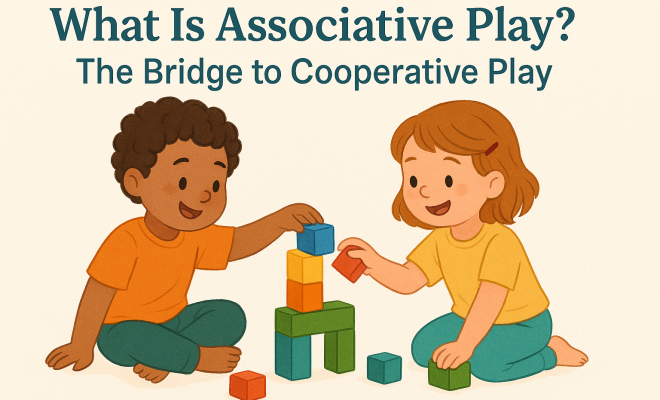
- Building Together: A group of children might work with blocks or Lego to create structures. They may share materials and suggest ideas, even if they are building separate structures.
- Art Projects: Children can create art together, such as painting on a large canvas where each child contributes their own ideas and elements while freely discussing their visions.
- Outdoor Play: During outdoor activities, children may engage in informal games where they share equipment like balls or jump ropes, discussing rules and taking turns without a fixed structure.
Connecting Associative Play to Other Developmental Theories
Understanding associative play can also be enriched by connecting it to various developmental theories. For instance, Vygotsky’s social development theory emphasizes the importance of social interaction in cognitive development. Associative play aligns with this theory, demonstrating how children learn through interactions with peers. They not only develop social skills but also cognitive skills as they negotiate roles and share ideas. Vygotsky’s concept of the “Zone of Proximal Development” illustrates that children often achieve more with the help of peers than they would alone, making associative play a perfect context for this kind of learning.
Additionally, Piaget’s cognitive development theory suggests that play is essential for children to develop logical structures and problem-solving skills. Associative play allows children to engage in symbolic and functional play, leading to a deeper understanding of the world around them. By observing how peers approach problems or create play scenarios, children can learn new strategies and perspectives.
Implications of Associative Play in Modern Education
As educational philosophies evolve, recognizing the importance of associative play within the classroom setting is vital. Schools are increasingly adopting play-based learning models that value the social and emotional growth that comes through different types of play. Such models emphasize the inclusion of associative play in lesson plans, where collaborative problem-solving and group projects are key components.
For example, educators can design math activities where children work in pairs or small groups to solve problems using manipulatives. This encourages discussion and negotiation, hallmarks of associative play. Similarly, in language arts, students can engage in storytelling projects where they collectively build a narrative, enhancing their communication skills while enjoying the creative process. By embracing associative play in education, schools can foster not just academic skills but also important life skills that children will carry into adulthood.
Conclusion
Associative play serves as a vital stepping stone towards cooperative play, enriching children’s social, emotional, and cognitive development. By understanding its significance, challenges, and cultural context, caregivers and educators can create enriching environments that promote this essential form of play. As we strive to raise socially competent and emotionally intelligent children, fostering opportunities for associative play will undoubtedly pave the way for healthier interactions and better overall development.
Trending Now
Frequently Asked Questions
What is the definition of associative play?
Associative play is a type of play where children engage in similar or parallel activities while maintaining their independence. It typically occurs between the ages of 3 and 5 and allows children to explore their environment and interact with peers without the structured rules of cooperative play.
Why is associative play important for child development?
Associative play is crucial for fostering social skills, communication, and emotional intelligence in children. It allows them to learn how to navigate interactions with peers, share ideas, and develop relationships, serving as a bridge between solitary and cooperative play.
What are the stages of play in child development?
Play can be categorized into four main stages: solitary play, where children play alone; parallel play, where they engage alongside peers independently; associative play, where they interact in similar activities; and cooperative play, where children work towards a common goal.
At what age does associative play typically occur?
Associative play usually develops during the preschool years, generally between the ages of 3 and 5. During this stage, children begin to engage with peers while still maintaining their independence in play activities.
How does associative play differ from cooperative play?
Associative play differs from cooperative play in that children interact and share materials without working towards a common goal. In cooperative play, children collaborate to achieve a shared objective, while associative play focuses on parallel activities and social interaction.
Agree or disagree? Drop a comment and tell us what you think.