How to Use the Zone of Proximal Development in Elementary Teaching
“`html
The concept of the zone of proximal development in teaching, introduced by Russian psychologist Lev Vygotsky, has transformed educational approaches in classrooms worldwide. This theory emphasizes the gap between what a learner can achieve independently and what they can accomplish with guidance. Understanding and implementing this concept in elementary teaching can significantly enhance student learning and engagement. Below, we explore nine essential strategies to effectively utilize the zone of proximal development in elementary education.
1. Understanding the Zone of Proximal Development
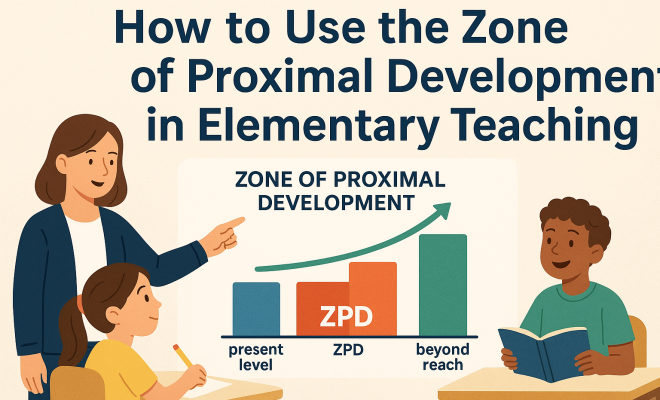
The zone of proximal development (ZPD) is a critical concept in educational psychology. It defines the range of tasks that a student can perform with the assistance of a more knowledgeable other (MKO). In simpler terms, it’s the sweet spot for learning — where students are challenged just enough to grow but not so much that they become frustrated and disengaged.
This zone typically includes what the learner can do with help and what they can do independently. For elementary teachers, recognizing a child’s ZPD is vital for appropriate scaffolding, which is the support given to students that helps them build upon their existing knowledge. Scaffolding can take various forms, such as verbal prompts, visual aids, or guided practice, and is crucial for fostering a deeper understanding of the material.
2. Assessing Student Readiness
Before you can effectively apply the concept of ZPD in your teaching, it’s crucial to assess where your students currently stand. This involves understanding their existing skills, knowledge, and learning preferences. Various assessment tools can be employed, including informal observations, quizzes, or more formal assessments.
Using formative assessments allows teachers to identify the readiness level of each student. By taking note of students’ responses, you can better tailor your teaching strategies to meet their individual needs. This personalized approach not only helps in pinpointing each student’s ZPD but also boosts their confidence as they experience success in their learning journey.
3. Implementing Scaffolding Techniques
Once you’ve assessed your students, it’s time to introduce scaffolding techniques that can enhance their understanding. Scaffolding involves breaking down learning tasks into manageable parts and providing the necessary support as students work through them. Effective scaffolding can take many forms, from modeling and guided practice to collaborative learning experiences.
For instance, when teaching a new concept in mathematics, a teacher might first model the problem-solving process, then guide students through similar problems, gradually releasing responsibility until they can solve them independently. By adjusting the level of support based on individual student needs, teachers can keep each learner within their ZPD, ultimately leading to greater mastery of the subject.
4. Encouraging Collaborative Learning
Collaborative learning is a powerful strategy that leverages the zone of proximal development in teaching. When students work together, they often learn from one another, sharing knowledge and skills that they might not fully grasp alone. This peer interaction is especially beneficial in elementary education, where social skills and teamwork are just as crucial as academic knowledge.
Group work can take many forms, including paired reading, group projects, or even peer tutoring. The key is to create diverse groups where students can support and challenge each other. In doing so, you not only foster a collaborative learning environment but also encourage students to step into the role of a teacher, reinforcing their understanding and skills.
5. Utilizing Formative Feedback
Feedback is an essential component of the learning process within the zone of proximal development. Formative feedback helps students understand their current strengths and areas for improvement. It should be specific, timely, and constructive to guide students effectively.
For instance, rather than saying, “Good job,” a teacher might say, “I noticed how you used the new vocabulary words in your writing. Can you think of another context where you might apply those words?” This type of feedback encourages students to reflect on their learning and explore further, allowing them to remain within their ZPD. (See: Zone of Proximal Development.)
6. Incorporating Technology as a Learning Tool
In today’s digital age, technology can play a vital role in addressing the individual needs of students within their ZPD. Educational apps and online platforms can provide personalized learning experiences that adapt to each student’s level of understanding. For example, programs like Khan Academy or DreamBox Learning offer differentiated instruction that adjusts in real-time based on student performance.
Moreover, technology can facilitate collaborative projects and peer feedback through interactive tools like Google Classroom or Padlet. This not only enhances the learning experience but also prepares students for a technology-driven world. By integrating these tools thoughtfully, teachers can support diverse learners and keep them engaged within their ZPD.
7. Creating a Supportive Learning Environment
Establishing a supportive classroom environment is essential for students to feel comfortable taking risks and exploring new concepts. A psychologically safe space encourages students to voice their thoughts and questions without fear of judgment. Teachers can foster such an environment by promoting a growth mindset and reinforcing the idea that making mistakes is a natural part of the learning process.
Additionally, incorporating positive reinforcement and celebrating student achievements, no matter how small, can help boost confidence. When students feel supported and valued, they are more likely to engage fully in their learning, which is critical in staying within their zone of proximal development.
8. Adjusting Instruction Based on Progress
As students progress in their learning, it’s crucial to adjust your instruction accordingly. Continuous assessment should guide your teaching choices — if a student shows mastery of a concept, it may be time to introduce more challenging material. Conversely, if a student struggles, providing additional support or revisiting foundational concepts is necessary.
This dynamic approach to instruction ensures that all students remain engaged and challenged appropriately within their ZPD. Remember, the goal is to push students toward higher levels of understanding while providing the necessary support that meets them where they are.
9. Reflecting on Teaching Practices
Finally, it’s essential for teachers to regularly reflect on their practices and the effectiveness of the zone of proximal development in their classrooms. By evaluating what strategies are successful and where challenges arise, educators can continuously improve their methods for facilitating learning.
Consider keeping a reflective journal or collaborating with colleagues to share insights and strategies. Professional development opportunities, such as workshops or webinars focused on the ZPD, can also provide valuable perspectives on enhancing your teaching practice.
In sum, effectively utilizing the zone of proximal development in teaching can lead to transformative educational experiences for elementary students. By understanding each child’s individual needs and providing tailored support, you can inspire a love for learning that lasts a lifetime.
10. Real-World Examples of ZPD in Action
Understanding how to apply the zone of proximal development in teaching can significantly enhance student learning. Let’s take a look at some real-world examples from various educational contexts where ZPD has been effectively implemented.
In a third-grade classroom, a teacher is introducing the concept of addition with carrying. The teacher begins by demonstrating a simple addition problem on the board, using manipulatives to illustrate the process. After showing how to perform the operation, the teacher moves to guided practice, where students solve similar problems in pairs. This structured approach ensures that students are working within their ZPD as they tackle the new concept with the teacher’s support.
Another example can be seen in a middle school science class where students are learning about ecosystems. The teacher assigns students to work in small groups to create a presentation on a specific ecosystem. Each group consists of students with different levels of understanding, allowing them to learn from one another. The teacher circulates among the groups, providing guidance and asking probing questions that help students think critically and deepen their understanding of the topic. This method not only keeps students within their ZPD but also fosters collaboration and communication skills.
11. The Role of Parents and Guardians
Engaging parents and guardians in the educational process is another essential element of the zone of proximal development. Parents can serve as vital partners in their child’s learning journey, particularly when they understand the concept of ZPD. When parents are aware of their child’s current learning stage and the areas where they can provide support, they can reinforce what is being learned in the classroom at home. (See: Learning and Development in Education.)
For example, if a student is struggling with reading, parents can read together with their child, discussing the story and asking questions to encourage comprehension. Similarly, when parents are involved in homework or project work, they can help guide their children through challenging tasks without doing the work for them, allowing kids to work within their ZPD.
12. Research and Studies on ZPD
Numerous studies have explored the effectiveness of the zone of proximal development in educational settings. Research shows that when teachers implement strategies that consider students’ ZPD, engagement and academic performance improve significantly. For example, a study conducted by researchers at Stanford University revealed that students who received instruction tailored to their ZPD showed a marked increase in test scores compared to those who did not.
Another study published in the Journal of Educational Psychology highlighted the positive impact of collaborative learning in conjunction with ZPD. The researchers found that students working in diverse groups, where they could learn from peers, showed heightened motivation and deeper understanding of the subject matter. These findings underscore the importance of using ZPD as a framework for designing effective teaching strategies.
13. Challenges in Implementing ZPD
While the zone of proximal development is a valuable framework for teaching, implementing it can pose challenges for educators. One common issue is the difficulty in accurately identifying each student’s ZPD, particularly in diverse classrooms with varying levels of ability. Teachers must be vigilant and flexible in their assessments to effectively gauge where each student is in their learning.
Another challenge is the potential for misalignment between a student’s ZPD and the curriculum mandates or standards they are required to meet. Educators may find themselves trying to cover specific content within a limited timeframe, which might not align with the individual learning needs of their students. Striking a balance between meeting curriculum requirements and addressing students’ ZPD is essential for effective teaching.
14. FAQ: Zone of Proximal Development in Teaching
What is the zone of proximal development (ZPD)?
The zone of proximal development is the range of tasks that a learner can perform with assistance but cannot yet perform independently. It represents the gap between what a student can do alone and what they can achieve with guidance from a more knowledgeable other.
Why is ZPD important in teaching?
Understanding a student’s ZPD allows teachers to tailor their instruction to meet individual learning needs. It helps in providing the right amount of challenge and support, which fosters student engagement and promotes deeper learning.
How can teachers assess a student’s ZPD?
Teachers can assess a student’s ZPD through a combination of formative assessments, observations, and formal tests. By monitoring student responses and progress, educators can identify where students are succeeding and where they may need additional support.
What are some practical strategies for implementing ZPD in the classroom?
Strategies include using scaffolding techniques, encouraging collaborative learning, providing formative feedback, utilizing technology, and creating a supportive learning environment. Adjusting instruction based on student progress and reflecting on teaching practices also play a crucial role.
Can ZPD be applied in subjects beyond academics?
Yes, the concept of ZPD can be applied in various domains, including social skills, emotional development, and physical activities. It is relevant whenever a learner is acquiring new skills or knowledge that requires guidance and support.
How can parents support ZPD at home?
Parents can support their child’s ZPD by engaging in activities that reinforce what is being learned in school. This can include reading together, discussing new concepts, or helping with homework in ways that allow the child to struggle and succeed with guidance rather than doing the work for them.
Are there any resources for teachers to learn more about ZPD?
Yes, there are numerous resources available, including books, online courses, and workshops focused on Vygotsky’s theories and their application in education. Websites like Edutopia and ASCD offer articles and professional development opportunities centered around ZPD and related strategies.
15. Future Implications of ZPD in Teaching
As educational landscapes evolve with technological advancements and changing pedagogical theories, the relevance of the zone of proximal development remains steadfast. Teachers are increasingly recognizing the need for personalized learning experiences that cater to the unique requirements of each student.
In the coming years, we can expect a rise in the utilization of artificial intelligence and machine learning tools that can analyze student performance data to better identify their ZPD. For example, AI-driven platforms can offer real-time feedback and customize learning paths based on individual needs. This could revolutionize how educators implement ZPD principles, enabling even more tailored and effective teaching strategies.
16. Expert Perspectives on ZPD
Educational experts and psychologists emphasize the importance of Vygotsky’s work in contemporary classrooms. According to Dr. Barbara Rogoff, a prominent researcher in cultural psychology, “the zone of proximal development is not just a static measurement but a dynamic process that can evolve with the student and the environment.” This insight underscores the necessity for teachers to remain adaptable and responsive as they guide students through their learning journeys.
Dr. David Wood, another key figure in the development of scaffolding theory, shares that “effective teaching requires an understanding of each student’s unique developmental trajectory.” Recognizing that each student has a different ZPD means that differentiation is critical to academic success. His advocacy for personalized learning methods is a call to action for educators to cultivate strategies that reflect these insights.
17. International Perspectives on ZPD
While Vygotsky’s theories originated in Russia, the zone of proximal development has garnered interest worldwide. In Finland, where education is known for its progressive methods, teachers are trained to incorporate ZPD principles into their instruction seamlessly. Finnish educators emphasize student-centered learning, where teachers act as facilitators, guiding students based on their individual ZPD.
In contrast, the American educational system often faces challenges in fully adopting ZPD due to standardized testing pressures. Yet, there are innovative schools across the U.S. that are pioneering ZPD-based methods, illustrating that educational reform can indeed lead to improved student outcomes.
18. Conclusion
Effectively utilizing the zone of proximal development in teaching can lead to transformative educational experiences for elementary students. By understanding each child’s individual needs and providing tailored support, you can inspire a love for learning that lasts a lifetime. The ongoing dialogue around ZPD shows its lasting impact and its potential to shape future educational practices in a way that emphasizes growth, collaboration, and personalized learning.
“`
Trending Now
Frequently Asked Questions
What is the zone of proximal development in teaching?
The zone of proximal development (ZPD) is a concept introduced by Lev Vygotsky, defining the range of tasks a learner can perform with assistance. It represents the space between what a student can do independently and what they can achieve with guidance, emphasizing the importance of support in enhancing learning.
How can teachers assess student readiness for the zone of proximal development?
Teachers can assess student readiness for the zone of proximal development by using various assessment tools, including informal observations, quizzes, and formal assessments. Formative assessments are particularly useful as they help identify each student's current skills and learning preferences, allowing for tailored teaching strategies.
What are some strategies for using the zone of proximal development in the classroom?
Effective strategies for utilizing the zone of proximal development include assessing student readiness, providing appropriate scaffolding, using collaborative learning techniques, and incorporating diverse teaching methods. These approaches help ensure that students are challenged appropriately and supported in their learning journey.
Why is scaffolding important in the zone of proximal development?
Scaffolding is crucial in the zone of proximal development because it provides the necessary support that helps students build on their existing knowledge. This support can take various forms, such as verbal prompts, visual aids, or guided practice, which foster a deeper understanding of the material while keeping students engaged.
How does the zone of proximal development enhance student learning?
The zone of proximal development enhances student learning by ensuring that learners are engaged with tasks that are appropriately challenging. By working within this zone, students receive the necessary support to progress without becoming frustrated, leading to improved understanding, skill development, and overall academic success.
What did we miss? Let us know in the comments and join the conversation.