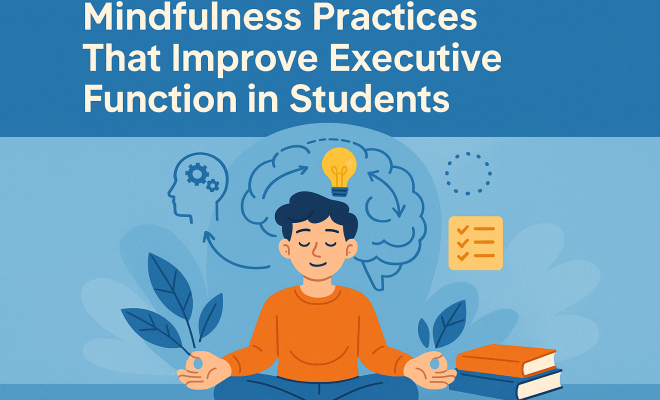
Mindfulness Practices That Improve Executive Function in Students
“`html
In today’s education landscape, students face a multitude of challenges that can impact their learning and performance. As they navigate the complexities of academic demands, social interactions, and personal development, the ability to focus, manage time, and control impulses becomes crucial. This is where mindfulness practices for students come into play. Research suggests that these techniques can significantly enhance executive function, a set of cognitive skills essential for academic success.
Understanding Executive Function: The Core of Learning
Executive function encompasses a range of cognitive processes that enable individuals to plan, focus attention, remember instructions, and juggle multiple tasks successfully. It’s often divided into three main components:
- Working Memory: The ability to hold and manipulate information in mind.
- Cognitive Flexibility: The capacity to switch between thinking about two different concepts or to think about multiple concepts simultaneously.
- Inhibitory Control: The skill to suppress impulsive responses and act in a controlled manner.
These skills are particularly vital for students who must balance various responsibilities, from homework to extracurricular activities. When executive function is compromised, it can lead to challenges like poor academic performance, behavioral issues, and increased anxiety.
The Rise of Mindfulness in Education
Mindfulness, defined as the practice of being fully present and engaged in the moment without judgment, has gained traction in educational settings. Its roots can be traced back to ancient meditation practices, but modern science has validated its benefits through numerous studies. Research has shown that mindfulness practices for students can reduce stress and anxiety, improve attention, and enhance overall well-being.
In a 2016 study published in the journal Mindfulness, researchers found that students who practiced mindfulness demonstrated improvements in attention and focus, essential components of executive function. As such, educational institutions are increasingly incorporating mindfulness into their curricula, recognizing its potential to foster a healthier learning environment.
Key Mindfulness Practices for Students
There are various mindfulness practices that students can engage in, each offering unique benefits for enhancing executive function. Below are some of the most effective methods:
1. Mindful Breathing
Mindful breathing is a fundamental practice that involves focusing on one’s breath as a means of anchoring attention in the present moment. Students can practice this by finding a quiet space, closing their eyes, and taking slow, deep breaths. By concentrating on the sensations of inhalation and exhalation, they can cultivate awareness and reduce distractions.
Studies have shown that mindful breathing can lead to increased attention span and improved working memory. A 2018 study found that participants who engaged in mindful breathing exercises exhibited enhanced cognitive flexibility compared to those who did not.
2. Body Scan Meditation
The body scan is a more advanced mindfulness practice that encourages students to focus attention on different parts of their body. This technique helps in building awareness of physical sensations and promotes relaxation. To practice, students lie down comfortably and mentally scan their body from head to toe, noting any tension or discomfort.
This practice fosters self-awareness and can improve inhibitory control, as students learn to recognize and manage their bodily responses to stress. A 2017 study indicated that individuals who practiced body scan meditation regularly showed significant improvements in self-regulation and executive function.
3. Mindful Movement
Mindful movement incorporates physical activity with mindfulness principles. Activities like yoga or tai chi encourage students to connect their breath with movement, promoting physical health and mental clarity. Research has demonstrated that engaging in mindful movement can enhance cognitive flexibility, thus supporting better decision-making processes.
A notable study published in The Journal of School Health found that students participating in a school yoga program exhibited improvements in attention and behavior, suggesting that mindful movement can serve as a powerful tool for enhancing executive function. (See: Mindfulness and executive function.)
4. Gratitude Journaling
Gratitude journaling is a reflective mindfulness practice where students write down things they are grateful for. This practice encourages positive thinking and can shift focus away from stressors. Students are often overwhelmed by academic pressures, and gratitude journaling helps build resilience and optimism.
A 2019 study in the Journal of Happiness Studies found that practicing gratitude can lead to improved emotional regulation and cognitive flexibility. By regularly acknowledging positive aspects of their lives, students can enhance their executive function and overall well-being.
5. Mindful Listening
Mindful listening involves paying full attention to sounds and conversations without judgment or distraction. This practice fosters better communication skills and enhances focus. In a classroom setting, students can practice mindful listening by engaging in activities where they actively listen to their peers or teachers.
Research indicates that practicing mindful listening can lead to better academic performance and social interactions. A study published in Educational Psychology demonstrated that students who practiced mindful listening showed improved attention and empathy, further supporting their executive function.
6. Nature Immersion
Spending time in nature has been linked to various mental health benefits, including improved focus and reduced stress. Students can practice mindfulness by engaging in nature walks or simply sitting outside and observing their surroundings. This practice promotes mindfulness and allows students to reconnect with their environment.
A 2020 study found that nature immersion significantly improved attention and cognitive performance among students. By taking breaks outdoors, students can recharge and enhance their executive function.
7. Mindfulness-Based Stress Reduction (MBSR)
Mindfulness-Based Stress Reduction (MBSR) is a structured program developed by Dr. Jon Kabat-Zinn that combines mindfulness meditation and yoga. While it’s typically offered in clinical settings, schools can adapt its principles for students. MBSR can help students develop coping strategies for stress, improving their overall mental health and executive function.
A comprehensive meta-analysis published in Psychological Bulletin confirmed that MBSR significantly enhances various cognitive functions, including attention, working memory, and emotional regulation. Implementing MBSR in school curricula could be a game-changer for student performance.
Implementing Mindfulness Practices in Schools
For mindfulness practices for students to be effective, schools must create a supportive environment that encourages their adoption. Here are several strategies educational institutions can use:
1. Training Educators
It’s crucial for teachers to receive proper training in mindfulness techniques. Educators who understand the principles of mindfulness are better equipped to guide their students. Schools could invite mindfulness experts for workshops or provide resources for self-study.
2. Incorporating Mindfulness into the Curriculum
Mindfulness should not be viewed as a separate subject but rather integrated into existing curricula. For example, teachers can start classes with a few minutes of mindful breathing or end the day with a gratitude reflection. By embedding these practices into the school day, mindfulness becomes a natural part of the learning process.
3. Creating Mindfulness Spaces
Dedicated spaces for mindfulness within schools can provide students with a peaceful environment to practice. These spaces can include comfortable seating, calming colors, and natural elements. When students have access to a designated area, they may be more likely to engage in mindfulness practices.
The Role of Parents in Supporting Mindfulness
Parents play a critical role in reinforcing mindfulness practices at home. By modeling these behaviors and participating in mindfulness exercises with their children, they can create a supportive environment that enhances the impact of school-based initiatives.
1. Family Mindfulness Activities
Families can engage in mindfulness activities together, such as yoga, nature walks, or mindfulness games. These shared experiences foster a sense of connection and provide opportunities for conversation about emotions and stress management.
2. Encouraging Open Communication
Parents should encourage their children to express their thoughts and feelings openly. Creating a safe space for discussion can help students process their experiences and learn to regulate their emotions better.
3. Practicing Mindfulness Together
Incorporating mindfulness practices into family routines can reinforce their importance. Whether it’s practicing mindful breathing before a meal or sharing gratitude reflections at bedtime, these rituals help students internalize mindfulness principles.
Current Relevance and Future Directions
The relevance of mindfulness practices for students has never been more significant, especially in light of the increasing mental health crisis among young people. The COVID-19 pandemic has exacerbated stress and anxiety levels, making mindfulness an essential tool for coping and resilience.
Educational institutions must recognize the benefits of incorporating mindfulness into their frameworks. As more schools adopt these practices, the potential for improving executive function and overall academic performance is immense. The future of education could very well hinge on embracing mindfulness.
Deepening the Understanding of Mindfulness in Education
To truly grasp the full impact of mindfulness practices for students, it’s essential to look beyond the basics. Mindfulness isn’t just about individual practices; it’s a holistic approach that can transform the educational landscape. Schools that embrace mindfulness often report not only improvements in student behavior and focus but also in the overall school culture.
The Science Behind Mindfulness
Research has shown that mindfulness can change how our brains work. One study from Harvard University found that participants who practiced mindfulness showed an increase in gray matter density in areas of the brain associated with memory, sense of self, empathy, and stress regulation. This suggests that regular mindfulness practice can lead to lasting changes in brain structure, which can profoundly influence students’ academic performance and emotional regulation.
Mindfulness and Academic Performance
Beyond just enhancing executive function, mindfulness has a direct correlation with academic performance. A review of research by the American Psychological Association found that mindfulness practices can lead to better grades and higher test scores. Students who practice mindfulness often report feeling more focused and less anxious during exams. For instance, a comprehensive study involving high school students showed that those who participated in a mindfulness program had a statistically significant improvement in their GPA compared to a control group.
Greater Emotional Intelligence
Mindfulness practices for students not only help in managing stress but also in enhancing emotional intelligence. As students learn to become more aware of their feelings and thoughts, they develop better emotional regulation skills. This heightened emotional awareness translates into improved relationships with peers and teachers, fostering an environment of cooperation and understanding in the classroom. A study published in The Journal of Educational Psychology indicated that students who practiced mindfulness exhibited greater emotional regulation, which led to fewer behavioral problems and improved social interactions.
Exploring Challenges of Incorporating Mindfulness in Education
While the benefits are clear, implementing mindfulness practices in schools is not without its challenges. Some educators may be skeptical about its effectiveness or may not have the training required to teach these practices. Concerns about time constraints in an already packed school schedule can also hinder the integration of mindfulness.
Addressing Misconceptions
One common misconception is that mindfulness is a form of religious practice and not suitable for public schools. However, mindfulness can be implemented in a secular framework that emphasizes well-being and mental health. Educators need to be equipped with the knowledge to teach mindfulness as a practice focused on mental health rather than spirituality.
Overcoming Time Constraints
Another challenge is the perception that there isn’t enough time in the school day for mindfulness. However, even a few minutes of mindfulness practice can make a significant difference. Short mindfulness exercises can be integrated into existing lessons or transitions between subjects. Schools might also consider incorporating mindfulness into physical education classes or during morning announcements.
Frequently Asked Questions about Mindfulness Practices for Students
What age is appropriate for students to start practicing mindfulness?
Mindfulness can be beneficial for students of all ages, even young children. Many schools introduce mindfulness practices in elementary grades, and there are tailored programs for various age groups. The key is to adapt practices to be age-appropriate and accessible.
Can mindfulness help with test anxiety?
Yes, numerous studies suggest that mindfulness practices can significantly reduce test anxiety. Techniques like mindful breathing and visualization can help students stay calm and focused during exams, improving performance and reducing nervousness.
How can teachers incorporate mindfulness into their classrooms?
Teachers can start by integrating short mindfulness breaks into their lessons, use mindful breathing exercises before tests, or even begin classes with a moment of silence. Creating a classroom culture that emphasizes well-being is essential.
Are there any resources for parents to learn about mindfulness?
Absolutely! Many resources are available, including books, online courses, and community workshops focused on mindfulness. Websites like Mindful Schools and the Greater Good Science Center offer valuable information and tools for parents looking to support their children’s mindfulness practices.
What are some simple mindfulness activities that can be done at home?
Some easy at-home mindfulness activities include mindful eating, where students pay attention to the taste and texture of their food, or taking mindful walks, focusing on the sights and sounds around them. Family gratitude journals are also a great way to practice mindfulness together.
Can mindfulness improve social skills in students?
Yes, practicing mindfulness can enhance social skills. By developing skills like empathy, active listening, and emotional regulation, students are better equipped to interact positively with their peers, leading to improved friendships and collaboration in group settings.
How long should students practice mindfulness each day?
Even short sessions of mindfulness can be effective. Starting with just five to ten minutes per day can yield benefits, and as students become more comfortable, they can gradually increase their practice time. Consistency is key, so daily practice is encouraged, even if it’s brief.
What are some signs that mindfulness is benefiting a student?
Signs that mindfulness is having a positive impact on a student include improved focus during class, enhanced emotional regulation, increased resilience in the face of stress, and better relationships with peers and teachers. Parents and teachers may also notice a decrease in anxiety-related behaviors and an overall increase in well-being.
Conclusion
Mindfulness practices offer a wealth of benefits for students, particularly in enhancing executive function skills. By implementing techniques such as mindful breathing, body scans, and gratitude journaling, students can cultivate essential cognitive abilities that support their academic journeys. Schools, educators, and parents must work collaboratively to create environments that prioritize mindfulness, ultimately fostering healthier, more successful learners. The growing body of research supporting mindfulness underscores its significance in contemporary education; it may well become a cornerstone of modern pedagogical strategies.
“`
Trending Now
Frequently Asked Questions
What are mindfulness practices that can help students?
Mindfulness practices for students include meditation, deep breathing exercises, and mindful movement activities like yoga. These techniques help students stay present, reduce stress, and enhance focus, ultimately improving their executive function and academic performance.
How does mindfulness improve executive function in students?
Mindfulness enhances executive function by promoting better working memory, cognitive flexibility, and inhibitory control. These improvements allow students to manage their time effectively, maintain focus on tasks, and control impulses, leading to better academic outcomes.
Why is executive function important for students?
Executive function is crucial for students as it encompasses skills like planning, attention, and impulse control. These cognitive abilities are essential for balancing academic responsibilities and managing complex tasks, contributing significantly to overall academic success.
What scientific evidence supports mindfulness in education?
Numerous studies, including a 2016 study published in the journal Mindfulness, show that mindfulness practices can reduce stress and anxiety in students, improve attention spans, and enhance overall well-being, thereby positively influencing their academic performance.
Can mindfulness practices reduce anxiety in students?
Yes, mindfulness practices have been shown to significantly reduce anxiety levels in students. By promoting relaxation and focus, these techniques help students manage stress, leading to improved emotional well-being and better academic performance.
What’s your take on this? Share your thoughts in the comments below — we read every one.