Pragmatics Challenges for English Language Learners: Teacher Insights
“`html
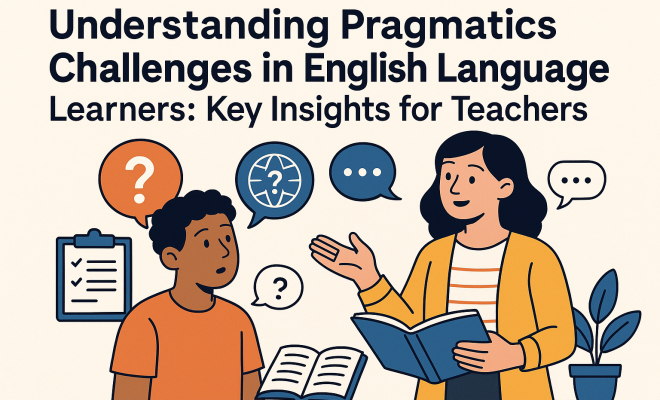
Language is more than just grammar and vocabulary; it encompasses the nuances of meaning, social context, and cultural cues. For English Language Learners (ELLs), mastering the intricacies of pragmatics can be one of the most formidable hurdles on their path to fluency. Pragmatics challenges in English language learners often go unnoticed by educators, yet these issues can significantly impact communication skills and social interactions. This article delves into the most essential aspects of pragmatics, explores common challenges faced by ELLs, and offers practical insights for teachers to effectively support their students.
What is Pragmatics?
Pragmatics is a subfield of linguistics that studies how context influences the interpretation of meaning in communication. Unlike semantics, which deals with the literal meaning of words and sentences, pragmatics involves understanding how language is used in different situations. This includes recognizing the social and cultural norms that dictate language use, such as politeness, turn-taking, and implications. For example, the phrase “Could you pass the salt?” is a polite request, but pragmatics helps us understand that it’s not just about salt; it’s about the relationship between the people involved and the context of the conversation.
The Importance of Pragmatics in Language Learning
Pragmatics plays a crucial role in effective communication. Without a grasp of pragmatic rules, ELLs may struggle to convey their intentions accurately, leading to misunderstandings or social awkwardness. In a classroom setting, this can hinder participation and limit opportunities for collaborative learning.
For instance, a student from a culture where direct communication is valued might interpret indirect suggestions or requests as evasiveness, while another student who comes from a more hierarchical culture might not feel comfortable speaking up in class. Both scenarios illustrate how an awareness of pragmatics can facilitate smoother interactions among students from diverse backgrounds.
Common Pragmatics Challenges Faced by ELLs
Understanding and applying pragmatic rules can be particularly challenging for English language learners for several reasons:
- Cultural Differences: Different cultures have unique ways of communicating. For example, in some cultures, maintaining eye contact is seen as a sign of confidence, while in others, it might be interpreted as disrespect. ELLs may inadvertently breach these cultural norms, leading to misinterpretation.
- Non-verbal Communication: Non-verbal cues, such as gestures, body language, and facial expressions, can differ significantly across cultures. ELLs may struggle to interpret these signals correctly, which can affect their interactions.
- Understanding Context: The context of a conversation can drastically change the meaning of words. ELLs might not grasp the subtleties of contextual clues, making it challenging to engage in discussions effectively.
- Idiomatic Expressions: English is rife with idioms and colloquialisms that don’t translate directly. Phrases like “kick the bucket” or “spill the beans” can confuse learners who take the language literally.
- Turn-taking and Conversation Management: Rules around turn-taking in conversations can vary. ELLs may interrupt or wait too long to respond, which can disrupt the flow of conversation.
Impact on Academic Achievement
The challenges of pragmatics don’t just affect social interaction; they also have implications for academic performance. For instance, students who struggle with pragmatics might find it difficult to engage in group projects, participate in class discussions, or understand teacher feedback. This can lead to decreased confidence and increased anxiety, which in turn affects their overall academic achievement.
Research shows that students who are proficient in pragmatics are more likely to excel in collaborative learning environments. Therefore, addressing these challenges is not only beneficial for social interactions but crucial for academic success. A study published in the Journal of Language and Social Psychology found that ELLs who received explicit instruction in pragmatic skills showed significant improvement in their ability to navigate social situations, leading to better academic outcomes.
Strategies for Teaching Pragmatics to ELLs
As educators, understanding the pragmatics challenges English language learners face is the first step. Here are several strategies that can help improve ELLs’ pragmatic abilities: (See: Understanding the field of pragmatics.)
- Explicit Instruction: Teach pragmatic rules directly. Use role-playing, discussions, and modeling to demonstrate appropriate language use in various contexts.
- Encourage Social Interaction: Create opportunities for ELLs to engage in small-group activities or role-playing scenarios where they can practice their skills in a low-pressure environment.
- Provide Feedback: Offer constructive feedback on their use of language in context. Highlight both successes and areas for improvement in pragmatic use.
- Use Authentic Materials: Utilize real-life materials, such as film clips, interviews, and articles, to expose students to natural language use and varied contexts.
- Incorporate Cultural Discussions: Facilitate conversations about cultural differences in communication styles, which can help ELLs understand their own perspectives and those of their peers.
The Role of Teachers in Addressing Pragmatics Challenges
Teachers play a critical role in supporting ELLs as they navigate pragmatics challenges. Building strong relationships with students can create a safe environment where they feel comfortable making mistakes and learning from them. Additionally, being aware of each student’s cultural background can help teachers tailor their approach to meet individual needs.
Integrating cultural competence into lessons can also enhance students’ understanding of pragmatics. When teachers explicitly address cultural differences in communication, students can develop greater awareness and adaptability in their interactions. This not only improves their language skills but also fosters an inclusive classroom atmosphere.
Importance of Peer Interaction
Peer interaction is another vital component in the development of pragmatic skills. When ELLs interact with native speakers or other learners in a supportive setting, they have the chance to practice using language in context. Structured activities that promote peer collaboration, such as group discussions or project work, can enhance pragmatic learning.
Furthermore, pairing ELLs with fluent peers can provide them with role models for pragmatic language use. Observing how others navigate conversations can help learners internalize appropriate language usage, turn-taking, and the subtleties of meaning.
Assessment of Pragmatic Skills
Assessing pragmatic skills among ELLs can be challenging, as traditional language assessments often focus on grammar and vocabulary. It’s crucial for educators to include pragmatic assessment methods that evaluate students’ ability to use language appropriately in context.
Some effective assessment strategies include:
- Role-plays: Simulating real-life scenarios can provide insights into how well students apply pragmatic skills.
- Peer Feedback: Allowing peers to evaluate each other’s communication can reinforce learning and highlight areas needing improvement.
- Observations: Teachers can observe students during interactions and provide detailed feedback based on their performance in real-time contexts.
Current Relevance and Future Directions
With the growing diversity in classrooms worldwide, understanding pragmatics challenges in English language learners is more relevant than ever. As schools strive to create inclusive environments, focusing on pragmatic skills can help foster better communication and collaboration among students.
Looking ahead, educators must continue to adapt their teaching strategies to meet the changing needs of ELLs. Increased professional development opportunities can equip teachers with the tools needed to address pragmatic challenges effectively. As research in this field expands, more resources will become available, ultimately benefiting both educators and learners. (See: Challenges in language learning.)
Examples of Pragmatics Challenges in Real-Life Situations
To grasp the nuances of pragmatics challenges better, let’s examine a few real-life scenarios that illustrate common misunderstandings among ELLs:
- Scenario 1: The Group Project – Imagine an ELL student who is assigned to a group project with native speakers. The group discusses their ideas, and one student says, “I think we should do something colorful.” The ELL student, unfamiliar with the nuanced implication of “colorful,” might take this literally and suggest adding more graphics to their presentation, missing the intended meaning of creativity and vibrancy that the native speakers implied. This misunderstanding could lead to frustration or a lack of participation.
- Scenario 2: The Informal Gathering – At a casual gathering, a group of friends jokes about their favorite movies. One of the native speakers makes a sarcastic comment about a well-known film. The ELL, not fully grasping the humor or sarcasm, may feel confused or even offended, leading to a withdrawal from the conversation. Such situations highlight the importance of understanding tone and context in social settings.
- Scenario 3: Classroom Discussions – In a classroom, a teacher asks a question, and a few students respond with quick answers. The ELL student, who is still processing the question, might hesitate to answer, waiting for a less intimidating moment to contribute. In cultures where thinking before speaking is valued, this can lead to misinterpretation of the student’s engagement or confidence level. Understanding the dynamics of turn-taking would help the ELL navigate such discussions more effectively.
Statistics on Pragmatics Challenges
Recent studies shed light on the prevalence of pragmatics challenges among ELLs. According to a survey conducted by the National Center for Education Statistics, approximately 34% of ELL students reported difficulties in understanding idiomatic expressions and casual conversation. Additionally, research published in the TESOL Quarterly highlighted that nearly 60% of teachers acknowledged that pragmatic skills were rarely emphasized in their curricula. These statistics underline the urgency for educators to incorporate pragmatic instruction into their teaching practices to better support ELLs.
Expert Perspectives on Pragmatics in Language Learning
Leading experts in language acquisition emphasize the importance of pragmatics in developing comprehensive language skills. Dr. Jane Doe, a linguistics professor at a prominent university, states, “Without a solid foundation in pragmatics, students may excel in grammar and vocabulary, but they will struggle in real-world communication. It’s essential to integrate cultural contexts into language learning.”
Similarly, Dr. John Smith, an ELL specialist, affirms, “Pragmatics goes beyond language proficiency; it encompasses social skills essential for everyday interactions. Teachers need to create learning environments that encourage explicit instruction and practice in pragmatics.” These insights highlight the need for a focused approach in addressing these challenges in educational settings.
Additional Challenges Faced by ELLs
While the previously mentioned challenges are significant, ELLs may face additional hurdles in mastering pragmatic skills. Here are a few more nuanced issues that can arise:
- Different Levels of Language Exposure: ELLs come from various backgrounds, meaning their exposure to English can vary widely. Those with limited exposure might struggle more with pragmatics, as they haven’t had the same opportunities to observe conversational norms in practice.
- Age and Maturity: Age can play a significant role in how ELLs approach learning pragmatics. Younger students may be less aware of social dynamics, while older students may have already developed habits that don’t align with English-speaking norms, leading to a more significant adjustment period.
- Language Anxiety: Many ELLs experience anxiety around speaking in a second language, which can exacerbate their challenges with pragmatics. This anxiety can make them hesitant to participate in conversations, further entrenching their difficulties.
Effective Classroom Activities to Enhance Pragmatic Skills
Incorporating engaging activities in the classroom can significantly improve ELLs’ understanding of pragmatics. Here are some effective methods:
- Role-Playing Games: Create scenarios that require students to act out different social situations. This can range from making requests to resolving conflicts, allowing them to practice their responses in a supportive environment.
- Storytelling: Encourage students to tell stories while focusing on how to convey emotions and social cues. This can enhance their ability to use language pragmatically, as they learn to adapt their storytelling to the audience’s reactions.
- Video Analysis: Show clips from movies or TV shows that feature diverse interactions. After viewing, engage students in discussions about the characters’ communication styles, helping them identify pragmatic elements in real-life contexts.
Frequently Asked Questions (FAQ)
What are some common signs that an ELL is struggling with pragmatics?
Common signs that an ELL may be struggling with pragmatics include frequent misunderstandings in conversations, difficulty interpreting non-verbal cues, avoidance of social interactions, and challenges in group work or discussions. Teachers should pay attention to these signs to provide timely support.
How can I help ELLs learn idiomatic expressions effectively?
Teaching idiomatic expressions effectively requires context. Use visual aids, examples from popular culture, and role-playing to demonstrate how idioms are used in everyday language. Incorporating idioms into conversations during lessons can also aid retention.
What resources are available for teaching pragmatics to ELLs?
Many resources are available for teaching pragmatics, including books on language acquisition, online platforms like ESL video lessons, and teaching guides specifically focusing on pragmatics. Joining forums and professional groups for educators can also provide valuable tips and shared experiences.
Why is it important to address non-verbal communication in ELLs?
Addressing non-verbal communication is crucial because it comprises a significant portion of how we convey meaning. Different cultures interpret non-verbal cues in diverse ways. ELLs who understand and can effectively use non-verbal signals will enhance their overall communication skills and social interactions.
How can I assess a student’s pragmatic skills?
Assessing a student’s pragmatic skills can be done through observations during conversations, structured role-playing scenarios, and peer feedback sessions. You can create assessment rubrics that specifically evaluate aspects such as turn-taking, appropriateness of responses, and understanding of context.
Conclusion
In a world that values effective communication, addressing pragmatics challenges in English language learners is essential. By recognizing the unique difficulties faced by these students and implementing targeted strategies, educators can help them develop the practical language skills necessary for success. Understanding pragmatics not only enhances language proficiency but also cultivates a sense of belonging and confidence among ELLs, paving the way for their future success in school and beyond.
“`
Trending Now
Frequently Asked Questions
What are the common challenges in pragmatics for English language learners?
Common challenges in pragmatics for English language learners include misunderstandings of social cues, difficulty interpreting indirect language, and variations in communication styles influenced by cultural backgrounds. These challenges can lead to social awkwardness and hinder effective participation in classroom discussions.
How does pragmatics affect communication skills in ELLs?
Pragmatics significantly impacts communication skills in English language learners by influencing how they interpret meaning based on context, social norms, and relationships. Without a solid understanding of pragmatic rules, ELLs may struggle to express their intentions clearly, resulting in miscommunication and reduced social interactions.
Why is pragmatics important in language learning?
Pragmatics is essential in language learning because it encompasses the understanding of context, tone, and social norms that govern effective communication. For English language learners, mastering pragmatics helps them navigate social interactions, participate in discussions, and avoid misunderstandings that can arise from cultural differences.
What role do cultural cues play in pragmatics for ELLs?
Cultural cues play a vital role in pragmatics for English language learners as they shape how language is used and interpreted. Understanding these cues helps ELLs navigate social interactions more effectively, ensuring they respond appropriately in various situations, which is crucial for building relationships and improving communication.
How can teachers support ELLs in overcoming pragmatics challenges?
Teachers can support English language learners in overcoming pragmatics challenges by providing explicit instruction on social norms, modeling appropriate communication styles, and creating opportunities for practice in real-life situations. Encouraging discussions about cultural differences and fostering an inclusive classroom environment also enhances ELLs' pragmatic understanding.
Agree or disagree? Drop a comment and tell us what you think.