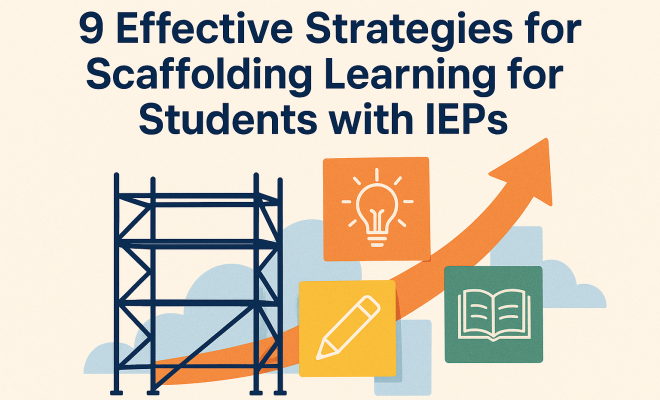
9 Effective Strategies for Scaffolding Learning for Students with IEPs
“`html
In the journey of education, scaffolding plays an essential role in supporting students with Individualized Education Programs (IEPs). These students often require tailored approaches to aid their learning and ensure they can thrive alongside their peers. Understanding how to effectively support these learners through scaffolding learning for students with IEPs is crucial for educators, parents, and support staff alike. This article explores nine impactful strategies that can be employed to scaffold learning effectively, along with practical examples to illustrate each approach.
1. Understanding Scaffolding in Education
Before diving into specific strategies, it’s important to grasp what scaffolding means in an educational context. Scaffolding is a teaching method that provides temporary support structures, allowing students to achieve higher levels of understanding and skill acquisition. The goal is for these supports to be gradually removed as students gain independence. For students with IEPs, this can mean tailored instructional strategies that cater to their unique learning needs.
By utilizing scaffolding techniques, teachers can create an environment where students feel safe to explore new concepts while being guided through the process. This approach emphasizes not only the content but also the individual learner’s process, making it particularly relevant for students with IEPs, who may face challenges in traditional learning settings.
2. Utilizing Visual Supports
Visual supports are one of the most effective scaffolding strategies for students with IEPs. These can include charts, graphs, images, and even color-coded materials that help clarify complex information. For instance, when teaching a new math concept, using visual aids like number lines or pie charts can help students grasp the idea more concretely.
Take, for example, a student struggling with fractions. A teacher might use pie charts to visually represent how fractions work, allowing the student to see the whole and the parts. This visual representation can bridge the gap between abstract concepts and tangible understanding, making it easier for the student to engage with the material.
3. Chunking Information
Chunking is another powerful strategy for scaffolding learning for students with IEPs. This involves breaking down larger pieces of information into smaller, manageable parts. Instead of overwhelming students with an entire lesson’s worth of content, a teacher can present material in bite-sized sections.
For example, if a teacher is introducing a new reading assignment, they might first focus on teaching the main themes before diving into character analysis. By doing this, students can build their understanding step by step, which is particularly beneficial for those who struggle with attention or processing information. This method not only aids comprehension but also boosts students’ confidence as they successfully tackle each chunk of material.
4. Interactive Learning Experiences
Interactive learning experiences can significantly enhance the educational journey for students with IEPs. Engaging students through hands-on activities encourages participation and cements their understanding. This could include group projects, role-playing scenarios, or using educational games that reinforce concepts in a fun and dynamic way.
For instance, in a social studies class, students could participate in a mock debate on a historical event. This interactive format allows them to apply what they’ve learned in a practical context while also building essential skills like communication and collaboration. Such experiences make learning memorable and can often lead to deeper retention of information.
5. Providing Clear Instructions
Clear and concise instructions are vital when scaffolding learning for students with IEPs. It’s essential to communicate expectations in an understandable way, as students with IEPs may struggle with processing complex language or multi-step directions. Teachers might consider simplifying their language and breaking down tasks into explicit, sequential steps.
For example, instead of saying, “Read the text and answer the questions at the end,” a teacher could say, “First, read the first paragraph. Then, look at the questions and write down your answer to the first question. We’ll do this step-by-step together.” This approach not only clarifies the tasks but also reassures students that they are not alone in the process.
6. Incorporating Technology
Technology can be an invaluable tool in scaffolding learning for students with IEPs. Various educational apps and software are designed to cater to diverse learning styles and needs. For instance, reading assistance apps can read aloud texts, helping students who struggle with reading comprehension or fluency. (See: Understanding scaffolding in education.)
Moreover, assistive technology such as speech-to-text software can support students with writing difficulties. By incorporating these tools, educators can provide personalized learning experiences that empower students and foster greater independence in their learning journeys.
7. Utilizing Peer Support
Peer support can be a powerful scaffold for students with IEPs. Pairing students with a peer buddy for collaborative tasks can enhance social skills and foster a sense of belonging. This approach not only helps with academic learning but also builds relationships among students, which is essential for a positive school experience.
For example, in a science lab, a student with an IEP might work alongside a classmate to conduct an experiment. The peer can help explain the procedures, providing additional clarification and encouragement. This collaborative effort reinforces learning while also promoting teamwork and communication skills.
8. Regular Feedback and Assessment
Frequent feedback is crucial in scaffolding learning effectively. For students with IEPs, knowing where they stand in their understanding can provide motivation and direction. Formative assessments, such as quizzes, discussions, or quick check-ins, allow teachers to gauge student comprehension and adapt instruction as needed.
Moreover, constructive feedback should be specific and actionable. Instead of saying, “Good job on your essay,” a teacher might say, “I liked how you used examples from the text to support your argument; next, try to elaborate on your conclusion to strengthen your overall point.” This kind of feedback helps students understand their strengths and areas for improvement, driving their learning forward.
9. Creating a Positive Learning Environment
A positive learning environment is essential for any student, but it’s particularly critical for those with IEPs. Creating a climate of trust and respect encourages students to take risks in their learning. Classroom routines, supportive behavior, and emotional safety play a significant role in how students engage with content.
Teachers can foster this environment by celebrating small victories, promoting a growth mindset, and being open to student feedback. For instance, acknowledging a student’s effort in participating during class discussions reinforces their confidence and encourages further engagement. When students feel valued and understood, they are more likely to invest in their learning.
10. Tailoring Instruction to Individual Needs
Scaffolding effectively requires a good understanding of each student’s individual needs. For students with IEPs, this might mean adapting lessons not just to accommodate different learning styles but to align with their specific goals set out in their IEPs. Teachers can use a variety of assessments to gather data on student progress and adjust their instructional approach accordingly.
For example, if a student has a goal related to improving reading fluency, a teacher might incorporate repeated reading strategies into their lessons, allowing the student to practice with familiar texts before moving on to new material. This tailored approach ensures that the scaffolding provided is relevant and meaningful, increasing the likelihood of success.
11. Parental Involvement in Scaffolding
Including parents in the scaffolding process can enhance the effectiveness of learning for students with IEPs. When parents are engaged and informed about the strategies being used in the classroom, they can reinforce these practices at home. Regular communication between teachers and parents ensures that everyone is on the same page regarding the student’s progress and challenges.
For instance, if a student is using a specific visual aid for learning vocabulary at school, parents can be encouraged to use similar strategies at home. This consistency helps reinforce learning and provides students with a more unified support system. Workshops or informational sessions for parents can also empower them to advocate for their child’s needs effectively.
12. Addressing Behavioral Challenges
Behavioral issues can hinder learning, particularly for students with IEPs. Scaffolding should not only focus on academic skills but also on behavioral expectations. Teachers can implement strategies to teach and reinforce positive behavior in the classroom. This might include setting clear behavioral expectations, using positive reinforcement, and providing appropriate consequences for negative behavior.
For example, a teacher might create a behavior chart that tracks positive behaviors and provides rewards when certain goals are met. This method not only helps students understand the behavioral expectations but also motivates them to make positive choices. Creating a structured environment where students know what is expected of them can significantly enhance their ability to focus on learning.
13. Using Formative Assessment Tools
Formative assessments are an essential part of scaffolding learning for students with IEPs. These assessments help teachers understand student needs in real-time and adjust their teaching strategies accordingly. Tools like exit tickets, one-on-one check-ins, and digital quizzes can provide immediate feedback on student understanding. (See: Individualized Education Programs (IEPs).)
For instance, a teacher might have students complete a quick quiz on a recent lesson. The results can then guide the teacher on whether to revisit certain topics or move forward with new material. This ongoing assessment allows for a more responsive teaching approach, ensuring that students receive the support they need when they need it.
14. Creating a Multi-Sensory Learning Experience
Multi-sensory learning engages multiple senses to help students with IEPs better understand and retain information. This can include using auditory, visual, and kinesthetic activities within the lesson. For example, a lesson on the water cycle might include reading a book about the topic, watching a video, and conducting a hands-on experiment to demonstrate evaporation and condensation.
By engaging different senses, students can form a richer understanding of the content. This method is particularly effective for students who might struggle with traditional learning formats, as it allows for more diverse ways of processing information. Classroom activities that integrate music, movement, and art can also make learning more enjoyable and impactful.
15. Fostering Independence through Gradual Release of Responsibility
The gradual release of responsibility is a powerful framework for scaffolding learning. It transitions students from teacher-led instruction to independent practice over time. This method involves four key phases: modeling, guided practice, collaborative practice, and independent work.
For example, a teacher might first model a math problem, then work through similar problems with students, gradually allowing them to tackle problems independently as their confidence grows. This structured approach helps students with IEPs build the skills and confidence they need to eventually take ownership of their learning.
16. Creating a FAQ Section
What is scaffolding in education?
Scaffolding refers to a variety of instructional techniques used to support students’ learning through gradual removal of assistance as they gain independence in their understanding and skills.
Why is scaffolding important for students with IEPs?
Students with IEPs often face unique challenges that require tailored support. Scaffolding helps bridge gaps in their understanding, allowing them to learn effectively alongside their peers.
How can teachers effectively implement scaffolding in the classroom?
Teachers can implement scaffolding by using various strategies such as visual aids, chunking information, providing clear instructions, and utilizing technology to meet the diverse needs of their students.
Can parents help with scaffolding at home?
Absolutely! Parents can reinforce scaffolding techniques by supporting their child’s learning at home, using similar strategies and maintaining regular communication with teachers to stay informed about their child’s progress.
What role does technology play in scaffolding for IEP students?
Technology can enhance scaffolding by providing tailored learning experiences through educational apps, online resources, and assistive technology that cater to different learning styles and needs.
17. Strategies for Enhancing Scaffolding Learning for Students with IEPs
To most effectively scaffold learning for students with IEPs, educators can employ a combination of strategies that reflect the diverse needs of their students. This may include differentiating instruction based on student interests, utilizing differentiated resources, and continuously assessing each student’s progress to ensure that they are receiving the support they need.
Another important strategy is to integrate students’ interests into the curriculum. For instance, if a student has a keen interest in animals, a science lesson could focus on animal habitats or ecosystems, using that interest to motivate learning. By making connections to students’ personal interests, teachers can foster greater engagement and, subsequently, better learning outcomes. (See: Supporting students with developmental delays.)
18. Collaboration Among Educators
Collaboration among educators is crucial in supporting students with IEPs. When general education teachers work alongside special education teachers, they can share insights and strategies that benefit all students in the classroom. Co-teaching models can be particularly effective, allowing teachers to address diverse learning needs in real-time.
This collaborative approach not only enhances the educational experience for students with IEPs but also fosters an inclusive environment where all students can learn from one another. For example, in a co-taught classroom, one teacher might focus on delivering the core content while the other provides additional support and resources for students who require it, thereby scaffolding the learning process effectively.
19. Incorporating Social-Emotional Learning (SEL)
Integrating social-emotional learning (SEL) into the curriculum can significantly enhance the scaffolding process for students with IEPs. SEL focuses on developing emotional intelligence and interpersonal skills, which are crucial for students’ overall success. By fostering skills such as self-awareness, self-management, social awareness, relationship skills, and responsible decision-making, educators can create a more supportive learning environment.
For instance, teachers can incorporate SEL activities that allow students to practice empathy, conflict resolution, and collaboration skills. This not only helps students with IEPs navigate their educational journey but also promotes a more inclusive classroom culture where all students feel valued and understood.
20. Understanding Learning Profiles
Each student with an IEP has a unique learning profile that outlines their strengths, weaknesses, and specific needs. Understanding these profiles is vital for effective scaffolding. Educators should take the time to review each student’s IEP, observe their learning styles, and assess their responses to different teaching methods.
For instance, a student with a visual processing disorder may benefit more from visual supports than verbal instructions. By tailoring learning experiences to align with these individual profiles, educators can provide the right level of support and challenge, promoting a more effective learning experience.
21. Using Real-World Connections
Making real-world connections is another effective strategy for scaffolding learning. When students can relate academic content to their own lives, they are more likely to engage with the material. For students with IEPs, this can mean connecting lessons to community resources, local events, or personal experiences.
For example, if a student is learning about money management, a field trip to a local bank could help them understand the practical applications of the lesson. By weaving in these connections, educators can create meaningful learning experiences that resonate with students and enhance their understanding of the subject matter.
22. Final Thoughts
Scaffolding learning for students with IEPs requires thoughtful consideration and a tailored approach. By implementing these strategies, educators can create supportive, effective learning experiences that accommodate individual needs while promoting overall educational growth. As we continue to strive for inclusivity in the classroom, understanding and applying these scaffolding techniques will play a vital role in ensuring that all students have the opportunity to succeed.
“`
Trending Now
- our breakdown of educators & linkedin: there is a place for you
- read the full story
- this guide on unlocking social skills: how role-play transforms social pragmatics in middle school
- our breakdown of empowering young minds: 9 ways to enhance pragmatic language development in preschool
- Decoding Language: How Pragmatics, Semantics, and…
Frequently Asked Questions
What is scaffolding in education?
Scaffolding in education refers to a teaching method that provides temporary support structures to help students achieve higher levels of understanding and skill acquisition. This approach is particularly beneficial for students with IEPs, as it allows tailored instructional strategies that cater to their unique learning needs.
How can visual supports help students with IEPs?
Visual supports, such as charts, graphs, and images, are effective for students with IEPs as they clarify complex information. For example, using pie charts to represent fractions can help these students grasp concepts more concretely and facilitate their understanding.
What are some effective strategies for scaffolding learning?
Effective scaffolding strategies include utilizing visual supports, breaking tasks into smaller steps, providing guided practice, offering feedback, and encouraging collaboration. These methods help create an inclusive learning environment tailored to the needs of students with IEPs.
Why is scaffolding important for students with IEPs?
Scaffolding is crucial for students with IEPs because it provides the necessary support to help them navigate challenges in traditional learning settings. This method fosters independence and allows these learners to explore new concepts more confidently.
How can teachers implement scaffolding techniques in the classroom?
Teachers can implement scaffolding techniques by assessing individual student needs, providing visual aids, breaking down assignments, offering ongoing feedback, and gradually removing supports as students gain skills and confidence, ensuring a supportive learning environment.
What did we miss? Let us know in the comments and join the conversation.