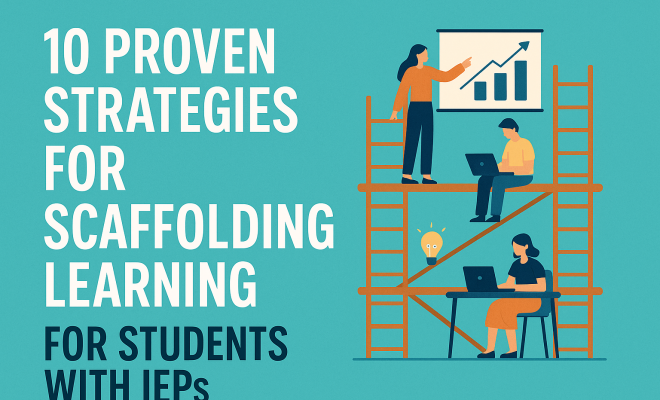
10 Proven Strategies for Scaffolding Learning for Students with IEPs
“`html
When it comes to education, ensuring that every student gets the support they need is critical. For students with Individualized Education Programs (IEPs), scaffolding learning is an essential practice that helps to provide that necessary support. Scaffolding learning for students with IEPs involves breaking down lessons into manageable parts, providing the right amount of support, and gradually removing that support as students gain confidence and skills. In this article, we’ll explore ten practical strategies that educators can implement to effectively scaffold learning for students with IEPs.
1. Understand Each Student’s Unique Needs
Before you can effectively scaffold any lesson, it’s crucial to understand the specific needs of each student with an IEP. This understanding starts with thoroughly reviewing the IEP itself, which outlines the student’s strengths, challenges, and accommodations. These documents often contain key insights into how a student learns best and what support they require.
Engaging directly with the student can also provide valuable information. Ask them about their preferred learning methods, what they find challenging, and how they feel about different subjects. This dual approach—reviewing the IEP and talking with the student—will give you a well-rounded view of how to scaffold their learning effectively.
2. Break Tasks into Smaller Steps
One effective strategy for scaffolding learning is to break tasks into smaller, more manageable steps. For students with IEPs, large assignments or complex concepts can feel overwhelming. By dividing these tasks into smaller parts, students can focus on one thing at a time, making it easier to understand and complete.
For example, if a student is working on a writing assignment, you might begin by helping them develop an outline. Once they have a clear structure, you can guide them through composing each section of the paper. This step-by-step approach allows for targeted support and gives students a sense of accomplishment as they complete each phase of the task.
3. Use Visual Aids and Graphic Organizers
Visual aids and graphic organizers are invaluable tools when it comes to scaffolding learning for students with IEPs. They help to clarify complex information and provide a visual representation that can simplify learning. For instance, a Venn diagram can help students compare and contrast different concepts, while flow charts can illustrate processes or sequences of events.
By integrating these visual tools into your lessons, you enhance comprehension and retention. Consider providing students with blank graphic organizers before beginning a new topic, allowing them to fill in the details as they learn. This interactive approach can also encourage active participation and engagement.
4. Incorporate Multisensory Learning
Multisensory learning is another effective way to scaffold lessons for students with IEPs. This approach involves engaging multiple senses in the learning process, which can enhance understanding and retention. For example, if teaching about the water cycle, you might include visual representations, hands-on experiments, and auditory components like songs or stories related to the topic.
By incorporating different modalities, you cater to varied learning styles, making lessons more accessible. It also keeps students engaged, as they can switch between different types of activities that cater to their strengths. This multisensory approach not only aids comprehension but also makes learning more enjoyable.
5. Provide Clear Instructions and Expectations
Clarity in instructions is paramount when scaffolding learning for students with IEPs. Ambiguity can lead to confusion and frustration, which can inhibit learning. Therefore, it’s essential to provide clear, concise directions for every task. Consider using simple language and breaking instructions into bullet points or numbered lists.
Additionally, reiterating the expectations for each assignment can help students understand what is required of them. Visual checkpoints or rubrics can also be beneficial, allowing students to reference what success looks like throughout the task. This structured approach helps to eliminate uncertainty and empowers students to take initiative in their learning.
6. Foster a Supportive Learning Environment
A supportive learning environment is vital for scaffolding learning effectively. For students with IEPs, feeling safe and supported can greatly influence their willingness to engage and take risks in learning. Encourage an atmosphere where mistakes are viewed as a natural part of the learning process. Celebrate effort, not just success, and remind students that everyone learns at their own pace. (See: Education and health resources.)
Additionally, pairing students for collaborative learning can build a sense of community and provide social support. When students work together, they can share strategies, troubleshoot challenges, and celebrate their successes together. This not only enhances their learning experience but also fosters important social skills.
7. Utilize Technology Wisely
Technology can be a powerful ally in scaffolding learning for students with IEPs. Assistive technologies, such as speech-to-text software, audio books, or interactive learning programs, can provide tailored support that meets individual learning needs. For instance, a student struggling with reading can benefit from text-to-speech tools that read materials aloud, allowing them to focus on comprehension rather than decoding.
Moreover, leveraging online resources such as educational games and videos can offer additional opportunities for practice and reinforcement. However, it’s essential to choose technology tools that align with the learning goals and needs of each student. Regularly assess the effectiveness of these tools and make adjustments as necessary to ensure they are facilitating rather than hindering learning.
8. Encourage Goal Setting and Self-Advocacy
Teaching students with IEPs to set goals can be a transformative aspect of their learning. Goal setting helps students take ownership of their educational journey and understand the steps needed to achieve their desired outcomes. Start by working with students to set SMART (Specific, Measurable, Achievable, Relevant, Time-bound) goals that are tailored to their individual needs.
In addition to goal setting, it’s crucial to foster self-advocacy skills. Encourage students to express their needs and preferences, whether it’s asking for help or seeking clarification on a task. By developing these skills, students become more independent learners who can navigate their education with confidence.
9. Monitor Progress and Adjust Strategies
Scaffolding is not a one-size-fits-all approach; it requires ongoing assessment and adjustment. Regularly monitor each student’s progress and evaluate the effectiveness of the scaffolding strategies you’ve implemented. Are they making adequate progress toward their IEP goals? Are they able to complete tasks with increasing independence?
Based on these observations, be prepared to modify your strategies as needed. If a particular approach isn’t resonating with a student, explore alternatives that might work better. Flexibility is key in scaffolding learning, as it allows you to respond to students’ changing needs and challenges.
10. Engage Families in the Scaffolding Process
Finally, engaging families in the scaffolding process can significantly enhance the learning experience for students with IEPs. Communication between educators and families is essential to create a cohesive support system. Encourage parents to share insights about their child’s learning preferences and challenges, and provide them with resources to support learning at home.
Regular updates on student progress can foster a collaborative approach that acknowledges the role of families in their child’s education. Whether through newsletters, phone calls, or parent-teacher conferences, keeping families informed empowers them to actively participate in their child’s learning journey, further reinforcing the scaffolding that occurs in the classroom.
11. The Role of Peer Support in Scaffolding
Peer support can play a pivotal role in scaffolding learning for students with IEPs. When students collaborate with peers, they often feel more comfortable asking questions and sharing challenges. Implementing structured peer tutoring or buddy systems can create an environment where students learn from one another. This not only helps to reinforce the material but also builds social connections that can enhance motivation and engagement.
For instance, pairing a student who excels in a subject with a peer who is struggling can be beneficial. The stronger student can explain concepts in relatable terms, while the struggling student can gain confidence through support from someone they see as an equal. This reciprocal learning process fosters a community atmosphere and encourages cooperative learning.
12. Incorporate Real-World Applications
Another effective strategy for scaffolding is to connect learning to real-world situations. When students can see the relevance of what they’re learning, it boosts their motivation and engagement. For students with IEPs, linking lessons to practical applications can make the concepts more understandable and relatable.
For example, when teaching math, you could incorporate real-life scenarios such as budgeting for a class event or planning a trip. This not only makes math more engaging but also demonstrates how these skills will be useful in their everyday lives. By providing context, students with IEPs can better grasp abstract concepts and see the value of their learning.
13. Effective Use of Assessment
Assessments are a fundamental part of the educational process, especially for students with IEPs. However, it’s crucial to ensure that these assessments are designed thoughtfully and provide meaningful data. Using formative assessments throughout the learning process allows educators to gauge student understanding and adjust strategies accordingly. Consider using quizzes, exit tickets, or informal observations to gather data on student progress. (See: Health and academic success.)
Additionally, presenting assessments in different formats can help accommodate diverse learning needs. For example, some students may perform better on oral assessments or projects rather than traditional tests. Tailoring assessments to fit the strengths of students with IEPs can lead to more accurate reflections of their knowledge and skills.
14. Creating a Safe Space for Mistakes
When scaffolding learning for students with IEPs, it’s essential to create a climate where mistakes are accepted as a natural part of the learning process. Encouraging risk-taking and experimentation can help students feel more confident. Remind your students that failure is not the end; it’s an opportunity for growth and learning.
One way to cultivate this environment is to celebrate attempts and efforts, even if they don’t lead to the desired outcome. Share stories of famous individuals who faced setbacks and overcame them, showing students that perseverance is key. By framing mistakes positively, you help students build resilience and a growth mindset, which are crucial for their academic journey.
15. Strengthening Executive Function Skills
Many students with IEPs struggle with executive function skills, which include planning, organization, and time management. Scaffolding learning to strengthen these skills can drastically improve their academic performance. Teachers can implement strategies such as teaching students how to use planners, checklists, and timers to structure their work and manage their time effectively.
Setting aside time for students to practice these skills during class can be beneficial. For example, you could have students create a weekly schedule to map out their assignments and responsibilities. This practice not only helps them stay organized but also reinforces their sense of autonomy and responsibility over their learning.
16. Incorporating Feedback Loops
Feedback is a critical component of learning, particularly for students with IEPs. Establishing feedback loops allows students to understand their progress and areas needing improvement. Regular, constructive feedback can guide students in modifying their approaches and improving their performance.
Consider implementing peer feedback sessions or self-assessments to encourage reflection. Teaching students how to give and receive feedback fosters a culture of growth and collaboration. Regular check-ins and one-on-one conferences can also enhance this process, providing targeted support that meets each student’s individual needs.
17. Frequently Asked Questions (FAQ)
What is scaffolding learning for students with IEPs?
Scaffolding learning for students with IEPs is the practice of breaking down lessons into manageable parts, providing appropriate support, and gradually removing that support as students gain confidence and skills. This approach helps make learning more accessible and ensures that students can master concepts at their own pace.
How can I assess the needs of students with IEPs?
To assess the needs of students with IEPs, review their IEP documents, engage in conversations with them about their learning preferences, and observe their interactions in classroom activities. Regular check-ins and assessments can also provide insight into their progress and challenges.
What types of visual aids can I use?
Common visual aids include graphic organizers like mind maps and Venn diagrams, charts, timelines, and images related to the content being taught. These aids help clarify information and reinforce learning through visual representation.
How can technology support scaffolding for students with IEPs?
Technology supports scaffolding by offering tools like speech-to-text software, text-to-speech applications, and interactive learning platforms that cater to various learning styles. These technologies can make learning more engaging and personalized, allowing students to progress at their own pace. (See: Understanding Individualized Education Programs.)
Why is family engagement important in scaffolding?
Family engagement is crucial as it creates a supportive learning environment that extends beyond the classroom. Involving families helps reinforce the strategies used in school and allows for a collaborative approach to addressing the learning needs of students with IEPs.
What are the best practices for setting goals with students with IEPs?
Best practices for setting goals include using the SMART criteria to ensure they are specific, measurable, achievable, relevant, and time-bound. Involve students in the goal-setting process to promote ownership and accountability for their learning.
18. Understanding the Importance of Scaffolding Across Different Subjects
While scaffolding is generally applicable across all subjects, its importance can vary depending on the area of study. For instance, in subjects like mathematics, where concepts build upon one another, scaffolding is critical to ensure foundational skills are solidified before advancing. A student who struggles with basic operations may find higher-level problem-solving nearly impossible without proper support.
In language arts, scaffolding might involve breaking down reading passages and discussing vocabulary and context before analyzing themes and characters. This gradual increase in complexity allows students to engage with the material without feeling overwhelmed. For science and social studies, hands-on experiments and real-life scenarios can be scaffolded to enhance understanding, making abstract concepts more tangible. Tailoring scaffolding strategies to the subject matter ensures that students receive the most effective support suited to their learning needs.
19. Using Case Studies to Illustrate Scaffolding Success
Case studies can provide concrete examples of successful scaffolding practices. For instance, a teacher in a middle school implemented a project-based learning unit on ecosystems. She first introduced the concept through a series of engaging visuals and videos. Then, students created graphic organizers to map out what they had learned, breaking down the complex interactions within ecosystems.
As the project progressed, the teacher provided individualized feedback, adapting her approach based on students’ responses. Some students thrived with additional hands-on activities, while others preferred more structured worksheets. By the end of the unit, students presented their projects, showcasing not just their learning but also their growth in confidence and skill. This case study highlights how scaffolding can lead to deeper understanding and success when tailored to individual student needs.
20. Adapting Scaffolding for Diverse Learning Environments
Scaffolding strategies can also be adapted to suit different learning environments, whether it’s in a traditional classroom, a virtual setup, or a hybrid model. In virtual classrooms, for instance, educators can utilize breakout rooms for small group discussions, allowing students to collaborate and support each other. Digital platforms often provide tools like annotation and interactive quizzes that can enhance engagement and facilitate scaffolding in real-time.
For hybrid models, teachers can blend face-to-face and online resources. Providing students with take-home kits for hands-on learning while also incorporating online discussions can create a balanced approach that meets various learning styles. The key is to remain flexible and responsive to the unique dynamics of each environment to ensure that all students, particularly those with IEPs, receive the support they need to thrive.
Effective scaffolding learning for students with IEPs is an ongoing process that requires creativity, patience, and adaptability. By implementing these strategies, educators can build a robust framework that supports diverse learners, promotes independence, and fosters a love for learning. Remember, the goal is to empower students with the skills and confidence they need to succeed. By investing time and effort into scaffolding, you are helping to create an inclusive environment where every student can thrive.
“`
Trending Now
Frequently Asked Questions
What are effective strategies for scaffolding learning?
Effective strategies for scaffolding learning include understanding each student's unique needs, breaking tasks into smaller steps, providing targeted support, and gradually removing that support as students gain confidence. These methods help students with IEPs manage their learning more effectively and build their skills progressively.
How can I support students with IEPs in the classroom?
To support students with IEPs, educators should review the IEPs to understand each student's strengths and challenges, engage directly with students to learn about their preferences, and implement scaffolding techniques such as breaking tasks into manageable parts and offering appropriate supports.
Why is scaffolding important for students with IEPs?
Scaffolding is crucial for students with IEPs as it provides structured support tailored to their individual learning needs. It helps them grasp complex concepts by breaking down lessons into smaller, manageable steps, thereby reducing feelings of overwhelm and promoting confidence in their abilities.
What does it mean to scaffold learning?
Scaffolding learning refers to the educational approach of breaking down lessons into smaller, manageable parts and providing support that is gradually removed as students become more proficient. This method helps students build confidence and develop skills at their own pace.
How can I understand the needs of students with IEPs?
Understanding the needs of students with IEPs involves reviewing their Individualized Education Programs to identify strengths and challenges, as well as engaging directly with the students to discuss their preferred learning methods and any difficulties they face in the classroom.
What did we miss? Let us know in the comments and join the conversation.