The Edvocate

Top Menu

Main Menu

  • Start Here
    • Our Brands
    • Governance
      • Lynch Education Consulting, LLC.
      • Dr. Lynch’s Personal Website
      • Careers
    • Write For Us
    • Books
    • The Tech Edvocate Product Guide
    • Contact Us
    • The Edvocate Podcast
    • Edupedia
    • Pedagogue
    • Terms and Conditions
    • Privacy Policy
  • PreK-12
    • Assessment
    • Assistive Technology
    • Best PreK-12 Schools in America
    • Child Development
    • Classroom Management
    • Early Childhood
    • EdTech & Innovation
    • Education Leadership
    • Equity
    • First Year Teachers
    • Gifted and Talented Education
    • Special Education
    • Parental Involvement
    • Policy & Reform
    • Teachers
  • Higher Ed
    • Best Colleges and Universities
    • Best College and University Programs
    • HBCU’s
    • Diversity
    • Higher Education EdTech
    • Higher Education
    • International Education
  • Advertise
  • The Tech Edvocate Awards
    • The Awards Process
    • Finalists and Winners of The 2025 Tech Edvocate Awards
    • Finalists and Winners of The 2024 Tech Edvocate Awards
    • Finalists and Winners of The 2023 Tech Edvocate Awards
    • Finalists and Winners of The 2021 Tech Edvocate Awards
    • Finalists and Winners of The 2022 Tech Edvocate Awards
    • Finalists and Winners of The 2020 Tech Edvocate Awards
    • Finalists and Winners of The 2019 Tech Edvocate Awards
    • Finalists and Winners of The 2018 Tech Edvocate Awards
    • Finalists and Winners of The 2017 Tech Edvocate Awards
    • Award Seals
  • Apps
    • GPA Calculator for College
    • GPA Calculator for High School
    • Cumulative GPA Calculator
    • Grade Calculator
    • Weighted Grade Calculator
    • Final Grade Calculator
  • The Tech Edvocate
  • Post a Job
  • AI Powered Personal Tutor

logo

The Edvocate

  • Start Here
    • Our Brands
    • Governance
      • Lynch Education Consulting, LLC.
      • Dr. Lynch’s Personal Website
        • My Speaking Page
      • Careers
    • Write For Us
    • Books
    • The Tech Edvocate Product Guide
    • Contact Us
    • The Edvocate Podcast
    • Edupedia
    • Pedagogue
    • Terms and Conditions
    • Privacy Policy
  • PreK-12
    • Assessment
    • Assistive Technology
    • Best PreK-12 Schools in America
    • Child Development
    • Classroom Management
    • Early Childhood
    • EdTech & Innovation
    • Education Leadership
    • Equity
    • First Year Teachers
    • Gifted and Talented Education
    • Special Education
    • Parental Involvement
    • Policy & Reform
    • Teachers
  • Higher Ed
    • Best Colleges and Universities
    • Best College and University Programs
    • HBCU’s
    • Diversity
    • Higher Education EdTech
    • Higher Education
    • International Education
  • Advertise
  • The Tech Edvocate Awards
    • The Awards Process
    • Finalists and Winners of The 2025 Tech Edvocate Awards
    • Finalists and Winners of The 2024 Tech Edvocate Awards
    • Finalists and Winners of The 2023 Tech Edvocate Awards
    • Finalists and Winners of The 2021 Tech Edvocate Awards
    • Finalists and Winners of The 2022 Tech Edvocate Awards
    • Finalists and Winners of The 2020 Tech Edvocate Awards
    • Finalists and Winners of The 2019 Tech Edvocate Awards
    • Finalists and Winners of The 2018 Tech Edvocate Awards
    • Finalists and Winners of The 2017 Tech Edvocate Awards
    • Award Seals
  • Apps
    • GPA Calculator for College
    • GPA Calculator for High School
    • Cumulative GPA Calculator
    • Grade Calculator
    • Weighted Grade Calculator
    • Final Grade Calculator
  • The Tech Edvocate
  • Post a Job
  • AI Powered Personal Tutor
  • We Need an Attitude Adjustment: Looking at Adolescence in a Different Light

  • New Teacher Tip: Be a Superstar Teacher from Day One

  • New Teacher Tip: Avoid Procrastination

  • New Science of Leadership: It Only Takes 3 Things to Succeed

  • Never Too Small to Play: Designing Inclusive, Sensory-Rich Playgrounds for Children Birth to 5!

  • Nervous System Facts for Kids

  • Neptune Fun Facts for Kids

  • Neil Armstrong Facts For Kids

  • Navigating Your First Teaching Job: Tips and Advice for Success

  • Navigating Parent-Teacher Communication

The Tech Edvocate
Home›The Tech Edvocate›Why Makerspaces Are the Key to Innovation

Why Makerspaces Are the Key to Innovation
By Matthew Lynch
February 4, 2017
0
Spread the love

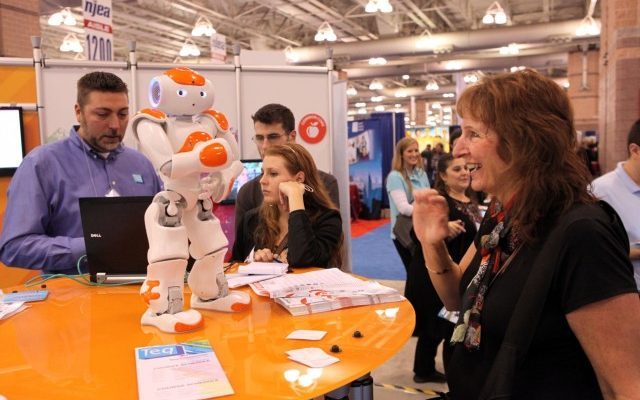
Makerspaces are creative spaces located in communities, schools, and public and academic libraries. These areas are designed to engage participants in hands-on activities that teach twenty-first-century skills. The emphasis in makerspaces is placed upon educating students in STEAM (science, technology, engineering, and mathematics) subjects as well as digital and information literacy.

According to Kylie Peppler and Sophia Bender in their article, Maker movement spreads innovation one project at a time, the focus of makerspaces is hands-on learning, “A hallmark of the maker movement is its do-it-yourself (or do-it-with-others) mindset that brings together individuals around a range of activities, including textile craft, robotics, cooking, wood-crafts, electronics, digital fabrication, mechanical repair, or creation — in short, making nearly anything.” This focus on hands-on creative learning is one of the reasons why makerspaces are seen by educators as being a key to innovation and an ideal method for equipping students to succeed in the future.

In today’s society, the future of the United States and its students is tied closely to STEAM subjects and innovation. The status of the present economy demands advancement in the fields of science and technology, both for the growth of the country and for student success. In order to be successful in this global economy, U.S. students need to catch up with other industrialized nations. The 2015 Programme for International Student Assessment (PISA) report from the Organization for Economic Cooperation and Development (OECD) states that American students are behind many other nations in science, math, and reading.

The U.S. ranks 25th in science and is below the PISA mean score in math, with this score showing a negative trend from the last PISA report in 2012. In reading, the U.S. is only four points above the mean and ranks below many European and Asian countries. Educators will need to take these results into consideration as they look for new ways to engage students and teach STEAM subjects. One of the tools that educators can employ to help bridge this disparity in math and science is the use of makerspaces and hands-on learning techniques. These methods have shown promise for moving students from being typical consumers and brought them towards creative innovation.

In addition to the focus on STEAM subjects, the recent changes in the economy and job market have impacted education. According to a recent Pew research Study, the education and training needs of today’s employees have changed drastically in the last ten years, and many positions require constant learning and adapting to new technologies and methodologies. In this study, The State of American Jobs, researchers found that computer/technology, soft skills, and communication/writing skills were ranked as being integral to success in the job market, with 85% of respondents reporting that these skills were either extremely or vital to success in the market.

The study also compared the skills needed today to those from 1980 and found that overall there has been a 68% increase in the amount of education and training necessary to succeed in the workforce. With the market’s increased demand for talented workers who are skilled in technology and communication, the opportunities that makerspaces generate for learning many of these skills are more important than ever before.

While educators have been working towards new teaching methodologies for STEAM subjects, the impact has not yet been realized in the test scores of U.S. students. The recent findings from the PISA report, in combination with the overall economy and job market, have made it quite clear that the U.S. still has much to do to prepare students to be successful in the market. One of the keys to bridging the gap in student knowledge of STEAM subjects is hands-on and creative learning.

Makerspaces can help address this problem with their focus on creation and social interaction. In Makerspaces students are given opportunities to work with technology, bring ideas to life, interact with peers and educators in new ways, and learn to problem solve, as well as, providing an environment in which they can make mistakes and learn from them. With all of the opportunities for learning that they offer, makerspaces may hold the key to unlocking the potential for innovation in our students and our economy.

For you visual learners, here is an great video that discusses how to develop a thriving makerspace.

TagsEdtechedtechchatelearningSTEAMSTEM
Previous Article

Diversity in Higher Education: What MLK Would ...

Next Article

Disengaged Students, Part 7: Too Much Information ...

Matthew Lynch

Related articles More from author

  • EdTech & InnovationEducation NewsTeachers

    The Key to STEM Achievement: Answering the Question

    November 29, 2016
    By Matthew Lynch
  • Digital & Mobile TechnologyEarly Childhood & K-12 EdTechTrending TopicsUncategorized

    10 ed-tech resources for school administrators

    September 15, 2017
    By Matthew Lynch
  • Higher Education

    Ready to Study Abroad?: The Top European Universities in 2018

    November 13, 2017
    By Matthew Lynch
  • Early Childhood & K-12 EdTechEdTech Startups & BusinessesHigher Education EdTech

    How to Pilot Your Edtech Product

    January 27, 2018
    By Matthew Lynch
  • EdTech & Innovation

    Reframing the Debate About Screen Time

    March 29, 2017
    By Matthew Lynch
  • Early Childhood & K-12 EdTechEdTech & InnovationTrending Topics

    What Are the Benefits of Using Virtual Reality in K-12 Schools?

    May 18, 2017
    By Matthew Lynch

Search

Registration and Login

  • Register
  • Log in
  • Entries feed
  • Comments feed
  • WordPress.org

Newsletter

Signup for The Edvocate Newsletter and have the latest in P-20 education news and opinion delivered to your email address!

RSS Matthew on Education Week

  • Au Revoir from Education Futures November 20, 2018 Matthew Lynch
  • 6 Steps to Data-Driven Literacy Instruction October 17, 2018 Matthew Lynch
  • Four Keys to a Modern IT Approach in K-12 Schools October 2, 2018 Matthew Lynch
  • What's the Difference Between Burnout and Demoralization, and What Can Teachers Do About It? September 27, 2018 Matthew Lynch
  • Revisiting Using Edtech for Bullying and Suicide Prevention September 10, 2018 Matthew Lynch

About Us

The Edvocate was created in 2014 to argue for shifts in education policy and organization in order to enhance the quality of education and the opportunities for learning afforded to P-20 students in America. What we envisage may not be the most straightforward or the most conventional ideas. We call for a relatively radical and certainly quite comprehensive reorganization of America’s P-20 system.

That reorganization, though, and the underlying effort, will have much to do with reviving the American education system, and reviving a national love of learning.  The Edvocate plans to be one of key architects of this revival, as it continues to advocate for education reform, equity, and innovation.

Newsletter

Signup for The Edvocate Newsletter and have the latest in P-20 education news and opinion delivered to your email address!

Contact

The Edvocate
910 Goddin Street
Richmond, VA 23230
(601) 630-5238
[email protected]
  • situs togel online
  • dentoto
  • situs toto 4d
  • situs toto slot
  • toto slot 4d
Copyright (c) 2025 Matthew Lynch. All rights reserved.