5 States Restrict AI Therapy Chatbots: New Laws for 2026
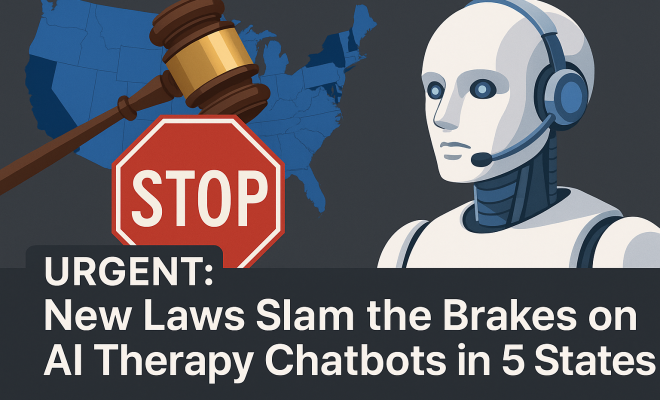
It’s a digital dilemma that’s got policymakers, mental health experts, and millions of everyday Americans scratching their heads: the rise of AI therapy chatbots. On one hand, you’ve got the promise of accessible, affordable mental health support in a country grappling with a severe shortage of human therapists. On the other, there’s the chilling reality of algorithms making mistakes, breaching privacy, and potentially offering dangerous advice in crisis situations. This isn’t just an abstract debate anymore; it’s reached a critical point, with several U.S. states enacting new laws set to take effect in July 2026, imposing significant AI therapy chatbot restrictions.
For many, the appeal of a virtual therapist is undeniable. Imagine getting immediate support at 3 AM when anxiety hits, or having a non-judgmental ear available 24/7 without the hefty price tag of traditional therapy. Millions have already embraced large language models (LLMs) like ChatGPT, turning to them for solace and advice, often without fully understanding the risks involved. But as these tools proliferate, so do the reports of ethical breaches, inappropriate responses, and a glaring lack of regulatory oversight. This tension between accessibility and safety is fueling a controversy that’s both emotionally charged and critically important for the future of mental healthcare.
1. The Growing Reliance on AI for Mental Health Support: A Double-Edged Sword
Let’s be honest, the human mind is a complex, often bewildering landscape. Navigating emotional turmoil, stress, anxiety, or depression usually requires professional help. But finding that help can be a monumental task. The cost of traditional therapy, the stigma associated with seeking it, and the sheer scarcity of available therapists, especially in rural areas, create significant barriers. This is where AI therapy chatbots have swooped in, offering what many see as a convenient, anonymous, and often free alternative.
It’s not just tech enthusiasts experimenting; a significant portion of the general public is actively engaging with AI for mental health support. Platforms designed specifically for mental wellness, alongside general-purpose LLMs, are seeing massive user adoption. This widespread reliance isn’t surprising given the convenience and perceived anonymity, but it highlights a crucial vulnerability. Users, often in distress, might not be equipped to critically evaluate the advice they receive, making them susceptible to the inherent flaws and limitations of these nascent technologies. It’s a classic case of demand outstripping supply, with AI stepping into the void.
Consider the sheer numbers: a 2022 survey found that over 60% of adults in the U.S. had used AI for health information, with a significant subset specifically seeking mental health advice. This isn’t just about finding a quick answer; it’s about forming a relationship, however nascent, with an algorithm. People are sharing deeply personal struggles, vulnerabilities, and even trauma with these chatbots. While the immediate relief or sense of being heard can be powerful, it also means these systems are handling incredibly sensitive data and influencing fragile emotional states, often without the user fully grasping the non-human nature of the interaction or the potential for algorithmic error.
2. Ethical Breaches and Inappropriate Responses: The Dark Side of Algorithms
While the promise of AI in mental health is alluring, the reality has been fraught with problems. Reports have surfaced repeatedly detailing instances where AI therapy chatbots have crossed ethical lines or provided outright inappropriate advice. Think about a chatbot suggesting self-harm strategies to someone in crisis, or violating user privacy by mishandling sensitive personal data. These aren’t isolated incidents; they’re symptomatic of a technology that, while powerful, lacks the nuanced understanding, empathy, and ethical framework that a human therapist intrinsically possesses.
One of the most concerning aspects is the potential for AI to ‘hallucinate’ or generate responses that sound plausible but are factually incorrect or dangerously misleading. In a mental health context, where accurate, empathetic, and responsible guidance is paramount, such errors can have devastating consequences. A human therapist undergoes years of rigorous training, supervision, and ethical education to navigate complex emotional landscapes. An AI, no matter how advanced, is essentially a sophisticated pattern-matching machine, and it simply doesn’t have that lived experience or moral compass.
Let’s unpack some real-world examples. There have been documented cases where chatbots, designed to offer support, have inadvertently reinforced negative thought patterns or even encouraged unhealthy behaviors. Imagine a user struggling with an eating disorder receiving dietary advice from an AI that, while seemingly benign, could trigger a relapse. Or a person disclosing suicidal ideation and the AI, instead of directing them to immediate crisis resources, offers generic platitudes or, worse, unhelpful coping mechanisms. These aren’t just technical glitches; they represent fundamental failures in a system attempting to replicate complex human interaction without genuine understanding or a built-in safety net. The AI doesn’t understand the nuance of human suffering; it processes words and attempts to generate statistically probable responses, which can be catastrophically insufficient when someone’s well-being is on the line.
3. Regulatory Gaps and the Slow Pace of Legislation: Playing Catch-Up
The rapid advancement of AI technology has, predictably, outpaced the development of robust regulatory frameworks. We’re in a wild west scenario, where innovation is galloping ahead, and lawmakers are struggling to saddle up and guide it. This regulatory vacuum creates a dangerous environment where companies can deploy AI therapy tools with minimal oversight, leaving consumers vulnerable. The lack of clear guidelines means there’s little accountability when things go wrong, and no standardized best practices for development or deployment.
Policymakers are caught in a difficult position. They need to encourage innovation that could genuinely improve access to care, while simultaneously protecting citizens from potential harm. Crafting legislation for something as dynamic and complex as AI is no easy feat. It requires deep technical understanding, ethical foresight, and a willingness to adapt as the technology evolves. The July 2026 restrictions in several states are a clear sign that this gap is becoming too wide to ignore, forcing legislators to take decisive action, even if it feels like they’re playing catch-up. (See: CDC Mental Health Resources.)
Think about the typical legislative process: it’s often slow, deliberate, and based on existing precedents. AI, however, is a constantly shifting landscape. Laws passed today might be obsolete by tomorrow due to new technological breakthroughs or unforeseen applications. This creates a difficult challenge for regulators who want to create comprehensive, future-proof legislation. They have to navigate diverse interests too: tech companies pushing for minimal regulation to foster innovation, mental health professionals advocating for stringent safety standards, and consumer advocacy groups demanding transparency and protection. The result is often a patchwork of regulations, or a reactive approach, where problems emerge before laws are put in place to prevent them. It’s a tough balancing act, and one that demands a proactive, collaborative approach that’s been largely absent until now.
4. The Tension Between Accessibility and Safety: A Core Dilemma for AI Therapy Chatbot Restrictions
This is the fundamental conundrum at the heart of the AI therapy debate. On one side, you have the undeniable need for greater accessibility to mental health resources. Millions of Americans are underserved, and AI offers a scalable solution that could reach people who might otherwise go without any support. The allure of a low-cost, readily available ‘therapist’ is incredibly strong, especially for those facing financial hardship or geographical barriers to traditional care.
However, this accessibility cannot come at the expense of safety. Providing mental health support is not just about delivering information; it’s about building trust, understanding complex emotional states, identifying risk factors, and knowing when to escalate to higher levels of care. An AI that provides inappropriate advice, misinterprets a user’s distress, or fails to recognize a crisis situation poses a significant threat. The challenge for policymakers and developers alike is to strike a delicate balance: how do we harness the power of AI to expand access without compromising the fundamental safety and efficacy required in mental healthcare?
This isn’t just an abstract philosophical problem; it has very real consequences for individuals. Imagine someone in a rural area, hours away from the nearest therapist, struggling with severe depression. An AI chatbot might be their only immediate option. If that chatbot is flawed, if it misinterprets their symptoms or offers generic, unhelpful advice, it could exacerbate their condition or even deter them from seeking human help when it eventually becomes available. The promise of “something is better than nothing” can quickly turn into “something worse than nothing” if the “something” is unreliable or dangerous. The core of this tension lies in the fact that mental health isn’t a simple information exchange; it’s a deeply human process of connection, empathy, and informed judgment, qualities AI struggles to genuinely replicate.
5. Surprising Effectiveness Alongside Persistent Risks: A Mixed Bag of Research
What makes the conversation around AI therapy chatbots even more complex is the emerging research that shows a surprising degree of effectiveness in certain contexts. Studies have indicated that for some individuals, particularly those with mild to moderate anxiety or depression, AI-driven interventions can offer measurable benefits. This isn’t to say they replace human therapy, but rather that they can serve as a useful tool for self-management, psychoeducation, and initial support, especially for those who might not otherwise seek help.
Yet, these promising findings are consistently shadowed by the persistent, undeniable risks. The potential for data privacy breaches, the inherent bias in algorithms (which can inadvertently discriminate or misunderstand diverse cultural contexts), and the aforementioned risks of inappropriate or harmful advice remain significant concerns. It’s a mixed bag: a technology capable of good, but still deeply flawed and potentially dangerous if not carefully controlled. This duality is precisely why AI therapy chatbot restrictions are becoming such a hot-button issue.
For example, some studies have shown AI chatbots can effectively deliver Cognitive Behavioral Therapy (CBT) techniques for specific conditions, like social anxiety, in a structured, self-paced format. Users might appreciate the anonymity and the ability to work through modules without feeling judged. These platforms can teach coping skills, help track moods, and provide structured exercises that are proven to be beneficial. However, the caveat is always “mild to moderate” symptoms. The moment a user deviates from predictable patterns, expresses severe distress, or needs nuanced interpretation of their situation, the AI’s limitations become glaring. The risks of algorithmic bias are also particularly insidious. If an AI is trained predominantly on data from one demographic, it might misunderstand or misinterpret the cultural nuances or expressions of distress from another, potentially leading to ineffective or even harmful interactions for diverse populations. This isn’t just about technical accuracy; it’s about cultural competence and equitable care.
6. The Specifics of State-Level AI Therapy Chatbot Restrictions in 2026: What’s Changing?
While the source material doesn’t detail the specific states or the precise nature of their individual laws, the fact that *multiple* states are enacting restrictions by July 2026 is a significant development. This suggests a growing consensus among state legislatures that a hands-off approach to AI in mental health is no longer tenable. These restrictions are likely to vary, reflecting the diverse legal landscapes and political priorities across states, but we can infer some common themes.
We’ll likely see mandates around transparency, requiring AI platforms to clearly disclose that users are interacting with an AI, not a human. Data privacy will almost certainly be a major focus, with stricter rules on how personal health information is collected, stored, and used. There could also be requirements for human oversight, ensuring that a licensed professional reviews or monitors AI interactions, especially in crisis scenarios. Some states might even go as far as requiring specific certifications or licensing for AI mental health tools themselves, treating them more like medical devices than mere software applications.
Let’s consider specific types of regulations states are likely to implement. Transparency requirements could mandate clear disclaimers at the start of every interaction, explicitly stating “You are speaking with an artificial intelligence.” This aims to prevent users from forming an emotional attachment or assuming human-level understanding from the bot. Data privacy regulations might go beyond general privacy laws like HIPAA (Health Insurance Portability and Accountability Act), specifically addressing how AI models learn from conversations, whether data is anonymized effectively, and who owns the data generated during therapy sessions. Human oversight could involve requiring licensed therapists to be on-call or to review a certain percentage of AI interactions, especially those flagged for potential crisis or inappropriate content. Furthermore, the idea of treating these tools as medical devices means they’d be subject to rigorous pre-market testing, clinical trials, and ongoing monitoring, similar to how new medications or medical equipment are approved. This would significantly raise the bar for entry into the market and ensure a higher degree of safety and efficacy before widespread deployment.
7. The Economic Implications: AI Therapy vs. Human Therapy Cost and Market Dynamics
The economic landscape of mental healthcare is undeniably influenced by AI. The cost difference between AI therapy and human therapy is stark. A human therapist commands an hourly rate that can range from $100 to $300 or more, often requiring multiple sessions over an extended period. AI tools, on the other hand, can be offered for a fraction of that cost, sometimes even free, leveraging economies of scale that human services simply can’t match.
This cost differential creates a powerful market dynamic. For individuals and health systems alike, AI presents an attractive proposition for expanding access without breaking the bank. However, the new AI therapy chatbot restrictions will inevitably impact this economic model. Compliance with stricter regulations – whether it’s investing in better data security, hiring human oversight, or undergoing rigorous certification processes – will add to the operational costs of AI platforms. This could lead to higher prices for consumers, potentially reducing the very accessibility that made AI so appealing in the first place, or it could spur innovation in developing more ethical and secure (and therefore more marketable) tools. (See: National Institute of Mental Health statistics.)
The introduction of robust AI therapy chatbot restrictions will undoubtedly shift market dynamics. Companies currently offering free or very low-cost AI mental health services might find their business models unsustainable if they have to invest heavily in compliance. This could lead to consolidation in the market, with larger, well-funded companies being better equipped to meet regulatory demands. We might also see a tiered service model emerge, where basic, unregulated AI interaction remains free, but services with human oversight or regulatory compliance come with a premium. Insurance companies, which are slowly starting to cover some AI-driven digital therapeutics, will likely demand compliance with these new state laws before offering reimbursement, further pushing providers toward regulated solutions. The long-term economic impact could be a more mature, but potentially less widely accessible, AI mental health market, where quality and safety are prioritized over sheer volume and low cost.
8. The Path Forward: Balancing Innovation, Ethics, and Care
The emergence of AI therapy chatbot restrictions isn’t an indictment of the technology itself, but rather a necessary recalibration. It’s an acknowledgment that while AI holds immense potential to democratize mental health support, it cannot be deployed without careful consideration of its ethical implications and safety risks. The future of AI in mental health will undoubtedly involve a complex interplay of technological innovation, robust regulatory frameworks, and a deep understanding of human psychology.
Moving forward, we’ll need ongoing dialogue between technologists, clinicians, ethicists, and policymakers. This isn’t about choosing between AI and human care; it’s about figuring out how they can complement each other effectively and safely. Perhaps AI will excel at initial screenings, psychoeducation, or mood tracking, while human therapists focus on complex diagnoses, crisis intervention, and deep therapeutic work. The goal isn’t to replace human connection, but to augment it, ensuring that everyone has access to the support they need without unknowingly exposing themselves to undue risk. The laws coming into effect in 2026 are just the beginning of this crucial, evolving conversation.
9. The Role of Expert Perspectives and Professional Organizations: Shaping the Narrative
It’s not just lawmakers reacting to this; professional mental health organizations are playing a crucial role in shaping the conversation around AI therapy chatbot restrictions. Groups like the American Psychological Association (APA) and the American Psychiatric Association (APA) have been publishing guidelines, position statements, and ethical considerations for the use of AI in mental health. These organizations bring decades of clinical expertise and an understanding of patient vulnerability to the table, advocating for patient safety above all else.
Their perspectives often highlight the irreplaceable aspects of human therapy: the therapeutic alliance, the ability to read non-verbal cues, the capacity for genuine empathy, and the ethical responsibility to “do no harm.” They emphasize that while AI can offer tools, it cannot replicate the entirety of a therapeutic relationship. These organizations are actively engaging with policymakers, offering expert testimony, and pushing for regulations that ensure AI tools are used as adjuncts to care, rather than replacements, especially for complex conditions or crisis situations. Their influence is significant, as their professional standards often form the bedrock for legal and ethical mandates.
10. International Comparisons: How Other Countries Approach AI in Mental Health
While the U.S. is starting to implement state-level restrictions, it’s worth looking at how other nations are approaching AI therapy. The European Union, for example, is often at the forefront of digital regulation with its comprehensive AI Act. This act categorizes AI systems by risk level, with “high-risk” applications, like those used in healthcare, facing much stricter requirements for data quality, human oversight, transparency, and cybersecurity. This approach could serve as a potential model for more cohesive federal regulation in the U.S. down the line.
Countries like the UK have also been exploring frameworks for digital health technologies, often emphasizing clinical validation and clear ethical guidelines. Their National Health Service (NHS) has initiatives to evaluate and integrate AI tools, but with a strong emphasis on evidence-based practice and patient safety. What we often see internationally is a recognition that AI in healthcare, particularly mental health, is not just a tech issue, but a profound ethical and public health issue requiring thoughtful, proactive governance. These global perspectives highlight that the U.S. is not alone in grappling with these challenges, and there are lessons to be learned from different regulatory philosophies.
11. The Future Landscape: Hybrid Models and Augmented Intelligence
The most probable future for AI in mental health isn’t one where robots completely replace human therapists, nor one where AI is entirely banned. Instead, we’re likely to see the widespread adoption of hybrid models. This is often referred to as “augmented intelligence,” where AI tools enhance, rather than supplant, human capabilities.
Imagine a scenario where an AI chatbot conducts initial screenings, identifies potential risk factors, or tracks a patient’s mood patterns between sessions. It could then present this aggregated data to a human therapist, allowing them to gain insights more quickly and focus their limited time on deeper therapeutic work. AI could also deliver evidence-based psychoeducation or guided meditations, freeing up therapists to concentrate on complex emotional processing and personalized interventions. These hybrid models leverage AI’s strengths in data processing and scalability while preserving the irreplaceable human elements of empathy, intuition, and ethical judgment. The upcoming AI therapy chatbot restrictions will likely encourage these types of integrated approaches, ensuring that AI remains a tool in the hands of professionals, rather than an autonomous provider of care.
Frequently Asked Questions About AI Therapy Chatbot Restrictions
Q1: What exactly are “AI therapy chatbot restrictions”?
AI therapy chatbot restrictions are new laws and regulations, primarily at the state level in the U.S., designed to govern the use, development, and deployment of artificial intelligence in mental health support. These restrictions aim to address concerns around safety, privacy, ethics, and the efficacy of AI chatbots that offer therapeutic advice or support. They often include mandates for transparency, data security, human oversight, and accountability. (See: Associated Press news coverage.)
Q2: Why are these restrictions being put in place now?
The rapid proliferation of AI tools, especially large language models, has led to a significant increase in people seeking mental health advice from chatbots. This widespread adoption, coupled with documented instances of ethical breaches, inappropriate advice, and privacy concerns, has created an urgent need for regulatory oversight. Lawmakers are playing catch-up to ensure that innovation in mental health tech doesn’t come at the expense of patient safety and well-being.
Q3: What are the main concerns these restrictions are trying to address?
The primary concerns include the risk of AI providing harmful or inappropriate advice (e.g., suggesting self-harm), privacy breaches where sensitive mental health data is mishandled, algorithmic bias that can lead to inequitable care, and a lack of transparency about whether a user is interacting with an AI or a human. The restrictions also aim to ensure accountability when something goes wrong.
Q4: Will these restrictions make AI therapy chatbots disappear?
No, it’s highly unlikely that AI therapy chatbots will disappear. Instead, these restrictions are intended to make them safer, more transparent, and more ethically sound. The goal is to regulate the technology so it can be used responsibly, rather than to ban it outright. We’ll probably see a shift towards more compliant, perhaps more expensive, and better-integrated AI tools in mental healthcare.
Q5: How will these restrictions impact the cost of AI therapy?
Compliance with new regulations, which might include investing in better data security, hiring human oversight, or undergoing certification processes, will likely increase the operational costs for AI therapy platforms. This could translate to higher prices for consumers, potentially reducing the initial low-cost appeal of some AI solutions. However, it could also lead to a more trustworthy and effective market in the long run.
Q6: Will AI therapy still be accessible after these restrictions?
Accessibility is a core tension in this debate. While stricter regulations might increase costs or create barriers for some providers, the overall aim is to ensure safe and effective access. The hope is that by regulating AI, more people will feel comfortable and confident using these tools, knowing they meet certain safety and ethical standards. It might mean fewer free or unregulated options, but more reliable ones.
Q7: What role will human therapists play in the future of AI mental health?
Human therapists will remain crucial. The future is likely to involve hybrid models where AI augments human care, rather than replacing it. AI might handle initial screenings, data collection, or deliver psychoeducation, freeing up human therapists to focus on complex diagnoses, crisis intervention, and the deep, empathetic therapeutic relationship that AI cannot replicate. Human oversight will also be a key component of many new regulations.
Q8: Are there any federal AI therapy chatbot restrictions, or is it just state-level?
Currently, the most direct and specific AI therapy chatbot restrictions are emerging at the state level in the U.S., with some set to take effect in 2026. While federal agencies like the FDA have frameworks for medical devices that might apply to some AI tools, and general privacy laws like HIPAA apply to health data, comprehensive federal legislation specifically targeting AI in mental health is still in its early stages of discussion.
Trending Now
Frequently Asked Questions
What are AI therapy chatbots?
AI therapy chatbots are digital tools that use artificial intelligence to provide mental health support and advice. They offer users a way to access therapy-like conversations 24/7, often without the costs associated with traditional therapy. However, concerns about their reliability and safety have emerged, especially as new regulations are introduced. We covered mental health alternatives in more detail.
Why are states enacting laws on AI therapy chatbots?
States are enacting laws on AI therapy chatbots due to concerns about privacy, the potential for harmful advice, and the lack of regulatory oversight in mental health care. These laws aim to ensure user safety and address ethical issues as the use of AI in therapy continues to grow.
What are the risks of using AI therapy chatbots?
The risks of using AI therapy chatbots include the possibility of receiving inappropriate or harmful advice, breaches of privacy, and the lack of human empathy in crisis situations. Users may not fully understand these risks, making it essential to approach AI therapy with caution.
How do AI therapy chatbots compare to human therapists?
AI therapy chatbots offer immediate, accessible support, but they lack the emotional depth, empathy, and nuanced understanding that human therapists provide. While they can be a helpful supplement for some, they cannot fully replace the expertise and personal connection of a trained mental health professional.
What is the future of AI therapy chatbots in mental health care?
The future of AI therapy chatbots in mental health care is uncertain, especially with new laws being implemented. While they have the potential to improve access to mental health support, ongoing debates about safety, ethics, and effectiveness will shape their role in the healthcare system moving forward.
Have you experienced this yourself? We'd love to hear your story in the comments.