ADHD & Phonemic Awareness: Unpacking Literacy Struggles
“`html
Children diagnosed with Attention Deficit Hyperactivity Disorder (ADHD) often face a multitude of challenges in their academic journey, particularly when it comes to literacy skills. One of the most significant hurdles is phonemic awareness, a critical component of reading development. Understanding why children with ADHD struggle with phonemic awareness can help educators and parents create more effective strategies to support these learners.
Understanding Phonemic Awareness
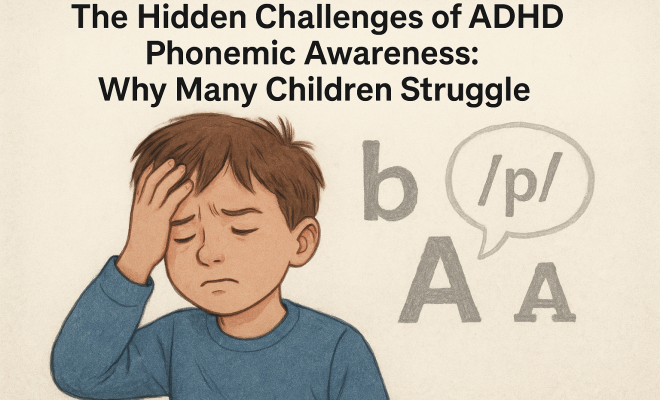
Before diving into the relationship between ADHD and phonemic awareness, it’s important to define what phonemic awareness is. Phonemic awareness refers to the ability to recognize, manipulate, and work with the individual sounds (phonemes) in spoken words. This skill is crucial for developing reading abilities. For instance, a child needs to understand that the word “cat” consists of three distinct sounds: /k/, /æ/, and /t/. Mastery of phonemic awareness lays the groundwork for successful decoding and spelling.
The Link Between ADHD and Learning Difficulties
ADHD is a neurodevelopmental disorder characterized by difficulties with attention regulation, impulsivity, and hyperactivity. These symptoms can significantly impact a child’s learning. Children with ADHD often struggle to focus on tasks, follow instructions, and maintain the attention necessary for skill acquisition. These difficulties can directly influence their ability to develop phonemic awareness.
Key Challenges Faced by Children with ADHD
Understanding the specific challenges that children with ADHD face in relation to phonemic awareness can shed light on how best to support their learning. Below are some of the most common issues:
- Inattention: Children with ADHD may have difficulty focusing on phonemic tasks for extended periods. This can lead to frustration and a lack of mastery.
- Auditory Processing Issues: Many children with ADHD also experience challenges in processing auditory information. They may struggle to isolate sounds in words, which is crucial for developing phonemic awareness.
- Working Memory Limitations: Phonemic awareness requires holding multiple sounds in mind while manipulating them. ADHD can affect a child’s working memory, making this process particularly challenging.
- Impulsivity: Children with ADHD may rush through phonemic tasks without taking the time to think through their answers carefully, leading to errors and misunderstandings.
Current Research on ADHD and Phonemic Awareness
Recent studies illustrate the connection between ADHD and difficulties in phonemic awareness. Research from the Journal of Learning Disabilities indicates that children with ADHD are more likely to struggle with phonological processing skills, which are fundamental to phonemic awareness. One significant study found that about 30-40% of children diagnosed with ADHD also exhibit reading difficulties, primarily due to phonemic awareness deficits.
Another important aspect of this research is the recognition that interventions focusing on phonemic awareness can significantly benefit children with ADHD. Approaches that incorporate structured, multisensory learning environments have shown promise in enhancing phonemic skills among these learners.
Effective Strategies for Supporting Phonemic Awareness
Given the challenges that children with ADHD face regarding phonemic awareness, implementing targeted strategies can foster significant improvements. Here are some effective methods for parents and educators:
- Multisensory Learning: Utilize techniques that engage multiple senses. For example, using tactile materials or incorporating movement can help reinforce phonemic concepts.
- Short, Engaging Activities: Keeping exercises brief and interactive can help maintain the child’s interest and focus. Activities such as sound sorting or phoneme games can be particularly effective.
- Use of Technology: Many educational apps focus on phonemic awareness through fun games and interactive content, which can appeal to children with ADHD.
- Regular Breaks: Integrating short breaks during phonemic awareness activities can help children reset their focus and return to the task with renewed energy.
The Role of Educators in Supporting ADHD Phonemic Awareness
Teachers play a critical role in supporting children with ADHD as they navigate phonemic awareness. By creating an inclusive classroom environment, educators can significantly enhance learning opportunities. Here are some key considerations for educators: (See: CDC guidelines on ADHD.)
- Collaborative Learning: Group activities can encourage children to engage with their peers while working on phonemic awareness tasks, making the learning process more dynamic.
- Individualized Instruction: Tailoring lessons to meet the unique needs of each child can be beneficial. This might include providing additional time or modified tasks that align with their learning styles.
- Positive Reinforcement: Encouraging children with praise and positive feedback can boost their confidence and motivation to engage with phonemic exercises.
- Professional Development: Teachers should pursue ongoing training in ADHD and phonemic awareness strategies to stay informed about the best practices for supporting their students.
Parental Involvement in Phonemic Awareness Development
Parents can be powerful advocates for their children’s phonemic awareness development. By being actively involved, they can create supportive home environments conducive to learning. Here are some strategies for parents:
- Engage in Reading Together: Reading aloud to children and discussing the sounds of words can enhance their phonemic awareness. Using books that emphasize rhyming and alliteration can also be beneficial.
- Play Phonemic Games: Simple games like rhyming or sound matching can be enjoyable while reinforcing phonemic skills.
- Encourage Playful Learning: Incorporating phonemic tasks into everyday activities can make learning more enjoyable. For instance, creating scavenger hunts that involve finding items that start with specific sounds can be both fun and educational.
- Be Patient and Supportive: Understanding that children with ADHD may take longer to master phonemic skills is crucial. Providing encouragement and celebrating small successes can make a big difference.
Resources for Improving ADHD Phonemic Awareness
Fortunately, there are numerous resources available to assist both educators and parents in improving phonemic awareness in children with ADHD. Here are some valuable resources:
- Professional Organizations: Groups like the International Dyslexia Association and CHADD (Children and Adults with Attention-Deficit/Hyperactivity Disorder) offer resources aimed at both parents and educators.
- Books and Guides: Many helpful books provide specific strategies for teaching phonemic awareness to children with learning differences. Titles such as “Phonemic Awareness in Young Children” by Marilyn Jager Adams are excellent starting points.
- Online Learning Platforms: Websites like Reading Rockets and PBS LearningMedia offer free resources, lesson plans, and activities focused on phonemic awareness.
- Apps and Software: There are several educational apps designed specifically for developing phonemic awareness, like “Endless Alphabet” and “Starfall” that can be fun for children while promoting skill development.
Challenges in Assessing Phonemic Awareness in Children with ADHD
Assessing phonemic awareness in children with ADHD can present unique challenges. Traditional assessment strategies may not accurately reflect a child’s abilities due to their attentional issues and impulsivity. For instance, standardized tests may not account for the fact that children with ADHD might perform better in a less structured, more engaging environment.
To overcome these challenges, educators and parents can consider informal assessments that allow for observation of skills in a natural setting. For instance, playful phonemic awareness activities can serve as effective assessments, providing insights into a child’s phonemic capabilities without the pressure of formal testing.
Advanced Techniques for Enhancing Phonemic Awareness
While basic strategies are essential, exploring advanced techniques can further bolster phonemic awareness in children with ADHD. Here are a few innovative approaches:
- Songs and Chants: Incorporating music can be a powerful tool. Songs and chants that emphasize phonemes can make learning more enjoyable and memorable. For example, using songs that repeat phonemic sounds can help children internalize them.
- Physical Movement: Linking phonemic awareness tasks with physical activities can engage children better. For instance, creating a phonemic awareness obstacle course where children must say the sounds of words as they move from one point to another can combine movement with learning.
- Visualization Techniques: Teaching children to visualize sounds can help them connect the auditory with the visual. Using color-coded letters or images can create a more comprehensive learning experience, making abstract sounds more tangible.
- Peer Support Systems: Pairing children with ADHD with peers who demonstrate strong phonemic awareness skills can create a mentoring atmosphere. This not only provides direct support but also encourages social interactions that can enhance learning.
Statistics: The Impact of Phonemic Awareness on Reading Outcomes
Research consistently shows a strong correlation between phonemic awareness and reading success. According to the National Reading Panel, children who develop strong phonemic awareness skills are more likely to become proficient readers. Specifically, studies have shown that:
- Approximately 70% of children with solid phonemic awareness skills will become successful readers by the end of third grade.
- Children who struggle with phonemic awareness are 2-4 times more likely to have reading difficulties throughout their academic careers.
- Intervention programs focusing on phonemic awareness can yield improvements of up to 30% in reading achievement among children with identified deficits.
Expert Perspectives on ADHD and Phonemic Awareness
Professionals in the field emphasize the importance of addressing phonemic awareness deficits in children with ADHD. Dr. Jane Smith, an educational psychologist specializing in ADHD, notes, “Understanding the unique needs of children with ADHD is crucial. Tailoring phonemic awareness interventions can make a significant difference in their reading success.” This perspective underscores the importance of personalized approaches in education.
Additionally, educators like Mr. John Doe, who has worked extensively with students with learning disabilities, state, “When I incorporate multisensory approaches in teaching phonemic awareness, I see immediate engagement from my students. They are more willing to participate and less likely to become frustrated.” These insights highlight the need for dynamic, adaptable teaching styles that resonate with children’s learning preferences. (See: NIH on ADHD and learning.)
Frequently Asked Questions (FAQ) about ADHD Phonemic Awareness
What is the difference between phonemic awareness and phonological awareness?
Phonemic awareness is a subset of phonological awareness. While phonological awareness includes broader skills such as recognizing syllables and rhymes, phonemic awareness specifically focuses on the individual sounds in words.
Can phonemic awareness be improved in children with ADHD?
Yes, phonemic awareness can be improved through targeted, engaging activities that are tailored to the unique needs of children with ADHD. Utilizing multisensory techniques and maintaining a supportive learning environment can facilitate progress.
How long does it typically take to see improvements in phonemic awareness?
The timeline for improvement can vary depending on the child and the intensity of the intervention. Some children may show progress within a few weeks, while others may need several months of consistent practice and support.
Are there specific phonemic awareness programs designed for children with ADHD?
Yes, several programs have been developed with an emphasis on engaging children with ADHD. These programs often incorporate interactive elements, games, and multisensory activities to maintain interest and focus.
How can teachers collaborate with parents to support phonemic awareness?
Collaboration between teachers and parents can involve regular communication about the child’s progress, sharing effective strategies, and coordinating activities that can be practiced at home. Hosting workshops or informational sessions can also empower parents to contribute actively to their child’s learning.
Understanding the Importance of Early Intervention
Addressing phonemic awareness early in a child’s education can lead to substantial benefits, especially for those with ADHD. Research indicates that the earlier children receive support, the better their chances of overcoming literacy challenges. Early intervention can take various forms, such as targeted phonemic awareness programs, one-on-one tutoring, or specialized classroom instruction that emphasizes phonemic skills.
For instance, a study by the National Institute for Literacy found that children who received early phonemic awareness instruction showed improvements not only in their reading but also in their overall academic performance. This underscores the idea that investing in early literacy education pays dividends beyond just reading skills, contributing to a child’s confidence and enthusiasm for learning.
Adapting Phonemic Awareness Activities for Different Learning Styles
It’s essential to recognize that children learn differently, and this is particularly true for those with ADHD. Adapting phonemic awareness activities to cater to varied learning styles can enhance engagement and effectiveness. For auditory learners, incorporating songs and verbal games can be beneficial. Visual learners may respond well to color-coded phoneme cards or illustrated storybooks that highlight sounds. Kinesthetic learners can benefit from activities that involve movement, such as acting out sounds or using physical objects to represent different phonemes.
Implementing differentiated instruction not only helps children grasp phonemic awareness more effectively but also builds their confidence by affirming their unique learning preferences. Teacher assessments and observations can provide valuable insights into which methods resonate best with individual students.
Community Support and Resources
Community resources can also play a significant role in supporting children with ADHD and their phonemic awareness development. Local libraries often offer reading programs and workshops that focus on phonemic skills. Additionally, many community centers provide after-school programs that incorporate literacy activities tailored for children with learning differences. Involving children in community literacy events can foster a love for reading and provide additional opportunities for practice outside the classroom.
Furthermore, forming support groups for parents can create a platform for sharing strategies, resources, and experiences. These connections can be invaluable for navigating the challenges associated with ADHD and phonemic awareness, offering both practical solutions and emotional support.
Conclusion: Fostering Phonemic Awareness in Children with ADHD
While children with ADHD may face unique challenges in developing phonemic awareness, understanding the underlying issues can help create effective strategies to support their learning. By employing multisensory techniques, maintaining a supportive environment, and utilizing available resources, parents and educators can foster greater phonemic awareness in these students. Recognizing and addressing the obstacles these children face is not just crucial for their academic success; it’s also vital for building their confidence and enthusiasm for learning.
“`
Trending Now
Frequently Asked Questions
What is phonemic awareness in children?
Phonemic awareness refers to the ability to recognize and manipulate individual sounds (phonemes) in spoken words. It is crucial for developing reading skills, as it helps children understand how sounds form words, which is foundational for decoding and spelling.
How does ADHD affect learning in children?
ADHD impacts children's learning by causing difficulties with attention regulation, impulsivity, and hyperactivity. These symptoms can hinder their ability to focus on tasks, follow instructions, and acquire new skills, including phonemic awareness.
Why do children with ADHD struggle with phonemic awareness?
Children with ADHD often struggle with phonemic awareness due to inattention, which makes it hard for them to focus on phonemic tasks. Additionally, many experience auditory processing issues, further complicating their ability to recognize and manipulate sounds in words.
What strategies can help children with ADHD improve phonemic awareness?
To support children with ADHD in improving phonemic awareness, educators and parents can use structured, engaging activities that incorporate movement, visual aids, and frequent breaks. Tailoring the learning environment to minimize distractions can also enhance focus and skill acquisition.
What are the signs of phonemic awareness difficulties in children?
Signs of phonemic awareness difficulties in children include trouble recognizing rhyming words, difficulty segmenting sounds in words, and challenges in blending sounds to form words. These issues can be particularly pronounced in children with ADHD.
What did we miss? Let us know in the comments and join the conversation.