ADHD & Emotional Regulation in Young Children
“`html
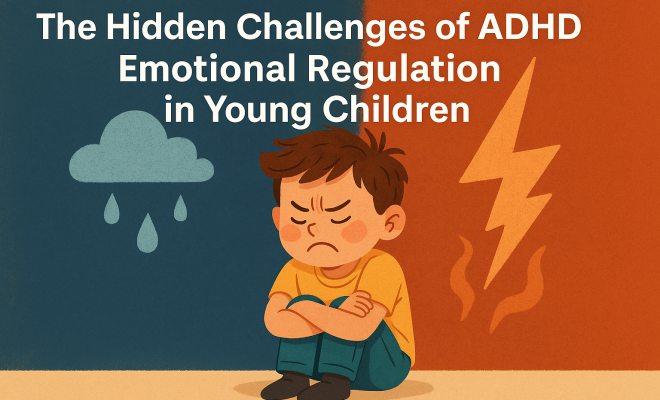
Understanding ADHD, or Attention-Deficit/Hyperactivity Disorder, often starts with its outward symptoms: hyperactivity, inattentiveness, and impulsivity. But what many may not realize is that one of the most profound impacts of ADHD is on emotional regulation, especially in preschool and elementary-aged children. ADHD emotional regulation issues can profoundly affect a child’s interactions, learning, and overall well-being. This article dives deep into how ADHD affects emotional regulation in young learners, the implications for their development, and what can be done to support them.
Defining ADHD and Emotional Regulation
ADHD is a neurodevelopmental disorder characterized by patterns of inattention and/or hyperactivity-impulsivity that interfere with functioning or development. According to the Centers for Disease Control and Prevention (CDC), approximately 6.1 million children aged 2-17 years have been diagnosed with ADHD in the United States. While many are familiar with the core symptoms, emotional regulation remains an often-overlooked aspect of ADHD.
Emotional regulation refers to the ability to monitor, evaluate, and modify emotional reactions in response to both internal and external stimuli. For many children, this involves understanding their feelings, expressing them appropriately, and managing responses to emotional situations. The challenge for children with ADHD is that their ability to regulate emotions is frequently impaired, leading to heightened emotional responses and difficulties in social interactions.
How ADHD Affects Emotional Regulation
Children with ADHD frequently struggle with emotional regulation due to distinct neurological differences that affect their brain’s response to emotions. Research indicates that the prefrontal cortex, which is responsible for higher-order functions such as planning, attention, and emotional control, may develop differently in children with ADHD.
Furthermore, children with ADHD may experience:
- Impulsivity: This can lead to outbursts of anger or frustration, as they may not fully process their feelings before reacting.
- Difficulty recognizing emotions: They may struggle to identify their own emotions or those of others, making it hard to appropriately respond in social situations.
- Overwhelming emotions: Without effective regulation strategies, emotions can become easily overwhelming, leading to shutdowns or explosive reactions.
- Low frustration tolerance: Children with ADHD often have a lower threshold for frustration, which can lead to increased conflict with peers and adults.
The Impact on Learning and Social Interactions
ADHD emotional regulation difficulties can have a significant impact on academic performance and peer relationships. For example, a child who struggles to manage frustration may become easily overwhelmed by challenging assignments, leading to incomplete work or avoidance of school tasks. This can exacerbate feelings of inadequacy and low self-esteem.
Socially, children with ADHD might find themselves in frequent conflicts with peers due to misunderstandings or inappropriate emotional responses. For instance, a child who reacts with intense anger to a teasing comment may alienate friends, leading to social isolation. Research shows that children with ADHD are at a higher risk for developing anxiety and depression, partly due to their struggles with social interactions and emotional dysregulation.
Recognizing Signs of Emotional Regulation Problems
Parents and educators play a critical role in identifying emotional regulation issues in children with ADHD. Some common signs include:
- Frequent mood swings or emotional outbursts.
- Difficulty coping with disappointment or frustration.
- Struggles with sharing or cooperating in group settings.
- Excessive worry or anxiety about performance.
- Withdrawal from peers or avoidance of social situations.
Strategies for Supporting Emotional Regulation
Fortunately, there are practical strategies that parents and educators can use to support children with ADHD in managing their emotions more effectively. Here are some approaches that can help:
1. Foster Emotional Awareness
Teaching children to recognize and name their emotions can be incredibly beneficial. Use age-appropriate books or stories that explore different feelings. Encourage discussions about emotions during daily activities to help children articulate their feelings, making it easier for them to manage them.
2. Model Emotional Regulation
Children learn by observing adults. By modeling healthy emotional regulation strategies—such as taking deep breaths, using calming techniques, or expressing feelings calmly—adults can provide children with functional tools for managing their emotions.
3. Create a Safe Environment
Creating a structured and predictable environment can significantly reduce anxiety and emotional outbursts for children with ADHD. Consistent routines, clear expectations, and a calm setting can help children feel secure and more in control of their emotions. (See: CDC ADHD facts and statistics.)
4. Teach Coping Strategies
Introduce coping strategies that children can use when they feel emotionally overwhelmed. Techniques such as mindfulness, deep-breathing exercises, or using a stress ball can be particularly effective. Practice these strategies regularly so children can use them instinctively during challenging situations.
5. Encourage Positive Play
Structured playtime can help children practice social skills and emotional regulation. Activities that involve teamwork, problem-solving, or role-playing can provide opportunities for children to learn how to express their feelings in a constructive manner.
The Role of Educators in Supporting Emotional Regulation
Educators are pivotal in fostering an environment that supports emotional regulation for students with ADHD. Here are several ways they can make a difference:
1. Training and Awareness
Teacher training programs should address emotional regulation in the context of ADHD. Understanding the neurobiological underpinnings of ADHD can empower educators to be more empathetic and responsive to the needs of their students, creating a more inclusive classroom environment.
2. Individualized Strategies
Developing Individualized Education Plans (IEPs) for students with ADHD can provide specific strategies tailored to their emotional regulation challenges. These plans should include accommodations that help students navigate their emotions effectively in the classroom.
3. Open Communication with Families
Encouraging open communication between teachers and families about emotional challenges faced by children is vital. Regular updates and collaborative strategies can help ensure that children receive consistent support both at school and home.
Current Relevance and Future Directions
As awareness of ADHD and its complexities continues to grow, there is a pressing need for targeted research into how emotional regulation specifically impacts young learners. Current studies highlight the importance of early intervention to mitigate the long-term effects of emotional dysregulation.
Additionally, there is a critical call for resources and training for teachers to better support students struggling with ADHD emotional regulation. Many schools lack sufficient support systems for children with ADHD, which can lead to a cycle of underachievement and negative self-perception.
Understanding the Neurobiology of Emotional Regulation in ADHD
To truly grasp the challenges faced by children with ADHD in terms of emotional regulation, it helps to explore the neurobiological factors involved. Studies show that children with ADHD often exhibit differences in brain structure and function, particularly in areas such as the prefrontal cortex and amygdala. The prefrontal cortex is crucial for impulse control and emotional regulation, while the amygdala is involved in processing emotions.
Research conducted by the National Institute of Mental Health indicates that children with ADHD may demonstrate lower activity in the prefrontal cortex compared to their peers. This reduced activity can lead to difficulties in emotional regulation, as children may struggle to assess situations, weigh consequences, and choose appropriate responses. Understanding these neurological differences is crucial for both parents and educators, as it fosters empathy and patience in dealing with emotional outbursts.
Real Life Examples of Emotional Regulation Challenges
Real-life scenarios can paint a clearer picture of how emotional regulation challenges manifest in children with ADHD. For example, consider a child named Jake, who often struggles with transitions. When it’s time to switch from recess to class, Jake may exhibit extreme resistance, leading to an emotional outburst. This behavior can be interpreted as defiance, but it stems from his difficulty in managing frustration and anxiety over the transition.
Another example could involve a girl named Mia, who loves art but gets incredibly upset when her artwork doesn’t turn out as she envisioned. Instead of being able to reflect on what she could change or improve, she might tear her paper in frustration. This reaction illustrates how ADHD emotional regulation issues can lead to a cycle of defeatism, as Mia feels her emotions take control rather than learning to manage them.
Statistics and Research Findings on ADHD and Emotional Regulation
Statistics related to ADHD emotional regulation issues are alarming. According to a study published in the Journal of Abnormal Psychology, approximately 40-50% of children with ADHD experience significant emotional dysregulation. This statistic highlights the prevalence and importance of addressing emotional challenges as part of comprehensive ADHD management. (See: NIH overview of ADHD.)
Moreover, longitudinal studies indicate that children with poor emotional regulation skills are more likely to experience academic struggles and social difficulties later in life. A significant finding from a study conducted by the University of California, Los Angeles, revealed that children with ADHD who received targeted interventions focusing on emotional regulation saw improvements not only in emotional control but also in their academic performance and peer relationships.
Expert Perspectives on ADHD Emotional Regulation
Experts in the field of child psychology emphasize the need for a nuanced approach to managing ADHD emotional regulation challenges. Dr. Ellen Littman, a noted clinical psychologist, argues that “the emotional experiences of children with ADHD are often dismissed as behavioral problems, but they are rooted in neurological differences that require understanding and support.” This perspective highlights the importance of viewing emotional dysregulation not just as a behavioral issue but as a complex interplay of neurological, psychological, and environmental factors.
Additionally, Dr. William Pelham, a leading researcher in ADHD, points out that “effective emotional regulation interventions can lead to significant improvements in a child’s overall functioning.” His research supports the idea that early identification and intervention are key in helping children develop the skills they need to manage their emotions effectively.
Frequently Asked Questions (FAQ)
What is emotional regulation in the context of ADHD?
Emotional regulation refers to the ability to understand, manage, and respond to one’s emotions in a constructive manner. For children with ADHD, this often means struggling to control intense emotional reactions, leading to outbursts or shutdowns.
How can parents help their children with ADHD improve emotional regulation?
Parents can support their children by fostering emotional awareness, modeling self-regulation techniques, creating a structured environment, and teaching coping strategies like mindfulness and deep-breathing exercises.
What role does therapy play in emotional regulation for kids with ADHD?
Therapy, particularly cognitive-behavioral therapy (CBT), can help children with ADHD develop better emotional regulation skills. CBT focuses on understanding thought patterns and emotions, providing tools to manage emotional responses more effectively.
Can teachers help with emotional regulation in students with ADHD?
Absolutely! Teachers can create supportive classroom environments, develop individualized strategies, and maintain open communication with families to help students manage their emotions effectively.
Are there specific techniques to teach children with ADHD for emotional regulation?
Yes, techniques such as using visual aids to identify emotions, role-playing scenarios to practice responses, and implementing structured routines can be effective in teaching emotional regulation skills.
Teaching Emotional Regulation in Schools
Schools can play an essential role in teaching emotional regulation skills to children with ADHD. Integrating social-emotional learning (SEL) into the curriculum can provide students with the necessary tools to understand and manage their emotions. SEL programs often include lessons on empathy, self-awareness, and relationship skills, all of which are crucial for children grappling with emotional dysregulation.
For instance, a program might include activities where students practice identifying their emotions through art or role-playing. When students express feelings creatively, it not only enhances their emotional vocabulary but also provides a safe outlet for their emotions.
Parental Involvement in Emotional Regulation Development
Parental involvement is another cornerstone of supporting emotional regulation in children with ADHD. Parents can foster a nurturing environment by actively participating in their child’s emotional growth. Regular family discussions about feelings, coupled with supportive feedback, can reinforce a child’s emotional competence.
Additionally, parents can set up routines that allow for emotional check-ins at home. For example, establishing a daily “feelings time” where family members share their emotions can help normalize discussions about feelings and make it easier for children to express themselves.
Understanding Co-occurring Conditions
It’s important to recognize that children with ADHD often experience co-occurring conditions that can further complicate emotional regulation. Anxiety, depression, and learning disabilities are among the most common conditions associated with ADHD. These comorbidities can exacerbate emotional dysregulation, making it critical for parents and educators to adopt a holistic approach to treatment.
For instance, a child with ADHD and anxiety may find their emotions overwhelming, leading to panic attacks or withdrawal in social settings. By addressing both ADHD and anxiety, such as through integrated therapy that targets both issues, children can develop a more robust emotional toolkit that helps them cope with a wider range of challenges.
The Importance of Early Intervention
Early intervention is crucial for children with ADHD emotional regulation issues. Research shows that the earlier a child receives support, the better their long-term outcomes. Interventions can range from behavioral therapy to medication and should be tailored to meet each child’s specific needs.
For example, a child identified with ADHD early on may benefit from tailored social skills training, which can help them navigate peer relationships more effectively. As children gain confidence in their ability to manage their emotions and interact socially, their overall well-being improves, leading to better academic performance and a more fulfilling social life.
Looking Ahead: Innovations in Treatment and Support
The landscape of ADHD treatment and support is continually evolving, with new approaches emerging to enhance emotional regulation. Recent advancements include digital tools and apps designed to help children with ADHD manage their emotions through interactive exercises and gamification. These tools can be especially appealing to younger audiences, making the learning process more engaging.
Furthermore, there’s a growing movement toward mindfulness-based interventions. Mindfulness practices, such as meditation and yoga, have shown promise in improving emotional regulation. Schools and therapy centers are increasingly incorporating these techniques into their programs, offering children practical skills they can use in their daily lives.
Conclusion: Moving Forward
ADHD emotional regulation issues present substantial challenges for preschool and elementary students, affecting not just their academic performance but also their social interactions and emotional well-being. By recognizing the signs, implementing supportive strategies, and fostering an understanding environment, parents and educators can significantly enhance the emotional resilience of children with ADHD. As we continue to deepen our understanding of ADHD, it is essential that we focus on nurturing emotional skills that will serve these children throughout their lives.
“`
Trending Now
Frequently Asked Questions
What are the emotional regulation challenges faced by children with ADHD?
Children with ADHD often struggle with emotional regulation due to neurological differences that affect their brain's response to emotions. This can lead to heightened emotional responses, difficulties in social interactions, and challenges in expressing feelings appropriately.
How does ADHD impact a child's social interactions?
ADHD can impair a child's ability to regulate emotions, which frequently results in heightened emotional reactions. This can lead to misunderstandings and difficulties in forming and maintaining social relationships with peers.
What is emotional regulation in the context of ADHD?
Emotional regulation in ADHD refers to the ability to monitor, evaluate, and modify emotional responses. Children with ADHD often find this challenging, leading to intense emotional reactions and difficulty managing their feelings in various situations.
How can parents support children with ADHD in emotional regulation?
Parents can support their children by creating a structured environment, teaching emotional awareness, and using positive reinforcement. Additionally, engaging in open conversations about feelings and practicing coping strategies can help improve emotional regulation.
What percentage of children are diagnosed with ADHD?
Approximately 6.1 million children aged 2-17 years in the United States have been diagnosed with ADHD, highlighting the prevalence of this neurodevelopmental disorder and its associated challenges, including emotional regulation issues.
Agree or disagree? Drop a comment and tell us what you think.