Regulators Clear Controversial $55 Billion EA Buyout
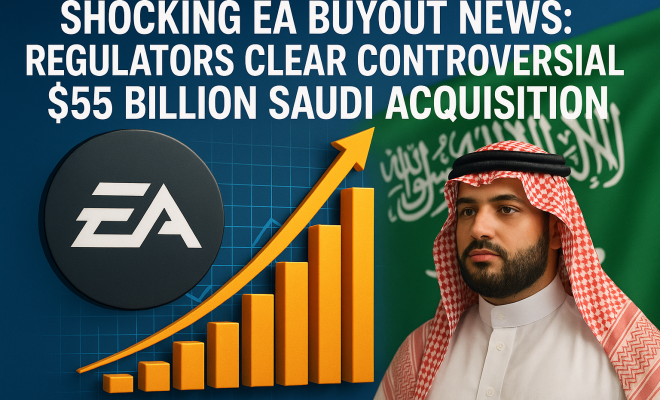
The world of gaming, already a swirling maelstrom of innovation, controversy, and multi-billion-dollar deals, just got another seismic jolt. In a move that has sent ripples of debate across social media and gaming forums, the European Commission has given its blessing to the proposed $55 billion acquisition of Electronic Arts (EA). This isn’t just any corporate takeover; it’s a massive deal that would see a group of investors, prominently led by Saudi Arabia’s Public Investment Fund (PIF), take the reins of one of the industry’s biggest publishers. The Commission’s official stance? This monumental EA buyout news, despite its gargantuan price tag and the identity of its prospective owners, “would not raise competition concerns.”
Let’s be honest, that statement feels a bit like a cold shower for many. For months, this potential acquisition has been a lightning rod for ethical discussions, particularly given the Saudi Arabian authorities’ well-documented history of alleged human rights violations. You’d think a deal of this magnitude, with such profound geopolitical and ethical implications, would face a more rigorous, perhaps even skeptical, regulatory gaze. Yet, here we are. The European Commission, a powerful body meant to safeguard fair competition and consumer interests across 27 member states, has essentially waved it through. This decision isn’t just a bureaucratic rubber stamp; it’s a profound moment that forces us to confront uncomfortable truths about corporate ethics, the ever-blurring lines between entertainment and geopolitics, and what we, as players and creators, truly expect from the industry we love.
The Unsettling Calm: Europe’s Regulatory Green Light for the EA Buyout
When news of a potential acquisition of this scale first broke, many in the gaming community braced for a protracted battle. After all, the industry has seen its fair share of regulatory hurdles, particularly in recent years. Remember the extensive scrutiny Microsoft faced over its Activision Blizzard acquisition? Regulators globally picked apart that deal, examining every angle for potential anti-competitive practices. So, when the European Commission announced its approval of the EA buyout, and did so with such apparent ease, stating it “would not raise competition concerns,” it naturally raised eyebrows.
The core function of competition authorities like the European Commission is to ensure that mergers and acquisitions don’t lead to monopolies or significantly reduce consumer choice. They typically analyze market share, potential for bundling, access to key technologies, and the overall impact on the competitive landscape. From a purely economic standpoint, one could argue that a Saudi-led investment group acquiring EA doesn’t directly reduce the number of major publishers or game developers. They aren’t another rival game studio looking to consolidate market power in a specific genre. Instead, they are an investment fund. This distinction, while seemingly academic, appears to be the primary lens through which the Commission viewed the deal, prioritizing economic competition over broader ethical or geopolitical considerations.
Beyond the Balance Sheet: The Ethical Quagmire of Saudi Ownership
For many, the European Commission’s focus on purely competition-related factors feels woefully inadequate, almost willfully ignorant, of the deeper issues at play. The Saudi Public Investment Fund is not just a faceless financial entity; it’s an instrument of the Saudi state, overseen by Crown Prince Mohammed bin Salman. And that’s where the ethical concerns truly begin to mount. Saudi Arabia’s human rights record is a constant source of international criticism, with allegations ranging from restrictions on free speech and political dissent to the treatment of women and LGBTQ+ individuals, and the highly publicized assassination of journalist Jamal Khashoggi.
When an entity with such a controversial background seeks to acquire a beloved entertainment company like EA, which creates games enjoyed by millions globally, it inevitably ignites a fiery debate. Players, creators, and even some industry figures wonder: does the source of investment money matter? Can we separate the art from the patron? For many, the answer is a resounding ‘no.’ They argue that accepting such investment, even indirectly, lends legitimacy and financial support to a regime whose values fundamentally clash with the progressive and inclusive ideals often espoused within the gaming community. This isn’t just about who owns the next FIFA title; it’s about the perceived complicity of the gaming industry in what some see as ‘sportswashing’ or ‘gameswashing’ – using popular culture to sanitize a controversial image.
The Simmers’ Revolt: A Precedent of Protest Against the EA Buyout News
The ethical concerns surrounding potential Saudi ownership aren’t just abstract anxieties; they’ve already manifested in concrete actions. Earlier this year, a significant moment of protest emerged from an unexpected corner: The Sims community. Several prominent content creators, who were part of EA’s official Creator Network, publicly announced their departure from the program. Their reason was clear and unequivocal: they could not, in good conscience, continue to collaborate with a company that might soon be owned by the Saudi PIF. This wasn’t a coordinated industry-wide strike, but a grassroots movement driven by individual moral compasses.
The Sims, known for its inclusive themes, diverse character creation options, and strong LGBTQ+ following, felt particularly ill-suited for ownership by a state with a documented history of human rights issues, particularly concerning LGBTQ+ rights. These creators, often seen as community leaders and influencers, chose to put their principles ahead of potential financial gain or career opportunities within EA’s ecosystem. Their actions served as a powerful, tangible demonstration that for a segment of the audience and creative talent, the identity of a company’s owners absolutely matters. It put a human face on the abstract ethical debate, showing that this EA buyout news has real-world consequences for individuals.
Geopolitical Chess: Saudi Arabia’s Diversification Strategy and Gaming
To fully grasp the significance of this potential EA buyout news, we need to understand it within the broader context of Saudi Arabia’s economic strategy. The Kingdom, historically reliant on oil exports, is aggressively pursuing Vision 2030 – a plan to diversify its economy and reduce its dependence on fossil fuels. This involves massive investments in various sectors, including tourism, entertainment, and technology. And gaming has emerged as a particularly attractive target. (See: Human rights in Saudi Arabia.)
Saudi Arabia views gaming not just as a profitable industry but also as a way to engage its young, tech-savvy population and project a modern image on the global stage. The Public Investment Fund has been steadily increasing its stakes in numerous major gaming companies, including significant holdings in Nintendo, Activision Blizzard, Take-Two Interactive, and Embracer Group. The potential acquisition of EA, however, would be a quantum leap, moving from minority stakes to outright ownership of one of the industry’s titans. This isn’t merely passive investment; it’s a strategic move to gain significant influence and control within a global cultural powerhouse. It’s a clear signal that Saudi Arabia sees gaming as a critical component of its future economic and geopolitical landscape.
The Industry’s Silence: A Deafening Lack of Official Comment
One of the most striking aspects of this ongoing saga is the relative silence from other major players within the gaming industry. While social media bubbles with furious debate, and individual creators make their stands, there’s been a noticeable lack of official statements or widespread condemnation from other publishers, developers, or even industry associations. Is it fear of alienating a powerful new investor? Is it a pragmatic acceptance of capital, regardless of its origin? Or is it simply a reluctance to wade into such a politically and ethically charged discussion?
This silence, for many observers, is as telling as the European Commission’s approval. It highlights a potential fissure within the industry: the tension between the progressive values often celebrated in games (diversity, inclusion, freedom of expression) and the hard realities of global capitalism. When billions of dollars are on the table, ethical lines can become blurry, and the desire for growth and profit often overshadows other considerations. This isn’t to say every company should comment on every geopolitical issue, but the sheer scale and ethical gravity of the potential EA buyout news make the industry’s collective reticence particularly conspicuous.
What Does it Mean for EA’s Games and Players?
Let’s move beyond the boardroom and the geopolitical machinations for a moment and consider the practical implications. If this EA buyout goes through, what could it mean for the games themselves and the millions of players who enjoy them? This is where speculation runs rampant, and opinions diverge sharply.
Some argue that an investment fund, even one backed by a state, primarily cares about financial returns. Their goal would be to maximize EA’s profitability, which could translate into more aggressive monetization strategies, increased focus on live service games, or a push for greater efficiency in game development. Others fear that editorial control could subtly shift. Could certain themes or content that conflict with the values of the new owners be discouraged or outright censored? While direct interference might be unlikely in the short term, the long-term influence on creative direction is a valid concern for many. For example, would a game like The Sims continue to push boundaries on LGBTQ+ representation if its ultimate owners held opposing views? These are difficult questions without easy answers, but they weigh heavily on the minds of players and creators alike.
The Precedent Set: Corporate Ethics and Geopolitical Influence
The European Commission’s approval of the EA buyout, despite the ethical controversy, sets a significant precedent. It effectively signals that, at least from a major regulatory body’s perspective, the source of investment capital, even from a state with a contentious human rights record, does not automatically constitute a competition concern. This could open the floodgates for similar large-scale investments from other sovereign wealth funds or state-backed entities into Western entertainment and tech companies.
The question then becomes: where do we draw the line? If a country’s human rights record isn’t a factor for competition regulators, whose responsibility is it to weigh these ethical considerations? Is it solely up to the individual consumer to boycott, or the individual creator to protest? This situation forces a re-evaluation of the role of corporations in a globalized world, and the extent to which they should be held accountable not just for their products, but for their ownership and the broader implications of their financial backing. It underscores a growing tension between the pursuit of capital and the maintenance of ethical standards in an increasingly interconnected, and often morally ambiguous, global economy.
Public Scrutiny and the Power of the Gaming Community
Despite the regulatory green light, the public scrutiny surrounding this EA buyout news is far from over. If anything, the European Commission’s decision has reignited the debate, amplifying voices on social media and prompting renewed calls for accountability. This is where the unique power of the gaming community truly comes into play. Unlike many other industries, gaming fosters an incredibly passionate, vocal, and often highly organized fanbase. Players aren’t just consumers; they are invested stakeholders, emotionally attached to the brands, franchises, and worlds they inhabit.
This collective voice, channeled through platforms like Twitter, Reddit, and Twitch, can exert significant pressure. While it might not overturn a regulatory decision, sustained public pressure can certainly influence corporate behavior, impact sales, and shape public perception. The Sims creators’ protest is a prime example of this grassroots power. Whether this widespread sentiment can translate into broader systemic change or force EA to address these concerns more directly remains to be seen, but it’s clear the conversation around corporate ethics and geopolitical influence in gaming is only just beginning to heat up.
The Road Ahead: What’s Next for EA, the PIF, and the Industry?
With the European Commission’s approval in hand, the path forward for the proposed $55 billion EA buyout appears significantly clearer, at least from a regulatory standpoint. While other jurisdictions might still need to weigh in, Europe’s sign-off is a major hurdle cleared. For EA, this could mean a significant influx of capital, potentially allowing for greater investment in new titles, technological advancements, or further acquisitions of its own. It’s a financial boon that could reshape its future trajectory. (See: Global health protection funding.)
For the Public Investment Fund, it represents a crowning achievement in their gaming investment strategy, solidifying their position as a major force in the global entertainment landscape. But for the wider gaming community, the implications are far more complex. This isn’t just a transaction; it’s a cultural statement. It forces us to grapple with difficult questions about values, principles, and the true cost of doing business in a world where capital increasingly transcends national and ethical boundaries. The future of EA, and indeed, a significant portion of the gaming industry, now sits at a fascinating, and for many, deeply unsettling, crossroads.
The Role of Sovereign Wealth Funds in Global Entertainment
The EA buyout news highlights a broader trend: the increasing involvement of sovereign wealth funds (SWFs) in global entertainment. These state-owned investment funds, often flush with capital from natural resources like oil, are seeking to diversify national economies and secure future revenue streams. The PIF is a prime example, but it’s not alone. Funds from Norway, Singapore, and Abu Dhabi have also made significant investments across various industries, from Hollywood studios to major sports leagues. What makes the PIF’s actions particularly noteworthy in gaming is the sheer scale and apparent intent of outright control, rather than just passive minority stakes.
This trend introduces new dynamics. Unlike traditional venture capitalists or private equity firms, SWFs can operate with different time horizons and strategic objectives that aren’t solely focused on quarterly earnings. They might prioritize long-term geopolitical influence, cultural soft power, or national image building, which can complicate the traditional business models of entertainment companies. It raises questions about corporate governance: who ultimately calls the shots, and whose values are prioritized when the owner is a state entity with its own political agenda?
Comparing Regulatory Approaches: Europe vs. the Rest
The European Commission’s seemingly swift approval of the EA buyout stands in contrast to the more drawn-out and rigorous reviews seen in other major jurisdictions, particularly regarding large tech and entertainment mergers. For instance, the UK’s Competition and Markets Authority (CMA) and the US Federal Trade Commission (FTC) have often taken a harder line, sometimes even blocking deals, as seen with the Microsoft-Activision Blizzard case where the CMA initially blocked it before a revised deal was approved. This difference in approach for the EA buyout raises an important question: are regulators in different regions applying different criteria, or are the specifics of this deal truly unique?
It seems the European Commission largely stuck to its core mandate: assessing competition impact. Because the PIF is an investment fund and not a direct competitor in game development or publishing, the traditional anti-trust concerns (like reduced consumer choice or monopoly formation) were deemed minimal. Other regulatory bodies, however, sometimes consider broader public interest issues, national security implications, or even the ethical track record of the acquiring entity. The European Commission’s decision suggests a narrower interpretation of its role in this particular instance, focusing purely on market dynamics rather than the wider societal or geopolitical context, which is a key point of contention for many critics.
The Future of Creative Freedom Under New Ownership
One of the most profound concerns swirling around the EA buyout news, especially for developers and players, revolves around creative freedom. Video games are, at their heart, a creative medium. They tell stories, explore themes, and sometimes challenge societal norms. The idea of a state-backed entity, particularly one with a conservative social stance, gaining control over a major publisher naturally raises alarms about potential interference in creative processes.
While an investment fund might publicly state a commitment to artistic independence, the reality can be more nuanced. Self-censorship, subtle pressure, or even changes in leadership that favor more ‘palatable’ content could gradually emerge. Would EA continue to greenlight games that feature prominent LGBTQ+ narratives, social critiques, or diverse cultural representations if those themes conflict with the owners’ values? This isn’t just about direct censorship; it’s about the chilling effect that can occur when creators feel their work might be scrutinized through a different, potentially restrictive, lens. Maintaining a vibrant, diverse creative output is crucial for the health of the gaming industry, and any perceived threat to that freedom is a significant concern.
FAQ: Understanding the EA Buyout News
Q1: What exactly is the EA buyout news about?
The EA buyout news refers to the proposed acquisition of Electronic Arts, one of the world’s largest video game publishers, for an estimated $55 billion by a group of investors primarily led by Saudi Arabia’s Public Investment Fund (PIF).
Q2: Has the EA buyout been finalized?
No, the buyout is not finalized. The European Commission has given its approval, stating it found no competition concerns. However, other regulatory bodies in different jurisdictions might still need to approve the deal, and the transaction itself would involve various financial and legal steps.
Q3: Why is the European Commission’s approval significant?
The European Commission is a major regulatory body that oversees competition across 27 member states. Its approval is a significant hurdle cleared for the acquisition, indicating that at least one major global regulator does not view the deal as anti-competitive.
Q4: What are the main concerns surrounding the EA buyout?
The primary concerns revolve around ethical issues related to Saudi Arabia’s human rights record, particularly its treatment of women and LGBTQ+ individuals. Critics worry about the implications of a state with such a record owning a major entertainment company, potentially impacting creative freedom, content decisions, or lending legitimacy to the regime.
Q5: How does the PIF’s ownership differ from other investors?
The PIF is a sovereign wealth fund, meaning it’s owned and operated by the Saudi Arabian government. This differs from traditional private equity or venture capital firms, as SWFs can have broader strategic goals beyond pure profit, including geopolitical influence and national image building, which can introduce different considerations for the acquired company.
Q6: What impact could this have on EA’s games like The Sims or FIFA?
It’s speculative, but concerns exist about potential shifts in creative direction. For games known for inclusivity like The Sims, players worry about content that aligns with LGBTQ+ representation. For sports titles like FIFA (now EA Sports FC), the impact might be less direct on content but could influence monetization strategies or regional market focus. Ultimately, the long-term influence on creative freedom is a key question.
Q7: Why didn’t the European Commission consider the human rights record?
Competition authorities like the European Commission typically focus on market competition, such as whether a merger creates a monopoly or reduces consumer choice. While broader ethical or geopolitical concerns are valid, they generally fall outside the scope of traditional anti-trust reviews, unless they directly impact market dynamics or national security, which wasn’t deemed the case here.
Trending Now
Frequently Asked Questions
What is the recent EA buyout news?
The European Commission has approved a $55 billion acquisition of Electronic Arts (EA) by a group led by Saudi Arabia's Public Investment Fund. This decision has sparked debates about corporate ethics and competition in the gaming industry.
Why is the EA acquisition controversial?
The acquisition is controversial due to the involvement of Saudi Arabia's Public Investment Fund, which has a history of alleged human rights violations. This raises ethical concerns about the implications of such a significant investment in the gaming industry.
How did regulators view the EA buyout?
The European Commission stated that the EA buyout would not raise competition concerns, allowing the deal to proceed despite the contentious nature of its backers and the potential ethical implications.
What impact could the EA buyout have on the gaming industry?
The EA buyout could significantly impact the gaming industry by altering corporate governance and potentially influencing game development and publishing practices, as well as raising questions about ethical investment and corporate responsibility.
What are the implications of the EA acquisition for gamers?
For gamers, the EA acquisition raises concerns about the direction of game development, corporate ethics, and the larger geopolitical influences on the industry. Players may need to consider the values of the companies they support.
What did we miss? Let us know in the comments and join the conversation.