Concrete Strategies for Teaching Math to Students with Irreversibility
“`html
Teaching math to struggling learners can be a daunting task, especially when faced with challenges like irreversibility. Many students find it difficult to understand that certain mathematical operations can be undone, leading to frustration and lack of confidence. But with the right strategies, educators can make a significant difference in how these students engage with math. This article explores effective techniques, practical insights, and the relevance of these approaches in today’s educational environment.
Understanding Irreversibility in Mathematics
Irreversibility refers to the inability to see that some actions can be undone. In math, this concept often surfaces when students struggle to grasp the relationships between operations, such as addition and subtraction. For instance, if a student adds two numbers, they might not easily understand that subtraction can return them to the original value. This lack of understanding can lead to persistent errors, especially in problem-solving situations.
The roots of this struggle often stem from cognitive development stages. Jean Piaget, a renowned psychologist, argued that young children typically view the world in concrete terms. They may not yet have developed the abstract reasoning necessary to understand operations as reversible or to manipulate numbers mentally. Thus, the challenge lies in bridging this gap.
The Importance of Concrete Examples
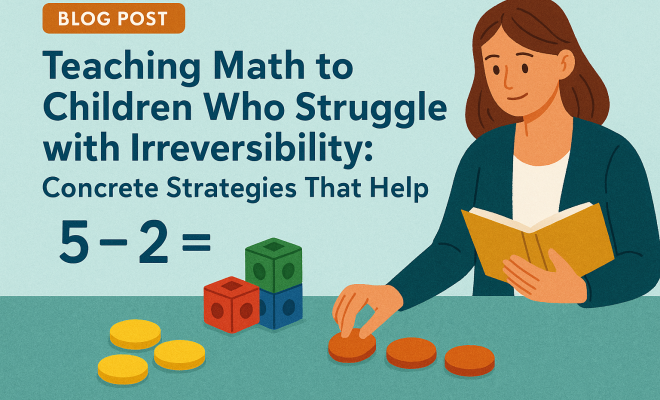
When it comes to teaching math to struggling learners, concrete examples are invaluable. These learners often benefit from hands-on experiences that make abstract concepts tangible. For instance, using physical objects like counters, blocks, or even drawing diagrams can help students visualize operations more clearly.
Consider a simple addition problem. Instead of asking students to calculate 3 + 2, provide them with three blocks and two additional blocks. Allow them to physically count the total. This method not only affirms their understanding but also reinforces the idea that addition can be reversed through subtraction, as they can remove blocks to see the operation in action.
Using Visual Aids and Manipulatives
Visual aids and manipulatives play a critical role in teaching math to struggling learners. Tools such as number lines, ten frames, and fraction strips can provide visual representation, making it easier for students to grasp concepts of addition, subtraction, and even multiplication.
For example, a number line can be particularly effective for illustrating how to move forward for addition and backward for subtraction. By physically moving along the line, students can visualize the operations and understand that they can “go back” to find their original number.
- Ten Frames: These are great for teaching number sense and basic operations. They visually show how numbers build to ten, helping students understand addition and its inverse.
- Fraction Strips: These can clarify how fractions relate to whole numbers, making it easier for students to understand how to add or subtract them.
Incorporating Storytelling in Math Lessons
Storytelling can be a powerful tool in making math relatable and less intimidating for struggling learners. By weaving narratives around mathematical concepts, educators can contextualize problems in a way that feels relevant and engaging.
For instance, a story about sharing apples between friends can lead to a problem involving division or subtraction. This not only captures students’ interests but also encourages them to think about the math in real-life scenarios. When they see the relevance of math in stories, they are more likely to understand and remember the concepts.
Encouraging Peer Collaboration
Collaboration among peers can enhance learning significantly. When struggling learners work together on math problems, they can share strategies and insights that they might not have thought of independently. Peer teaching can be particularly effective in reinforcing concepts of reversibility.
Consider setting up small groups where students can explain their thought processes to each other. Often, a peer can explain a concept in a way that resonates more than a teacher’s explanation. This collaboration not only builds confidence but also fosters a sense of community in the classroom.
Integrating Technology into Math Instruction
In today’s digital age, technology can be a game-changer in education. Numerous apps and online resources are designed specifically to aid struggling learners in math. Programs that use gamification can make learning math fun while reinforcing essential concepts. (See: Jean Piaget's theories on cognitive development.)
For instance, apps that allow students to manipulate numbers in a virtual environment can give them the concrete experience they need. As they work through problems, they can visualize the operations and see how to reverse them. It’s about providing multiple avenues for learning, catering to the different needs and preferences of each student.
Building a Growth Mindset
Fostering a growth mindset is crucial when teaching math to struggling learners. When students believe that their abilities can improve with effort, they are more likely to persevere through challenges. Educators should emphasize that making mistakes is a part of learning, particularly in math.
Encourage students to view difficult problems as opportunities to learn, rather than as insurmountable obstacles. For example, after encountering a mistake, ask students to reflect on what they learned from the experience and how they might approach the problem differently next time. This reflection can lead to deeper understanding and resilience.
Personalizing Learning Experiences
Recognizing that each student learns differently is vital in the teaching process. Personalizing learning experiences can significantly aid struggling learners in overcoming irreversibility. Tailoring lessons to meet the individual needs of students allows them to engage with the material in a way that makes sense for them.
For instance, some students may benefit from one-on-one instruction, while others thrive in a group setting. By assessing individual learning styles and preferences, educators can adjust their approaches to help each student succeed. This might involve offering various methods to solve a problem, allowing students to choose which one resonates best with them.
The Role of Assessment in Learning
Assessment isn’t just a tool for grading; it’s a critical component in understanding how well students grasp concepts. For struggling learners, formative assessments can provide insights into their understanding of irreversibility in math. These assessments allow educators to identify specific areas where students are struggling and adjust their teaching accordingly.
For example, using exit tickets at the end of a lesson can help gauge student understanding. Questions can be designed to assess whether students can recognize the relationship between addition and subtraction. By analyzing these responses, educators can provide targeted interventions that address individual student needs.
Current Relevance and Future Directions
As educational standards evolve, the need for effective strategies in teaching math to struggling learners remains critical. Current educational initiatives often emphasize inclusivity and personalized learning. This shift highlights the importance of understanding how to teach students with varying degrees of mathematical understanding, particularly those who struggle with concepts like irreversibility.
With an increasing focus on STEM education, equipping students with a solid foundation in math is more important than ever. Educators must remain adaptable, incorporating new research and methodologies to empower all learners. As we look to the future, continuous professional development for teachers will be essential in ensuring they have the tools they need to support struggling learners effectively.
Teaching math to struggling learners, especially those grappling with concepts like irreversibility, may seem challenging. However, by implementing concrete strategies, utilizing resources effectively, and creating a supportive learning environment, educators can facilitate meaningful mathematical understanding. Every step taken to enhance the learning experience not only bolsters the students’ confidence but also lays the groundwork for future academic success.
Engaging Parents and Caregivers
Involving parents and caregivers in the learning process can significantly enhance the support struggling learners receive. When families understand the challenges their children face in math, they can provide the necessary encouragement and reinforcement at home. Educators can host workshops or send home resources that explain effective math strategies, allowing parents to replicate these methods in their home environment.
For example, families can engage in math-related activities together, such as cooking, budgeting for groceries, or playing board games that rely on math skills. Involving parents in this way not only supports students’ learning but also strengthens the home-school connection, creating a more holistic educational experience.
Specialized Programs and Interventions
In many districts, specialized programs exist for students who struggle with math. These programs often focus on targeted interventions designed to address specific areas of difficulty. For instance, Response to Intervention (RTI) models typically involve tiered levels of support. Students who show persistent struggles may be moved into more intensive instruction that focuses on foundational skills and conceptual understanding. (See: CDC on learning and cognitive development.)
Research indicates that early intervention can make a significant impact. According to the National Center for Learning Disabilities, students who receive timely support are more likely to overcome their challenges and succeed in math. Educators should stay informed about available resources and advocate for the necessary support for their students.
Differentiating Instruction
Effective differentiation is crucial when it comes to teaching math to struggling learners. Differentiated instruction means tailoring lessons and activities to meet the diverse needs of all students in a classroom. This might include varying the difficulty of problems or providing additional scaffolding for those who need it.
One way to differentiate is by using tiered assignments. For example, if the objective is to understand addition, some students might work on basic problems, while others tackle word problems that require higher-order thinking skills. This method ensures that all students are working towards the same learning goal but at a level that is appropriate for them.
Creating a Positive Math Environment
Creating a classroom environment that nurtures a love for math is essential for struggling learners. When students feel safe and supported, they are more likely to take risks and engage with challenging material. Teachers can foster this environment by celebrating small successes, encouraging questions, and providing constructive feedback that focuses on growth.
Additionally, the physical classroom setup can impact student learning. Arrange desks in a way that promotes collaboration and interaction. A positive atmosphere can significantly influence students’ attitudes towards math, motivating them to participate and persevere through challenges.
Frequently Asked Questions (FAQ)
What are some signs a student is struggling with math?
Some common signs include persistent frustration during math tasks, avoidance of math homework, low performance on tests, difficulty remembering math facts, and a lack of understanding of basic concepts. If you notice these behaviors, it may be time to implement some of the strategies discussed.
How can I help my child if they don’t understand a math concept?
Start by breaking the concept down into smaller, more manageable parts. Use concrete examples or manipulatives to help them visualize the problem. Encourage them to ask questions and work through problems step by step. If you’re unsure how to assist, consider reaching out to their teacher for additional resources.
What role does technology play in teaching math?
Technology can provide interactive and engaging ways for students to learn math concepts. Apps and online resources can offer personalized practice and immediate feedback, making it easier for struggling learners to grasp challenging material. Many educational platforms incorporate games that reinforce math skills while keeping the learning process enjoyable.
How can teachers assess students’ understanding effectively?
Utilizing formative assessments, like quizzes, exit tickets, and observations during group work, can help gauge student understanding. These methods allow teachers to identify areas of difficulty and adapt instruction accordingly. Regularly checking for understanding ensures that no student falls behind.
Are there specific strategies for teaching math to students with disabilities?
Absolutely. Strategies might include using multi-sensory approaches, providing extended time for tasks, and allowing for alternate forms of assessment. It’s essential to collaborate with special education professionals to tailor instruction to meet individual needs.
What is the importance of a growth mindset in math education?
A growth mindset encourages students to view challenges as opportunities to learn rather than obstacles. When struggling learners adopt this mindset, they are more likely to take risks, engage in problem-solving, and persist through difficulties. This ultimately leads to more significant improvements in their mathematical understanding.
Engaging with Real-World Math
One effective way to teach math to struggling learners is to connect mathematical concepts to real-world applications. When students see how math applies outside the classroom, they are often more motivated to engage with the material. This might involve utilizing examples from daily life, such as calculating change when shopping, measuring ingredients while cooking, or planning a trip and calculating distances.
For instance, a project where students create a budget for a hypothetical event can help them understand addition, subtraction, and multiplication in a context that is meaningful to them. Engaging in these practical applications can not only enhance their skills but also boost their confidence as they realize their ability to use math in real-life situations.
Utilizing Games and Interactive Activities
Games and interactive activities can be a fun and effective way to teach math concepts, especially for struggling learners. Incorporating games into lessons can reduce anxiety around math and create a more relaxed learning environment. When students are having fun, they are often more willing to take risks and engage with challenging content.
For example, using board games that require counting, strategy, or basic arithmetic can help reinforce math skills. Online platforms also offer interactive games tailored to various math concepts, allowing students to practice at their own pace. By incorporating play into math lessons, educators can create a more dynamic and enjoyable learning experience.
Collaborating with Specialists
Collaboration with specialists, such as math coaches or special education teachers, can provide additional resources and strategies for teaching math to struggling learners. These professionals can offer insights into best practices, suggest effective interventions, and provide support with lesson planning.
Creating a team approach ensures that teachers are not alone in addressing the needs of struggling learners. Regular meetings can help identify students who need support and develop tailored strategies that cater to their specific challenges. This collaborative effort can lead to improved outcomes for all students involved.
Creating a Supportive Learning Community
A supportive learning community is vital for the success of struggling math learners. Building relationships among students can foster a sense of belonging and encourage them to support one another. Class activities that promote teamwork, such as group projects or collaborative problem-solving tasks, can help establish this community spirit.
Furthermore, celebrating achievements, no matter how small, can create a positive environment that motivates students to continue working hard. Recognizing progress can boost students’ confidence and encourage them to persevere through challenges.
Conclusion
Teaching math to struggling learners requires a multifaceted approach that addresses their unique challenges. By implementing a variety of strategies—including concrete examples, visual aids, technology integration, and collaboration with peers and parents—educators can create a nurturing environment where all students can thrive. With patience, creativity, and the right resources, every teacher can help their students develop a strong foundation in math and a love for learning.
“`
Trending Now
Frequently Asked Questions
What are concrete strategies for teaching math to struggling learners?
Concrete strategies for teaching math to struggling learners include using hands-on materials like blocks or counters, providing visual aids such as diagrams, and breaking down problems into smaller, manageable steps. These techniques help students grasp abstract concepts by making them more tangible and relatable.
How does irreversibility affect children's understanding of math?
Irreversibility affects children's understanding of math by making it difficult for them to recognize that some operations can be undone. For example, they may struggle to see that adding and then subtracting the same number returns them to the original value, which can lead to errors in problem-solving.
What role do concrete examples play in math instruction?
Concrete examples play a crucial role in math instruction as they provide tangible experiences for students. By using physical objects and visual aids, educators can help students visualize mathematical operations, making abstract concepts easier to understand and reducing frustration.
How can educators help students overcome challenges with irreversibility in math?
Educators can help students overcome challenges with irreversibility by using hands-on learning activities, encouraging the use of manipulatives, and promoting discussions around the relationships between different operations. This approach fosters a deeper understanding and builds confidence in mathematical reasoning.
What cognitive development stages affect learning math?
Cognitive development stages, as proposed by Jean Piaget, affect learning math by influencing how children perceive and understand mathematical concepts. Young children often think concretely, which can hinder their ability to grasp abstract concepts like reversibility in math operations.
What’s your take on this? Share your thoughts in the comments below — we read every one.