Supreme Court to Rule on Birthright Citizenship & Trump’s Order
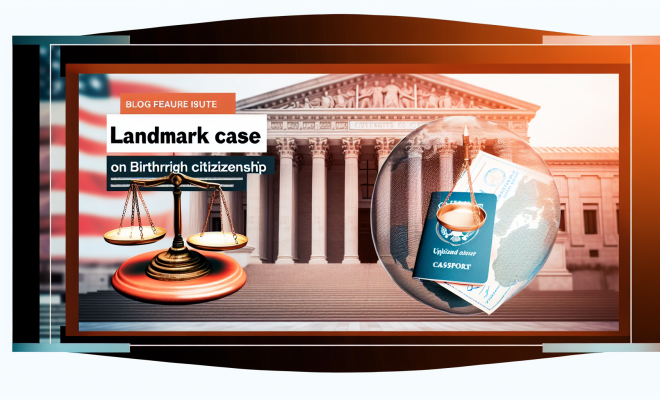
The United States Supreme Court is currently deliberating a significant legal battle surrounding President Trump’s executive order aimed at limiting birthright citizenship. This case has garnered considerable attention, especially as Trump prepares to attend the oral arguments—marking the first time a sitting president has participated in such proceedings.
Background of the Case
The central issue at hand is the executive order proposed by Trump, which seeks to deny citizenship to children born in the U.S. to parents who are here illegally or on temporary visas. This initiative has drawn sharp criticism and legal challenges, with lower courts previously deeming the executive order unconstitutional. Legal experts reference the 1898 Supreme Court decision in Wong Kim Ark, which affirmed birthright citizenship for individuals born on U.S. soil, regardless of their parents’ legal status.
Legal Precedent and Arguments
The Trump administration contends that children of noncitizens do not fall under the category of being “subject to the jurisdiction” of the United States, a pivotal phrase in the 14th Amendment. This amendment, ratified in 1868, was designed to secure citizenship for all individuals born or naturalized in the U.S., specifically addressing issues following the Civil War.
In contrast, opponents of the executive order argue that it directly contradicts the longstanding interpretation of the 14th Amendment. They assert that the Wong Kim Ark case established a clear precedent that has been upheld by generations of legal scholars and courts. Critics fear that limiting birthright citizenship could lead to a slippery slope, undermining the fundamental principles of equality and justice embedded in U.S. law.
Implications of Birthright Citizenship
The implications of this case extend beyond legal technicalities; they reach into the fabric of American society and its values. Birthright citizenship has traditionally been seen as a cornerstone of American identity, promoting inclusivity and diversity. Many advocates argue that revoking such rights could foster divisions and increase discrimination against marginalized communities.
Furthermore, the potential ruling could have significant impacts on millions of families. According to estimates, there are approximately 4 million children born to undocumented parents in the U.S. If the Supreme Court were to side with the Trump administration, these children could face a future devoid of the rights and privileges typically afforded to U.S. citizens.
Strategic Attendance by President Trump
Trump’s decision to attend the oral arguments is not just a historic moment; it also signifies his administration’s commitment to pushing forward its immigration agenda. Political analysts suggest that his presence may serve to galvanize support among his base, framing the case as a pivotal moment in the battle over immigration policy.
Political dynamics surrounding this case are complex, with the potential for significant shifts in public opinion. As the case unfolds, both supporters and opponents of the executive order are mobilizing their efforts to influence the court’s decision. Advocacy groups on both sides are preparing to highlight the broader societal implications of the ruling.
Expectations for a Ruling
The Supreme Court is expected to issue a definitive ruling by early summer, a timeline that aligns with the lead-up to the 2024 presidential elections. This case not only serves as a legal battleground but also as a litmus test for the future direction of immigration policy in the United States.
As the court weighs the arguments, legal experts and citizens alike are left to ponder the ramifications of the decision. Will the justices uphold the principles established over a century ago, or will they pave the way for a new interpretation of citizenship that could redefine what it means to be American?
Conclusion
The ongoing Supreme Court case concerning President Trump’s executive order on birthright citizenship is poised to become a landmark decision with far-reaching consequences. As the nation watches closely, the implications of this case extend beyond the courtroom, potentially reshaping the landscape of American citizenship and immigration policy for generations to come.