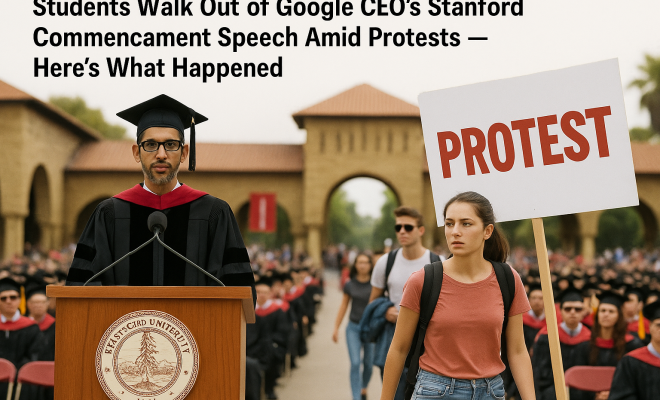
Students Walk Out of Google CEO’s Stanford Commencement Speech Amid Protests — Here’s What Happened
“`html
In a dramatic turn of events during the Stanford University commencement ceremony, students walked out while Google CEO Sundar Pichai was delivering his speech. This incident quickly became a flashpoint for discussions around Big Tech, surveillance, and the ethical responsibilities of tech giants. The protest occurred against a backdrop of increasing scrutiny of technology companies, especially regarding their involvement in state surveillance and military-related activities.
The Setting: Stanford University and Its Legacy
Stanford University has long been a significant player in the world of innovation and technology. Nestled in the heart of Silicon Valley, the institution has cultivated numerous tech luminaries, making it a pivotal point for discussions surrounding the ethical implications of technology. With its history of fostering entrepreneurship and technological advancement, Stanford’s commencement ceremonies hold considerable weight, drawing attention not only for the graduates but for the speakers who often represent the titans of industry.
When Sundar Pichai was invited to speak at this year’s commencement, the expectations were high. Pichai, who has led Google through monumental changes, is often seen as a voice of reason in an industry frequently criticized for its policies. However, the decision to have him speak came with its own set of controversies, given Google’s involvement in contentious issues.
The Protest: Voices of Dissent
The student walkout was not merely an isolated act of defiance but part of a broader protest movement at Stanford regarding the university’s ties to the tech industry. Many students are increasingly aware of the implications of technology on privacy, freedom, and ethics. The protest was organized by a coalition of student groups advocating for accountability from tech companies, especially regarding their role in state surveillance.
As Pichai began his speech, the students’ discontent became apparent. Reports indicate that a significant number of graduates and their families participated in the walkout, an act that symbolized more than just a rejection of one speaker; it represented a call for greater ethical standards within the tech industry.
The Reaction: Social Media Amplification
Social media platforms erupted with reactions almost immediately after the incident. Videos of the walkout, accompanied by hashtags like #StanfordWalkout and #TechAccountability, began circulating, drawing widespread attention. The incident quickly transformed into a societal commentary on the influence and responsibility of tech companies.
Users shared their thoughts, ranging from support for the students to criticism of the protest as disruptive. Notably, this rapid amplification demonstrates how social media serves as a powerful tool for activism, allowing students to voice their concerns beyond the confines of campus.
The Broader Implications: Big Tech Under Scrutiny
The protest during the Google CEO Stanford commencement speech isn’t an isolated incident. It reflects a growing discontent among the public about the impact of Big Tech on society. Recent years have seen numerous instances where tech giants have faced backlash over privacy violations, misinformation, and their partnerships with government entities.
Take, for instance, the increasing scrutiny of tech companies’ roles in state surveillance. Concerns have been raised about how data collected by companies like Google is used – often without the knowledge or consent of users. This uncertainty fuels anxiety around privacy and civil liberties, prompting activists and students alike to demand accountability from these corporations.
Inside the Speech: What Was Said?
While the protest overshadowed much of Pichai’s speech, it’s essential to understand what was discussed during the address. Pichai aimed to inspire the graduates, urging them to leverage technology for positive change. He spoke about innovation, resilience, and the importance of using technology to solve pressing global issues.
However, many students found it difficult to reconcile his message with their concerns about the ethical implications of the technologies under his watch. The disconnect between Pichai’s words and the reality of the tech industry served as fuel for the fire of protest. In their eyes, it added to the narrative that tech leaders are often out of touch with the ramifications of their work. (See: Stanford University history and significance.)
The Historical Context: Protests at Commencement Ceremonies
The Stanford incident is not the first time a commencement speech has been disrupted by protests. Universities have a long history of becoming battlegrounds for social issues, particularly during graduation ceremonies where influential figures are invited to speak. From the Vietnam War protests of the 1970s to more recent demonstrations against climate change, commencement ceremonies have often been a stage for students to voice their concerns.
This particular protest stands out due to its connection to a well-known tech figure and the increasing relevance of technology in daily life. It serves as a reminder that students are increasingly willing to tackle uncomfortable issues head-on, especially when those issues impact their lives and futures.
Students Speak Out: Voices of a Generation
The walkout was not just a collective action but also an individual expression of dissent. Many students later shared their motivations for participating in the protest, citing a desire to hold tech leaders accountable for their influence and decisions. By walking out, they wanted to send a message that they refuse to accept complacency regarding ethical practices in technology.
One student, who participated in the walkout, stated, “We need to advocate for a future where technology serves humanity, not the other way around. This protest is about demanding ethical leadership in the tech space.” Such sentiments encapsulate the growing consciousness among young people regarding their role in shaping the future of technology.
What This Means for Tech Companies
The Google CEO Stanford commencement speech incident serves as a wake-up call for tech companies. Students and younger generations are increasingly demanding transparency and responsibility from industry leaders. This shift in mindset could lead companies to re-evaluate their practices and policies, especially concerning user privacy and ethical considerations.
Furthermore, as students become more vocal about their concerns, companies may need to engage in more proactive dialogues with their communities. This could involve creating platforms for discussion, hosting forums on ethical technology, or even collaborating with universities to align their missions with the values of the students they aim to serve.
Looking Ahead: The Future of Activism in Tech
With the incident at Stanford as a backdrop, it’s clear that activism within the tech industry is gaining momentum. Students are at the forefront of this movement, advocating for a more responsible and ethical approach to technology. Their actions could reshape the narrative around tech giants, pushing them towards greater accountability.
As we look ahead, it’s essential to monitor how these protests evolve. Will they lead to substantial changes in corporate practices, or will they be viewed as fleeting moments of dissent? The answer may lie in the continued engagement of students with tech companies and society at large.
Final Reflections: A Call for Accountability
The walkout during the Google CEO Stanford commencement speech serves as a potent reminder of the power of student activism. It highlights the broader discourse about the role of technology in society and the ethical considerations that come with it. In an age where technology permeates every aspect of life, the need for accountability has never been more pressing.
As technology evolves, so too must the conversations surrounding it. The Stanford protest, combined with growing public scrutiny, indicates that we are entering an era where responsibility is paramount. Students are not just passive consumers of technology; they are active participants in shaping its future. And as they continue to raise their voices, the tech industry will be challenged to listen and act accordingly.
Understanding the Core Issues at Stake
While the protest focused on Pichai, it’s essential to understand the broader issues that motivated the students. Concerns about privacy, data ethics, and the role of algorithms in society are becoming more pronounced. For instance, many tech companies collect vast amounts of personal data, raising questions about how this data is used, who has access to it, and how it might be weaponized against individuals or communities.
The Cambridge Analytica scandal is a prime example of how data misuse can have far-reaching consequences. This incident not only affected voters in the 2016 U.S. presidential election but also raised alarms about what happens when companies prioritize profit over ethical considerations. Many students at Stanford are acutely aware that the tech industry is still grappling with these issues, and they want to see real changes.
Statistics Highlighting Public Sentiment
Recent surveys indicate that public trust in tech companies is at an all-time low. According to a 2023 Pew Research study, only 30% of Americans believe that tech companies are acting in the best interest of the public. This sentiment is echoed by a significant proportion of young adults, a demographic that is increasingly skeptical about the motivations of tech giants. As activists and consumers, they are calling for transparency and ethical frameworks that prioritize user rights over shareholder profits. (See: impact of technology on youth.)
Comparing Activism Across Generations
When we look at the current wave of student activism, it’s helpful to compare it to previous generations. The 1960s saw students protesting against the Vietnam War, and the 1980s brought a resurgence of activism focused on apartheid in South Africa. Today’s students are uniting around technology, an issue that merges political, ethical, and social dimensions. This comparison shows a continuity of student engagement with the world, but it also highlights how the medium of activism has evolved.
Instead of sit-ins and protests in physical spaces alone, today’s movements leverage social media, online petitions, and global networks, amplifying their messages far beyond campus confines. This shift allows for a more nuanced and widespread engagement that can lead to tangible change.
Expert Perspectives on Tech Ethics
Experts in technology ethics have weighed in on the implications of the protest. Dr. Sarah T. Kahn, a professor of technology ethics at Stanford, stated, “The students’ actions reflect a growing awareness of the ethical implications of technology. They understand that the decisions made today will shape the world they live in tomorrow.” This perspective underscores the importance of educating young people about the ethical dimensions of technology, as they will be the designers, consumers, and regulators of these tools in the future.
Additionally, Dr. Amir Patel, a tech industry analyst, pointed out that “the tech industry is at a crossroads. Companies can either adapt to the changing expectations of the public or risk becoming irrelevant as consumers demand more ethical practices.” His insights suggest that the student movement may serve as a catalyst for broader industry change.
FAQ: Understanding the Stanford Protest
What prompted the student walkout during Sundar Pichai’s speech?
The student walkout was driven by concerns over Google’s involvement in state surveillance and ethical issues regarding technology. Many students felt that the message of accountability was not aligned with Pichai’s speech.
How did social media play a role in this event?
Social media amplified the protest by allowing students to share their experiences and opinions. Hashtags like #StanfordWalkout gained traction, highlighting the conversation around tech accountability.
What are the broader implications of this protest for tech companies?
This protest signals a shift in public sentiment, particularly among younger generations who demand transparency and ethical practices from tech companies. Firms may need to re-evaluate their operations and engage more meaningfully with communities.
How do protests like this shape the future of technology?
Protests like this contribute to a growing movement for ethical technology. As students raise their voices, tech companies face increasing pressure to prioritize user rights, ethical practices, and social responsibility in their business models.
Are there historical precedents for student protests at commencement ceremonies?
Yes, universities have a long history of student-led protests during commencement ceremonies, addressing issues such as the Vietnam War and climate change. The Stanford protest continues this tradition by focusing on the ethical dimensions of technology.
What should tech companies do in response to student activism?
Tech companies should actively engage with students and the broader community, fostering discussions on ethics in technology. They can create platforms for dialogue, collaborate with educational institutions, and adopt transparent policies to build trust. (See: New York Times coverage of the protests.)
The Role of Ethics in Technology Education
One of the most significant takeaways from the Stanford protest is the imperative for technology education to include a robust ethical framework. Educational institutions like Stanford have the opportunity to shape future tech leaders who are as adept at addressing ethical dilemmas as they are at coding and innovation.
Courses that discuss the ethical implications of technology, data privacy laws, and the societal impacts of emerging technologies are becoming increasingly vital. As students graduate, they carry with them not only technical skills but also a heightened awareness of their responsibilities as future leaders in the tech industry. This kind of education can play a crucial role in ensuring that the next generation of technologists is prepared to tackle the challenges posed by their work.
Case Studies of Ethical Practices in Technology
To underscore the importance of ethical practices, we can look at companies that have made strides in this area. For instance, Microsoft has made significant commitments to privacy and ethical AI use. They have established ethical guidelines for AI development to ensure fairness, accountability, and transparency. These principles can serve as a model for tech companies aiming to align their operations with societal values.
Another example is Mozilla, the organization behind Firefox, which has championed user privacy and empowerment. Mozilla’s commitment to open-source software helps foster a culture of transparency and accountability, which can build trust with users. Such examples can inspire other tech giants to adopt similar values, demonstrating that ethical practices are not just good for public relations but essential for sustainable business.
Engagement Between Students and Corporations
Moving forward, fostering dialogue between students and tech companies can pave the way for a more responsible tech ecosystem. Engaging in open discussions, hackathons focused on ethical tech solutions, and internships where students work on projects with societal benefits can bridge the gap between industry practices and student expectations.
Furthermore, universities could implement advisory boards comprising students and tech industry representatives. These boards can facilitate ongoing conversations about ethical practices and ensure that students’ voices are heard in decision-making processes related to technology development and implementation.
Conclusion: The Path Forward for Tech Companies
The events surrounding Sundar Pichai’s commencement speech at Stanford University serve as both a challenge and an opportunity for tech companies. The growing activism among students reflects a fundamental shift in how society perceives technology. As we advance, both industry leaders and young innovators must work together to create a future where technology enhances human lives while adhering to ethical standards.
This collaborative approach not only ensures that technology serves the common good but also builds a foundation for sustainable growth in the tech industry. With students leading the charge for accountability, it’s clear that the tech landscape will continue to evolve, driving change from within.
“`
Trending Now
Frequently Asked Questions
Why did students walk out of Sundar Pichai's speech at Stanford?
Students walked out during Sundar Pichai's commencement speech to protest against Google's involvement in state surveillance and military activities. The protest highlighted broader concerns about Big Tech's ethical responsibilities and its impact on privacy and freedom.
What were the main issues raised during the Stanford protest?
The protest at Stanford focused on accountability from tech companies, particularly regarding their roles in state surveillance and ethical implications surrounding technology. It reflected growing student awareness of the influence of Big Tech on society.
What is the significance of Stanford University in the tech industry?
Stanford University is a pivotal institution in Silicon Valley, known for fostering innovation and entrepreneurship. Its commencement ceremonies attract attention due to the influential figures who speak, making them significant platforms for discussing technology's ethical implications.
Who is Sundar Pichai and why was he invited to speak at Stanford?
Sundar Pichai is the CEO of Google, recognized for leading the company through significant changes. He was invited to speak at Stanford's commencement due to his prominent role in the tech industry, despite the controversies surrounding Google's practices.
What was the student response to Sundar Pichai's speech?
The student response was one of dissent, culminating in a walkout during Pichai's speech. This action was part of a larger movement calling for greater accountability from tech companies, reflecting students' concerns about privacy and ethical technology use.
Agree or disagree? Drop a comment and tell us what you think.