
Revealed: The Astonishing Reason Millions Demand More Childcare Costs Assistance Now
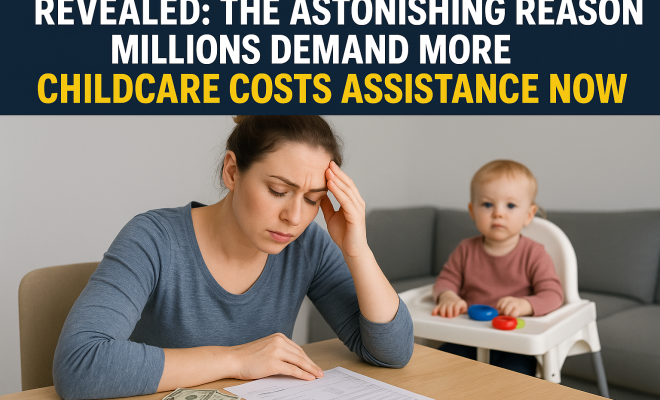
If you’re a parent in America right now, or even just thinking about becoming one, you’ve probably felt it: that knot in your stomach when you look at the price tag for raising kids. It’s not just the diapers and the cute little outfits; it’s the elephant in the room that devours paychecks – childcare. A recent poll paints a stark picture, showing that a staggering 52% of U.S. adults are clamoring for more federal spending on childcare. And guess who’s leading the charge? Gen Z, with nearly 60% of their voters demanding action. This isn’t just about convenience; it’s about survival for many families, and it highlights a critical need for substantial childcare costs assistance.
The numbers are truly eye-opening, almost unbelievable when you stack them up against other household expenses. We’re talking about an average national cost of $1,230 per month for full-time infant center care as of 2026. Let that sink in for a moment. For many, that’s more than their rent or mortgage payment. This isn’t a regional anomaly; it’s a nationwide crisis that’s forcing tough choices, delaying family plans, and pushing parents into debt. It’s clear we’re at a breaking point, and the call for robust childcare costs assistance is growing louder by the day.
1. The Crushing Weight of Childcare Expenses: A National Crisis Unfolding
Let’s be blunt: childcare in America isn’t just expensive; for many families, it’s financially crushing. The average national cost of full-time infant center care hitting $1,230 per month in 2026 isn’t just a statistic; it’s a monthly gut punch for parents across the country. This isn’t some luxury service; it’s a fundamental necessity for working families. Without reliable, safe, and affordable childcare, parents, especially mothers, are often forced out of the workforce, impacting their careers, long-term earning potential, and the overall economic stability of their households.
This isn’t just a problem for low-income families either. Middle-class households, often with two working parents, find themselves caught in a vicious cycle. Their income might be too high to qualify for some existing subsidies, but not high enough to comfortably absorb thousands of dollars a month in childcare costs. This creates a ‘missing middle’ dilemma, where many families are simply treading water, making difficult sacrifices, or, alarmingly, going into debt just to ensure their children are cared for while they work. The current system seems designed to penalize productivity rather than support it, making the need for comprehensive childcare costs assistance more urgent than ever.
The economic impact of this ‘missing middle’ is significant. These are families who are often earning above the poverty line but well below the income needed to comfortably afford childcare without substantial financial strain. They pay taxes that support social programs, yet often receive minimal benefit from them when it comes to childcare. This effectively creates a double burden, where they contribute to a system that doesn’t adequately support their own needs. It’s a fundamental flaw that needs addressing to truly unlock the economic potential of these households and ensure everyone has a fair shot at raising a family without crippling financial stress.
2. Gen Z’s Unprecedented Demand: A Generational Cry for Help
It’s fascinating, isn’t it? The generation often stereotyped as detached or overly focused on social media is actually leading the charge on a critical economic issue. Nearly 60% of Gen Z voters are advocating for increased federal spending on childcare. This isn’t just a casual preference; it’s a clear signal of their priorities and anxieties about the future. Many in Gen Z are either new parents themselves, contemplating parenthood, or watching older siblings and friends struggle, and they’re seeing the writing on the wall.
This generation has grown up in an era of economic uncertainty, student loan debt, and rising housing costs. Adding exorbitant childcare expenses on top of that makes the prospect of starting a family seem almost impossible. Their strong stance on childcare costs assistance isn’t just altruism; it’s a pragmatic recognition that systemic changes are needed to make family life sustainable. They’re not waiting for others to solve the problem; they’re actively demanding that policymakers address this fundamental barrier to economic stability and family formation.
What’s particularly compelling about Gen Z’s advocacy is its direct connection to their future. Many of them are at the age where they’re deciding whether to start families, and the cost of childcare is a huge deterrent. They’ve witnessed the struggles of previous generations and are determined not to repeat the cycle of financial strain. This isn’t just an abstract political issue for them; it’s a deeply personal one that will dictate their life choices and long-term well-being. Their collective voice brings a fresh urgency to the debate, pushing for innovative and far-reaching solutions that previous generations might have only dreamed of.
3. Childcare vs. Housing: A Disturbing Financial Showdown
Here’s a comparison that often leaves people speechless: childcare expenses frequently surpass median rent or mortgage payments. Think about that for a moment. For many families, the cost of keeping their child safe and cared for during working hours is higher than the roof over their head. This isn’t just an anecdotal observation; it’s a widespread reality across numerous states. This disturbing statistic underscores the sheer magnitude of the financial burden parents are facing.
It forces families into impossible choices. Do you prioritize housing security, or ensure your child receives quality care? In an ideal world, parents shouldn’t have to choose. This financial showdown isn’t just about numbers on a spreadsheet; it’s about the quality of life, the stress levels within households, and the long-term economic prospects for families. When childcare eats up such a disproportionate chunk of income, it leaves less for everything else: groceries, healthcare, savings, and even retirement. This dynamic screams for more robust childcare costs assistance to rebalance family budgets.
Consider the psychological toll this takes. Imagine having to make a decision every month between paying for a safe place for your child to be while you work, and keeping a roof over their head. This isn’t a theoretical exercise for millions of American families; it’s their lived reality. This constant financial pressure contributes to increased stress, mental health challenges, and can strain family relationships. It’s not just an economic burden, but a significant human one, undermining the very stability families strive to build. The comparison to housing costs isn’t just a shock statistic; it’s a window into the profound societal challenge we face.
4. States Stepping Up (But Is It Enough?): Local Efforts for Childcare Costs Assistance
While the national conversation often focuses on federal solutions, several states aren’t waiting around. They’re recognizing the immediate crisis and attempting to implement their own forms of childcare costs assistance. Indiana, for example, made headlines by allocating a substantial $200 million to clear waitlists for childcare subsidies. This kind of investment is a lifeline for families who were previously stuck in limbo, unable to access affordable care because programs were oversubscribed. (See: Childcare and child development resources.)
Other states are exploring concepts like subsidy floors, which aim to ensure a baseline level of financial support for families regardless of their specific circumstances. These state-level initiatives are critical and demonstrate a growing awareness of the problem. However, the patchwork nature of these efforts means that access to affordable childcare and childcare costs assistance can vary wildly depending on your zip code. What’s a robust program in one state might be non-existent in another, creating inequities and highlighting the need for a more unified national approach.
It’s worth noting the creative approaches some states are taking. Colorado, for instance, implemented universal pre-kindergarten for all four-year-olds, significantly reducing the burden for families with children in that age group. New Mexico has also made strides by expanding childcare assistance to more families and making it nearly free for many. These examples show that meaningful change is possible at the state level. Yet, the sheer discrepancy between states creates a “childcare lottery” where a family’s financial stability can depend more on geography than need. This geographic inequality is precisely why many advocates argue that a federal framework is essential to ensure a baseline of support for all American families.
5. The Unintended Consequence: Fewer Children, More Debt
The financial strain of childcare isn’t just affecting current family budgets; it’s reshaping the future of American families. A troubling trend reported by many parents is the decision to have fewer children than they originally intended. This isn’t about personal preference; it’s a cold, hard calculation based on economic reality. When the cost of raising one child is already pushing you to the brink, the thought of adding another becomes financially impossible for many. For more context, see hidden costs of raising children.
Beyond reducing family size, the other major consequence is the accumulation of debt. Parents are reportedly going into debt to cover childcare expenses. This isn’t discretionary spending; it’s a non-negotiable cost for most working families. Taking on debt for a basic necessity like childcare can have long-lasting ramifications, from impacting credit scores to delaying major life milestones like homeownership or retirement savings. This cycle of debt is unsustainable and a clear indicator that the current system is broken, urgently needing effective childcare costs assistance to break the pattern.
This phenomenon isn’t just theoretical; demographic data in the U.S. shows a consistent decline in birth rates, with economic factors frequently cited by young adults as a primary reason for delaying or foregoing parenthood. This isn’t just a personal choice; it has broader societal implications, impacting future workforce size, consumer markets, and the dependency ratio of retirees to working-age adults. When financial barriers prevent people from having the family size they desire, it’s a symptom of a systemic problem that needs national attention and robust childcare costs assistance to ensure a healthy demographic future.
6. Why This Issue Is Going Viral: Beyond the Balance Sheet
You’ve likely seen this topic trending on social media, discussed on news programs, and debated among friends. Why the sudden virality? It’s simple: it impacts everyone, directly or indirectly. For parents, it’s a daily struggle that hits their bank accounts and mental well-being. For those considering parenthood, it’s a daunting obstacle. Even for those without children, the issue affects the broader economy, workforce participation, and the overall health of communities.
The intergenerational debate it sparks is also a key factor. Older generations might recall a time when childcare was less expensive or when one parent could more easily stay home. Younger generations are facing a vastly different economic landscape. The shocking statistics comparing childcare costs to housing further fuel the conversation, creating those ‘jaw-dropping’ moments that make people share and discuss. This isn’t just a niche policy discussion; it’s a mainstream concern that speaks to fundamental anxieties about financial stability and the American dream, making robust childcare costs assistance a truly universal need.
Social media platforms have played a huge role in amplifying this conversation. Personal stories of parents struggling to afford care, viral infographics comparing childcare to college tuition, and direct calls to action have resonated deeply. These platforms have given a voice to individuals who might otherwise feel isolated in their financial struggles, creating a collective sense of urgency and shared experience. This digital mobilization has effectively pushed childcare from a background issue to a front-and-center topic in public discourse, demanding attention from politicians and policymakers who might have previously overlooked it.
7. The Policy Tug-of-War: Finding Solutions for Childcare Costs Assistance
Addressing the childcare crisis isn’t a simple task. It involves a complex tug-of-war between various policy approaches, funding mechanisms, and political ideologies. On one side, you have advocates for universal childcare, arguing that it should be treated like public education – a societal good funded by the government. They point to countries like Canada, which has committed to a $10-a-day childcare program, as a model for how significant federal investment can transform access and affordability.
On the other side, there are those who prefer more targeted subsidies, tax credits, or market-based solutions, arguing against large-scale government intervention. The debate also involves discussions about provider wages, facility standards, and the overall quality of care. Finding a path forward requires not just political will but a comprehensive understanding of the intricate ecosystem of childcare, from in-home providers to large centers. The challenge lies in crafting solutions for childcare costs assistance that are effective, equitable, and sustainable for the long term.
Expert perspectives on this policy tug-of-war often highlight the need for a multi-pronged approach. Economists frequently discuss the “return on investment” of early childhood education, showing how every dollar spent can yield significant societal benefits down the line. Child development specialists emphasize the importance of quality over mere affordability, advocating for policies that support well-trained staff and stimulating environments. Meanwhile, business leaders often champion childcare as essential infrastructure for a thriving workforce. Reconciling these diverse viewpoints into cohesive policy is the real challenge, requiring careful consideration of both immediate relief and long-term systemic change to provide effective childcare costs assistance.
8. Personal Finance Strategies Amidst the Chaos: Budgeting for the Unbudgetable
While the policy debates rage on, parents are still left with the immediate challenge of paying for childcare. This has led to an explosion of personal finance strategies aimed at making the unbudgetable, well, budgetable. Many financial experts advise new parents to create incredibly detailed budgets, often cutting back drastically on discretionary spending. Tools like budgeting apps and spreadsheets become indispensable for tracking every dollar.
Beyond strict budgeting, parents are exploring various avenues: maximizing employer-sponsored Dependent Care Flexible Spending Accounts (FSAs), researching state and local grants, or even considering alternative work arrangements like hybrid schedules or part-time roles to reduce childcare hours. Some are looking into in-home care options, family share arrangements, or co-ops to lower costs. While these strategies offer some relief, they often require significant effort and sacrifice, highlighting that personal solutions can only go so far without systemic childcare costs assistance.
Let’s unpack some of these strategies a bit more. Dependent Care FSAs, for instance, allow you to set aside pre-tax money for eligible childcare expenses, effectively reducing your taxable income. This can be a significant saving for many families. Some employers also offer direct childcare subsidies or on-site childcare centers, which are invaluable benefits. For those exploring in-home care, joining a nanny share with another family can dramatically cut costs while still providing personalized attention. These aren’t perfect solutions, but they represent the creative lengths parents are going to, just to make ends meet in a broken system that desperately needs more comprehensive childcare costs assistance. (See: Rising childcare costs in America.)
9. The Long-Term Economic Ripple Effect: Beyond Individual Households
The childcare crisis isn’t just a problem for individual families; it has profound long-term economic ripple effects that touch everyone. When parents, particularly mothers, are forced out of the workforce due to childcare costs, it represents a significant loss of human capital and economic productivity. This can lead to slower economic growth, reduced tax revenues, and a less competitive workforce on a national scale.
Furthermore, the lack of affordable, high-quality early childhood education can have lasting impacts on children’s development and future educational outcomes. Investing in early childhood is often cited as one of the most cost-effective public investments, yielding significant returns in terms of educational attainment, earning potential, and reduced social costs later in life. Therefore, robust childcare costs assistance isn’t just a social welfare issue; it’s a critical economic investment in the nation’s future, impacting everything from workforce participation to long-term economic prosperity.
Consider a practical example: a parent, let’s say a skilled engineer, leaves the workforce because childcare costs erase their entire salary. That’s not just a loss for that family, it’s a loss of expertise and innovation for their company and the broader economy. Multiply that by millions of parents, and you see a tangible drag on economic growth. Moreover, research consistently shows that children who attend high-quality early learning programs are more likely to succeed in school, earn higher wages as adults, and be less reliant on public assistance. So, addressing childcare costs assistance is truly an investment in human capital that pays dividends for decades. For more context, see financial benefits for families.
10. Navigating Federal Childcare Costs Assistance Programs
While the ideal solution of widespread, affordable childcare remains a goal, several federal programs currently exist to offer some relief, though they often have strict eligibility requirements and varying levels of impact. Understanding these can be crucial for families seeking immediate help.
The Child Care and Development Fund (CCDF) is the largest federal program providing childcare subsidies to low-income working families. Administered by states, it helps families pay for childcare so parents can work or attend training/education programs. Eligibility and the amount of assistance vary significantly by state, and waitlists are common. For instance, a family in California might have different income thresholds and co-payment requirements than a family in Texas.
Another key program is the Child and Dependent Care Credit, a federal tax credit that allows families to deduct a portion of their childcare expenses from their taxes. This isn’t a direct subsidy but can reduce a family’s tax liability. The maximum credit amount and income phase-outs apply, meaning higher-income families might receive less or no benefit. It’s an important piece of the puzzle, but often doesn’t provide the upfront relief many struggling families need.
Additionally, some specific populations receive targeted assistance. Military families, for example, often have access to subsidized childcare through Department of Defense programs, which are significantly more affordable than civilian options. Families receiving Temporary Assistance for Needy Families (TANF) cash assistance may also be eligible for childcare support. These programs, while vital for those they serve, underscore the fragmented nature of federal childcare costs assistance, highlighting the need for a more universal approach.
11. The Provider’s Perspective: Why Childcare is So Expensive
It’s easy to point fingers at the high costs, but understanding why childcare is so expensive requires looking at it from the provider’s side. Childcare centers operate on incredibly thin margins, and the high fees parents pay often don’t translate into huge profits for providers. So, where does the money go?
A significant portion of costs goes directly to staffing. Quality childcare requires a high staff-to-child ratio to ensure safety and effective learning environments. Unlike many industries, you can’t automate childcare; it relies heavily on human interaction. Paying competitive wages to attract and retain qualified early childhood educators is a constant struggle, especially when many feel undervalued compared to public school teachers.
Then there are the operational expenses: rent for facilities, utilities, insurance (which is particularly high for childcare due to liability), educational materials, food, and strict licensing and regulatory compliance. These regulations are essential for child safety and quality but also add to the financial burden on providers. For example, a center might need to invest in specific playground equipment, safety gates, or undergo frequent inspections, all of which cost money.
Furthermore, the business model of childcare often struggles with economies of scale. Infant care, which is the most expensive, requires the lowest staff-to-child ratio, meaning fewer revenue-generating children per staff member. This fundamental structure makes it inherently costly to provide high-quality care, reinforcing the idea that robust childcare costs assistance is needed to stabilize the entire ecosystem, not just help parents.
Frequently Asked Questions About Childcare Costs Assistance
Q1: What is the average cost of childcare in the U.S.?
A1: As of 2026, the average national cost for full-time infant center care is projected to be around $1,230 per month. This number can vary dramatically by state and even by specific city, with some urban areas seeing costs well over $2,000 per month. The cost generally decreases as children get older, but it remains a significant expense for most families. For more context, see urgent needs in childcare funding. (See: The financial burden of childcare.)
Q2: What is “childcare costs assistance”?
A2: Childcare costs assistance refers to any program, subsidy, tax credit, or financial aid designed to help families afford the cost of childcare. This can come from federal, state, local, or even employer-sponsored programs. The goal is to reduce the financial burden on parents, making it easier for them to work or pursue education while ensuring their children receive care.
Q3: Who is eligible for federal childcare assistance programs?
A3: Federal programs like the Child Care and Development Fund (CCDF) primarily target low-income working families or those in education/training programs. Eligibility criteria, including income thresholds, vary by state. The Child and Dependent Care Credit is a tax credit available to a broader range of income levels, but the benefit is higher for lower-income families and phases out for higher earners.
Q4: My income is too high for subsidies but childcare is still unaffordable. What can I do?
A4: This is the “missing middle” dilemma many families face. You might still qualify for the federal Child and Dependent Care Credit. Check if your employer offers a Dependent Care Flexible Spending Account (FSA), which allows you to pay for childcare with pre-tax dollars. Also, explore local community grants, nanny-share options, or family co-ops. Some states are also expanding their eligibility for subsidies, so it’s worth checking your state’s specific programs.
Q5: How does childcare expense compare to housing costs?
A5: Shockingly, in many parts of the U.S., the average cost of full-time infant childcare surpasses the median rent or mortgage payment. This highlights the immense financial pressure on families and illustrates how childcare has become one of the largest household expenses, often competing directly with basic housing needs.
Q6: Are there specific programs for military families or college students?
A6: Yes, military families often have access to highly subsidized childcare through the Department of Defense. For college students, some institutions offer on-campus childcare or provide grants specifically for student parents. It’s best to check with your specific military branch or college’s financial aid and student services departments for available resources.
Q7: What are some state-level initiatives offering childcare costs assistance?
A7: States are implementing various strategies. Examples include universal pre-kindergarten programs (like in Colorado), expanded subsidy eligibility (like in New Mexico), and efforts to clear waitlists for existing programs (like in Indiana). The specific programs and their scope differ significantly by state, so visiting your state’s Department of Human Services or Child Care Assistance website is the best starting point.
Q8: Why is quality childcare so expensive for providers to offer?
A8: The high cost for providers stems from several factors: high staff-to-child ratios required for safety and quality, the need to pay competitive wages to qualified educators, and significant operational costs like rent, utilities, insurance, educational materials, and compliance with extensive licensing regulations. Childcare is a labor-intensive service that is difficult to scale cheaply without compromising quality.
Q9: How can I find out about local childcare assistance programs?
A9: Your state’s Child Care Resource and Referral (CCR&R) agency is an excellent starting point. They can provide information on state and local subsidies, grants, and even help you find licensed childcare providers. Many cities and counties also have their own initiatives, so checking your local government’s social services department is a good idea.
The mounting pressure from American families, especially the powerful voice of Gen Z, makes it undeniable: the current state of childcare in the U.S. is unsustainable. The financial squeeze is altering family planning, driving debt, and creating a ripple effect across the economy. While state efforts offer some relief, a comprehensive, national strategy for childcare costs assistance is no longer a luxury; it’s an economic imperative if we want to support families, foster a strong workforce, and invest in the next generation.
Trending Now
Frequently Asked Questions
Why are childcare costs so high in the U.S.?
Childcare costs in the U.S. are high due to various factors including increased demand, regulatory requirements, and the need for qualified staff. As of 2026, the average cost for full-time infant care is around $1,230 per month, which can exceed typical housing expenses for many families.
What percentage of Americans support increased childcare assistance?
A recent poll indicates that 52% of U.S. adults support increased federal spending on childcare. This demand is particularly strong among Gen Z voters, with nearly 60% calling for action to address the rising costs of childcare.
How does high childcare cost affect families?
High childcare costs can significantly impact families by forcing parents, especially mothers, out of the workforce. This not only affects their immediate financial situation but can also hinder their long-term career prospects and economic stability.
What is the average cost of childcare in America?
As of 2026, the average national cost for full-time infant center care is approximately $1,230 per month. This amount can often be more than what families pay for rent or mortgage, highlighting the financial burden of childcare.
Is childcare assistance only for low-income families?
No, the need for childcare assistance extends beyond low-income families. Middle-class families are also feeling the financial strain of high childcare costs, which can lead to tough choices and increased debt for many households.
What's your take on this? Share your thoughts in the comments below — we read every one.


